-
-
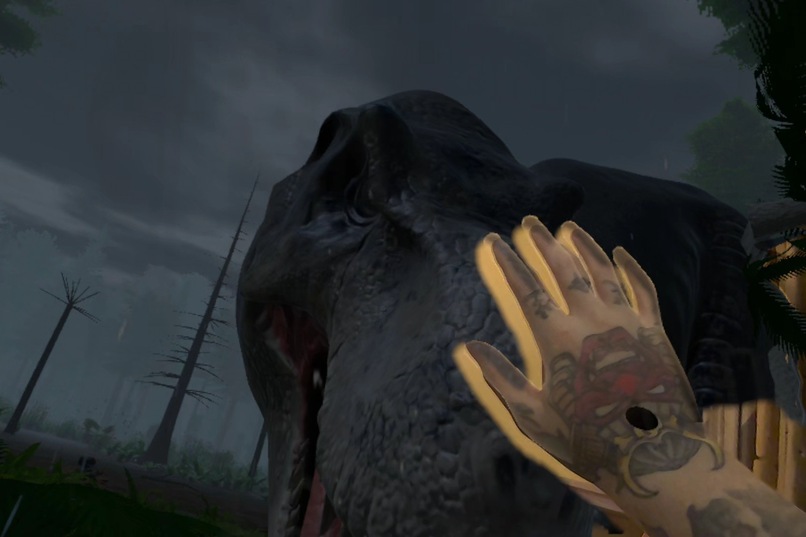
Stroking rex
-
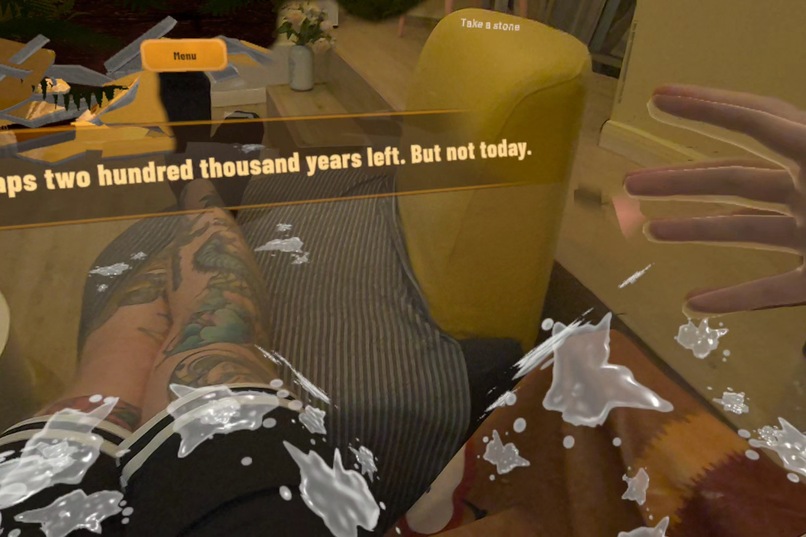
Dribble
-
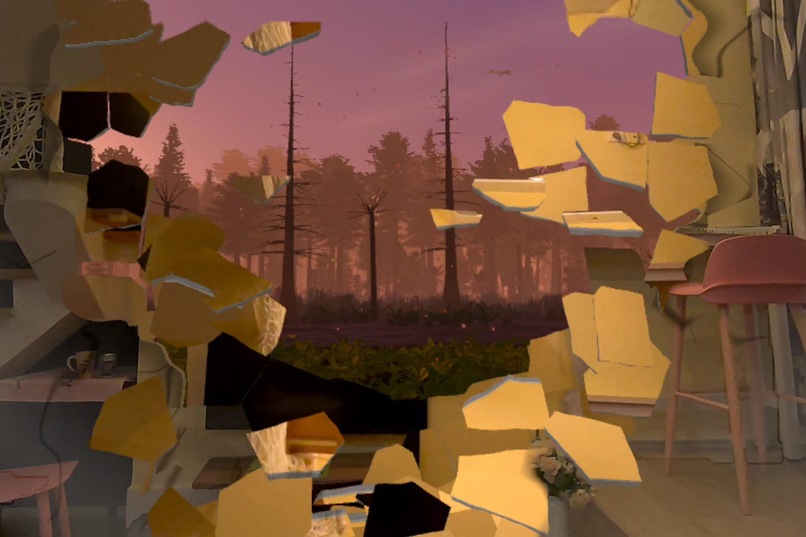
Wall break
-
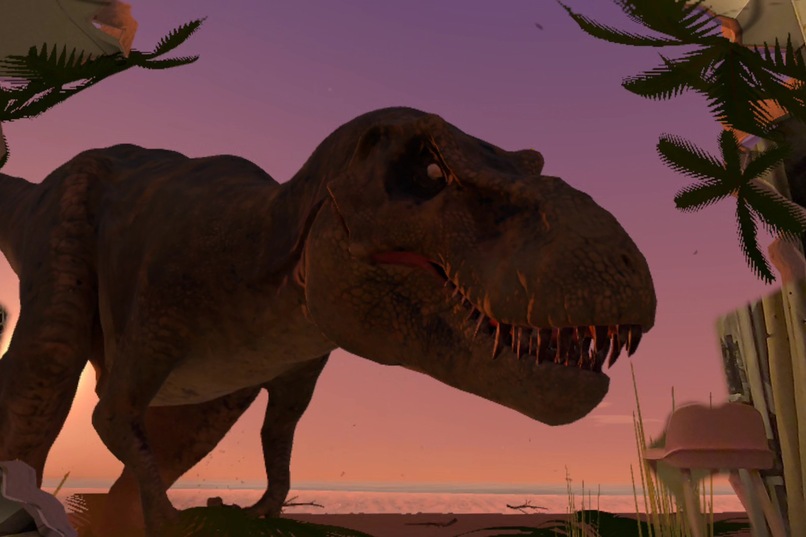
Rex Visit
-
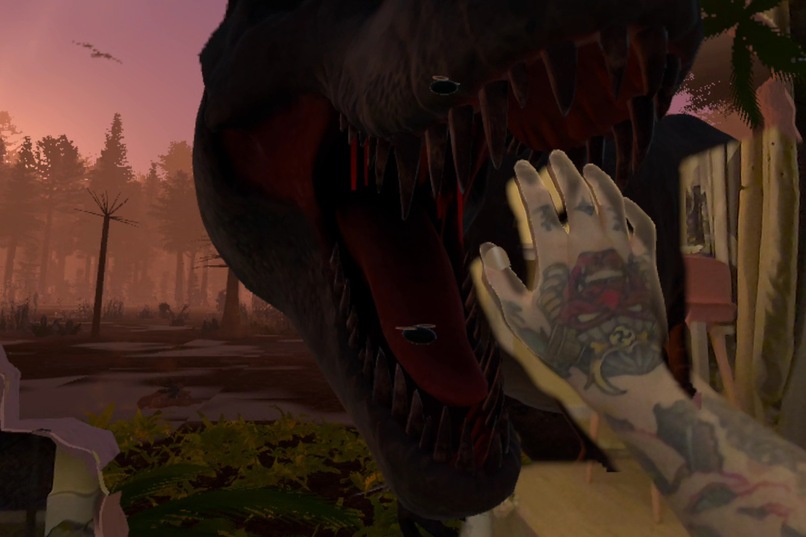
Stroking Rex
-
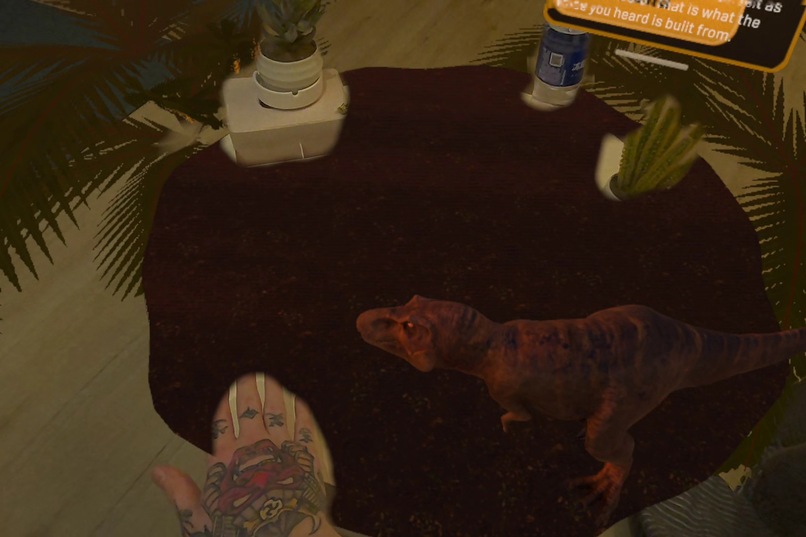
Table top mode
-
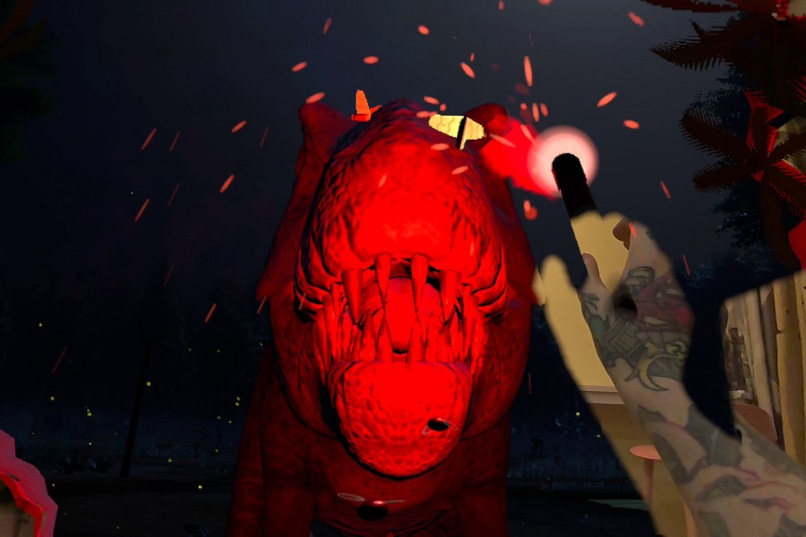
Flare
-
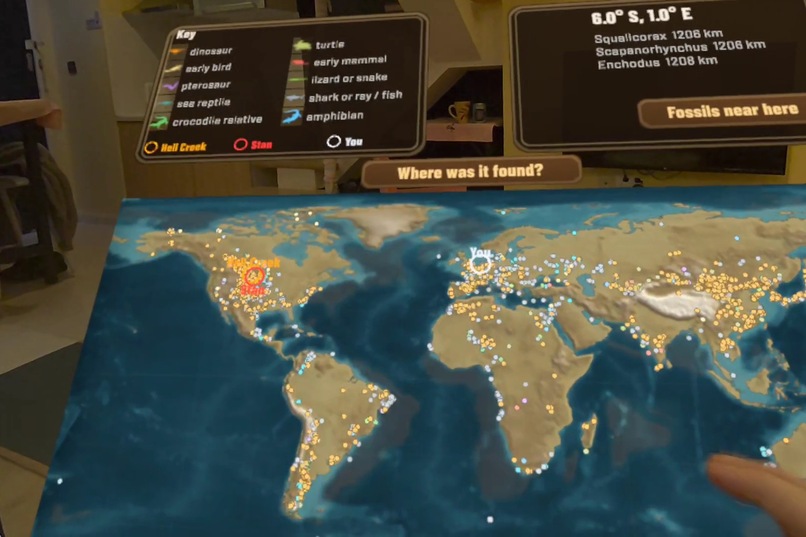
World map with fossil data
-
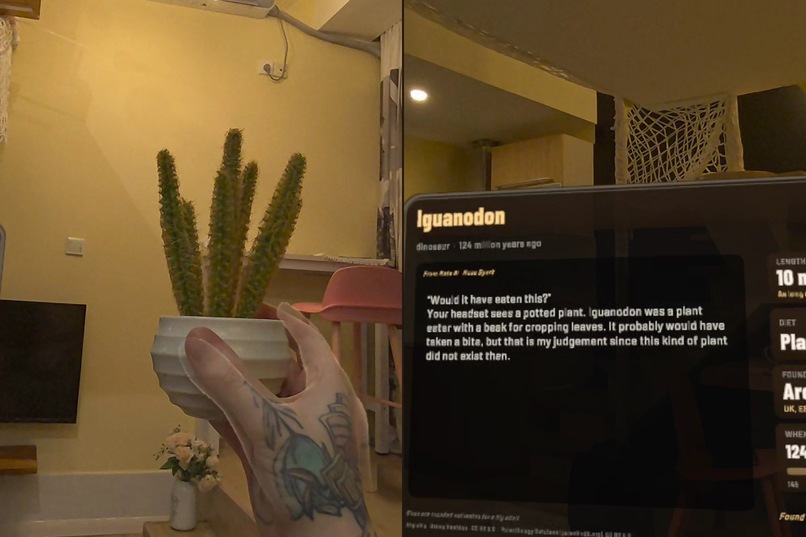
Checking real objects with Meta Ai
-
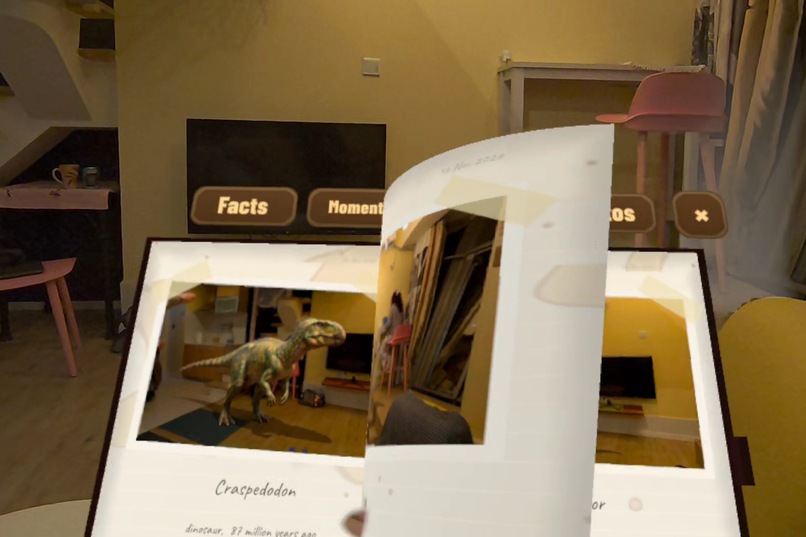
Journal with all your pictures
-
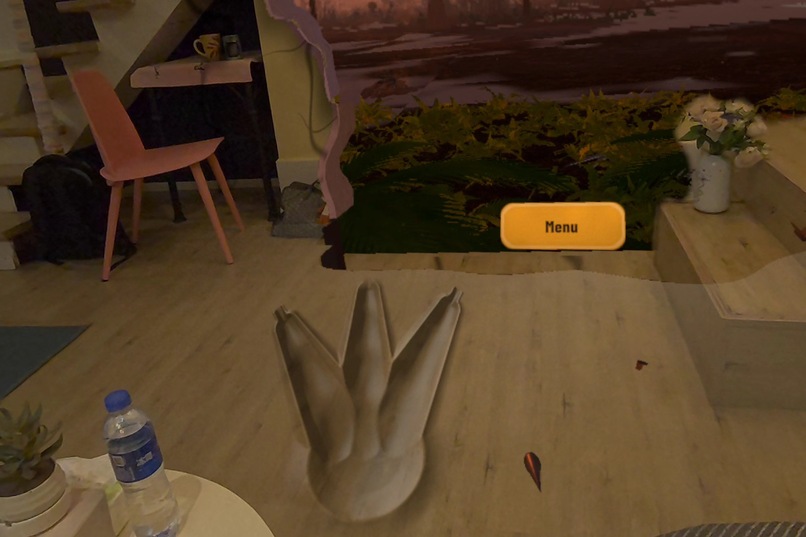
Footprint imprinted on real world
-
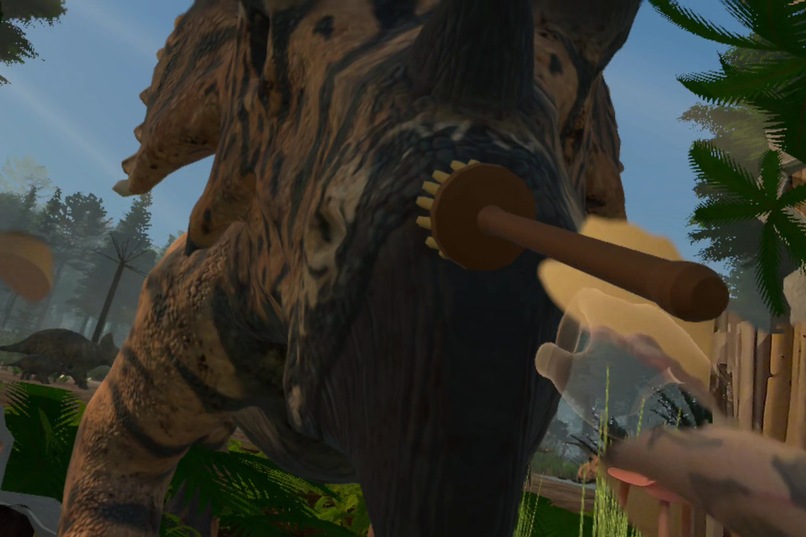
Brushing a Triceratops
-
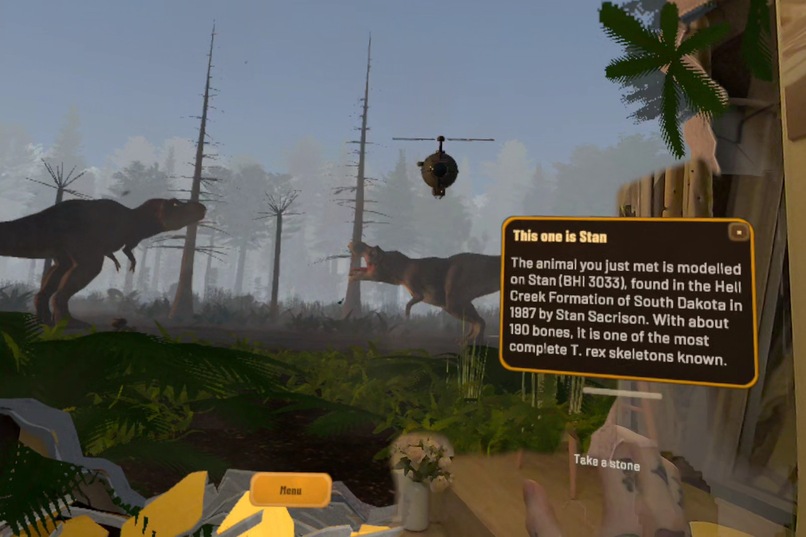
T-rex Face off
-
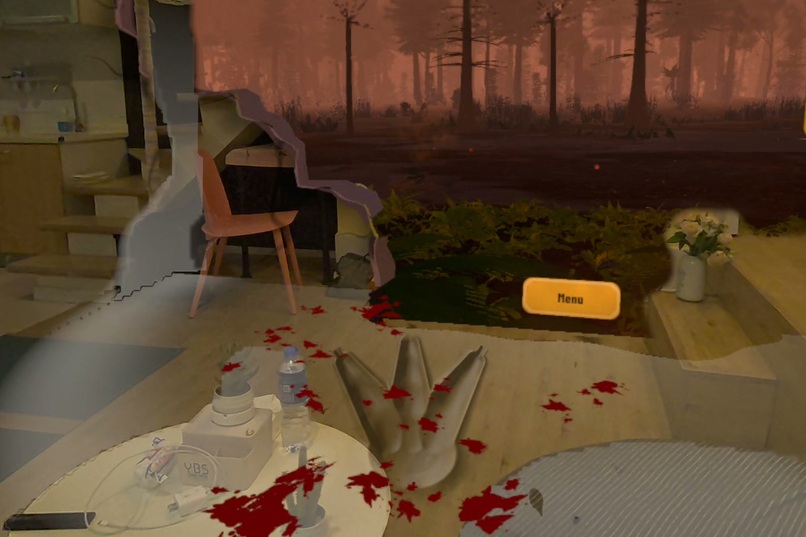
Bloody aftermath,
-
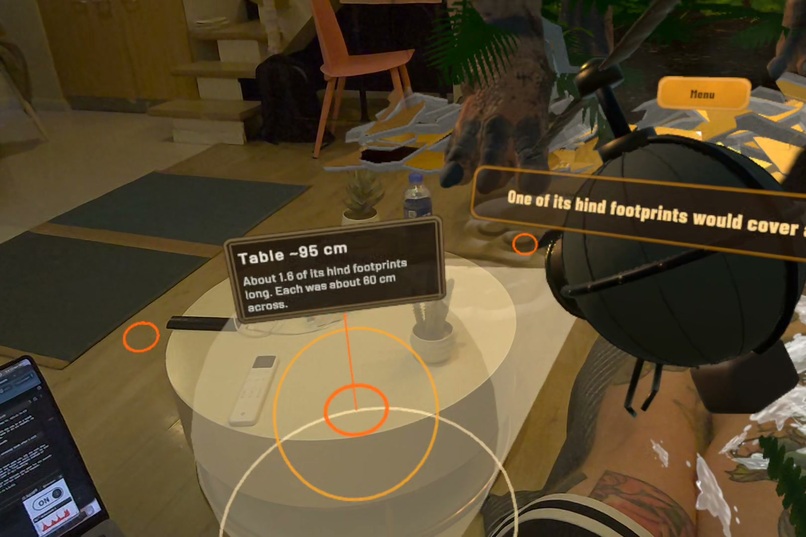
Room sense - Drone scan


Inspiration
As a kid I watched shows like Walking with Dinosaurs over and over, and I have been interested in dinosaurs ever since. I also remember visiting the Natural History Museum in London, where a few interactive exhibits let you do more than look. I wanted to bring both of those into VR and mixed reality: an experience that brings these animals into your own space. Not a film monster, but an animal, moving, sounding and behaving as the science says it did, close enough to feed and to touch.
I also wanted it to be for everyone, not only for people who already know their way round a headset. One Christmas I showed my grandparents the Quest. They loved it, but getting them started was the hard part. That is where Director mode comes from: someone else runs the visit from a phone, laptop and even the meta ray ban display, and the person in the headset only has to sit, look and reach out.
The same thinking shaped how you play. My PhD was about playful technology for wheelchair users, and it taught me that most room-scale mixed reality quietly assumes you can stand up and walk about. So Hell Creek is built from the seat first: you can stay where you are and the Cretaceous comes to you, through your own wall. That suits a wheelchair, a sofa, a bed or a small room. But nothing ties you to the chair. If you would rather stand up and walk round her, everything works the same way.
What it does
Look at a wall and pinch. The plaster cracks, the wall breaks open, and behind it is a forest from 66 million years ago. A life-size Tyrannosaurus rex walks past, notices you and brings her head into your room.
- Hands only, from a seat. Hold out a hand and she comes to you. Stroke her snout, keep still or get noticed. She drools on your floor, and now and then she licks you.
- Feeding. Throw her meat and she eats it. A Triceratops from the herd outside walks over to be fed fern fronds, and it may sneeze on you.
- Different places and hours. The forest floor, a river, a swamp and the coast, from a still morning to a night storm.
- Three ways to play. Through a wall, all round you, or as a 1:30 table top world at lap height, so it works on a sofa, in bed or in a plane seat.
- Your room is part of it. The broken wall pieces wear a picture of your own wall, leaves land on your furniture, footsteps send ripples across your floor, and your real hands pass in front of the animals.
- Director mode. Someone else can run the visit from a phone or laptop with a four-letter code: call her over, change the hour, send in the Triceratops. It is there for a parent with a child in the headset, for demos and for filming.
- Ask anything. A guide answers spoken questions from a fact file grounded in the palaeontology, and Room Sense spots everyday objects around you and ties them to the science. The AI features are for adult accounts only and have offline fallbacks.
- Reasons to come back. A map game and a quiz that pay out dinosaur cards, a journal, and a photo mode that is never scored.
- Access. No controllers, no walking and nothing out of arm's reach. Head gaze works if your hands are not tracked, narrator lines are subtitled, boards can be moved to where you want them, and the interface is in 17 languages with narration voiced in 7.
- Ask anything, with Meta AI. A guide answers spoken questions from a fact file grounded in the palaeontology. Room Sense names everyday objects around you and ties them to the science, and See it in your room makes a picture of a dinosaur standing in your own room. These use Meta's models for adult accounts only. Without a network the guide falls back to stored answers and Room Sense to a detector on the headset.
How we built it
Hell Creek is a solo project, built in Unity 6 with the Universal Render Pipeline.
- Mixed reality: Meta XR Core SDK and MR Utility Kit (v207) for hand tracking, passthrough, the room model and anchors, with the Depth API so real furniture and hands hide the animals correctly.
- The break in the wall: a stencil portal that uses the room model as an occluder, so there is one physical hole with a broken plaster edge and nothing drawn over the animal.
- The places: The near and middle ground are live geometry, and the far forest is a set of pictures rendered in Blender, one for each hour of the day.
- Interaction: my own gaze and pinch pointer, buttons and movable boards, designed around a seated player's field of view.
- Room Sense and the guide: an on-device object detector (YOLOX-Tiny) running in Unity's inference engine, and Meta's Model API through a small server, with stored answers when there is no network.
- Sound: narration, animal voices and music were generated with ElevenLabs, then placed and timed in the scene (the bellow is timed to the jaw).
- Animals: the T. rex and Triceratops models are licensed store assets, driven by my own behaviour code.
- Meta AI: Meta's Model API, reached through a small server of my own so that no key sits in the app. It answers spoken questions from the fact file, names what is in a photo of your room, and makes the See it in your room picture. A photo is only taken when the player presses the button and agrees. For See it in your room, any people in it are pixelated on the headset first, the player sees the exact photo before choosing Send or Cancel, and the server keeps nothing.
- On-device detection: when there is no network, or the account is not an adult one, an object detector runs on the headset instead (YOLOX-Tiny, trained on the COCO object set, in Unity's inference engine). It recognises things like a sofa, a table, a TV, a plant or a cat, and nothing leaves the headset. The app still works in full without the online service.
Challenges i ran into
A whole Cretaceous landscape on a standalone headset. A forest you can believe in needs thousands of plants, and the first version cost about 500 draw calls. Merging it at build time brought that to 47. The far forest could not be geometry at all, so it became pictures rendered in Blender. The hard part was the join: when you lean to one side, or raise the viewing platform, a flat picture gives itself away. The middle ground had to be rebuilt several times, and the water now mirrors the far picture rather than paying for a real reflection.
High-fidelity animals at arm's length. The T. rex is life size, with a detailed skeleton, face shapes and more than a hundred animation clips, and she puts her head close enough to stroke. At that distance every flaw shows. A big animal cannot cheat: she never walks backwards, never pivots on the spot, and a sliding foot breaks the spell at once. I measured the clips instead of guessing, matched her speed to her stride, and capped how fast she can turn and lean.
Effects that have to land in a real room. Passthrough never switches off, so everything has to agree with a room I have never seen. The wall has to read as broken masonry, not a floating screen. The rubble wears a picture of your own wall and has to come to rest on your real floor and furniture, using both the room model and live depth. Drool, ripples and a pterosaur's shadow fall on the real floor, your hands pass in front of her, menus must never vanish behind a table, and she must not walk through the walls beside you. Where there is no room scan, the floor and walls are built from live depth.
Working in every room, not only mine. I built it in a plain rectangular room. When I went to film it, the room was a duplex: an upper level cut across the wall I was breaking, the ceiling was two different heights, and the space carried on behind the wall. The forest showed in places it should not, and the upper floor sliced through her head. I had to stop trusting the room scan to be a simple box. The wall and ceiling are now carried on past where the scan stops, so her world only ever shows through the break. The occlusion ignores real surfaces that are high up or far behind her, while anything close to you, your hands, a table, the arm of the sofa, still passes in front of her.
Keeping the frame rate. All of that runs at once: passthrough, depth, a dense forest and several large animated animals. Hell Creek uses Application SpaceWarp, so the app renders 36 frames a second and the headset displays 72. That brought its own work, because every moving effect had to be checked for smearing. Shaders are warmed before the wall opens so the break itself is smooth, and I measured the cost of each feature on the headset one at a time rather than guessing where the time went.
Accomplishments that i am proud of
- The moment the wall breaks. It is your wall, in pieces, on your floor.
- A T. rex that reads as an animal, not a monster: she notices you, comes to your hand and stays.
- The whole experience works from a chair, a sofa or a bed, with bare hands, from the first screen to the last.
- A forest drawn in 47 draw calls.
- Three ways to play, so the room you have is the room it works in.
- Director mode, so a parent or a friend can share the visit from outside the headset.
What i learned
- Presence is lost in small things. Nobody remembers the polygon count, but everyone sees a foot slide.
- Design from the seat first. Everything that works from a chair also works standing, and the reverse is not true.
- Measure, do not guess: clip timings, frame times and reach distances all surprised me.
- Mixed reality is judged against the real room. An effect that ignores the floor or the furniture looks wrong at once.
What's next for Hell Creek
- Target launch: December 2026 on the Meta Horizon Store.
- More animals joining the roster, and more places to visit.
- On-device speech recognition, so the guide works fully offline.
- Native-speaker checks of every language.
- More play tests with seated players.