-
-
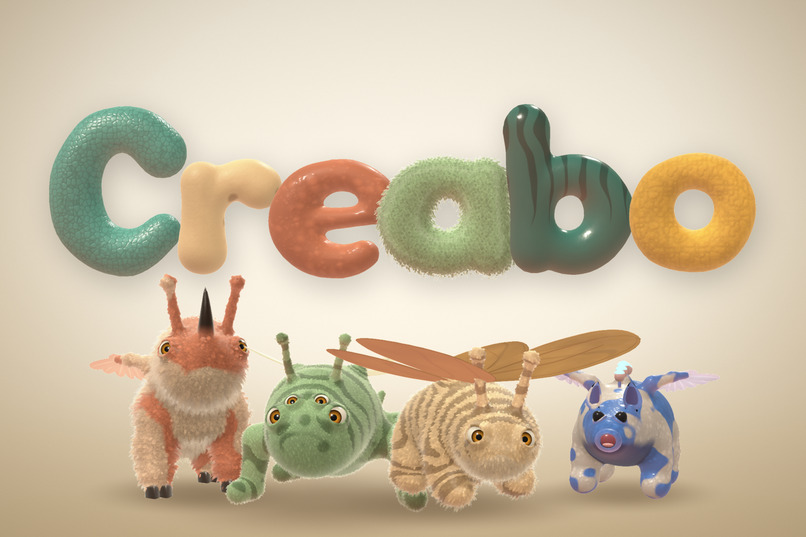
Thumbnail
-
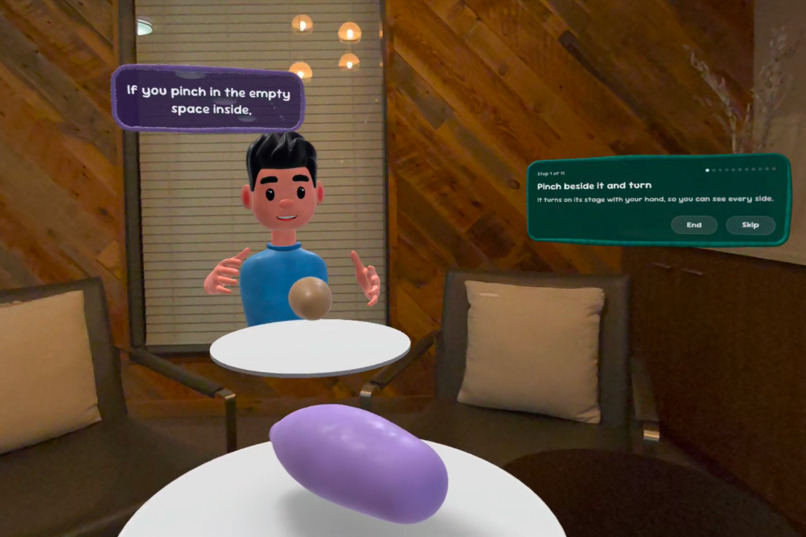
Tutorial
-
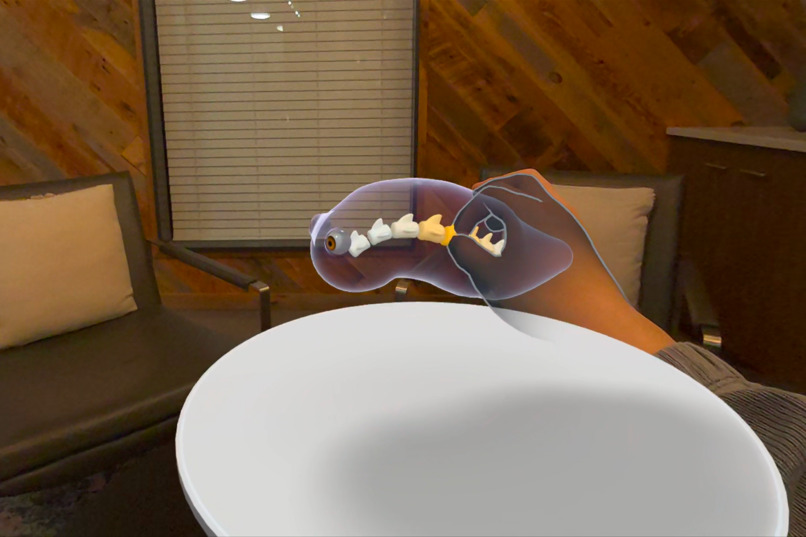
Adjusting spine
-
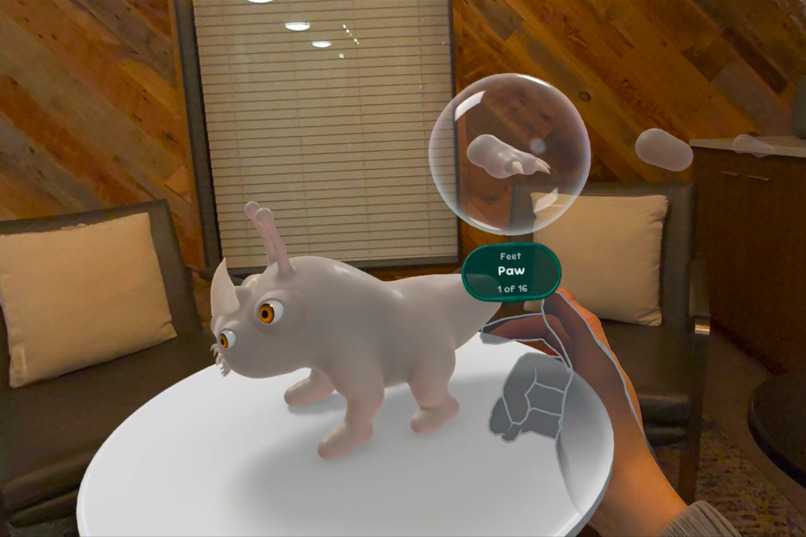
Bubble menu
-
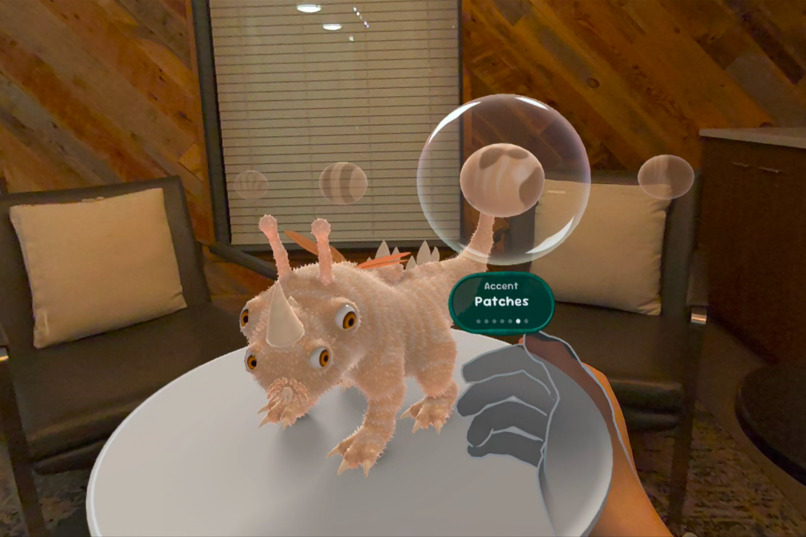
Skin texture
-
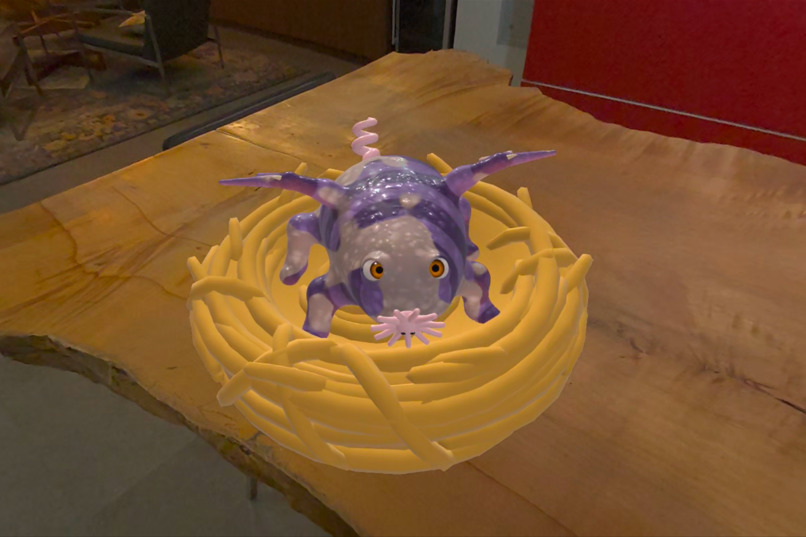
Interactivity


Inspiration
When I was 10, my father gifted me a game CD called Spore. It was a game where I evolved alien creatures, and it really fulfilled my young imagination and creativity. My favorite part was the creature creating portion, which was great but was behind a screen, designed for a mouse. It felt restricting and not real sometimes. Creabo lets me reach in directly and see my creature in 3D space.
What it does
You can create creatures using just your hands and is single-hand operable. It adjusts lighting to your environment, tracks desk/room surfaces so that the creature can move around the desk or your space. Below are some detailed explanations of the different aspects of the game:
- Sculpt: It starts with a nub on a platform where you can reach in with their hands and manipulate the spine structure, make it thicker or thinner, shaping the overall body structure.
- Build: You can browse different body parts and attach them to the creature. They will react when you give them different parts like flapping wings when you give them a pair, etc. Don't be startled!
- Paint and texture: Change colors, patterns, accents, and even textures of the skin ranging from wet amphibian skins, to stone-like texture, to furs and more.
- Play: The creature breathes, looks at you when you talk or when your hand is close, walks to where you point. If it must, it'll jump or fly over there!
- Keep: Save the newly created creature to your gallery. Make as many as you want and save them all.
How we built it
- Unity 6 and Meta XR SDK v207: Interaction SDK hands, MR Utility Kit, the Depth API and spatial anchors.
- Claude Code: Codes way better and faster than me.
- Blender: With Blender MCP, Claude is able to model assets quick and in batches. Ideating, fine tuning, guiding was my job.
- Automatic rigging: A skeleton is generated with the skin and the skin is deformed in its shader, so any combination of parts can breathe, look around and walk on whatever legs it has.
- The tutorial is me (Alvin): I recorded myself in the headset (head, hands and voice), played back as a 3D tutor across the stage. Mirror neuron theory says: if you see me perform actions with my own hands, it makes sense to you more than any other written instructions!
Challenges we ran into
- Making any parts work together. Separate meshes stuck on a body looked like toys. Growing everything into one skin fixed the look, but meant I had to optimize rebuilding the creature fast enough to follow a hand on a mobile processor chip.
Accomplishments that we're proud of
- The Fidelity: I wanted to make these imaginative creatures still look real and high fidelity. the combination of part management, rigging, texture/shading, light estimation, and sound design all comes together to make it feel real.
What we learned
- Small signs of life (breathing, blinking, a glance) make a creature feel alive more than detail does.
- Test on the headset early: the bugs that mattered most never showed up in the editor.
What's next for Creabo
- A public gallery to share creatures and visit other people's.
- More parts, sounds, and interactions with the creature that are unlockable.
- Launching on the Meta Horizon Store.