-
-
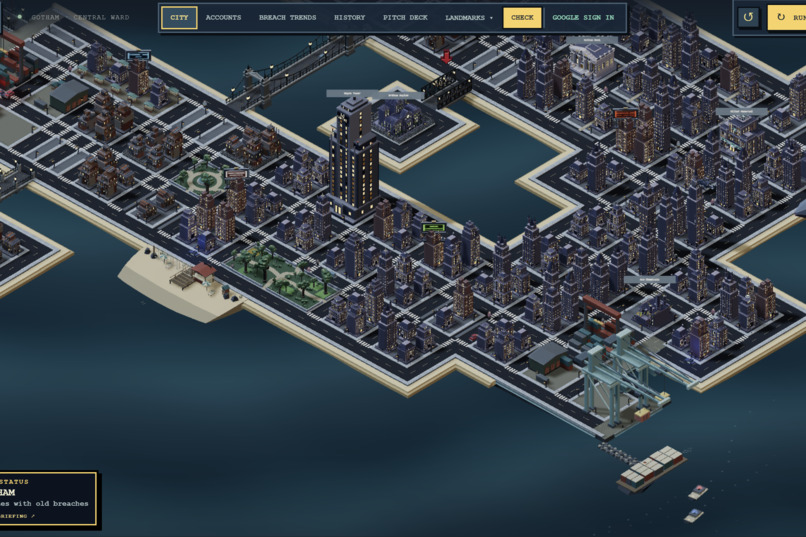
Main Screen
-
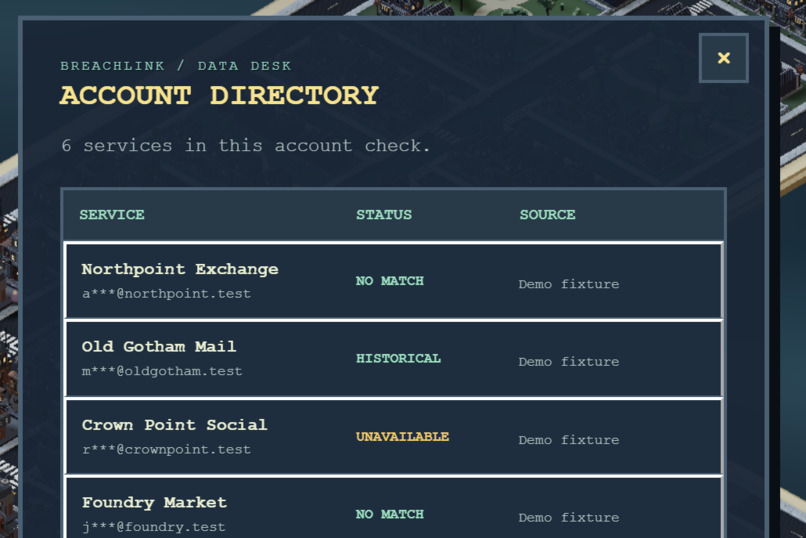
Account Directory
-
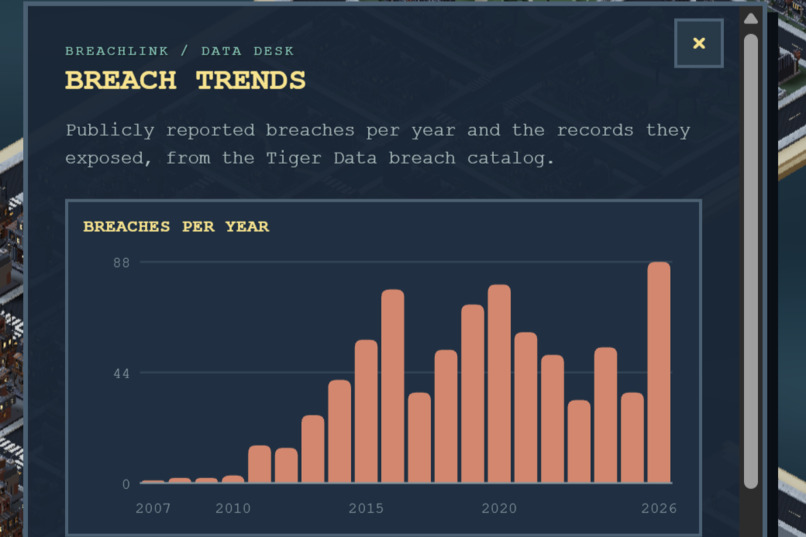
Breach Trends
-
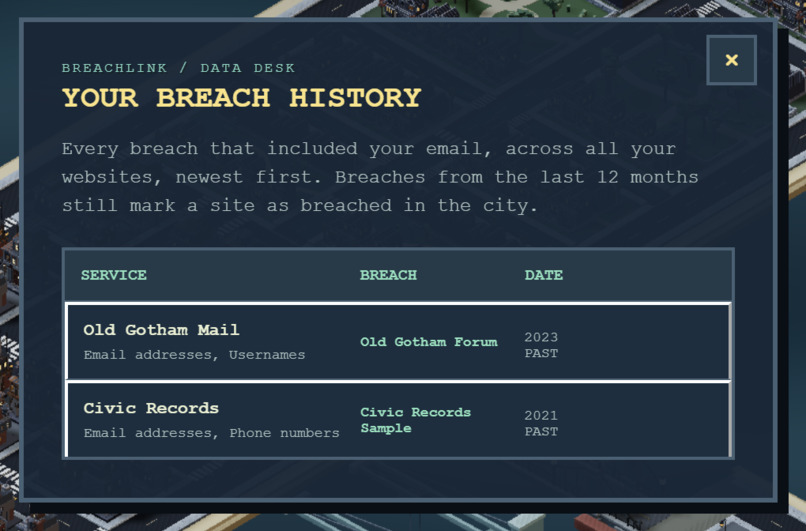
Your Breach History
-
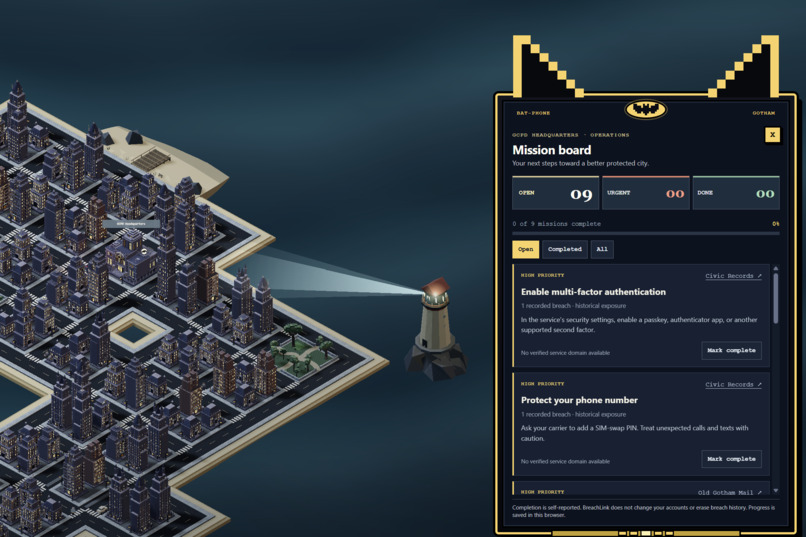
GCPD Landmark Missions


Inspiration
It all started when one of our teammates was breached through their Cursor account and was wrongfully charged 200 USD. About a week later, an email from Cursor explained the reasoning behind the breach and how a bad actor was the reason millions of users were charged a fee that was never supposed to be charged. This is just a sliver of what is out there in terms of data breaches.
According to a report from Verizon, around 22,000 data breaches took place between 2024 to 2025. This is where we realized that this is not just a non-issue, where it is just a small population that is affected. This is a huge problem that is faced around the world. In the same report published by Verizon, data was collected from 145 countries.
This is where we understood the importance of data security and users protecting their data with intent. BreachLink was something that we came up with to gamify that process, so that tedious process becomes a more bearable and users find it not only useful to protect their data but also find it fun.
What it does
BreachLink is a gamified visualization of all accounts connected to a user's email account. We used Tiger Data to store that information that we received from the OAuth API from the Google Cloud Console. We then categorize that information depending on whether that account was breached, not breached or we just do not have enough information to categorize that particular account. This is then visualized through the city with breached accounts being the buildings on fire, which can be put out by the user changing their password, enabling MFA or similar steps to take precautions for data protection. We also have multiple other ways to visualize certain data that has been breached worldwide, so as to put stress on the importance of data protection and good account use practices.
How we built it
We used the Blender MCP to connect our Codex sessions to Blender and made hundreds of models for the city to use and started with a rough outline of what that would look like. Then we turned to Tiger Data to use the data we collected from the OAuth API from the Google Cloud Console to better visualize breaches. We then used an open-source software to record data breaches and then report them to the user, suggesting them to take further steps.
Challenges we ran into
A huge challenge we ran into was scaling. Users tend to have more than a hundred accounts, which would take a huge load on the GPU of the laptop that is rendering the city. We tackled it with easier models that were less GPU intensive.
Another challenge we ran into was how to put data in visualizations that the general public would understand. When we looked at reports or data online, they were represented in boring and complicated graphs, which is not user friendly. This was also a huge challenge, where we had to figure out how to visual appropriately for the general public.
Accomplishments that we're proud of
We are proud that we were able to finish modelling about 170 Blender models in under 36 hours. This was something that we did not think was possible. We targeted for a smaller city, but aiming for something as huge as this was really ambitious. Each model was also unique from each other, which raised the difficulty level significantly.
Another accomplishment is the fact that we actually made a product that would be used by people for a purpose that combats a huge issue throughout the globe. We believe that this is actually something that people will look at and use as something to increase personal data security.
What we learned
We learnt a ton about GitHub branches throughout the hackathon. We think that we used branches really inefficiently throughout the hackathon, where we began with the main branch to be the deployment version, but that slowly changed to another version branch. This was especially confusing when deploying using Vercel and the GoDaddy domain.
Having good naming convention is also something that we learnt, because we did not name our Blender models appropriately for both us nor our AI agents to recognize which version was which. We had a lot of difficulties differentiating between the older and newer models.
What's next for BreachLink
I think BreachLink is at that point of tipping scalability. We do not know if our laptop's GPUs could take more accounts and with Blender models that has become an issue, because they are very compute intensive. This would be the next step for us.
Built With
- blender
- css
- github
- google-cloud-console
- html
- javascript
- node.js
- postgresql
- three.js
- tiger-data
- vercel
- webgl
