-
-
hero
-
upload
-
check what we found
-
two questions
-
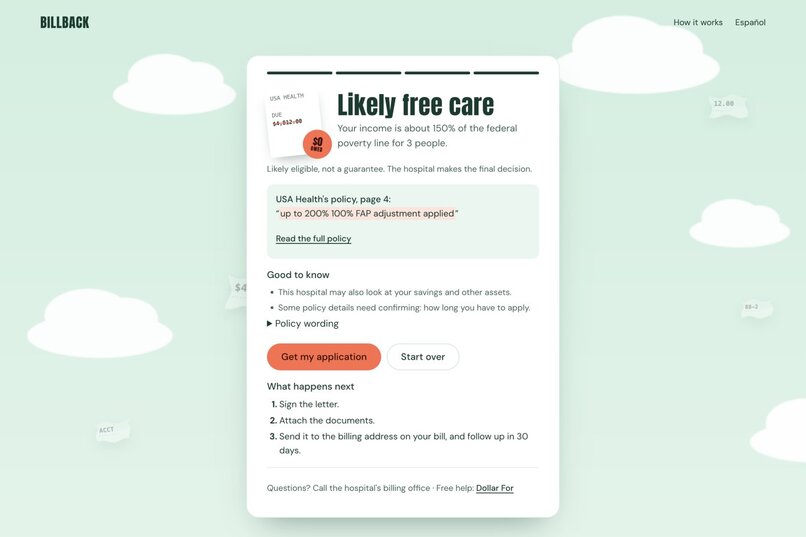
result
-
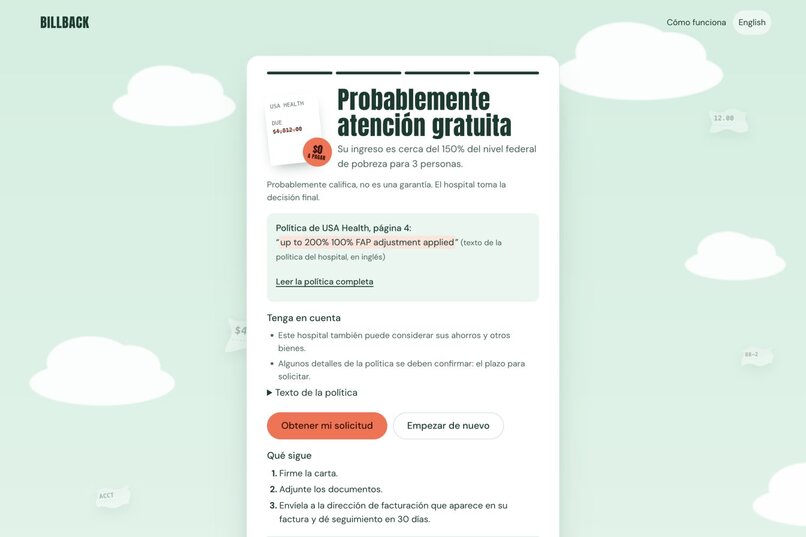
result in spanish


Inspiration
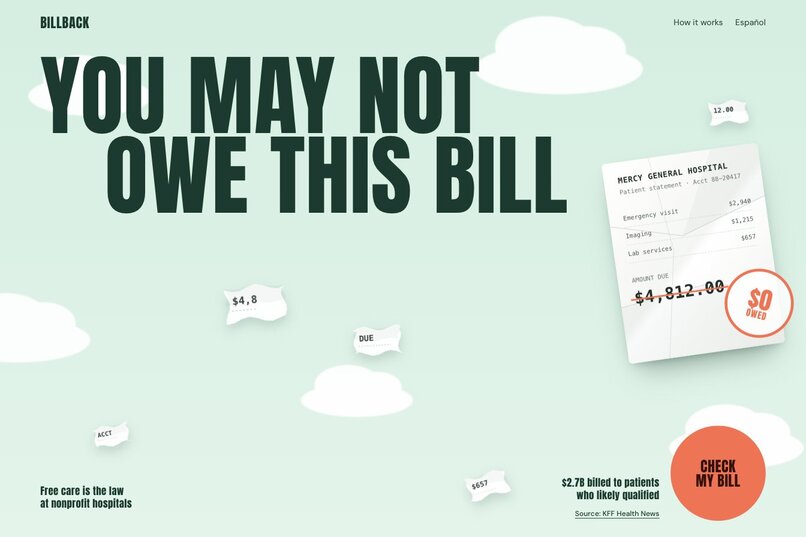
Nonprofit hospitals are required to offer free or discounted care to low-income patients, yet they billed about $2.7 billion in one year to patients who likely qualified (KFF Health News). Most patients never know to ask. The nonprofit Dollar For has proven the fix works (17,000+ applications, $60M+ in relief), but someone still has to read each hospital's financial assistance policy and fill out its forms.
What it does
https://billback-ten.vercel.app/ BillBack turns a photo of a hospital bill into a likely eligibility result and a filled-in application:
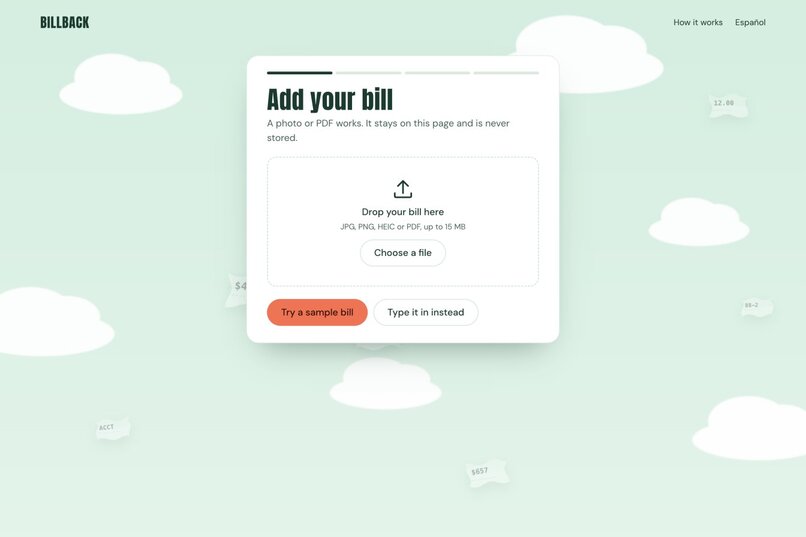
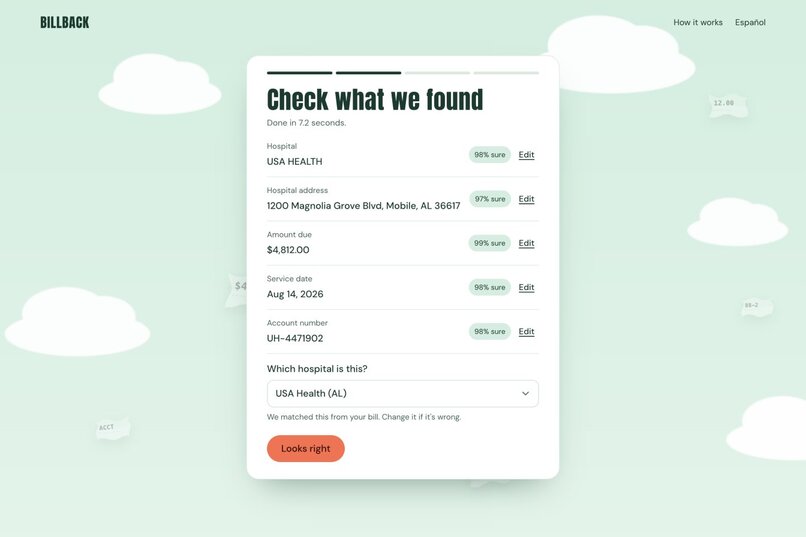
- Snap your bill. Claude reads five fields (hospital, address, amount due, service date, account number), each with a confidence score. Anything under 80% is shown to the patient to confirm. Nothing is ever stored.
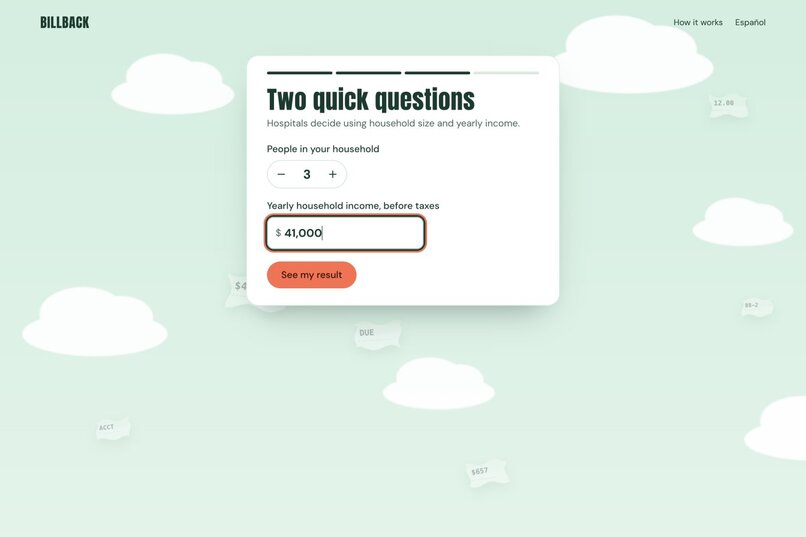
- Answer two questions: household size and yearly income.
- Get a result from plain code, not AI: "Likely free care", "Likely a discount" or "Probably not eligible", with the exact quote and page number from the hospital's own policy and a link to the full PDF.
- Download your application: a request letter, an income statement and a checklist of documents to attach, in English or Spanish. The patient signs and sends it themselves.
How we built it
- Bill reader: Claude Sonnet 5.5 vision with structured JSON output, plus code checks that normalize amounts and dates and flag low-confidence fields.
- AI policy reader: turns a hospital's financial assistance policy PDF (pdfplumber text, with scanned pages sent as PDF) into rules JSON: free-care limit, discount tiers, asset test, residency and deadline to apply. Every value carries a word-for-word quote and page number, and code verifies each quote against the PDF text.
- Eligibility engine: plain Python that compares income as a percent of the 2026 HHS poverty guidelines (Federal Register) to the policy's thresholds. No AI makes the decision. Covered by pytest.
- Front end: Next.js, Tailwind, shadcn/ui and Motion. Mint, forest and coral palette; a "check what we found" confirm step; the PDF application generated in the browser with pdf-lib; full English/Spanish; keyboard and screen-reader support; reduced motion respected.
- API: FastAPI. Uploads are processed in memory and never written to disk.
Results
- Bill reading: 50/50 fields correct on 10 synthetic bills, including simulated crumpled and dim-light shots. The 2 low-confidence fields were flagged for the patient, and both were correct.
- Eligibility: 10/10 independently hand-calculated test households got the right result.
- Policy reading: 11 of 12 fields correct on two real policies checked by hand. All 21 quoted excerpts were verified word for word against the source PDFs.
- Speed and cost: about 3–9 seconds and about 1 cent per bill; about 8 seconds and 4 cents per policy.
Challenges we ran into
- Real policies are messy. USA Health's policy contradicts itself on the deadline to apply (240 days from the first bill vs. from the date of service). Our reader flagged it for human review instead of guessing.
- A "COPY" watermark mixed into the extracted PDF text and broke quote matching, so we made quote verification tolerant of noise.
- The official HHS poverty-guidelines page was down, so we copied the numbers from the Federal Register notice instead of typing them from memory.
Accomplishments that we're proud of
- AI reads the paperwork, but a rule decides eligibility, and every result shows the exact policy line it relied on.
- A calm, accessible flow in two languages that a stressed patient can finish in about a minute.
What we learned
Showing the source sentence builds more trust than any confidence score. Confidence thresholds plus a "check what we found" step catch AI mistakes before they matter.
Limits
BillBack gives a likely result, not a guarantee, and it is not legal or financial advice. The hospital makes the final decision. We cover a curated set of hospital policies; live reading of any new policy is beta. We don't handle insurance statements, billing-error detection or state-specific charity-care laws yet.
What's next for BillBack
More hospitals, live policy reading for any hospital, a letter asking the hospital to pause collections while the application is reviewed, follow-up reminders, and a partnership with patient advocates like Dollar For.
Built during the event
All code in the repo was written during EvoHacks II; the commit history is our proof. Pre-existing components: open-source libraries (Next.js, React, Tailwind CSS, shadcn/ui, Motion, pdf-lib, FastAPI, Pydantic, pdfplumber, pytesseract, pytest), the Anthropic API (Claude Sonnet 5.5), public hospital financial assistance policies and the 2026 HHS poverty guidelines. We used AI coding assistants while building. All bills and households in our tests are fictional.
Team
- Anish Meruva: backend, bill reader, AI policy reader, API
- Abhinav Medisetty: eligibility engine, policy collection, tests and evaluation
- Siddharth Tumati: front end, design, sample bills, application PDF, Spanish, accessibility, video
Built With
- anthropic
- claude
- fastapi
- motion
- next.js
- pdf-lib
- pdfplumber
- pydantic
- pytest
- python
- react
- shadcn-ui
- tailwindcss
- tesseract
- typescript


