
All things Azure
Developer focused how-tos, use cases and solutions on Microsoft Azure
Featured posts

Build, scale, and monetize apps and agents with Microsoft Marketplace

At Microsoft Build, we are sharing how Microsoft Marketplace brings development, distribution, and monetization together— so apps and agents move beyond prototy...
Azure Skills Plugin – Let’s Get Started!

Part 2 of the Azure Skills Plugin series Previously: Announcing the Azure Skills Plugin This post is all about getting you up and running. I won't g...

Platform Engineering for the Agentic AI era


For the last decade, platform engineering has relied on explicit API interaction layers: CLIs, SDKs, pipelines, wrappers, and UI workflows that translate human ...

Context-Driven Development: Agent Skills for Microsoft Foundry and Azure

Code will be generated, not written. Most enterprise AI workloads are net-new microservices. Modular, greenfield work. Perfect for coding agents. The catch? ...
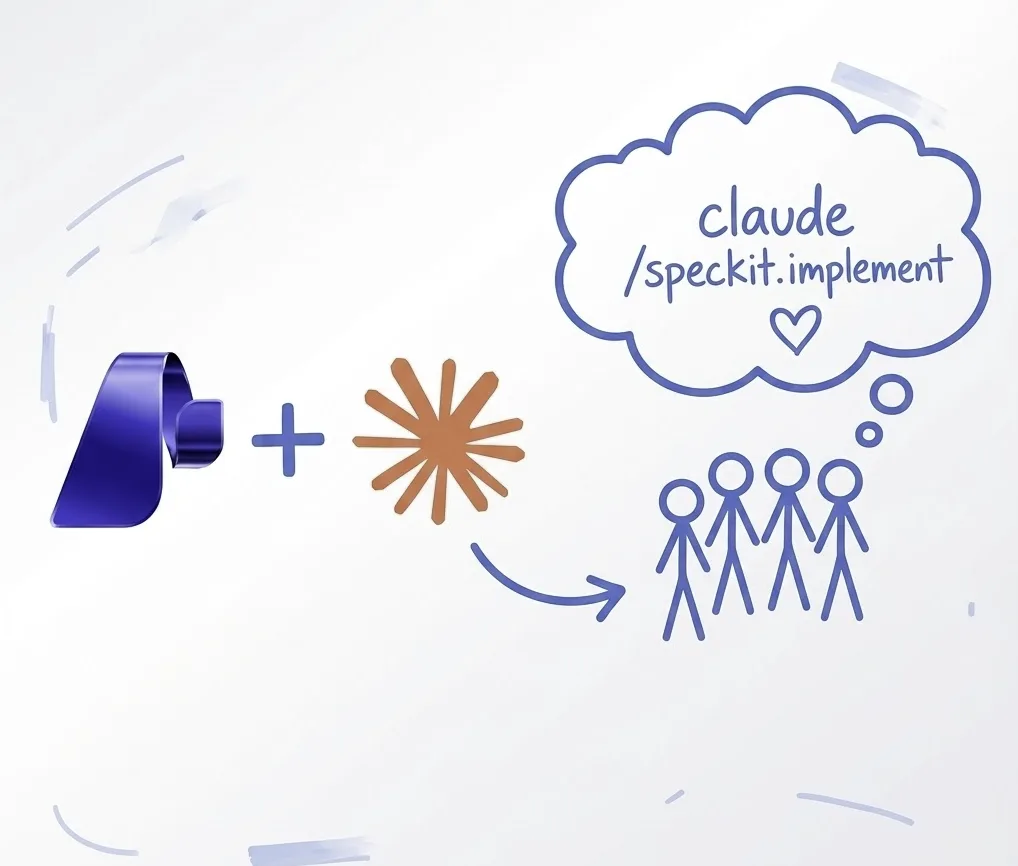
Claude Code + Microsoft Foundry: Enterprise AI Coding Agent Setup
This guide covers setting up Claude Code CLI and VS Code extension with Microsoft Foundry, configuring CLAUDE.md for project context, integrating Spec Kit for s...
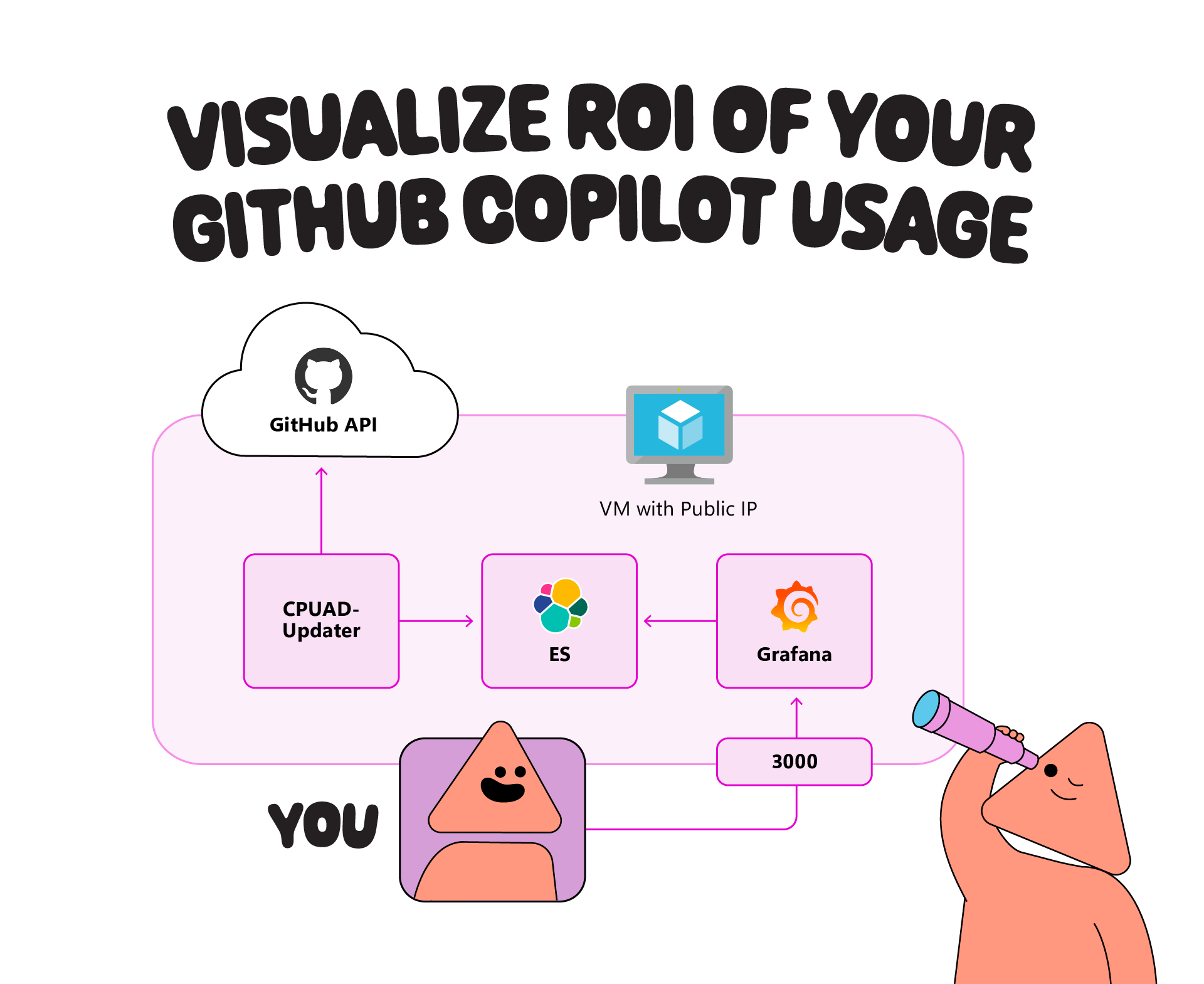
Visualizing GitHub Audit Log in Microsoft Defender


Key Observability Trends Around GitHub Security Modern enterprises are increasingly adopting DevSecOps practices, integrating security into every phase...

Codex Azure OpenAI Integration: Fast & Secure Code Development
Introduction You can now enjoy the same Codex experience in CLI or VS Code with Azure OpenAI support. We've contributed the following five pull requests to mak...

How to develop AI Apps and Agents in Azure – A Visual Guide

As organizations explore new AI-powered experiences and automated workflows, there's a growing need to move beyond experiments and proofs-of-concept to producti...
Latest posts
Frameworks only matter when they force decisions

Frameworks mean nothing, until they change what gets built! In this article we discuss how Git-Ape turns architecture and governance into delivery controls on Azure because, if frameworks do not shape delivery decisions, they are just decoration. Cloud teams do not have a framework problem. They have an execution problem. The industry is full of architecture guidance, governance models, and security baselines, yet far too many deployments still reach production with obvious weaknesses because the frameworks are treated like reference material instead of delivery controls. That is the real issue, not a ...
Build, scale, and monetize apps and agents with Microsoft Marketplace
At Microsoft Build, we are sharing how Microsoft Marketplace brings development, distribution, and monetization together— so apps and agents move beyond prototyping into real-world usage at scale. Microsoft Marketplace connects tens of thousands of cloud and AI solutions built by software development companies to millions of commercial customers. For developers, Marketplace turns code into results. As you build, scale, and monetize your apps and agents, Marketplace connects them to customer demand. Today, Microsoft Marketplace is launching intelligent discovery (in preview). Instead of rel...

Removing The Monkey Work of Migration
Removing The Monkey Work of Migration; in this post we show how Git-Ape analyses an AWS deployment repo and generates an Azure-native replacement, with design critique built in. This post walks through a real migration workflow: start with an AWS deployment repo and end with an Azure deployment repo. The goal isn’t a 1:1 syntax conversion. It’s intent extraction and architecture remapping—agents that read what your deployment does, propose an Azure-native equivalent, and generate deployment-ready artefacts. Along the way, a critique step flags design issues early, before you ship them. Related...

I Wasted 68 Minutes a Day Re-Explaining My Code. Then I Built auto-memory.

~1,900 lines of Python. Zero dependencies. Saves you an hour a day. GitHub → · Now give Copilot CLI enhanced context recall. Point it at and let it cook. 🍳 Are you tired of using the slash /compact command every 10 min? The Context Window Is a Lie Every AI coding agent ships with a big number on the box. 200K tokens. Sounds massive. You could fit an entire codebase in there, right? Here's what actually happens when you start a session: 200,000 tokens — your context window (on paper) -65,000 tokens — MCP tools load at startup (~33%) -10,000 tokens — instruction files ((~5%) ========= ~12...
Getting Started with Agentic DevOps – Part 1: Foundations

This post is the first in a 3-part series: Bookmark this post for quick reference as you start exploring Agentic DevOps. It will be updated as the 3 parts become available. Getting started with Agentic DevOps Agentic DevOps is a new approach to software development where AI-powered agents work alongside your team across the entire software development lifecycle. Unlike traditional AI assistance, these agents go beyond suggestions—they can take on tasks end-to-end, collaborate across tools, and operate across the lifecycle with your guidance and approval. This series is designed as a pract...
Best of Both Worlds for Agentic Refactoring: GitHub Copilot + MicroVMs via Docker Sandbox

Legacy codebases frequently contain hardcoded logic and complex build scripts that depend on specific filesystem structures, making them notoriously difficult to modernize in isolated environments. Docker Sandbox addresses this challenge through a bidirectional workspace sync that preserves the same absolute paths inside the sandbox as on the host. This means that when a GitHub Copilot agent refactors a legacy Java or .NET application, file references and build outputs remain consistent across the isolation boundary. The result? Modernized code can be moved back to the host without breaking dependencies. Ho...
Choosing the Right Azure Hosting Model for AI Agents: A Deep Dive into Foundry Hosted Agents

AI agents are quickly moving from experiments to production‑critical components of modern applications. But while many teams know how to build agents, far fewer are confident they’re hosting them on the right foundation. Most organizations start by deploying agents the same way they deploy microservices—containers, functions, or app services. That approach works initially. But as agents evolve to support long‑running conversations, tool orchestration, stateful workflows, and continuous iteration, infrastructure decisions start to matter in new ways. Azure offers multiple ways to host AI agents, each wit...

DevOps Playbook for the Agentic Era

Practices, Principles, and Strategic Direction Software delivery has entered a new phase. AI agents are no longer confined to autocomplete suggestions in the editor. They are opening pull requests, generating code across multiple files, proposing infrastructure changes, responding to issues with working implementations, and executing multi-step engineering tasks with minimal human intervention. Tools like GitHub Copilot Cloud Agent (coding agent) represent the leading edge of a shift that is transforming how teams design, build, test, and ship software. This is not a future scenario. It is happening now, acro...
Putting Agentic Platform Engineering to the test
In Part 1 of this blog series set the stage for why platform engineering is being reshaped by agentic AI. (read it here) Basically we outline how instead of humans translating intent through layers of CLIs, SDKs, and bespoke workflows, capable agents can interpret natural-language goals and turn them into safe, validated platform actions using well-described APIs and control schemas. That shift changes what “good” looks like for internal platforms, raising the bar on guardrails, policy, and self-service interfaces allowing teams to move faster without sacrificing safety, reliability, or governance. In th...