MOTR: End-to-End Multi-Object Tracking with Transformers
MOTR is a state of the art end-to-end multiple object tracker that does not require any temporal association between objects of adjacent frames. It directly outputs the track of objects in a sequence of input images (video). MOTR uses Deformable DETR for object detection on a single image. To understand the architecture of MOTR it […]
Continue ReadingGhostNetV2: Enhance Cheap Operation with Long-Range Attention
GhostNetV2 is a recent SOTA architecture that allows an implementation of Long-Range attention in the deep CNN frameworks used in various ML tasks such as image classification, object detection, and video analysis. GhostNetV2 proposes a new attention mechanism called DFC attention to capture long range spatial information. And it does so while keeping the implementation […]
Continue ReadingUnderstanding CLIP by OpenAI
CLIP By OPEN-AI Introduction Nearly all state-of-the-art visual perception algorithms rely on the same formula: (1) pretrain a convolutional network on a large, manually annotated image classification dataset (2) finetune the network on a smaller, task-specific dataset. This technique has been widely used for several years and has led to impressive improvements on numerous tasks. […]
Continue ReadingUsing Active Learning to Improve your Machine Learning Models
Machine Learning Reality Check In the Machine Learning World or broadly in the AI Universe, the colonists such as Data Scientists, Machine Learning Engineers, Deep Learning Specialist are coached towards a belief i.e. “More Training Data Means Highly Accurate Production Model“. Which to some extent is unavoidably true but predominately it’s also a fact, that […]
Continue Reading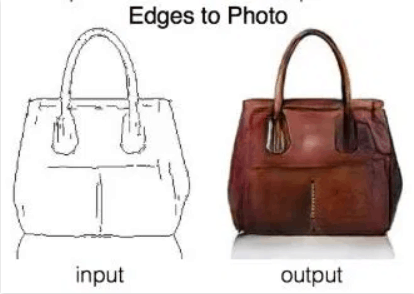
Understanding and improving Image to Image Translation Pix2PixHD
Introduction Photo-realistic image rendering using standard graphics techniques requires realistic simulation of geometry and light. The algorithms which we use currently for the task are effective but expensive. If we were able to render photo-realistic images using a model learned from data, we could turn the process of graphics rendering into a model learning and […]
Continue Reading