
I’m currently speaking at DDD Europe 2026 about Unbounded Contexts in LLM Usage.
If you’ve scanned a QR code in that talk, it has brought you here. Welcome! Resources I mention in that talk:
“What Can We Expect from LLMs as Software Engineers?” Talk Transcript and Slides
“Debugging: Techniques for Uncertain Times” talk from RailsConf
The O’Reilly Agentic Coding Skill Plan (I recommend logging into the O’Reilly platform prior to visiting this link; it unfortunately won’t redirect you back once you complete the sign in process)
Sign up for your reminder to join me for Agentic Coding Live in July!
====
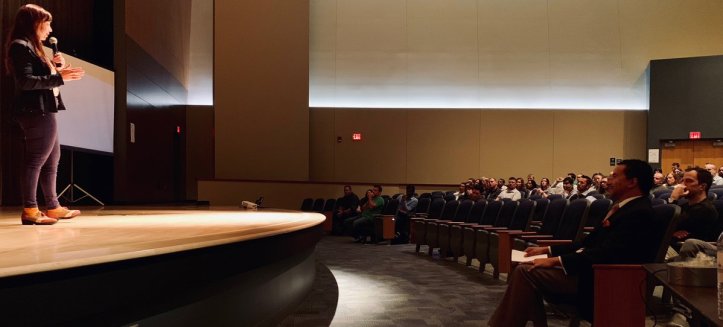
Looking for a speaker?
My talks are:
- Didactic: I teach a topic. I draw examples from my career, but the talk does not center me or my personal experience. For example, I talk about leveling up, but not my journey into software development.
- Technical: I focus on things I think engineers should know (though I make sure to include something for designers and product folks, too). The examples come from application or machine learning development projects. The slides may have code samples. For example, I talk about refactoring, but not “being a woman.”
- Language and version agnostic: I stick to principles and approaches that remain valuable across languages, frameworks, and versions. For example, I talk about debugging strategies, but not what’s new in the latest Android SDK release.
Conference “Rider”
I love speaking and facilitating workshops at conferences, and nothing brightens my day like an invitation to speak at yours!
That said, I’ve been doing this long enough to see that a) conference organizing is hard and therefore b) it’s not unusual for conferences run by well-meaning people to negatively impact the community by accident. When I’m deciding whether to speak at a conference, I consider:
- The organizing committee: Conference organizing is hard. One person trying to organize a conference is risky. Success in this realm usually takes a team. At least some of the organizers on that committee ought to have conference organizing experience.
- The Code of Conduct: Is it complete? Is it specific? Is it a good code of conduct from knowledgable CoC people, or is it hand-rolled? Does it have an enforcement measure that I believe in?
- The equity plan: What is the plan for ensuring a diverse list of speakers and attendees, and how is the conference planning to proactively meet the inclusion needs of a diverse group?
- The compensation plan: It helps a lot if an in-person conference conference covers travel, lodging, and the ticket price. It’s not that I can’t or won’t pay: it’s the effect that the policy has on the speaker list. See, a conference that expects speakers to cover themselves is only accessible to speakers who have the cash to foot the bill, and it’s only really attractive to speakers working at a company that will pay it for them. I’m tired of speaker lists dominated by the same six companies.
On Panels
I think panels are an excellent way to juxtapose varied perspectives on a topic. To that end, I’m thrilled to consider moderating and speaking on panels that are germane to software engineering or software leadership.
I’ll also consider inclusion-related topics, but the audience must be private and the event must not be recorded or distributed. These engagements also have a separate fee structure from technical topics.
For all panel appearances, please ensure the following (adapted from Mary Robinette Kowal’s inclusion rider): I’m not the only woman on the panel, and the panel is not homogenous by gender (which includes trans & cis), sexuality, ability, or race. If you need help balancing a panel, I’m happy to help find voices from underrepresented groups.
Speaker Bio and Headshot:
Chelsea is a Machine Learning Operations Engineer at Mozilla, focused on the role of data privacy and scientific rigor in automation. She teaches Python to formerly incarcerated technologists through Columbia University’s Justice Through Code Initiative, and she also teaches at the University of Chicago Master’s Program in Computer Science. She hosts workshops for professional engineers through O’Reilly as well as her personal site, and writes at chelseatroy.com.
Chelsea flings barbells around for fun. She drives an electric cafe cruiser named Gigi.
