
Principal Investigator

Gina M. Grimshaw, PhD.
Gina has an undergraduate degree in Biochemistry from the University of Toronto, and a Ph.D. in Psychology from the University of Waterloo. After postdoctoral work at the University of California San Diego she became an Associate Professor at California State University San Marcos. Gina moved to Victoria University of Wellington in 2007, and is director of the Cognitive and Affective Neuroscience Laboratory and an Associate Professor/Reader. Her research has been funded by the Marsden Fund; Ministry of Business, Innovation and Employment (MBIE); National Institute of Mental Health (US); and the Neurological Foundation (NZ).
You can view Gina’s staff profile on the Victoria University of Wellington website here.
Research Fellows

Christopher Maymon, PhD.
Chris has an undergraduate degree in Psychology from Loyola University of Maryland and completed his PhD at VUW in 2018. He has since been focused on the application of Virtual Reality technology to psychological science. Chris’ current research focuses on the relationship between emotional states and presence (i.e., our sense of ‘being there’). In the VR Lab, Chris also investigates such topics as: how attentional control is influenced by emotions like fear, awe, and disgust, how we can regulate our intense emotional responses, and how we infer other people’s emotional states on the basis of their body movements.
You can view Chris’ staff profile on the Victoria University of Wellington website here.

Michael Tooley, PhD.
Michael has been working in the Cognitive and Affective Neuroscience Lab since 2008. He recently completed his PhD, which examined emotion regulation and vulnerability to depression. He was particularly interested in psychophysiological and electrophysiological markers of vulnerability and their relationship to cognitive and emotional processes. Michael now works as a neuroscience lab technician, and a teaching fellow for the Cognitive and Behavioural Neuroscience Masters program at VUW.
Research Assistants
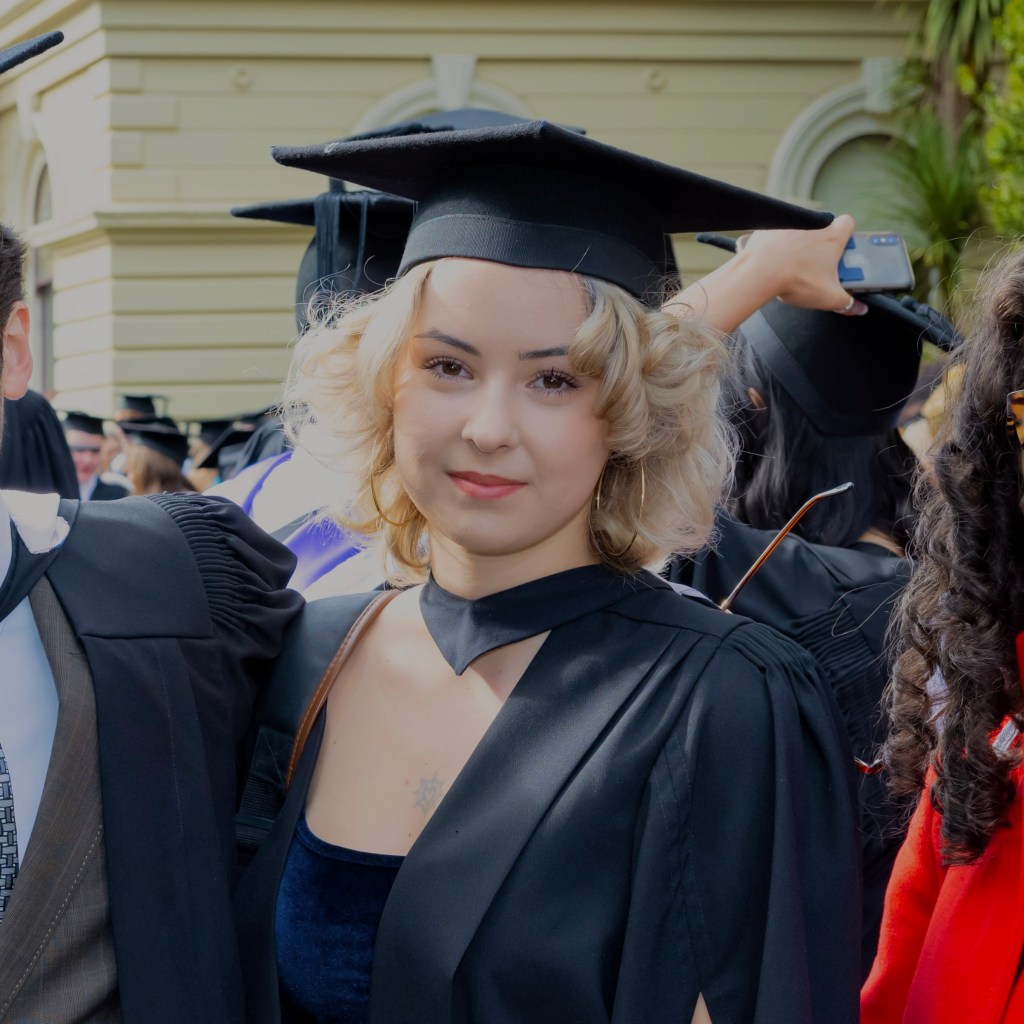
Evie Cleland, Lab Coordinator
Evie has an undergraduate degree in Art History and Psychology and completed her MSc in Cognitive and Behavioral Neuroscience at VUW in 2024. In her thesis, she explored variations in emotional attention across psychopathic traits. Evie oversees general lab operations, and helps students get their research up and running.

Jordan Schulde
Jordan completed her Masters in Cognitive and Behavioural Neuroscience in the CANLab. Her focus was on how fear influences our cognition, particularly attention, cognitive control, and response inhibition (the ability to stop yourself from doing something). To do this, she used realistic Virtual Reality to create compelling and strong emotional states. Jordan’s research added to current knowledge on the interaction between emotion and cognition, and may also assist within more applied contexts.

Damian Tjiptono
Damian completed his undergraduate degree in Psychology at VUW and completed his MSc in Cognitive and Behavioral Neuroscience at VUW in 2024. His work continues to focus on exploring the impact of fearful states on attentional control in VR.
Current Students

Laura Kranz, PhD Student
Laura completed a Master of Cognitive and Behavioural Neuroscience in 2015. She is now working towards her PhD, working with both the School of Psychology and the Centre for Science in Society. Her research looks at the role of emotion in science communication.

Lauren Pritchard, PhD Student
Ren is currently completing her PhD in Cognitive and Behavioural Neuroscience. Ren’s research question is focused on studying the Psychology of Awe and is working alongside the Virtual Reality team to study this.

Joanna Mete, PhD Student
Joanna has completed undergraduate degrees in Educational Science and in Psychology, as well as a masters’ degree in Cognitive Psychology. She is currently conducting her doctoral research in the CANlab, focusing on the relationship between cognitive control and anxiety, aiming to understand potential underlying mechanisms of attentional (and more broadly cognitive) processing in the anxious mind. She is also interested in the implications of attentional and cognitive processing in areas such as emotion regulation, coping, and well-being.

Nat Gajdusek, MSc Student
Nat completed her undergraduate in psychology and philosophy at VUW and is working towards completing the Cognitive and Behavioural Neuroscience Masters program. Her thesis focuses on the development of a VR paradigm to investigate the influence of disgust on cognition.

Johno Richards, MSc Student
Johno completed his BSc in Psychology at VUW and is now working to complete his MSc in Cognitive and Behavioural Neuroscience. His thesis focuses on the translatability of motor skills, utilising the VR rhythm game Beat Saber.

Solana Carpenter, Honours Student
Solana works with the virtual reality team to study emotions, specifically awe. She has been working on the awe project since she was an undergrad. She is now completing her honours year in psychology. Her research focuses on measuring the subjective experience of awe using quantitative and qualitative data.
Other Lab Members
Luke Pelham, Madison Jones, Lara Cooke, Max Abbott, Michael Lin, Joe Cornes, Yulia Korduke, Lauren Bell, Cathryn Bjarnesen, Petra Bolitho, Kieran Carnegie, Angus Chapman, Nikki Duff, Shannon Garland Duignan, Rebecca Hamilton, Kelly Hewitt, Line Johansen, Winter Jones, Claire Marsh, Linda Martis, Jeremy Meier, Tawhai Moss, Sophia Noble, Amy O’Connell, Hannah Quigan, Billy Richardson, Anne Rijnink, Elliot Robins, Elisabeth Schrammen, Brendan Sturt, Nurul Zani Soenarsono, Annabelle Wride, Anna Markovitz, Daniel Jenkins, Nick Heyworth, Shania Thomson, Stina Persen, Adriana Vasinca, Jessie Auckram, Carmela Espellarga

Lab Alumni
Ph.D.
Justin Murphy (2023). Thesis title: Exploring the impact of focused attention mediation on emotional distraction: An experimental approach [link]
Kealagh Robinson (2021). Thesis title: Emotion in non-suicidal self-injury: A contradiction between global self-reports and real-time responses [link]
Sophie Hedley (2020). Thesis title: Exploring the Role of Schizotypy in Creative Cognition [link]
Amy Walsh (2019). Thesis title: Motivation Reduces Positive and Negative Emotional Distractions [link]
Kameron Christopher (2019). Thesis title: Personal Predictions of Self-Reported Emotion Responses to Music Stimuli [link]
Hazel K. Godfrey (2017). Thesis title: A role for attentional bias in cognitive deficits in chronic pain? [link]
Jessica Clifton (2015). Thesis title: Training the Interpretation of Ambiguity [link]
Michael Tooley (2015). Thesis title: Emotion Regulation and Vulnerability to Depression: A Longitudinal Test of the Diathesis-Stress Model [link]
Julie Anne Séguin (2013). Thesis title: The Effect of Emotion on Time Perception for Complex Visual Stimuli [link]
Master of Science
Jordan Schulde (2023). Thesis title: Proactive and Reactive Control in Emotional States: an Investigation of Fear using the AX-Continuous Performance Task in Virtual Reality [link]
Joe Cornes (2022). Thesis title: Dynamic Changes in Heart Rate Variability Under Threat: Exploring the Effects of Emotion Regulation on the Parasympathetic Nervous System [link]
Conor Bryant (2021). Thesis title: Understanding the cognitive differences in psychopathy: Emotional distraction across psychopathic traits [link]
André Botes (2020). Thesis title: Learning to Expect the Predictable: The Role of Expectation in the Cognitive Control of Attention [link]
Daniel Jenkins (2018). Thesis title: Awareness and Integration: Understanding the challenges of inferring multisensory integration outside of awareness [link]
Thomas Scott-Smith (2018). Thesis title: Alcohol and the Dysregulation of Cognitive Control: Exploring the Role of Emotion [link]
Dayna Mercer (2018). Thesis title: The Role of Attentional Bias in Excessive Food Consumption [link]
Rosanna Ellen Moody (2015). Thesis title: Testing the Asymmetric Inhibition Model: Frontal EEG Asymmetry Does Not Predict Inhibitory Control of Emotional Distractors [link]
Justin Lawrence Murphy (2015). EEG Evidence for the Effective Proactive Control of Emotional Distraction [link]
Adele Hogan (2015). Thesis title: Distortions in Predicted Motion: Pitch and Direction Influence Imagined Speed for a Visual Object during Occlusion [link]
Laura Kranz (2015). Thesis title: Proactive Control of Emotional Distraction: An ERP Investigation [link]
Lisa Michelle Hunkin (2014). Thesis title: Engagement with Angry Faces during Attentional Bias Modification: Insights from the N2pc [link]
Joshua James Foster (2013). Thesis title: Attention Capture by Angry Faces Depends on the Distribution of Attention [link]
Jessie E. Stewart (2012). Thesis title: Do You Have a “Strict Purse”? The Routes to Meaning in Metaphor [link]
Frances Marie Bryson (2012). Thesis title: The Time-Course of Induced Interpretive Biases in Healthy Individuals Varying in Depressive Symptoms [link]
Hazel K. Godfrey (2011). Thesis title: Conceptual Metaphors of Emotion in Spoken Language: Good Is Up in Semantics and Prosody [link]
Amy Walsh (2010). Thesis title: Words and Faces on Left and Right: Perceptual Asymmetries as a Marker for SSRI Responsiveness [link]
Megan Humphrey (2009). Thesis title: A Signal Detection Approach to the Perception of Affective Prosody in Anxious Individuals: A Developmental Study [link]
Collaborators
Hedwig Eisenbarth, Victoria University of Wellington
Valeria Gazzola, Netherlands Institute for Neuroscience
Christian Keysers, Netherlands Institutes for Neuroscience
Sebastian Ocklenburg, Medical School Hamburg
Jutta Petersburs, Medical School Hamburg
Kealagh Robinson, Massey University
David Carmel, Victoria University of Wellington
Christel Devue, Victoria University of Wellington
Alan Kingstone, University of British Columbia
Paul Corballis, University of Auckland
Steve Most, University of New South Wales
Sebastian Ocklenburg, Ruhr Universitat Bochum
Jutta Peterburs, University of Muenster
 VUW Cognitive & Affective Neuroscience Lab