Creating a cut flower garden

Forget me nots, cow parsley, wild allium, mint, honeysuckle, aquilegia, white flowering dead nettles and red clover.

I tour garden clubs in the East Midlands giving inspiration for growing cut flowers at home. An hour’s talk is only long enough to give a flavour of the subject. Here are some notes to accompany my talks.

Chose a backbone of useful shrubs:

Dogwoods:

Cornus Westonbirt.

Cornus Westonbirt has the brightest red stems in winter. Only a few stems are needed to add a vertical element to flower arrangements. To get the brightest stems, cut the shrubs back to 20cm in March. New stems will grow back strongly.

An autumn bouquet with just three stems of dogwood.

Physocarpus Diabolo:

A beautiful backbone shrub, growing to 8ft. Comes into leaf early in spring. Produces pretty pinkish white flowers. Flowers then produce interesting seed heads. good strong stems for floristry and a lovely dark colour to set off all flower colours. I grow mine on a north-facing border directly in front of a hawthorn hedge. Copes with dry soil and semi-shade.

Physocarpus seed heads

Viburnum Eve Price

The pink flat heads are viburnum Eve Price. Surrounded by ivy, gypsophila, rosehips. Euonymus, and Rosa The Fairy.

Viburnum Eve Price flowers all winter. It has evergreen leaves and is tough and hardy.

Plant Roses:

Timeless Cream

Timeless Cream and Timeless Purple are part of the new home florists’ range . Few thorns and wonderful scent.

Timeless Purple

Grow a patch of wildflowers:

I have a bed 3m long by 1.2m wide with paths surrounding it. Grown from a packet of wild flower seeds (Mr Fothergill’s or Sarah Raven). The plants that emerged included white oxeye daisy, blue cranesbill geranium, pink campion. These come back every year. The grasses grow in a strip along the edge of the lawn. Quaking grass is particularly lovely.

More perennial plants: Grow white argyranthemums.

Argyranthemums with ammi, verbascum and rudbeckias.

Argyranthemum or shasta daisies grow to 70cm and can be grown in a garden border in full sun. They need dividing every three years and will need staking. They provide flowers from June to September. Most garden centres sell these plants.

Annuals to grow for cut flowers :

Sweet Peas:

Wiltshire Ripple

Sow Sweet Peas in October in long root trainers with 50 percent compost and 50 percent grit for drainage. Place the pots inside a clear plastic storage box to protect from mice and the weather. Storage boxes can be brought indoors and stacked up like a mini greenhouse if the temperatures go below freezing. Lids can be removed in good weather. Do not allow seedlings to get too wet over winter. Plant out in good soil in April.

An A-Frame structure made from hazel poles purchased from farm fencing suppliers. These are used as binders in hedge laying. Ammi, gladioli and cosmos are planted down the middle. Calendula on the outsides.

Locally, Musson Fencing sell bundles of hazel rods in winter and early spring. They sell out quickly so it’s best to order your supplies.

https://www.davidmussonfencing.com/

Alternatively, Rutland Willows make bespoke willow and hazel supports and frames and run courses to make your own. We have had many hurdle fences and supports from them and have been very happy with everything.

https://www.rutlandwillows.com/

Sweetpea High Scent

At this time of the year (mid-May at the time of writing) I would probably buy in pre-grown plants from Easton Walled Gardens. A good excuse to visit them and have a walk around the beautiful cut flower gardens and landscape. Order your seed now to be delivered in late summer for October planting.

Annuals:Calendulas.

Calendula Snow Princess

Sow calendulas in autumn and overwinter them in pots in a greenhouse. Or sow now. Use plug plant trays, one seed per cell. Use seed compost with 50 percent vermiculite. Cover seed with vermiculite. This helps with drainage. Most seed sowing failures are due to watering – either over or under watering. A soggy compost is death to seedlings. Better to be on the dry side that too wet.

A note about compost: I use peat-free Melcourt seed compost and I add vermiculite, or horticultural sand whichever I have to hand. I don’t use multi-purpose compost for seed sowing. It contains fertiliser which burns delicate seedling roots. I move plants on quickly, water with seaweed extract every time I water and get plants in the ground or into big pots as soon as possible.

Tips on seed sowing:

Use spotlessly clean pots and seed trays.

Warm the compost in the greenhouse before using. Or bring indoors. Never use cold, wet, soggy compost – especially old compost from the bottom of pallets at garden centres.

Read the back of the seed packets for information such as whether to cover the seeds or not. Also follow germination temperatures and time to sow guidelines.

Use fresh seed. Home-saved seed is always likely to germinate faster than bought seed.

Buy seed from the best companies – Mr Fothergills, Chiltern Seeds, Higgledy Seeds. Do not buy from garden centres where seed will have been too hot, too old, or might have got wet. Best to buy mail order.

Water with a fine rose so as not to disturb the seeds. Always use tap water as water barrels contain pathogens which might cause seeds to wilt and die.

Protect new seedlings from too much sunlight. They are like babies.

Sow very thinly to prevent damping off. Make sure you ventilate the greenhouse in hot weather also to prevent mould and damping off problems.

Only sow half a packet at a time. If that fails for any reason, you’ve got a second chance with the other half of the seeds.

Always harden off plants before planting outside. This takes about seven days and involves bringing the plants in at night be putting them out in the day.

Soil Improvers:

We use and highly recommend PlantGrow fertiliser and mulch. There’s also a liquid feed which I use on established plants needing a boost. The 10 percent discount code for blog readers is bramble10. I’m not paid to recommend them, but I do like to support family companies and this one is based in Norfolk.

More annuals: Cosmos:

Cosmos Psyche White.

Cosmos should be started early as it needs a long growing season. It’s best to start seeds in February in a heated propagator at 18C. Most garden centres are selling pre-grown plants now. Sarah Raven sells small plants in spring. It’s safe to plant them out in the first week of June. They will flower until first frosts. My tip is to grow just a few but grow them really well. Pinch out the tips to make them bushy when they are about 4” tall. Support them with canes and tie them in well as they rock about in windy weather.

Cosmos Apricot Lemonade.
Cosmos Seashells Pink
Seashells White

More Annuals: Sunflowers

Sunflower cut flower mix from Mr Fothergill

Sunflowers can be sown in April and May. Earth Walker and Velvet Queen are good varieties. Look out for the multi-headed dwarf sunflowers. I grow mine amongst the sweetcorn and the vegetables help to hold the sunflowers upright in stormy weather. Calendulas and courgettes are grown at the base.

Velvet Queen

I start seed off in a propagator at 18C. Plants are grown on until they are about 20cm tall. Any smaller and the slugs will eat them. Spray with garlic extract to protect from slugs and snails. The recipe is on the blog in the search bar.

Dahlias:

Dahlia David Howard grown with Alstroemeria Indian Summer.

There’s still time to buy dahlia tubers from the garden centre and pot them up indoors. Take cuttings now to get more plants. Each tuber can provide 7 cuttings without detriment to the mother plant. Cuttings need to be tiny, 2-3cm only and placed in a 9cm pot with the 50/50 compost vermiculite mix in a propagator at 18C. They will readily root and can be planted out the first week of June. Cuttings will flower this year. If buying potted plants, there are some good mail-order nurseries offering stock. Todds Botanics are recommended.

Nuit D’Ete is a lovely cactus-type dahlia.
Dahlias, cosmos and dogwood. Senecio Vira Vira is from Coton Manor nursery.
Protect dahlias from earwigs. Add pots of straw or newspaper to the top of canes. Tip them out each morning.
Dahlia cuttings.
Today’s bouquet.

Don’t forget to just look around the garden and use what you have! I have cow parsley, poppies, alliums, Dutch iris, aquilegia and violas just now. Not many flowers are needed to make a jam jar posy. These were not planted specifically for cut flowers, but taking just a few won’t harm the spring display.

Answering questions from last night’s talk: How do you grow cow parsley?

Chose plug plants from. https://www.naturescape.co.uk/product/cow-parsley/

These won’t compete with lush grass, so use a spade to lift a patch of turf. Plant plug plants into the bare soil. Plant with cranesbill and foxgloves. Plants will die, but will set seeds for next year. Keep the patches free from vigorous grasses. You can plant delicate shaking grass though. If you have a large enough space, I would plant a swathe of them to get the best effect.

Peak cow parsley time in my garden today.

Question 2: What honeysuckle are you growing?

Common honeysuckle, Lonicera periclymenum caprifoliaceae. I recommend Jekka’s Herbs for plants. Wonderful scent and beautiful red berries. Plant with the roots in the shade and it will climb to reach the sun. If you plant the roots in the sun, the plant often succumbs to mildew and aphids. It is a woodland plant, essentially. Its habit is to climb and then flop down. In nature you often see plants dangling from high up in trees. So it is not ideal to try to control it and plant it over an arch or on a trellis. It will always want to go skywards. It wants to use other trees and shrubs as a climbing frame. Be careful when buying honeysuckle as some varieties do not have any scent, which is such a disappointment if you’ve waited several years for the plant to flower!

Question 3. Where can you buy the little wooden and metal stand containing four glass bottles for flower arranging?

My stand came from Jonathan Moseley. He sells floristry materials, flower cutting snips and vases at various flower shows all over the country. He also has an online shop. I use this stand every day and place it down the centre of the kitchen table. Vases can also be arranged in a circle with a pillar candle in the centre. I have created mini posies for this photo, but equally you can just pick a few stems and place them directly in the jam jars and they look ‘arranged.’

All white theme with Italian ranunculus, cow parsley, hyacinth and Lily of the Valley.
Wonderful scent from such a small arrangement.

Don’t forget that cow parsley can be used even when the flowers are going over. The little lime green seed heads are still attractive. I also use seed heads of parsnip, onion, carrot, chives, mustard and leeks. I found out by accident by leaving some vegetables to go to seed. I now leave them on purpose to supply free seed heads for floristry. Fluffy clematis seeds are also saved for winter decorations.

If this has inspired you to grow something for your own cut flowers, then I’m very happy. I’m hosting a cut flower course at Barnsdale in September. It’s a lovely garden and the owners are kind and generous people. There’s a lot included in the price. I can highly recommend the cream tea!

Link : https://shop.barnsdalegardens.co.uk/products/growing-flowers-for-cutting

Thanks for reading my blog. Please leave a comment below if you have any questions and I’ll do my best to answer them. Or e mail at k.gimson @btinternet.com.

Also visit Cathy’s blog for more inspiration:

https://ramblinginthegarden.wordpress.com/2025/05/12/in-a-vase-on-monday-sundae-on-monday/

Gardeners World Live Show at Beaulieu

UPDATE: The free tickets have been won by Gary Legg. Thank you everyone who took part in the prize draw.

Thank you to everyone who took part in the recent prize draw for the NEC Gardeners World Live show.

Now there’s an opportunity to win two tickets for the Beaulieu show for Sunday May 4th.

Frances Tophill presenting from one of the show gardens.
Bug and butterfly hotels feature in this show garden at GW Live.

Gardeners World presenter Arit Anderson will be appearing at the show. She was recently presented with the RHS Veitch Memorial Medal, awarded to those who have made an outstanding contribution to the advancement of the science and practice of horticulture.

The show organisers say:

“We can offer a pair (one winner) of standard adult tickets for the BBC Gardeners’ World Spring Fair at Beaulieu. Tickets will be valid for Sunday 4th May, 9.30am entry. RRP £52.00 per pair.

The winner will be emailed a link to register online and will receive their tickets by email.

Tickets are non-refundable, non-exchangeable and non-transferable, and do not include travel, accommodation or expenses. There is no cash alternative. Details of giveaway and prize correct at time of print. Ticket terms and conditions apply https://www.immediatelive.com/ticket-terms-and-conditions .

To take part in the prize draw, please leave your name in the comments box below and a winner will be drawn randomly on Easter Monday at 6pm. Please include your name as otherwise the reply just says “someone.” And check back to see if you have won. If there’s no reply from the winner within 24 hours I’ll chose another name.

Please note, this competition is for the Beaulieu event only, and not for the NEC event.

Car parking

You’ll find information about parking at Beaulieu here and disabled parking here.

Good luck everyone and Happy Easter!

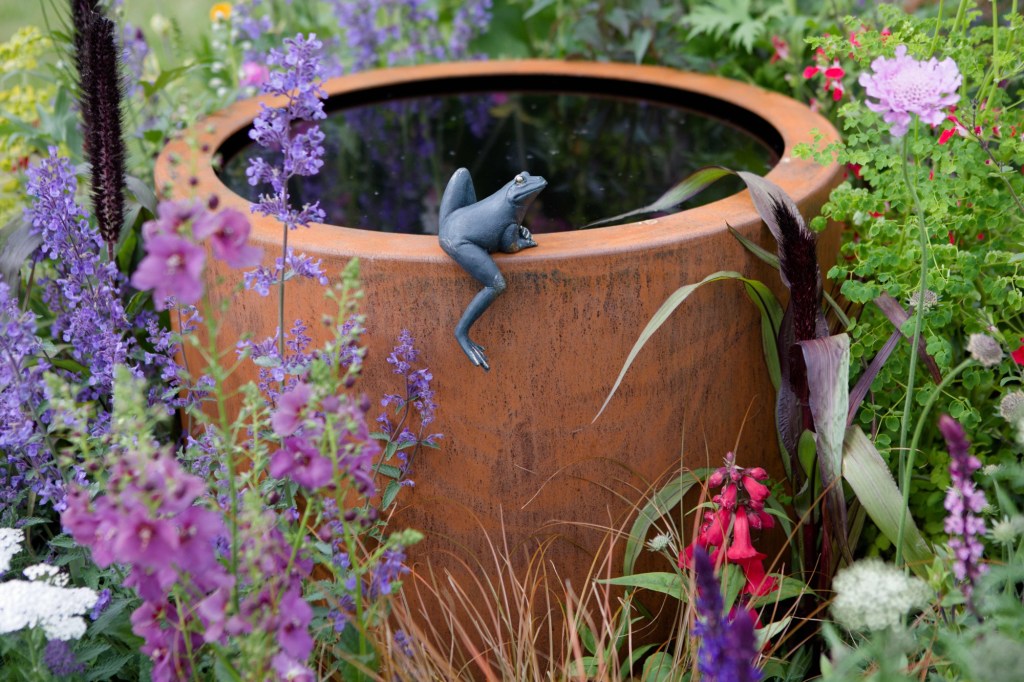
A quiet pool of water at the GWLive show.
Primrose Hall Peonies.

Prize winner for Gardeners World Live tickets

Derrienne Bell has won the two free tickets for GW Live in the prize draw competition. All names were included in the draw and Derrienne’s name was randomly selected.

Thank you for taking part in this prize draw.

The organisers have also given me a discount code to pass on to blog readers. Please read the terms and conditions carefully. Remember that car parking is not included in any offers and is expensive.

The organisers say:

You requested a discount code for your followers. These are:

SAVE20: 20% off standard adult/concession entry tickets (applies any day),offer expires 23:59 on 7 May 2025

SAVE15: 15% off standard adult/concession entry tickets (excluding Saturday),offer starts 8 May, expires 23:59 on 4 June 2025.

*Discounts valid on adult/concession standard entry tickets. Not valid on VIP, 2-day tickets, added extras or with any other offer. £3.95 transaction fee per advance order. Details correct at time of print.

I’m looking forward to viewing the show gardens again this year. There’s always a good selection of styles, and they are more relevant to me than the expensive RHS show gardens.

Thank you again for reading my blog. Have a great gardening week! Look out for more book reviews and tickets coming up…..

You might find this info and link useful for car parking for the show, which can be expensive if not purchased in advance.

“You’ll find parking info at the link here: https://www.bbcgardenersworldlive.com/whatson/getting-to-the-show/. The organisers strongly advise advance booking for pre-paid parking (up to 24 hours prior) to save time and secure the best rate, £8. This price has been subsidised by Immediate Media.”

Gardeners World Live. Giveaway for two free tickets.

*Please remember to leave your name, or comments just come up as ‘anonymous.’ Thank you.

Dan Hartley Eco Oasis Garden

Each year, the organisers of Gardeners World Live offer my blog readers the chance to win two free tickets. This has been successful and I’ve had wonderful reports back that winners have enjoyed a really lovely day out.

Nick Bailey garden design. Alexandra Froggatt ©️

It’s very simple to enter. Just leave a comment in the box below and names will be randomly selected on Sunday 30 March.

Please read the terms and conditions carefully. Tickets are for a specific time and date. The prize does not include car parking which is expensive.

The organisers say: “We can offer you a pair of standard adult tickets, valid Sunday 15th June, 9.00am entry, RRP £58.00 per pair. The organisers will not be issuing paper tickets. Winners will be emailed a link to register online and will receive tickets by email.

“Tickets are non-refundable, non-exchangeable and non-transferable, and do not include travel, accommodation or expenses. There is no cash alternative. Details of giveaway and prize correct at time of print. Ticket terms and conditions applyhttps://www.immediatelive.com/ticket-terms-and-conditions

The Chef’s Table garden by Adam Frost
QVC Reflective Retreat
My favourite feature of the garden: The Plant Expert stage with much-respected gardeners and designers, Tamsin Westhorpe, Lucy Chamberlain, Saul Walker and Prof David Stevens.
The show attracts the best people in horticulture. Much-respected writer, speaker and teacher David Hurrion hosting the ‘Lets Talk Plants’ stage.
All photos ©️ Gardeners World Live

I hope you’ve enjoyed these photos from past shows. I’ve written about the Gardeners World Live Show here:

https://bramblegarden.com/2021/07/03/gardeners-world-live-two-tickets-to-give-away/

Please leave a comment below including your name, otherwise the comment just says “someone.” Look back to check if you have won the tickets. The draw will be at 6pm. If there’s no response within 24 hours, the prize will be re-drawn. Good luck!

Update: Derrienne Bell has won the two free tickets. Thank you for taking part.

Here’s some info from the organisers regarding parking for the show.

“You’ll find parking info at the link here: https://www.bbcgardenersworldlive.com/whatson/getting-to-the-show/. The organisers strongly advise advance booking for pre-paid parking (up to 24 hours prior) to save time and secure the best rate, £8. This price has been subsidised by Immediate Media.”

Spring Courses

There’s nothing better than combining a love of flowers and gardens with learning a new skill. Here are some tempting courses on offer this spring.

Botanical artist Lauren Lusk

Tuesday 29 April, 2025.

Broadwell Manor, Broadwell, Gloucestershire.

Auricula appreciation and painting day.

https://broadwellmanor.com/events/

Lauren Lusk

Details on the Broadwell Manor website say Lauren trained at the world-renowned Central St Martins. Lauren found it impossible to ignore the lure of plants, which were the focus of her degree show. Her love for the natural world is perhaps to be expected, given that Lauren is Rachel de Thame’s eldest daughter and she grew up surrounded by plants. Some years after graduating, Lauren decided to focus on botanical painting. Predominantly working in the time-honoured, traditional but painstakingly slow technique of applying layers of watercolour to vellum. For this workshop she will be showing how to use watercolour on paper to paint the charming detailed ‘faces’ of individual auriculas. Lauren was recently featured in House & Garden Magazine and her work is being widely commissioned and collected.

Lauren’s botanical painting
Auricula theatre featured on the Broadwell website.
All photos ©️Broadwell Manor/ Lauren Lusk

Lauren recently produced a series of paintings of flowers and graphite drawings of insects for A Flower Garden for Pollinators, written by Rachel de Thame. 

Rachel’s book was reviewed on the blog here:

https://bramblegarden.com/2024/12/16/a-flower-garden-for-pollinators-by-rachel-de-thame/

Lauren’s website is:

https://laurenluskbotanical.com

Monty Cholmeley

Wednesday 23 April 2025

Easton Walled Gardens

Introduction to Watercolour Workshop 

The website says: This workshop is aimed at complete beginners and you will leave with an understanding of how to mix colours, both on the palette and on the paper. You will also take home your own set of watercolours and a brush to continue practicing! 

Meet at 5.30pm in our Coffee Room, before embarking on a two hour class from 6pm-8pm, where you will learn the basics and beyond of working with this special medium. You will leave with techniques you can replicate at home and a deeper understanding of colour.

Tickets include coffee and materials.  

8 places available. 

Photos ©️Easton Walled Gardens

Monty Cholmeley is the son of the owners of Easton Walled Gardens.

He is well known for his art work and photography.

More details and prices on the website.

http://www.visiteaston.co.uk

David Stevens

Photo ©️ Barnsdale Gardens

Saturday 12 April

At Barnsdale Gardens, Rutland

Planting Design

The website says: If your garden is not achieving everything you envisaged and you’re unsure what to do, then why not join internationally renowned garden designer David Stevens for this very special workshop.

David will take you through all the basics, as well as looking at specific plants, showing how they work best in a garden, planting techniques and preparing a planting plan.

David is in great demand as a designer and lecturer in garden design all over the world, so this day is a treat not to be missed!

Price includes tea/coffee, lunch and entry to the Gardens.

To book look on the website

https://barnsdalegardens.co.uk/index.html

Barnsdale spring flowering cherries. Photo ©️Barnsdale Gardens

Also at Barnsdale this year there’s botanical painting courses 12/13 Nov and a focus on painting dahlias on 17/18 Sept.

I am pleased to be leading several courses at Barnsdale this year.

Growing Flowers for Cutting, 3 September:

https://shop.barnsdalegardens.co.uk/products/growing-flowers-for-cutting

Creating borders with 365 days of colour. 10 October.

https://shop.barnsdalegardens.co.uk/products/365-days-of-colour

Thank you for reading my blog. Are you planning to attend any courses this year? Please leave a message in the box below. If you are new to the blog, please follow and sign up for notifications via e mail, and remember to say hello in the comments below! Happy gardening!

Welcome to garden club members

A big welcome to members of Southwell Garden Club! I hope you enjoyed my talk last night! Here’s more photos of my garden, to give some inspiration for creating spring colour.

Our garden was created from a field. We moved here when we were in our 20s.

We planted 260 tiny sapling trees which came from a scheme promoted by the Woodland Trust and Rushcliffe Borough Council. The plants were free to anyone converting farm land to woodland.

Down one side of the plot I planted a kind of ‘avenue’ or ‘holloway’ of ash trees given to me by Michael Beeby. He was a lovely, keen gardener who lived in our village and wanted to save the little seedling saplings growing all over his garden. He regularly visited the garden to see how his trees were getting on. Sadly he passed away a few years ago. In memory of a kind and generous gardener I’ve named this area of the garden the Michael Beeby Walk. And every time I walk along this path I think of Michael and how he cared about nature. He was always smiling, always supportive and encouraging. He’s not forgotten.

There are some wonderful sunsets from the garden
Trees on the hill

There’s a gap in the hedge. I walk to this point every day and look through the hole in the hedge. I see hares, deer, owls. No one can see me.

I mark the changes in the seasons. Each day, the view is different.

All the trees we planted have grown to produce a lot of shade. Over the years, the lavender, penstemons and salvias have had to give way to woodland plants. Snowdrops thrive in the cool shade. Madeline is a favourite with its elegant ‘lightbulb’ shape and delicate yellow markings.

I have a little helper in the garden. He’s three years old. We are at the same stage in life, both marvelling at the beauty in everything. Living in the moment.

Polar Bear, a new variety, late flowering.
Viridapice with green tipped markings
Robin Hood. Named for the X markings. Appropriate as we live right on the Nottinghamshire border.
Plain, simple single snowdrops, Galanthus Nivalis. Still my favourite to be honest. In my grandfather’s Sankey terracotta pots.

Hellebores also thrive in the semi-shade of trees. I bought a few colours from John Massey at Ashwoods Nursery in Birmingham. They have seeded all over the garden in shades of white, cream, pink, and inky- black.

Some remind me of stained glass.

Floated in an inch of water in an old zinc container.

A favourite double cream-white hellebore.
In amongst the hellebores we have wild violets. The sweetest scent. Originally from one single plant my grandfather brought here over 30 years ago. Now the whole gardens is full of them. I look at them and think of him.
Wild anemones. Such a joy, emerging just as the snowdrops are going over. And full of bumblebees today.
Crocus Joan of Arc. The best white. Also bumblebee heaven!
Phlomis Fruiticosa. Also ladybird heaven! An important plant to grow as they hibernate within the soft woolly leaves.

A posy for my mum with flowers from the garden. Small flowering cherry, Prunus Kojo-No-Mai blooms on bare stems and has glorious orange and red autumn foliage.
Come back another day for some summer-themed flowers.

Thank you for inviting me to talk, and for reading my blog.

I’m karengimson1 on instagram.

Please leave a comment in the box below, and sign up for e mail notifications for further posts. Enjoy your gardening!

Daffodils book, prize draw winner

Thank you for reading my review of Daffodils by Naomi Slade. The winner of the prize draw copy is Cathy from https://wordsandherbs.Wordpress.com.

The book is published by Pavilion/ Harper Collins UK who kindly offered a spare copy to give away in a prize draw.

Narcissus Viridi

The author highlighted 60 different varieties, including this striking viridiflorus seedling propagated by WF Lee and and raised by Manuel Lima. Images are provided by one of the world’s leading floral and garden photographers, Georgianna Lane.

Pink Paradise

Pink Paradise is another variety that stands out in the book. “Ivory white double petals that form the basis of this flower would be unassuming enough, were it not for the immoderate presence of rogue petaloid segments that have stuffed and wedged their frilly selves in between more modest neighbours.”

Lilac Charm

“The white petals are elegantly reflexed due to the flower’s Cyclamineus heritage and their waxy, rather than papery substance comes from a crystalline finish, giving the flowers a gleaming, sparkling quality. The snout is similarly shapely, with a prominent, slightly flared funnel, ribbed along its length with a kicked-back frill to the end; forming a cylinder that is pistachio-green at the very base before becoming a pale yellow-peach followed by a rapid transition to a pale and lovely lavender pinkish hue.” Lilac charm was bred by Brian Duncan in Ireland. It’s a fantastic and eye-catching variety for the show bench, the garden and for cutting.

A double page spread from the book

In my opinion, it’s the most beautiful book of the year! I have the book open on different pages each day, set out on my kitchen table where it can brighten my day while I work.

I never fail to be delighted and amazed by the beauty of flowers and daffodils in particular are such a spring joy.

Congratulations to Cathy for winning the prize copy. There are many more books to follow. It seems a particularly good year for horticulture-themed books. And also free tickets for flower shows are coming up.

My review of Daffodils is here:

https://bramblegarden.com/2025/03/12/daffodils-by-naomi-slade/

Royal China

Daffodils by Naomi Slade

Book Review and giveaway.

Published by Pavilion/ Harper Collins

Photographs by Georgianna Lane

Hardback 240 pages. RRP £25

Published 13 March 2024

Can there ever be anything more cheerful than the first sign of daffodils in spring. I sigh with relief as soon as they emerge from the recently frozen, muddy ground. The worst of the winter is behind us. Spring is well and truly on the way. We have come through the cold, dark days and survived the winter once more.

Naomi Slade’s latest book is a joyful celebration of daffodils. Colour springs from every page with the wonderful photography of Georgianna Lane combined with the glorious descriptions by the award-winning author. It really is the kind of book you’d want to leave open on a different page every day. Just to gaze at the photographs and read Naomi’s words is like a balm.

Contents page

Naomi splits the daffodils into categories: charming and cheerful, ruffled and fluttering, demure and delicate, glorious and glowing. There are sections on the history of narcissus, as well as growing advice, and information on pests and diseases.

Excerpts from the book
Naomi describes 60 varieties with suggestions for planting, growing and cutting. The book would make a lovely gift for any fan of spring flowers, for gardeners, florists and collectors alike.
Actaea. One of my favourites.
Selected varieties are each given a page of description.
Delnashaugh – a large double cream and apricot variety. Ruffled and layered, makes a lovely flower for a vase or a bridesmaid’s posy.
Royal China. Introduced in 1997 by British grower Clive Postles. ‘The rounded petals present themselves in two overlapping layers, in a gentle shade of pearly white that sparkles subtly in the sunshine. The central corona, meanwhile, is exquisitely formed; ivory white along its length with a greenish yellow splash at the base and a crisp pink frill to the rim.”
Lilac Charm
Pink Paradise
Trigonometry
The ever-popular tete-a-tete
Katie Heath

Katie Heath is a muted palette of pink and cream. Lovely with willow twigs and catkins. “Named in honour of the mother of Brent Heath, who has himself found fame as one half of the well-known American bulb nursery duo that is Brent and Becky’s Bulbs.

About the author and photographer

I can wholeheartedly recommend ‘Daffodils’ by Naomi Slade. It’s written in a cheerful, enthusiastic style with just the right amount of detail to answer all your questions.

Daffodils is the latest in a series written by a Naomi and photographed by Georgianna. Previously, I’ve reviewed Lilies, Dahlias, Ranunculus, and Chrysanthemums. There’s also Hydrangeas and Lilacs. This latest book is just as brilliant and inspiring as the others. A triumph again for this super talented duo!

Thank you for reading my blog. The publishers have kindly offered one copy to give away to readers. To be included in the prize draw, please leave a comment and your name below. Sorry, uk only. There’s no cash alternative and the publisher’s decision is final. The draw will be on Saturday 15th March 6pm. Please look back on Saturday to check if you have won. The prize will be redrawn on Sunday if there’s no reply from the winner.

I wrote about Lilies here:

https://bramblegarden.com/2021/05/25/lilies-book-review-and-giveaway/#:~:text=Stunning%20to%20look%20at%2C%20and,flowers%20reaching%20almost%20the%20roofline.

I wrote about Dahlias here:

https://bramblegarden.com/2018/06/24/dahlias-beautiful-varieties-for-home-and-garden/

Please remember to add your name at the end of comments as otherwise it comes out as ‘someone.’

Inspiring People

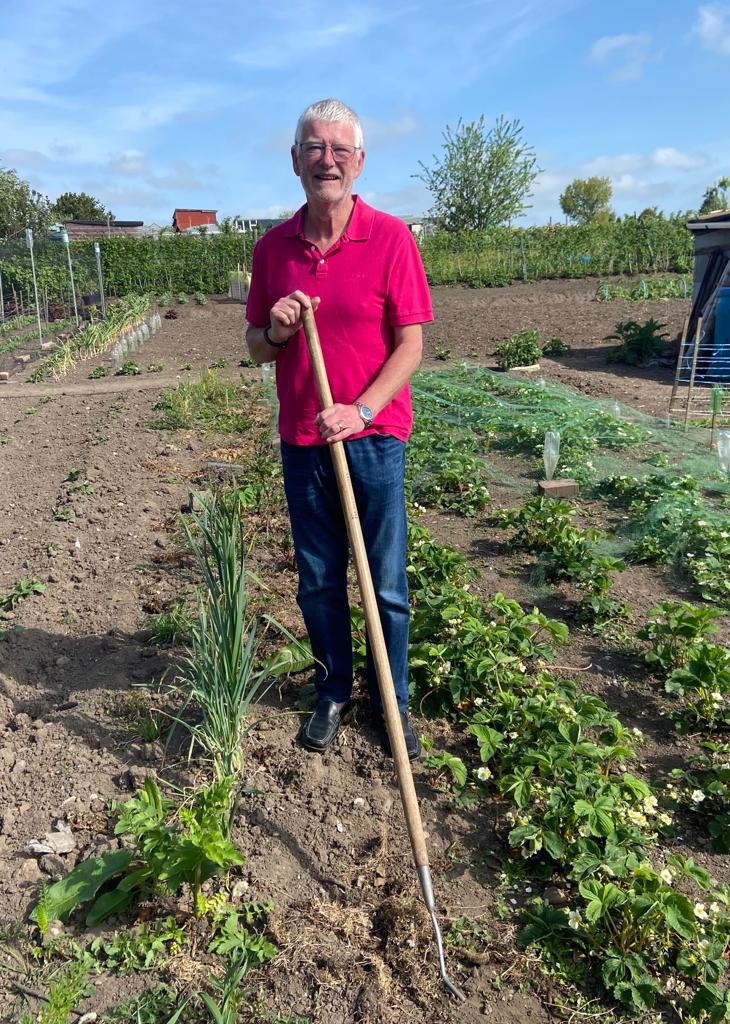
Ian Piper, working on his allotment plot.

Ian Piper faced one of the saddest situations in life, the death of his baby grandson Otis. Otis died aged just 7 weeks. He and his family were greatly helped by Rainbows Children’s Hospice in Leicestershire. I met Ian while I was giving a talk to a garden club, and Ian told me of his fund-raising activities for Rainbows. I’m sharing his story here as I feel we all need inspiring people at the moment. Ian and his endeavours remind me there are wonderful people in this world doing good things and helping others. Here’s Ian’s story, in his own words.

“Five and a half years ago our first grandson died at Rainbows when he was seven weeks old. The support and kindness provided inspired us to see if we could help in any way. We especially loved the remembrance garden. Otis’s name was engraved on a glass leaf and displayed on the memorial tree in the centre of the garden.

“The opportunity for us to start fundraising happened when we had a glut of pumpkins on my allotment in October 2021. As we are not permitted to sell allotment produce, my wife, Jayne, suggested that we could put them at the end of the drive of our house and ask for donations which would go directly to Rainbows. It proved to be surprisingly successful, so we decided we would continue with other surplus produce from the plot. In the spring of 2022 and all through the growing season that year we continued to raise funds from produce. I said to Jayne that it would be wonderful if we could raise £1000 by the end of the year. She was doubtful and I tended to agree. 

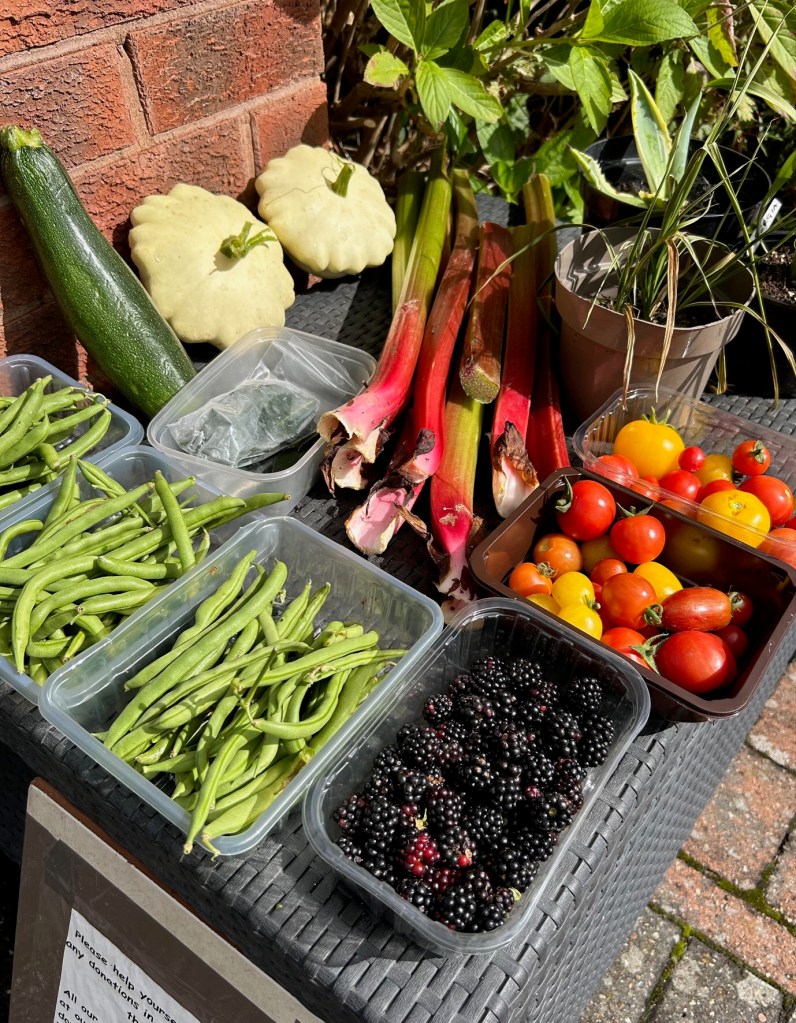
Fruit and vegetables for the Rainbows fundraiser.

“What we didn’t anticipate was that the lovely people of Ravenshead would take on board what we were doing as enthusiastically as they did. Not only that but the other plotholders of the allotments where mine is located also became involved. By the end of 2022 we did pass the £1000 mark. 

“As a result I kept the Ravenshead Facebook pages updated with how things were progressing. To our surprise and delight, things snowballed. Other plotholders offered extra produce and brought it for me to put out. Not only that, but many of the village residents started to bring surplus vegetable plants, plus both indoor and outdoor plants, fruit and produce from their own gardens too. On occasion we looked a little like a mini garden centre!

“As I moderate one of the Ravenshead Facebook pages I began to photograph what was available and post it on not only that page but the other Ravenshead pages too. It has allowed us to continue fundraising and in addition we are having really lovely conversations with many residents that we would not normally have met. We see people now driving past most days to see what there is available- sometimes even before I have had the chance to post on the page. Currently the total that we have managed to raise thanks to the generosity of people who have donated is around £4300. Our next target is £5000 which we should hopefully achieve by the summer, fingers crossed!

“It has been really wonderful to think that we are helping Rainbows in a small way as a thank you for how kind they were when we needed them. 

“We will certainly be continuing to raise as much in funds as we possibly can for as long as we can. I must thank Jayne for having the original inspiration in the first instance.

“It just shows that a germ of an idea no matter how small can prove to be so worthwhile. I would strongly urge anyone to try and engage their local community in any way possible. It’s surprising how supportive people can be. Rainbows is the most wonderful facility for families with children with life-limiting conditions and any contribution, no matter how small, can make a huge difference.”

Thank you for reading my blog. I wrote about Rainbows hospice here:

https://bramblegarden.com/2018/07/22/we-made-a-garden-for-rainbows-hospice-belvoir-show-2018/

Please subscribe for e mail blog post updates and leave a comment in the box below. Have a great gardening week!

Snowdrops at Thenford Arboretum

Emma Thick, deputy head gardener at Thenford Arboretum

A Shepherd: A person who herds, tends and guards. Watches over and protects.

I looked up the word shepherd when deputy head gardener Emma Thick described herself as a ‘snowdrop shepherd.’ It’s an apt description. For Emma, who works at Thenford Arboretum, tends, protects and cares for over 1,500 varieties of snowdrop, some of them rare and unusual.

Emma has been in charge of the collection for ten years, and spending the day with her is a revealing and exciting journey of discovery. I ask Emma which is her favourite snowdrop, with so many to choose from. Immediately, she walks over to a patch of Galanthus ‘Mrs McNamara’ an elwesii variety. It starts flowering at Christmas and, in a cold winter such as this one, will still be in flower at the end of February. “It has big, broad, glaucus blue-green leaves, single inner-markings like a Chinese bridge, and is a very bright white. It sounds strange, but some snowdrops are not very white. This is a beautiful clear white flower. If I could only have one snowdrop it would be ‘Mrs McNamara’ always.”

The last few flowers of G ‘Mrs McNamara’.

When Emma first started working at Thenford, the owners Lord and Lady Heseltine, had amassed a collection of 350 types of snowdrop. Since then, the collection has grown, and in June 2023 Thenford was awarded National Collection status by Plant Heritage.

G. Plicatus ‘Henham no 1’

Snowdrops cluster around the base of specimen trees within the arboretum. But Emma says you don’t need to have a woodland setting or trees to grow snowdrops successfully. She has been trialling growing snowdrops at the base of hydrangeas. The shrubs take up water in the summer, giving snowdrops the period of dormancy they need. Then hydrangeas provide colour in late summer and autumn.

Emma recommends all hydrangea varieties for this plant partnership. At Thenford there are hundreds of mop-head, lacecap and paniculata types. These are low maintenance as well as being perfect planting companions for snowdrops.

G. ‘Pat Mason’ under a mop-head hydrangea
G. ‘James Backhouse’

Snowdrops can successfully be grown in containers. Thenford has a topiary garden with a collection of Italian urns containing black grass, Ophiopogon planiscapus, and snowdrops.

There’s also a plant theatre, created for auriculas, but in winter it’s used for snowdops and daffodils.

Snowdrops in teracotta pots look striking set against the black painted background, and it’s an opportunity to look closely and compare markings.

G. ‘Jedburgh’

I asked Emma which other varieties would she recommend. Here’s her list of top snowdrops to grow.

G. ‘Daisy Sunshine’. Snowdrop photos copyright Emma Thick.

‘Daisy Sunshine’ is not a lot different from the horde of nivalis sandersii group but quite a good, reliable yellow. Again, love the name . Everyone could find room for a bit of ‘Daisy Sunshine’ to brighten a corner of a garden, says Emma.

G. ‘Miss Behaving.’

“Galanthus reginae-olgae subsp vernalis ‘Miss Adventure’. Again, great name, quirky snowdrop. The spathe has mutated to become petal like. Has the bonus of having the outer petals maker green too, so would probably count as an inverse poculiform or I-poc for short . We grow her sister ‘Miss Behaving’ near by.

G. ‘Hill Poe’

‘Hill Poe’. A very frilly full double that does nothing but want to grow. Looks great in a big clump.

G ‘Hill Poe’
G. ‘E.A.Bowles’

‘E.A. Bowles’ is a pure white poculiform (inners and outers same length) almost shaped like a tiny lampshade. An exquisite beauty, not always the easiest to grow.

‘G. ‘Tilebarn Jamie ‘

Galanthus reginae-olgae subsp reginae-olgae ‘Tilebarn Jamie’ 

Flowers in October. Perfectly normal for this subsp to do that. And happens to coincide with the red leaf fall of Acer palmatum ‘Skeeters Broom.’ Just exquisite and an unexpected delight on our October open days.

G. ‘Tilebarn Jamie’
G. ‘Cider with Rosie’

Woronowii ‘Cider with Rosie’ a green-tipped variety of Galanthus woronowii which I adore. One to admire up close as it is not the biggest or most dramatic.

G. ‘Rosemary Burnham’

Galanthus elwesii ‘Rosemary Burnham.’ A virescent snowdrop which people probably either love or hate depending on how you like green flowers. Again, grows well here at Thenford but not for others. Best appreciated up close.

G. ‘Greenfinch.’

‘Greenfinch’ an excellent green tipped snowdrop. The green is really embedded in the outer petals so it appears very pinched.

G. ‘Blewbury Tart.’

‘Blewbury Tart’. Not a pretty flower really, but looks good in a clump. It is my mum Cherry Thick’s favourite. It was found by Alan Street in Oxfordshire. Again, best admired up close.”

I asked Emma for advice on planting snowdrops. She said wait until the bulbs are dormant before moving them. Snowdrops produce just one set of roots each year. Any damage to the roots while digging up or planting means the bulb will not be able to take up enough nutrient for the following year. This means the bulb will either fail to flower or die.

Thenford opens for 20 days a year. Rupert Heseltine explained his parents, Lord and Lady Heseltine purchased the house and it’s surrounding garden in 1976. Over the next 25 years, their priority was to restore the 40 acres of woodland. Debris was cleared, rotten or fallen trees removed and replaced with many rare and unusual varieties. The arboretum now extends to 70 acres with 3,000 trees and shrubs. There are 113 ‘Champion Trees.’ The medieval fish ponds and their interconnecting canal and lake have all been restored and two new lakes have been added.

The walled garden was being used as a sheep field when the Heseltines bought the property. It has now been restored and features trained fruit trees, step-over apples, and a range of greenhouses containing exotic plants and citrus.

To book tickets to visit Thenford, see the website:

https://thenfordarboretum.com/

The 2026 Snowdrop Spectacular will be held on Saturday, February 14.

Thank you for reading my blog. I hope you’ve enjoyed these photos and found the information from Emma inspiring. There’s an interview with Emma on my Instagram account at karengimson1.

I enjoyed every second of my visit to the gardens and I’m certainly looking forward to visiting again through the seasons, and to viewing the snowdrops again next February. It’s a ‘must visit’ on my calendar!

Snowdrop Painting Workshop at Broadwell, Gloucestershire.

Date: 1st February at Broadwell Manor.

Details: [email protected].

Photo courtesy of D. George

I started writing this blog with the intention of spreading good news about all things gardening. With that in mind, I thought you’d like to hear about some new events being planned for Broadwell in Gloucestershire. The first event was a Christmas wreath-making course reviewed here on the blog. See below for details.

Rachel de Thame has now announced plans for a snowdrop painting workshop in association with celebrated artist Debbie George.

Debbie George
Rachel’s garden, from her latest book, A Flower Garden for Pollinators published by Greenfinch/ Quercus Books with detailed botanical illustrations by Lauren Lusk and photographs by Jonathan Buckley

I was lucky enough to get a chance to wander about Rachel’s garden while foraging for foliage for my Christmas wreath, and there under the huge, hundred year old trees, I spotted masses of little green shoots. Rachel had no idea the snowdrops were there when she bought the house- it was a glorious and very welcome surprise when drifts of them emerged.

Rachel says she’s very excited to be teaming up with Debbie George for the snowdrop painting workshop and galanthus appreciation day. “It’s a rare opportunity to be guided by Debbie through the process of painting snowdrops. I’ll be sharing growing tips and discussing the passion that these tiny flowers inspire in enthusiasts. Then we’ll go outside to pick snowdops from the many hundreds growing in the garden for you to paint, with Debbie on hand to help and advise.”

Another lovely example of Debbie’s paintings

All materials are supplied, as well as a three course lunch and refreshments throughout the day. There will be a selection of unusual snowdops available to buy, supplied by Ashwood Nurseries.

Debbie’s richly-illustrated book documenting her life and work was published in March 2024 by Rylett Press.

For more than thirty years, Debbie has painted still lifes – primarily flowers and pottery, sometimes landscape, and often all three in a single composition. Her paintings are today highly collected and appreciated around the world as joyful pictorial celebrations of the English seasons, of country life and the natural world.

Based on conversations with Debbie and drawing on her personal archive, the book provides a rare glimpse into the life and working methods of the artist. Packed with more than 200 illustrations, it shows that the clarity and sophistication of Debbie George’s art is the result of continuous practice and experimentation. This is a timely celebration of a lifetime of painting flowers, pottery and landscape.

“For Debbie George admirers and collectors, this celebration of her work is long overdue. It’s wonderful to see the full range of her paintings, spanning more than thirty years, collected together in one volume. Each turn of the page reveals another image to be poured over by all who share Debbie’s love of nature and feel lifted by her unique portrayal of Earth’s riches, however small they be.” – Rachel de Thame, BBC TV presenter, garden writer and columnist.

Snowdrops and catkins

I hope you’ve enjoyed viewing these beautiful illustrations as much as I have. They have certainly brightened a very cold wet day here in Leicestershire. Thank you for reading my blog. Sign up for e mail notifications for more reviews, garden visits, and general news from my wildlife-filled, English country garden.

For more information on courses contact [email protected].

For the wreath-making review:

https://bramblegarden.com/2024/12/19/christmas-wreath-workshop-with-rachel-de-thame-and-arit-anderson/

For a review of Rachel’s latest book:

https://bramblegarden.com/2024/12/16/a-flower-garden-for-pollinators-by-rachel-de-thame/

Thank you and Happy New Year!

RHS Grow Food Anywhere -prize draw win

Thank you everyone who read my review and left a comment on the blog. John Tilton has won the prize copy. Please get in touch John by sending an e mail to [email protected].

Many thanks to the publishers, Dorling Kindersley, for sending a copy of the book to give away.

I have no hesitation in recommending Lucy Chamberlain’s new book. If ever you’ve wanted to have a go at growing food, look out for the book. It will set you on the right path for success.

Lucy shows us how to analyse our gardens to create ‘zones.’ It’s then a case of right plant for the right place. There’s literally something to grow in any situation.

Sunny aspect suggestions
Mapping your plot
Give crops the best start in life
Part shade
Lucy’s own garden as a case study
Beautiful as well as productive.
I wrote this over on instagram at karengimson1 .

Thank you for reading my blog. Please sign up for e mails and notifications. More book reviews to follow…. Happy New Year! Karen

RHS Grow Food Anywhere book review

By Lucy Chamberlain

Published by Dorling Kindersley, January 2025

Hardback and ebook 223 pages. £20

ISBN 978-0-2416-5649-5

The publishers have kindly sent one copy to give away in a prize draw. Please leave your name in the comments box below to be included in the draw. UK entries only.

One of my favourite writers is Lucy Chamberlain who manages to capture the magic of gardening and makes us want to rush outside and get growing! In her new book published today she tells us exactly how to grow just about anything anywhere. And it’s all written in an easy to understand format, without being either too simple or too complicated. That’s the beauty of Lucy, she’s able to strike just the right note and make it relevant to all gardeners.

Lucy’s garden

Lucy uses her own fruit and vegetable plot as a case study. I’ve watched Lucy create this garden over the past few years and admired just how much produce she manages to pack in there, as well as making it look beautiful with dwarf hedges, espalier apples and raised beds.

Contents page

Growing plants in the wrong place is one of the main reasons for crop failure. Lucy splits the book into ‘growing zones’ covering all the situations growers are likely to face when starting to garden. Sunny and sheltered, sunny and moist, open and cold, shady and wet, shady and dry, for example.

Several case studies are related, including a garden attached to large detached property, a compact garden, and an allotment. Lucy shows how to map areas of the garden to work out what will grow successfully in each position.

Mapping the plot
What will grow in different areas
Choosing plants to grow in full sun
Lucy’s garden where she grows 150 varieties of fruit, veg and herbs

In each area, top performing plants are suggested. I grow hazelnuts in dry shade, and each year I harvest a bumper crop of tasty nuts for making cakes and biscuits. They really are far more delicious than anything you can buy in the shops.

Other star performers for part-shade
About the author

I’ve known Lucy for about 20 years and have always admired her get-up-and-go. Her enthusiasm for growing fruit and vegetables translates so well in her writing for newspapers, magazines and books. I also love the podcast ‘Talking Heads’ which she hosts with Saul Walker. Real gardeners, talking about real gardening. It’s a joy to listen to them, to be honest.

Back cover of the book

I have no hesitation in recommending Lucy’s latest book. The ‘right crop, right place’ principal is beautifully explained. Lucy breaks down the environments found in gardens into seven zones, even incorporating indoor spaces. The book is packed with expert guidance on maximising your growing through making the best of what you have. Grow Food Anywhere will soon get you harvesting fresh, healthy pesticide-free fruit, veg and herbs. What a great way to start 2025!

Please leave your name below and one winner will be randomly selected on Sunday 6pm. Editor’s decision is final and there’s no cash alternative.

Thank you for reading my blog and Happy New Year everyone!

Christmas Wreath Workshop with Rachel de Thame and Arit Anderson

Everyone busy at a table set out in Rachel de Thame’s hall.

Some opportunities are too good to be missed! I’d been watching announcements for weeks, but couldn’t attend any of the dates offered. Then all of a sudden two people dropped out on the one day I was free. So this week I unexpectedly found myself driving to Gloucestershire to take part in one of Rachel de Thame’s first Christmas wreath-making courses. I can still hardly believe my luck!

I wish I’d taken a photograph of the path leading to the front door. It was lined each side with piles of evergreen foliage ready for the course. Mindful of the fact that this was Rachel’s home, I didn’t get my camera out. But it was obvious from the first glance that we were all in for a treat of a day! Stepping inside the front door, Rachel’s entrance hall was set out with a long table and buckets of flowers and foliage in all four corners. There was such an array of different foliage materials, much of it pruned from Rachel’s garden. I fell in love with the pink hydrangea heads and orange rosehips straight away. I also decided on using the skimmia kew green as a background for my wreath.

Rachel first demonstrated how to make a wreath using a copper ring and moss attached with reel wire. Rachel was using wire she’d saved from previous years and recycled. The base of the wreath was entirely conifer sprays trimmed to about 5” and attached first to the left and then the right all the way round the circle. Flowers, berries, and seed heads could then be attached on top. Arit Anderson who was guest host for the day, demonstrated making a wreath using the same copper ring, but with moss attached with twine. Arit’s wreath was a looser design using twigs, seed heads, grey pussy willow and grasses. Arit explained the wreath could be safely composed after Christmas, as all the components would eventually compost down. The copper rings could be saved for another year. Even the ribbon we used was biodegradable.

Rachel’s wreath, showing the fir sprays being attached to the mossy base.
Arit with the mossy base attached with compostable twine.
Arit displaying one of the wreaths in the window.
Rachel and Arit with fir cones, dried hydrangea heads and foraged grass and poppy seed heads.

Before getting started on our own wreaths, Rachel demonstrated how to make an arrangement for a fireplace. I must admit, I wanted to take both the arrangement and the fireplace home!

Surprisingly, that huge arrangement all started with a relatively small glass bowl. Rachel rolled up some chicken wire and used florist tape to attach it to the bowl. She added long lengths of ivy, Portuguese laurel and pittosporum. Then colour was added with spray chrysanthemums and grey pussy willow. I have walked past endless amounts to trailing ivy in my garden and never realised it could be turned into anything as beautiful as this. But now, I’ll have a go!

Our day included a three course lunch. We had home-made soup, followed by a buffet of amazing salads, followed by chocolate brownies and cream. Plenty of tea was also consumed! The table in Rachel’s kitchen was set out with such style. I really enjoyed every second I was there! Everything was literally perfect.

Beautiful flowers set out on the table

Best of all though, I had the company of the famous Woodapuss sitting next to me. I’d seen her many times on the television. I can report that she is as lovely in real life as on the TV. Such a calm and happy cat, very affectionate. I was quite happy to sit there making a fuss of her. A highlight of my day.

After lunch we wandered around Rachel’s garden foraging for materials to use for our wreaths. It was such a treat to see the walled garden where Rachel grows her tulips and cut flowers. The walls are such a gorgeous soft, creamy colour, and we found holes were solitary bees had made nests.

Back to the house, and we all made a start on our wreaths. I decided to go for a base of eucalyptus and rosemary, for the scent. Then I wove rosehips in to the mix, and finished with two hydrangea heads. Arit showed me how to gather the hydrangea heads into a ball if they were too spread out, and tie them at the base. This made a much better focal point. We then chose a gorgeous burgundy ribbon to finish off.

And here it is! Displayed on Rachel’s front door which is painted a deep glossy green.

What a great day we all had! I learned many new techniques in floristry, made some new like-minded friends, fussed Rachel’s cat, and went home with a beautiful wreath for my own front door. A really wonderful, perfect day.

Thank you Rachel and Arit for such a happy and memorable event! A truly special start to our Christmas festivities.

Thanks for reading my blog. Rachel has plans for lots more courses and events at Broadwell Manor in 2025. To find out more contact [email protected]. Or follow on Instagram @racheldethame.