Lost, Hidden, and Found: The Herpetofauna of Samar’s Karst Labyrinth

A recent field study to document reptile and amphibian diversity found in Samar Natural Park (SINP) and Samar Island unveils fascinating results.

Guest Blog Post by the Research Team of Samar Island’s Herpetofauna

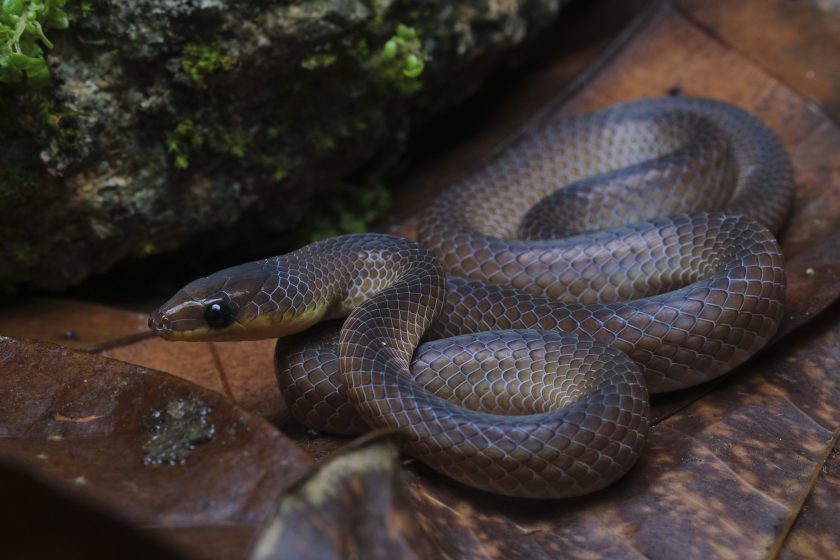
In the darkness of the Samar rainforest, a flash of color stopped the research team in their tracks. Their headlamps illuminated a small shrub on a worn limestone trail, revealing a tiny pink snake. With a quiet sense of triumph, Yñigo del Prado readied his camera and leaned forward to photograph the coiled serpent within the branches of the shrub.

Although unknown to del Prado’s research team at the time, their rediscovery of the rare blindsnake Ramphotyphlops marxi would become one of the significant findings of the most recent comprehensive field study to document reptile and amphibian diversity found in Samar Natural Park (SINP) and Samar Island. Indeed, first recorded by the eminent zoologist Dioscoro Rabor in 1957 and unseen since, the snake is now a key highlight of the the survey, now published in the open-access journal ZooKeys.

Ramphotyphlops marxi – Marx’s worm snake. (Image credit: Yñigo del Prado).

“Samar Island is a biological frontier hiding in plain sight,” remarks Arvin Diesmos, a former curator in herpetology at the National Museum of the Philippines, and present senior director at the ASEAN Centre for Biodiversity. He was part of an expedition team from the Herpetological Research Collection of the University of Santo Tomas to survey the biodiversity of Samar Island Natural Park.

The primary goal of the expedition was to  generate updated and comprehensive data on the terrestrial vertebrate fauna—from amphibians and reptiles to birds and mammals—that aim to strengthen the scientific foundation for the nomination of SINP to the UNESCO World Heritage List.

The diverse team of biologists was assembled by UST Assistant Professor Mae Diesmos and head of UST–HRC, to spearhead the terrestrial faunal surveys, while project was designed by Professor Eric Zerrudo, also from UST, and the director of the Center for Conservation of Cultural Property and Environment in the Tropics.

Together with biologists from the University of the Philippines in Diliman and Los Banos campus, in close partnership with the Department of Environment and Natural Resources and the Samar provincial government, the project undertook a month-long biodiversity survey of the karst rainforest of SINP – a ~333,339 hectare protected area of intact lowland forest over limestone and a Key Biodiversity Area in the Philippines.

Karst rainforest of SINP. (Image credit: Yñigo del Prado).

At an estimated area of ca 1,310,700 ha, Samar and the nearby island of Leyte count as one of the largest islands of the Philippines. While Samar has gradually experienced progressive decline in forest cover over the last couple of decades, its interior still houses one of the largest intact labyrinths of habitats spanning karst rainforest and cave systems.

“The reptiles and amphibians in limestone karst systems have evolved in remarkable ways. Every major survey [we] conducted reveals something new, something previously undetected just hiding under the woodworks. Which tells us that Samar remains one of the most important—and often understudied, biodiversity strongholds in the eastern region of the Philippines.”

Mae Diesmos

Though, perhaps “understudied” is an overstatement. A number of biological surveys have been conducted in SINP, as referenced in the article, with some of the extensive surveys dating back as early as the 1850s.

 With the benefit of hindsight, the team integrated historical records into their paper, updating species names and distributions to match current classifications. This process effectively cleared up past confusion over identification. In addition, the larger taxon-based field biologists from UST and UP, allowed for more targeted sampling of several taxonomic groups. Increasing the sampling effort subsequently led to more extraordinary discoveries.

Case in point, the team found an additional 39 new records of reptiles and amphibians that bolstered the listing in SINP to a total of 79 species, and new distribution records of three species previously unknown from the island. And of course, there was the collection of the two specimens of R. marxi, whose existence had only been known from two historical records.

Striped leaf gecko. (Image credit: Yñigo del Prado).

Acquiring this valuable data was by no means a simple task. The herpetology team was beset by the onset of the monsoon season, meaning that dry transect walks and even dry clothing were rare. The team also faced the strong currents and high rapids of the adjacent Ulot River as they moved from one site to another, and endured sandfly-infested campsites.

Ulot River Stream. (Image credit: Yñigo del Prado).

Encounters with local herpetofauna were always a joy. In the search for unique and cryptic species of lizards and snakes, the herpetology team relied on some tried and tested methods such as targeted microhabitat sampling of decaying logs, forest litter, and stream banks to look for fossorial species. Some methods were largely improvised; collapsible fishing poles became indispensable to shake down arboreal species or at the very least, encourage them to descend from the canopies.

Some species, however, had to be approached differently, as was the case for Platymantis bayani. The species is part of a larger complex of limestone frogs that could be found in karst formations in the Philippines, and each known species is unique to the location where it is found. On more than one occasion, the herpetology team had to search through overgrown limestone crevices; in others, the group descended into the depths of massive limestone caves in the dark to search for these elusive frogs.

Platymantis bayani – Walter’s limestone frog. (Image credit: Yñigo del Prado).

But Filipinos are nothing if resilient, as a local adage goes. Certainly, Mae Diesmos and her team had their work cut out for them. The officials of the Samar provincial government were notably also very thorough in their coordination and movement across study sites, to ensure the safety of the team. This highlights the importance of collaborative work between research institutions and local government units and stakeholders. Research is considerably more difficult without proper funding and local coordination.

This issue is not unique to Samar. Limited and precious funding to support scientific research remains a challenge to sustain biodiversity surveys across many islands and regions of the country. Much work remains to be done because numerous areas and habitats still lack detailed biodiversity surveys. Field biologists and conservationists have, for many decades now, been locked in a dizzying and (at times) disheartening race against habitat destruction and population decline of key species.

Semper’s forest dragon. (Image credit: Yñigo del Prado).

As more field studies continue, Samar and nearby islands will likely continue to reveal even more of its hidden biodiversity. An inspiring reminder to future researchers that even in the 21st century, the rainforest of the Philippines still holds many scientific discoveries waiting to be made.

Original source:

Diesmos MLL, del Prado YLC, Kim PMM, Caguimbal NALE, Venturina REL, Lorenzo II AN, Diesmos AC (2026) Amphibians and reptiles of Samar Island Natural Park, Philippines, with an updated checklist, a rediscovery, and new records for Samar Island. ZooKeys 1269: 303-328. https://doi.org/10.3897/zookeys.1269.173854

For more articles on zoology, visit the ZooKeys website and follow the journal on BlueSky and Facebook.

New species of spiny mouse discovered in rainforest

The new species was discovered in Ecuador, and is the 14th of its genus to be identified in the past five years.

A new species of spiny mouse has been discovered in Ecuador, making it the 14th of its genus to be identified in the past five years. Neacomys marci, which was previously confused with another species, is around the length of a tennis ball, with a long tail, pale suede belly fur and a white throat.

New species of spiny mouse pictured in its natural habitat.
Live specimen of new species Neacomys marci in its natural habitat.
Photo by: Jorge Brito

Discovered in the Chocó biogeographic region in northwestern Ecuador, it is the 24th formally recognised species in its genus, which has seen significant upheaval in recent years.

Researchers Nicolás Tinoco, Pontificia Universidad Católica del Ecuador (Quito), Claudia Koch, Leibniz Institute for the Analysis of Biodiversity Change (Germany), Javier E. Colmenares-Pinzón, Universidad Industrial de Santander (Colombia) and Jorge Brito, Instituto Nacional de Biodiversidad (Quito, Ecuador) published their description of the rodent in the open access journal Zookeys.

Neacomys is a widely distributed genus of small spiny or bristly rodents that occupy habitats in eastern Panama and the northern half of South America. Since 2017, studies of the genus have been remarkably dynamic, resulting in the description of several new species.

New species of spiny mouse pictured in its natural habitat.
Live specimen of new species Neacomys marci in its natural habitat.
Photo by: Jorge Brito

However, as there are still many unexplored areas in South America and adjacent Central America (Panama), some of the currently recognised species have not been studied thoroughly, and the true diversity of the genus may be underestimated.

The Chocó biogeographic region is considered one of the most diverse biodiversity hotspots in South America, but one of the least studied despite its great size (along the Pacific coasts of Panama, Colombia and Ecuador). The rainforests of northwestern Ecuador have high biodiversity and endemism due to the influence of the Chocó and the Andes Mountains.

Natural habitat of new species of spiny mouse.
Habitat where specimens of Neacomys marci were collected in the study.
Photo by: Jorge Brito

Major reviews of museum collections and increased field collection efforts have helped scientists understand Neacomys marci and other species. Molecular analysis is also being used to assist with more accurate animal group identification.

The new species was named after Marc Hoogeslag of Amsterdam, the Netherlands, who was co-founder and leader of the International Union for Conservation of Nature – Netherlands Land Acquisition Fund, which helps local groups around the world establish new ecological reserves and conserve endangered species. The EcoMinga Foundation‘s Manduriacu Reserve, home to this new species, is one of many reserves that have benefited from Hoogeslag’s program.

Original Source:

Tinoco N, Koch C, Colmenares-Pinzón JE, Castellanos FX, Brito J (2023) New species of the Spiny Mouse genus Neacomys (Cricetidae, Sigmodontinae) from northwestern Ecuador. ZooKeys 1175: 187-221. https://doi.org/10.3897/zookeys.1175.106113

Follow ZooKeys on social media:

New species of owl discovered in the rainforests of Príncipe Island, Central Africa 

The Principe Scops-Owl, the eighth known bird species endemic to the island, has a unique call and lives in a restricted range in the Príncipe Obô Natural Park.

A new species of owl has just been described from Príncipe Island, part of the Democratic Republic of São Tomé and Príncipe in Central Africa. Scientists were first able to confirm its presence in 2016, although suspicions of its occurrence gained traction from 1998, and testimonies from local people suggesting its existence could be traced back as far as 1928. 

Otus bikegila. Photo by Martim Melo

The new owl species was described in the open-access journal ZooKeys based on multiple lines of evidence such as morphology, plumage colour and pattern, vocalisations, and genetics. Data was gathered and processed by an international team led by Martim Melo (CIBIO and Natural History and Science Museum of the University of Porto), Bárbara Freitas (CIBIO and the Spanish National Museum of Natural Sciences) and Angelica Crottini (CIBIO).

Bárbara Freitas, Bikegila and Martim Melo pose with an owl. Photo by Martim Melo

The bird is now officially known as the Principe Scops-Owl, or Otus bikegila.

Otus” is the generic name given to a group of small owls sharing a common history, commonly called scops-owls. They are found across Eurasia and Africa and include such widespread species as the Eurasian Scops-Owl (Otus scops) and the African Scops-Owl (Otus senegalensis). 

Bikegila. Photo by Martim Melo

The scientists behind the discovery further explain that the species epithet “bikegila” was chosen in homage of Ceciliano do Bom Jesus, nicknamed Bikegila – a former parrot harvester from Príncipe Island and now a ranger of its natural park. 

“The discovery of the Principe Scops-Owl was only possible thanks to the local knowledge shared by Bikegila and by his unflinching efforts to solve this long-time mystery,” the researchers say. “As such, the name is also meant as an acknowledgment to all locally-based field assistants who are crucial in advancing the knowledge on the biodiversity of the world.”

Martim Melo and Bikegila. Photo by Alexandre Vaz

In the wild, the easiest way to recognise one would be its unique call – in fact, it was one of the main clues leading to its discovery. 

Otus bikegila‘s unique call is a short “tuu” note repeated at a fast rate of about one note per second, reminiscent of insect calls. It is often emitted in duets, almost as soon as the night has fallen,” Martim Melo explains.

Otus bikegila’s call. Recording by Martim Melo

The entire Principe Island was extensively surveyed to determine the distribution and population size of the new species. Results, published in the journal Bird Conservation International, show that the Principe Scops-Owl is found only in the remaining old-growth native forest of Príncipe in the uninhabited southern part of the island. There, it occupies an area of about 15 km2, apparently due to a preference for lower elevations. In this small area (about four times the size of Central Park), the densities of the owl are relatively high, with the population estimated at around 1000-1500 individuals.

The difficult terrain of the uninhabited southern forests of Príncipe Island, home to the Príncipe Scops-Owl, was somewhat immortalised by José Correia, Portuguese collector for the American Museum of Natural History, when collecting there in 1928. He wrote in his diary: “I have been in very bad fields ready, but this is bad among the bad or worse among the worse”. Photo by Alexandre Vaz

Nevertheless, because all individuals of the species occur in this single and very small location (of which a part will be affected in the near future by the construction of a small hydro-electric dam), researchers have proposed that the species should be classified as ‘Critically Endangered’, the highest threat level on the IUCN Red List. This recommendation must still be evaluated by the International Union for Conservation of Nature.

Otus Bikegila. Photo by Martim Melo

Monitoring the population will be essential to get more precise estimates of its size and follow its trends. For this purpose, a survey protocol relying on the deployment of automatic recording units and AI to retrieve the data from these has been designed and successfully tested.

“The discovery of a new species that is immediately evaluated as highly threatened illustrates well the current biodiversity predicament”, the researchers say. “On a positive note, the area of occurrence of the Principe Scops-Owl is fully included within the Príncipe Obô Natural Park, which will hopefully help secure its protection.”

A view of the owl’s habitat. Photo by Martim Melo

This is the eighth known species of bird endemic to Príncipe, further highlighting the unusually high level of bird endemism for this island of only 139 km2.

Otus Bikegila. Photo by Paul van Giersbergen

Even though a new species of scops-owl was just described from Príncipe, genetic data indicated that the island was, surprisingly, likely the first in the Gulf of Guinea to be colonised by a species of scops-owl.

“Although it may seem odd for a bird species to remain undiscovered for science for so long on such a small island, this is by no means an isolated case when it comes to owls,” the researchers state. “For example, the Anjouan Scops-Owl was rediscovered in 1992, 106 years after its last observation, on Anjouan Island (also known as Ndzuani) in the Comoro Archipelago, and the Flores Scops-Owl was rediscovered in 1994, 98 years after the previous report.”

 “The discovery of a new bird species is always an occasion to celebrate and an opportunity to reach out to the general public on the subject of biodiversity,” says Martim Melo. “In this age of human-driven extinction, a major global effort should be undertaken to document what may soon not be anymore,” he and his team state in their paper.

Otus bikegila. Photo by Philippe Verbelen

“Birds are likely the best studied animal group. As such, the discovery of a new bird species in the 21st century underscores both the actuality of field-based explorations aiming at describing biodiversity, and how such curiosity-driven endeavour is more likely to succeed when coupled with local ecological knowledge, the participation of keen amateur naturalists, and persistence,” they add.

They believe that this “new wave of exploration, carried out by professionals and amateurs alike”, will help rekindle the link to the natural world, which will be essential to help revert the global biodiversity crisis.

Research article:

Melo M, Freitas B, Verbelen P, da Costa SR, Pereira H, Fuchs J, Sangster G, Correia MN, de Lima RF, Crottini A (2022) A new species of scops-owl (Aves, Strigiformes, Strigidae, Otus) from Príncipe Island (Gulf of Guinea, Africa) and novel insights into the systematic affinities within Otus. ZooKeys 1126: 1-54. https://doi.org/10.3897/zookeys.1126.87635

Naming rights for 5 new snail-sucking snake species auctioned to save rainforests in Ecuador

Sibon bevridgelyi is arguably the prettiest of the lot. Photo by Alejandro Arteaga.

The existence of five delightfully weird snail-sucking snakes slithering through the forest floors of Ecuador was announced by a group of scientists in a study in the open access journal Zookeys.

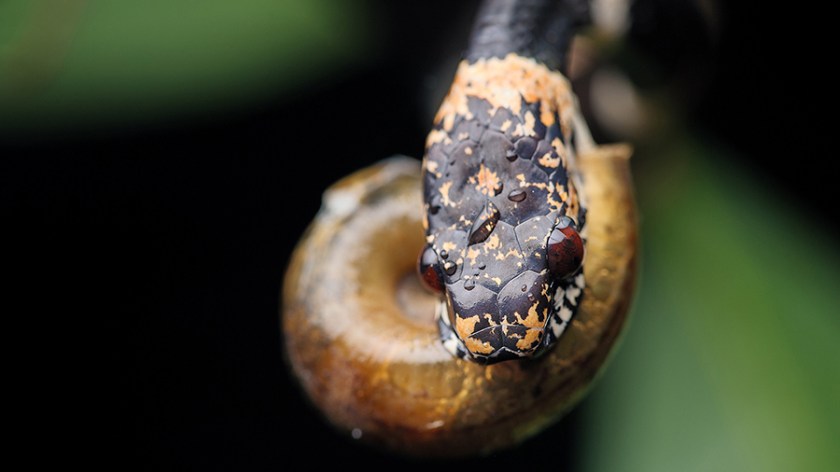
Believe or not, there is an entire group of snakes for which snails are number one on their menu. This is why their jaws are modified in such a way that they can suck the viscous slimy body of a snail right out of its shell.

Dipsas bobridgelyi trying to suck a snail out of its shell. Photo by Matthijs Hollanders.

Luckily for us, these snakes are harmless to humans. However, humans are not harmless to them. Four out of the five newly discovered species are already facing the possibility of becoming extinct, as the forest remnants they call home are currently being destroyed.

In a bid to take care after the unfortunate reptiles, the scientists auctioned the naming rights for the new species at a recent event in New York City. The money are to purchase and save a previously unprotected 72 ha (178 acre) plot of land where some of these species live.

To do so, Fundación Jocotoco is to add the purchased plot to the Buenaventura reserve, in order to expand the only protected area where two of the new snakes are found, and prevent these endangered snake species from going extinct.

Dipsas bobridgelyi. Photo by Alejandro Arteaga.

Three of the five species were discovered during a series of expeditions to three rainforests in Ecuador between 2013 and 2017, conducted by Alejandro Arteaga, an Ecuadorian–Venezuelan PhD student at the American Museum of Natural History and scientific director of Tropical Herping, who partnered with Dr. Alex Pyron, The George Washington University and National Museum of Natural History, USA.

In another habitat type, the dry forest, Ecuadorian scientists Dr. Omar Torres-Carvajal, Pontificia Universidad Católica del Ecuador (PUCE), David Salazar-Valenzuela, Universidad Tecnológica Indoamérica, Diego Cisneros-Heredia, Universidad San Francisco de Quito, Juan Carlos Sánchez, Universidad del Azuay, Mario Yánez-Muñoz, Instituto Nacional de Biodiversidad  (INABIO), and Peruvian scientist Pablo Venegas, CORBIDI, noted the existence of the other two new species.

“We had to let people know that these cool snakes exist,” Alejandro said, “and that these species might soon stop to exist, and we need people’s help to protect the snake’s habitat.”

In order to confirm these five snakes as new species, the team of researchers, particularly Drs. Konrad Mebert, Universidade Estadual de Santa Cruz, Nicolás Peñafiel, Universidad Tecnológica Indoamérica, Gabriela Aguiar, Tropical Herping, and Timothy Colston, The George Washington University and National Museum of Natural History, USA, counted scales and gathered measurements from more than 200 museum specimens, and extracted DNA from nearly 100 snakes.

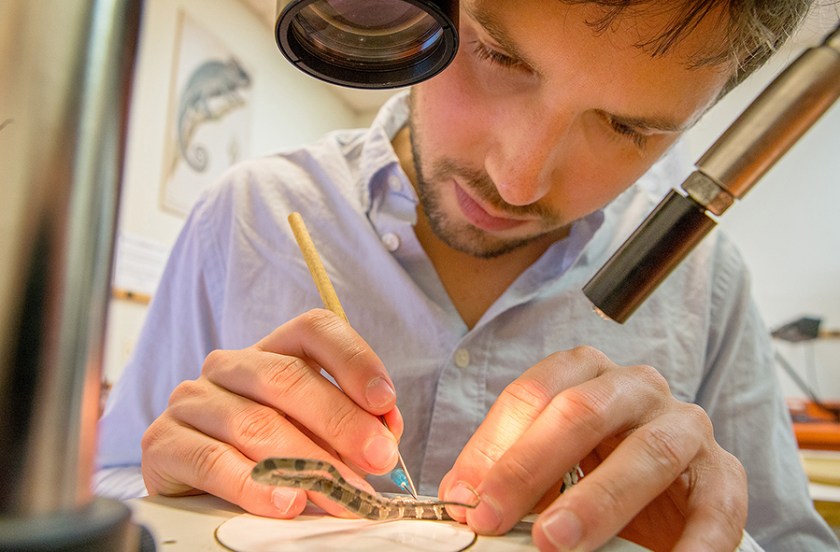
PhD student Alejandro Arteaga measured snake specimens at various museums, including the American Museum of Natural History in New York City.

Having made the highest bid at the auction, Rainforest Trust (RT) and Bob Ridgely got to name three of the five new snakes.

Thus, the species Dipsas georgejetti now honors George Jett, who supported the inception of Fundación Jocotoco’s reserves in Ecuador; while Dipsas bobridgelyi is a tribute to Dr. Robert “Bob” S. Ridgely, a leading ornithologist and distinguished conservationist who helped the establishment of the Buenaventura reserve. Bob, who was at the auction, chose the name Sibon bevridgelyi (Bev Ridgely’s Snail-Eater) to honor his father.

Dipsas georgejetti is found in only in dry forests in the coast of Ecuador. Photo by Alejandro Arteaga.

The remaining two snail-eating species, Dipsas oswaldobaezi and D. klebbai, were named after Dr. Oswaldo Báez and Casey Klebba, respectively, in recognition for their passion for Ecuador’s biodiversity and conservation.

Dipsas klebbai is the only one among the new species currently not threatened with extinction. Photo by Alejandro Arteaga.

“Several companies let you name a star after a loved one,” Alejandro says, “but, generally, such names have no formal validity. Naming an entire species after someone you love or admire is different. With few exceptions, this is the name that both the general public and the whole scientific community will use. So, why not let people choose the name of a species in exchange for a donation that protects its habitat?”

Dipsas oswaldobaezi photographed at Reserva la Ceiba. Photo by Jose Vieira.

The act of naming species is essential in raising awareness about the existence of a species and its risk of extinction, but it also provides an opportunity to recognize and honor the work of the people and institutions fighting to protect the species.

“Naming species is at the core of biology,” says Dr. Juan M. Guayasamin, co-author of the study and a professor at Universidad San Francisco in Quito. “Not a single study is really complete if it is not attached to the name of the species, and most species that share the planet with us are not described.”

“Everybody knows elephants and orangutans,” says Dr. Martin Schaefer of Fundación Jocotoco, “but some reptiles and amphibians are even more threatened. Yet, we still lack even the basic information to protect them better. This is why the work by scientists is so important; it provides the necessary information to guide our conservation decisions.”

“Through photography or by joining a scientific expedition, the general public can learn more about hidden biodiversity and how threatened it is,” says Lucas Bustamante of Tropical Herping. “This is a model to obtain support for research and conservation while recruiting more environmental ambassadors.”

***

Find out more about the Tropical Herping’s scientific discoveries and expeditions on Instagram and Facebook.

***

Watch the video below to follow entomologist and science communicator Phil Torres as he joins Alejandro Arteaga for one of his expeditions to document what it takes to find a new snake.

Academic paper:

Arteaga A, Salazar-Valenzuela D, Mebert K, Peñafiel N, Aguiar G, Sánchez-Nivicela JC, Pyron RA, Colston TJ, Cisneros-Heredia DF, Yánez-Muñoz MH, Venegas PJ, Guayasamin JM, Torres-Carvajal O (2018) Systematics of South American snail eating snakes (Serpentes, Dipsadini), with the description of five new species from Ecuador and Peru. ZooKeys 766: 79–147. https://doi.org/10.3897/zookeys.766.24523

Get to know them faster: Alternative time-efficient way to describe new moth species

Having collected thousands of moth and butterfly species from across Costa Rica, famous ecologist Daniel Janzen, University of Pennsylvania, and his team were yet to find out many of their names. When they sought help from Dr. Gunnar Brehm, the taxonomist realised he needed too much time to describe species in the framework of an extensive revision of the genus, especially as there are still only a few biologists skilled to do this.

In the end, he found a way to revise the Neotropical looper moth genus Hagnagorafast and efficiently through avoiding wordy descriptions, but focusing on diagnostic characters, illustrated external characters, genitalia structures and DNA barcoding instead. His study is available in the open-access journal ZooKeys.

Having been put together back in the 19th century, most of the species within the Neotropical moth genus Hagnagora had been described by 1913. In modern days, it seemed necessary for the taxon to be revised. As a result, Dr. Gunnar Brehm herein publishes a “concise revision” comprising twenty species. It includes two species that have been revived from synonymy, two subspecies reinstated to a species level, four species excluded from the genus and the description of three new to science. In honour of the people who had funded the research, the new species have been named after them.

Following the revision, the research concludes not only the DNA molecules divergence between the separate species, but some subtle differences such as size, form of the wing blotches or the shape of the male genitalia.

Curious characteristic behaviour traits have also been noted within the genus. The representatives of the discussed genus fold their wings vertically while resting just like most butterflies and unlike the majority of related geometrid moths. Similarly, three of the revised species were noticed to be active during the day when they would often perch on moist substances like rotting plants, mud or dung, from whose fluids they would find vital nutrients.

The author stresses on the fact that taxonomists can hardly keep up with the pace inventories are being compiled, nor with the accelerating destruction of tropical rainforests. “Taxonomists therefore need to accelerate their workflows and try to make their papers useful not only to other taxonomists but for ecologists who need their support”, Dr. Gunnar Brehm says.

“What used to be one species ten years ago, known as Hagnagora anicata, is now regarded as a complex of six species, and more might be discovered in South American rain forests”, Brehm says. “Integrating information of molecules and morphology, as concisely as possible, appears to be one promising way to cope with the problem of slow taxonomy”, he explains in conclusion.

###


Original source:

Brehm G (2015) Three new species of Hagnagora Druce, 1885 (Lepidoptera, Geometridae, Larentiinae) from Ecuador and Costa Rica and a concise revision of the genus. ZooKeys 537: 131-156. doi: 10.3897/zookeys.537.6090

Night calls reveal two new rainforest arboreal frog species from western New Guinea

Tracked by their calls at night after heavy rains, two species of narrow-mouthed frogs have been recorded as new. During the examinations it turned out that one of the studied specimens is a hermaphrodite and another one represents the first record of the genus Cophixalus for the Misool Island.

The field work, conducted by Steve Richards, South Australian Museum, Adelaide, and his team, took place in the Raja Ampat Islands, Indonesian part of New Guinea. Their findings, compiled by Dr. Rainer Guenther, Museum fur Naturkunde, Berlin, are available in the open access journal Zoosystematics and Evolution.

Belonging to the narrow-mouthed frog genus Cophixalus that occurs mainly in New Guinea and northern Australia, the two new species have been differentiated by their morphological features along with the specificity of their advertisement calls, produced by males to attract their partners. Both are characterised by small and slender bodies, measuring less than 23 mm in length.

Curious enough, when dissected one of the male specimens, assigned to the new species C. salawatiensis, revealed a female reproductive system with well-developed eggs. Simultaneously, neither its sound-producing organs, nor its calls differed in any way from the rest of the observed males from the same species. Therefore, it is to be considered a hermaphrodite.

Both new frog species have been retrieved from logged lowland rainforests. There the scientists noted that after heavy rains at night the males perched on leaves of bushes and produced sounds, characteristic for each species.

All specimens have been placed in the collection of the Museum Zoologicum Bogoriense (MZB) in Cibinong (Bogor), Indonesia.

###

Original source:

Guenther R, Richards S, Tjaturadi B, Krey K (2015) Two new species of the genus Cophixalusfrom the Raja Ampat Islands west of New Guinea (Amphibia, Anura, Microhylidae).Zoosystematics and Evolution 91(2): 199-213.doi: 10.3897/zse.91.5411