Celebrating Deep Day with Incredible Deep-Sea Research

Protecting the deep sea, the largest and least explored habitat on Earth, requires collaborative effort.

May 7th marks Deep Day, a global day of awareness and action dedicated to the deep sea. Founded by the Deep Sea Conservation Coalition, it aims to raise awareness of the deep sea’s immense ecological importance and call for its protection against threats like deep-sea mining and destructive fishing.

To celebrate the wonders of our oceans and raise awareness of the incredible biodiversity of the deep sea, we at Pensoft Publishers would like to highlight some of the remarkable marine studies that have recently been published in our scientific journals.

A Global Collaboration to Uncover Deep-Sea Amphipods

24 deep-sea amphipods
The 24 newly described deep-sea amphipod species. Image credit to: Eleanor Frost, National Oceanography Centre

Demonstrating the power of global teamwork, an international group of experts recently discovered 24 new deep-sea amphipod species in the central Pacific Ocean’s Clarion-Clipperton Zone (CCZ). Researchers from institutions worldwide, including the University of Lodz and the National Oceanography Centre, came together for a coordinated taxonomy workshop to achieve this. Their work revealed a completely new evolutionary branch with the discovery of a new superfamily, Mirabestioidea.

Crucially, their findings form part of the International Seabed Authority’s Sustainable Seabed Knowledge Initiative (SSKI) and its ‘One Thousand Reasons’ project, which aims to formally describe 1,000 new species by the end of the decade.

Highlighting the importance of this joint effort, Dr. Anna Jażdżewska from the University of Lodz shared:

This was a truly collaborative process that allowed us to achieve the ambitious goal of describing more than 20 species new to science within a year – something that would not have been possible if each of us worked independently. The team’s findings provide information that is crucial for future conservation and policy decisions.

Learn more in the Special Issue: New deep-sea Amphipoda from Clarion-Clipperton Zone

What lives 10 km below the surface?

@pensoft.publishers

😯Fascinating new #study recorded 108 morphotaxa from 4,500m down to the #hadal depths of 9,775m, revealing the hidden life of the NW Pacific trenches. 🎥They analyzed 460 hours of video from landers & submersibles across the Japan, Ryukyu, and Izu-Ogasawara trenches. 👇Full study here: https://doi.org/10.3897 /BDJ.14.e182172 📗You can read all about it on Pensoft’s blog 👇 https://blog.pensoft.net/2026/04/06/what-lives-10-km-below-the-surface-a-new-look-at-life-in-japans-deepest-ocean-trenches/ Research center: Minderoo-UWA Deep-Sea Research Centre. Main funders of the expedition: Inkfish, Caladan Oceanic #deepsea #sciencetok #research

♬ THE MOON – Camargguinho
Photo and video credit to Minderoo-UWA Deep-Sea Research Centre, Inkfish, Caladan Oceanic, Jamieson et al., 2026

Another recent expedition provided a profound look at life up to nearly 10 kilometers below the surface in the Japan, Ryukyu, and Izu-Ogasawara trenches, cataloging at least 108 distinct organism groups. The research captured rare footage of species interactions at extreme depths – and one baffling, unidentified animal that has left taxonomists worldwide perplexed.

Animalia incerta sedis
The unknown organism or Animalia incerta sedis. Credit to Jamieson et al., 2026, o Minderoo-UWA Deep-Sea Research Centre, Inkfish and Caladan Oceanic.

Rather than using traditional trawls that can damage fragile organisms, the team utilized crewed submersibles and free-fall baited landers. Explaining the value of this non-destructive method, the research team noted:

This combination enabled us to build the most comprehensive visual baseline yet for abyssal and hadal megafauna in the Northwest Pacific to date.

They added that the study aims to establish a foundation for the future, emphasizing that:

More than anything, the hadal zone remains one of Earth’s least-explored and most intriguing frontiers.

Learn more: Jamieson AJ, Swanborn DJB, Bond T, Cundy MC, Fujiwara Y, Lindsay D, Stott MS, Kitazato H (2026) Faunal biodiversity of the lower abyssal and hadal zones of the Japan, Ryukyu and Izu-Ogasawara trenches (NW Pacific Ocean; 4534-9775 m). Biodiversity Data Journal 14: e182172. https://doi.org/10.3897/BDJ.14.e182172

The Internet Names a New Deep-Sea Chiton

Ferreiraella populi
Ferreiraella populi on woodfall. Image credit to ©ChongChen/JAMSTEC

Finally, highlighting a unique way the public can engage with science and taxonomy, a recently found deep-sea chiton was named by the internet after science YouTuber Ze Frank featured it in an episode of his “True Facts” series. Originally discovered in 2024 within the Izu-Ogasawara Trench at a depth of 5,500 meters, this new species belongs to the genus Ferreiraella, a rare and specialized group of mollusks that live exclusively on sunken wood in the deep sea.

From over 8,000 suggestions submitted across social media, the research team selected the name Ferreiraella populi. The epithet populi is a Latin singular noun in the genitive case meaning “of the people”.

Prof. Dr. Julia Sigwart, co-chair of the Senckenberg Ocean Species Alliance (SOSA), emphasized the broader significance of this public discovery:

Ferreiraella populi exemplifies the overwhelming biodiversity of the oceans, the vast majority of which remains unexplored. Many species go extinct before we even know they exist – this is especially true for marine invertebrates.

Learn more: (SOSA) SOSA, Chen C, Frank H, Kraniotis L, Nakadera Y, Schwabe E, Sigwart JD, Trautwein B, Vončina K (2026) Ocean Species Discoveries 28–30 — new species of chitons (Mollusca, Polyplacophora) and a public naming competition. Biodiversity Data Journal 14: e180491. https://doi.org/10.3897/BDJ.14.e180491 

@pensoft.publishers

Happy #DeepDay ! Started by Deep Sea Conservation Coalition, this annual day is aimed at raising awareness to the incredible diversity in our deep seas. Today, we’re sharing with you three remarkable studies from our journals – each one a window into a fascinating world, hoping to raise awareness and inspire action to #DefendtheDeep . 👇𝐎𝐮𝐫 𝐛𝐥𝐨𝐠: https://blog.pensoft.net/…/celebrating-deep-day-with…/ 🔎By analysing 460 hours of video from landers and submersibles across the Japan, Ryukyu, and Izu-Ogasawara trenches, researchers found something extraordinary: a mysterious organism so unusual it was classified as Animalia incerta sedis! 📗𝐑𝐞𝐚𝐝 𝐭𝐡𝐞 𝐟𝐮𝐥𝐥 𝐬𝐭𝐮𝐝𝐲 𝐩𝐮𝐛𝐥𝐢𝐬𝐡𝐞𝐝 𝐢𝐧 Biodiversity Data Journal (𝐁𝐃𝐉) 𝐡𝐞𝐫𝐞: https://doi.org/10.3897/BDJ.14.e182172 Cc: Minderoo-UWA Deep-Sea Research Centre at The The University of Western Australia, JAMSTEC: Japan Agency for Marine-Earth Science and Technology, Inkfish, Caladan Oceanic LLC 🎥Footage credit: Minderoo-UWA Deep-Sea Research Centre, Inkfish, Caladan Oceanic, Jamieson et al., 2026 After thousands of name suggestions from the public, the “chiton of the people” has been officially described in Biodiversity Data Journal. 🙌A huge thank you to everyone who voted and participated! Cc: True Facts Senckenberg Senckenberg Ocean Species Alliance – SOSA 🎥Footage credit: ©ChongChen/JAMSTEC 𝐅𝐮𝐥𝐥 𝐚𝐫𝐭𝐢𝐜𝐥𝐞 𝐢𝐧 𝐁𝐃𝐉: https://doi.org/10.3897/BDJ.14.e180491 🦐24 new deep-sea amphipods discovered in the Clarion Clipperton Zone. Through an international collaboration – with key momentum from a 2024 taxonomic workshop at Uniwersytet Łódzki – researchers described 24 new species of amphipods from the central Pacific abyss. 𝐀𝐜𝐜𝐞𝐬𝐬 𝐚𝐥𝐥 𝐭𝐡𝐞 𝐩𝐮𝐛𝐥𝐢𝐜𝐚𝐭𝐢𝐨𝐧𝐬 𝐢𝐧 ZooKeys: https://zookeys.pensoft.net/issue/4856/ See less #deepsea #deepocean #sciencetok

♬ Fantasy in an Immersive World – Ernesto P. Neto

These studies highlight the vastness of the unexplored frontier that our deep seas and oceans offer. Revealing this hidden life – from entirely new evolutionary branches of amphipods to records of unknown organisms – requires global collaboration, cutting-edge exploration technologies, and the involvement of the general public.

Ultimately, this shared pursuit of discovery provides the fundamental knowledge crucial for conservation and policy decisions. As Deep Day reminds us of the encroaching threats from deep-sea mining, human-derived debris, and destructive fishing, we must work together to understand these fragile habitats so that we can effectively protect them and #DefendtheDeep.

For more curious research follow Pensoft Publishers’ socials: Facebook, Bluesky, Instagram, TikTok, LinkedIn and X.

The Giants of the Reef: New Citizen Science Project Races to Document Centennial Corals

Ancient, massive coral reef colonies hold scientific treasures but remain largely unknown – now they are being mapped with the help of citizen science.

Guest blog post by Federica Siena

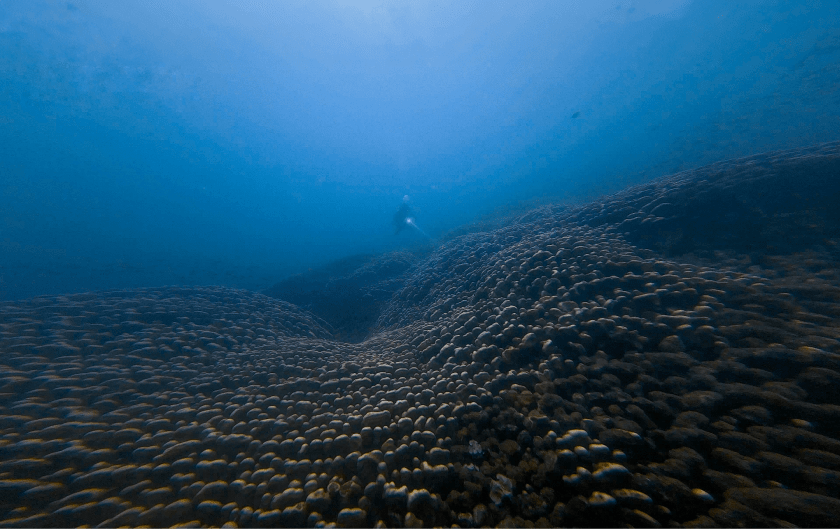
Coral reefs hide “scientific treasures” that have survived for centuries, yet many of these giant, ancient organisms remain largely unknown to science. A new study published in the journal Nature Conservation introduces “Map the Giants,” a pioneering citizen-science initiative launched by researchers from the University of Milano-Bicocca to find these giant coral colonies before they are lost to escalating global pressures.

Map the Giants® was born from a sobering yet stimulating realization by the research team: despite their centennial age and their remarkable sizes – defined by the project as colonies measuring at least 5 meters in length – these colonies lack formal recognition. This leaves them vulnerable to disappearance simply because we do not know they exist.

A Mission of Discovery

Coral giant, video credit to Map the Giants®

While these coral giants have withstood the elements for hundreds of years, the last century has brought unprecedented local and global threats. “We are in a race to recognize these organisms. They have survived for centuries, but modern pressures are increasing so rapidly that some colonies may disappear before they are even documented,” the authors emphasized the urgency.

The research highlights that identifying these giants is not just a scientific necessity, but a vital tool for fostering ocean literacy and raising awareness among local stakeholders and the broader community – a goal made possible through a standardized reporting protocol and multi-expert validation that ensures robust data collection regardless of the contributor’s background.

Secrets of Survival

The team searched for more than just size; they also looked for vital clues to “coral resilience“. Long-lived giant corals act as high-resolution time capsules, archiving centuries of past climate and environmental conditions within their skeletons.

By locating and studying these ancient survivors, we hope to unlock the genetic secrets and traits that have enabled these specific individuals to resist and acclimatize to environmental changes.

researchers explained

Furthermore, the project aims to provide a validated sampling frame to support peer-reviewed studies on resilient “super-corals,” which could help future-proof and restore the reefs of tomorrow. Ultimately, by identifying these culturally and ecologically valuable colonies, the researchers plan to collaborate with stakeholders to explore protection measures and establish them as marine monuments.

The Power of the Community

@pensoft.publishers

Some #corals have been alive for CENTURIES – and scientists are just now racing to find them before they disappear. 🪸 “Map the Giants” is a new citizen science project tracking coral colonies 5+ metres long. In just 18 months, contributors from 22 countries have already added 133 verified entries to the global database. 👐Pretty incredible what a community can do. Photo and video credit to: Map the Giants, Luca Fallati, Federica Siena, Anuar Abdulla and Easy Divers Bali #coralreefs #science #marine #climatechange

♬ mirage – théos & Antent

The project has already seen remarkable success. In its first 18 months, the initiative received 195 submissions from 22 countries, resulting in 133 validated entries added to the public database. Most surprisingly, the project reports of an incredibly large Porites sp. coral measuring over 60 metres in linear length or a Pavona cf. clavus over 195 metres in perimeter, offering new inspirations for future scientific research.

Citizen science is pivotal. The sheer scale of coral reefs requires a concerted effort. Anyone with a camera and a snorkel can join us. A simple report of a giant’s existence is the first step in recognizing and studying them.

said the project lead Prof. Simone Montano

How to Join the Search

The project is designed for total accessibility. Through a dedicated website (www.mapthegiants.com) and social media presence, the public can contribute data and learn about the beauty and fragility of reef ecosystems. The adaptable protocol ensures that whilst data are robust, the background of the contributor will only affect the level of complexity of the data, not the report on its own. By turning divers and reef users into “coral seekers,” the project aims to bridge the gap between professional science and community-led conservation.

Original source:

Siena FM, Gabbiadini A, Fallati L, Galli P, Montano S (2026) Map the Giants: a new citizen-science portal to map, study and protect the largest coral colonies. Nature Conservation 63: 127-151. https://doi.org/10.3897/natureconservation.63.182923