Lost, Hidden, and Found: The Herpetofauna of Samar’s Karst Labyrinth

A recent field study to document reptile and amphibian diversity found in Samar Natural Park (SINP) and Samar Island unveils fascinating results.

Guest Blog Post by the Research Team of Samar Island’s Herpetofauna

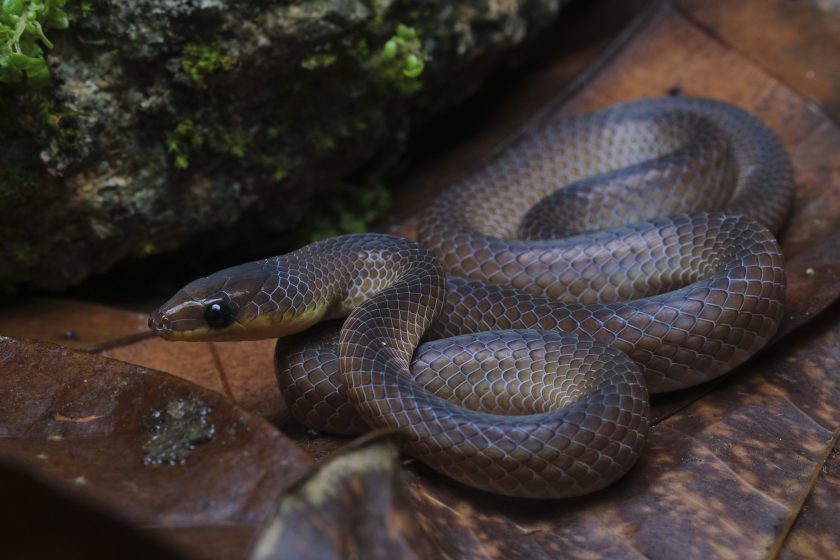
In the darkness of the Samar rainforest, a flash of color stopped the research team in their tracks. Their headlamps illuminated a small shrub on a worn limestone trail, revealing a tiny pink snake. With a quiet sense of triumph, Yñigo del Prado readied his camera and leaned forward to photograph the coiled serpent within the branches of the shrub.

Although unknown to del Prado’s research team at the time, their rediscovery of the rare blindsnake Ramphotyphlops marxi would become one of the significant findings of the most recent comprehensive field study to document reptile and amphibian diversity found in Samar Natural Park (SINP) and Samar Island. Indeed, first recorded by the eminent zoologist Dioscoro Rabor in 1957 and unseen since, the snake is now a key highlight of the the survey, now published in the open-access journal ZooKeys.

Ramphotyphlops marxi – Marx’s worm snake. (Image credit: Yñigo del Prado).

“Samar Island is a biological frontier hiding in plain sight,” remarks Arvin Diesmos, a former curator in herpetology at the National Museum of the Philippines, and present senior director at the ASEAN Centre for Biodiversity. He was part of an expedition team from the Herpetological Research Collection of the University of Santo Tomas to survey the biodiversity of Samar Island Natural Park.

The primary goal of the expedition was to  generate updated and comprehensive data on the terrestrial vertebrate fauna—from amphibians and reptiles to birds and mammals—that aim to strengthen the scientific foundation for the nomination of SINP to the UNESCO World Heritage List.

The diverse team of biologists was assembled by UST Assistant Professor Mae Diesmos and head of UST–HRC, to spearhead the terrestrial faunal surveys, while project was designed by Professor Eric Zerrudo, also from UST, and the director of the Center for Conservation of Cultural Property and Environment in the Tropics.

Together with biologists from the University of the Philippines in Diliman and Los Banos campus, in close partnership with the Department of Environment and Natural Resources and the Samar provincial government, the project undertook a month-long biodiversity survey of the karst rainforest of SINP – a ~333,339 hectare protected area of intact lowland forest over limestone and a Key Biodiversity Area in the Philippines.

Karst rainforest of SINP. (Image credit: Yñigo del Prado).

At an estimated area of ca 1,310,700 ha, Samar and the nearby island of Leyte count as one of the largest islands of the Philippines. While Samar has gradually experienced progressive decline in forest cover over the last couple of decades, its interior still houses one of the largest intact labyrinths of habitats spanning karst rainforest and cave systems.

“The reptiles and amphibians in limestone karst systems have evolved in remarkable ways. Every major survey [we] conducted reveals something new, something previously undetected just hiding under the woodworks. Which tells us that Samar remains one of the most important—and often understudied, biodiversity strongholds in the eastern region of the Philippines.”

Mae Diesmos

Though, perhaps “understudied” is an overstatement. A number of biological surveys have been conducted in SINP, as referenced in the article, with some of the extensive surveys dating back as early as the 1850s.

 With the benefit of hindsight, the team integrated historical records into their paper, updating species names and distributions to match current classifications. This process effectively cleared up past confusion over identification. In addition, the larger taxon-based field biologists from UST and UP, allowed for more targeted sampling of several taxonomic groups. Increasing the sampling effort subsequently led to more extraordinary discoveries.

Case in point, the team found an additional 39 new records of reptiles and amphibians that bolstered the listing in SINP to a total of 79 species, and new distribution records of three species previously unknown from the island. And of course, there was the collection of the two specimens of R. marxi, whose existence had only been known from two historical records.

Striped leaf gecko. (Image credit: Yñigo del Prado).

Acquiring this valuable data was by no means a simple task. The herpetology team was beset by the onset of the monsoon season, meaning that dry transect walks and even dry clothing were rare. The team also faced the strong currents and high rapids of the adjacent Ulot River as they moved from one site to another, and endured sandfly-infested campsites.

Ulot River Stream. (Image credit: Yñigo del Prado).

Encounters with local herpetofauna were always a joy. In the search for unique and cryptic species of lizards and snakes, the herpetology team relied on some tried and tested methods such as targeted microhabitat sampling of decaying logs, forest litter, and stream banks to look for fossorial species. Some methods were largely improvised; collapsible fishing poles became indispensable to shake down arboreal species or at the very least, encourage them to descend from the canopies.

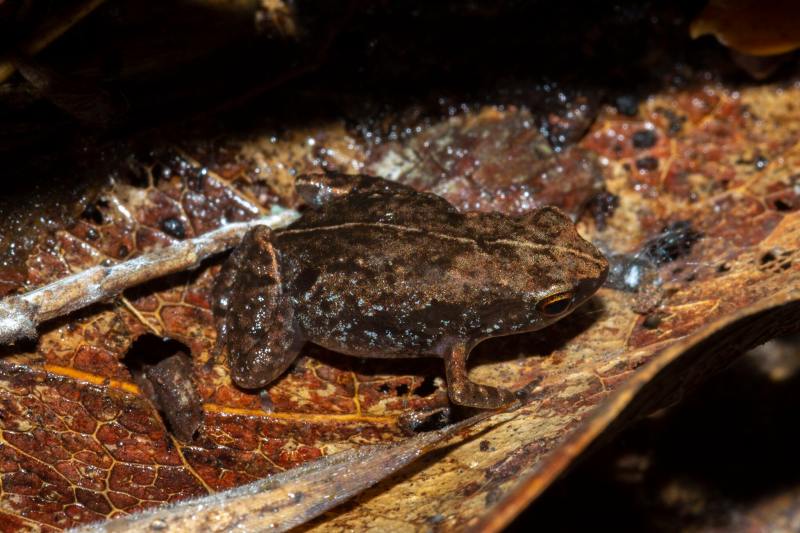
Some species, however, had to be approached differently, as was the case for Platymantis bayani. The species is part of a larger complex of limestone frogs that could be found in karst formations in the Philippines, and each known species is unique to the location where it is found. On more than one occasion, the herpetology team had to search through overgrown limestone crevices; in others, the group descended into the depths of massive limestone caves in the dark to search for these elusive frogs.

Platymantis bayani – Walter’s limestone frog. (Image credit: Yñigo del Prado).

But Filipinos are nothing if resilient, as a local adage goes. Certainly, Mae Diesmos and her team had their work cut out for them. The officials of the Samar provincial government were notably also very thorough in their coordination and movement across study sites, to ensure the safety of the team. This highlights the importance of collaborative work between research institutions and local government units and stakeholders. Research is considerably more difficult without proper funding and local coordination.

This issue is not unique to Samar. Limited and precious funding to support scientific research remains a challenge to sustain biodiversity surveys across many islands and regions of the country. Much work remains to be done because numerous areas and habitats still lack detailed biodiversity surveys. Field biologists and conservationists have, for many decades now, been locked in a dizzying and (at times) disheartening race against habitat destruction and population decline of key species.

Semper’s forest dragon. (Image credit: Yñigo del Prado).

As more field studies continue, Samar and nearby islands will likely continue to reveal even more of its hidden biodiversity. An inspiring reminder to future researchers that even in the 21st century, the rainforest of the Philippines still holds many scientific discoveries waiting to be made.

Original source:

Diesmos MLL, del Prado YLC, Kim PMM, Caguimbal NALE, Venturina REL, Lorenzo II AN, Diesmos AC (2026) Amphibians and reptiles of Samar Island Natural Park, Philippines, with an updated checklist, a rediscovery, and new records for Samar Island. ZooKeys 1269: 303-328. https://doi.org/10.3897/zookeys.1269.173854

For more articles on zoology, visit the ZooKeys website and follow the journal on BlueSky and Facebook.

New reptile on the block: A new agamid lizard species discovered in China

Measuring less than 9 cm with an orange tongue, it inhabits subtropical and tropical forests, thriving in various landscapes including urban areas.

A new agamid joins Asia’s rich reptile fauna, officially described as new to science in the open-access journal ZooKeys.

Calotes wangi.

“From 2009 to 2022, we conducted a series of field surveys in South China and collected a number of specimens of the Calotes versicolor species complex, and found that the population of what we thought was Calotes versicolor in South China and Northern Vietnam was a new undescribed species and two subspecies,” says Yong Huang, whose team described the new species.

Calotes wangi hainanensis, a newly discovered subspecies of Calotes wangi.

Wang’s garden lizard (Calotes wangi) is less than 9 cm long, and one of its distinguishing features is its orange tongue.

Calotes wangi is found in subtropical evergreen broad-leaved forests and tropical monsoon forests in southern China and northern Vietnam, mostly in mountainous areas, hills and plains on forest edges, arable land, shrub lands, and even urban green belts. It is active at the edge of the forest, and when it is in danger, it rushes into bushes or climbs tree trunks to hide. Investigations found that the lizards lie on sloping shrub branches at night, sleeping close to the branches,” says Yong Huang.

Calotes wangi.

It is active from April to October every year, while in the tropics it is active from March to November or even longer, and eats a variety of insects, spiders, and other arthropods.

For now, the researchers estimate that the new species is not threatened, but they do note that in some areas its habitat is fragmented.

Images of Calotes wangi’s habitat.

“In addition, their bodies are used medicinally and the lizards are also eaten,” they write in their research paper.

This is why they suggest that the local government strengthen the protection of their ecological environment and pay close attention to the population dynamics.

Research article:

Huang Y, Li H, Wang Y, Li M, Hou M, Cai B (2023) Taxonomic review of the Calotes versicolor complex (Agamidae, Sauria, Squamata) in China, with description of a new species and subspecies. ZooKeys 1187: 63-89. https://doi.org/10.3897/zookeys.1187.110704

Follow ZooKeys on Facebook and X.

Same and different: A new species of pit viper from Myanmar

In a collaborative study involving institutions from Singapore, Malaysia, Germany, and the UK, scientists have discovered a new species of pit viper from Myanmar that is both similar and different from its adjacent sister species.

Finding and describing new species can be a tricky endeavor. Scientists typically look for distinctive characters that can differentiate one species from another. However, variation is a continuum that is not always easy to quantify. At one extreme, multiple species can look alike even though they are different species—these are known as cryptic species. At the other extreme, a single species can be highly variable, creating an illusion of being different species. But what happens when you encounter both extremes simultaneously?

Herpetologist Dr Chan Kin Onn (previously at the Lee Kong Chian Natural History Museum, Singapore, now with the University of Kansas Biodiversity Institute and Natural History Museum, USA) led a study describing a new species of pit viper from Myanmar that is both similar and different from its sister species. The discovery is published in the open-access journal ZooKeys.

A specimen of Trimeresurus ayeyarwadyensis from the Yangon Region, Myanmar. Photo by Wolfgang Wüster

“Asian pit vipers of the genus Trimeresurus are notoriously difficult to tell apart, because they run the gamut of morphological variation. Some groups contain multiple species that look alike, while others may look very different but are actually the same species,” they say.

A specimen of Trimeresurus ayeyarwadyensis from the Yangon Region, Myanmar. Photo by Wolfgang Wüster

The redtail pit viper (Trimeresurus erythrurus) occurs along the northern coast of Myanmar and is invariably green with no markings on its body. A different species called the mangrove pit viper (Trimeresurus purpureomaculatus) occurs in southern Myanmar. This species typically has distinct dorsal blotches, and incredibly variable dorsal coloration including gray, yellow, brown, and black, but never green. Interestingly, in central Myanmar, sandwiched between the distribution of the redtail pit viper and the mangrove pit viper, a unique population exists that is green with varying degrees of blotchiness, which appears to be a blend between the redtail pit viper and the mangrove pit viper.

“This mysterious population in central Myanmar baffled us and we initially thought that it could be a hybrid population,” the researchers said. In a separate paper, Dr Chan used modern genomic techniques and determined that the population in central Myanmar was actually a distinct species and not a hybrid population.

But this was not the end of the story. The researchers discovered another surprise when they examined the snake’s morphological features: they found that the new species was also highly variable. Certain populations are dark green with distinct blotches, easily distinguishable from its closest relative, the redtail pit viper, which is bright green with no blotches. However, some populations of the new species are bright green with no blotches and look virtually identical to the redtail pit viper.

“This is an interesting phenomenon, where one species is simultaneously similar and different from its closest relative (the redtail pit viper). We think that at some point in the past, the new species may have exchanged genes with the redtail pit viper from the north and the mangrove pit viper from the south,” says Dr Chan.

The new species is called the Ayeyarwady pit viper (Trimeresurus ayeyarwadyensis) in reference to the Ayeyarwady River, which is the largest and one of the most important rivers in Myanmar. The river forms an expansive delta that is bounded by the Pathein River to the west and the Yangon River to the east. These rivers and their associated basins also mark the westernmost and easternmost distribution boundaries of the Ayeyarwady pit viper.

Research article:

Chan KO, Anuar S, Sankar A, Law IT, Law IS, Shivaram R, Christian C, Mulcahy DG, Malhotra A (2023) A new species of pit-viper from the Ayeyarwady and Yangon regions in Myanmar (Viperidae, Trimeresurus). ZooKeys 1186: 221-234. https://doi.org/10.3897/zookeys.1186.110422

Follow ZooKeys on X and Facebook.

Psychedelic rock gecko among dozens of species in need of further conservation protection in Vietnam

Researchers recommend IUCN CPSG’s One Plan Approach to Conservation measures, which include both habitat conservation and increasing the number of threatened species in breeding stations and zoos. 

Endangered psychedelic rock gecko (Cnemaspis psychedelica)
Photo by Thomas Ziegler. Licence: CC-BY.

Further conservation measures are required to protect Vietnamese reptiles, such as the psychedelic rock gecko (Cnemaspis psychedelica), from habitat loss and overharvesting, concludes a new report, published in the open-access scientific journal Nature Conservation.

Having identified areas of high reptile diversity and large numbers of endangered species, the study provides a list of the 50 most threatened species as a guide for further research and conservation action in Vietnam. 

The study, based on the bachelor thesis of Lilli Stenger (University of Cologne, Germany), recommends IUCN CPSG’s One Plan Approach to Conservation measures, which, next to improved habitat conservation, also involves increasing the number of threatened species in breeding stations and zoos to maintain populations suitable for restocking. 

Co-authors of the report are Anke Große Hovest (University of Cologne, Germany), Truong Quang Nguyen (Vietnam Academy of Science and Technology), Cuong The Pham, (Vietnam Academy of Science and Technology), Anna Rauhaus (Cologne Zoo, Germany), Minh Duc Le (Vietnam National University), Dennis Rödder (Leibniz Institute for the Analysis of Biodiversity Change, Germany) and Thomas Ziegler (University of Cologne and Cologne Zoo, Germany).

“Modern zoos, as well as local facilities, can play a crucial role in not only conducting or financially supporting in situ conservation projects, that is to say in nature, but also by protecting species from extinction through maintaining ex situ assurance colonies to reinforce in situ conservation programs,”

said Prof. Dr. Thomas Ziegler, Vietnam conservation team member and coordinator from Cologne Zoo, Germany.
Endangered Truong Son pit viper or Quang Binh pit viper (Trimeresurus truongsonensis).
Photo by Thomas Ziegler. Licence: CC-BY.

The scientists identified 484 reptile species known to Vietnam, aiming to provide a baseline to authorities, conservationists, rescue centers, and zoos, so they can follow up with appropriate conservation measures for endangered species. They note that the number is likely to go up, as the country is regarded as a top biodiversity hotspot, and the rate of new reptile species discoveries remains high.

According to the IUCN Red List, 74 of the identified species are considered threatened with extinction, including 34 endemic species. For more than half of Vietnam’s endemic reptiles (85 of 159), the IUCN Red List status is either missing or outdated, and further research is imperative for these species, the researchers say.

Vietnam has a high level of reptile diversity and an outstanding number of endemic species. The species richness maps in the study revealed the Central Annamites in central Vietnam to harbor the highest endemic species diversity (32 species), which highlights it as a site of particular importance for reptile conservation. Alarmingly, a protected area analysis showed that 53 of the 159 endemic species (33.2%) including 17 threatened species, have been recorded exclusively from unprotected areas, such as the Psychedelic Rock Gecko.

The Critically Endangered Annam pond turtle (Mauremys annamensis) is one of the most endangered turtle species in Vietnam and in the world. It is not known from any protected area. Despite likely being extinct in the wild,  ex situ conservation programs have been implemented in time with a high number of individuals being kept and bred in zoos and stations and now ready for restocking actions.
Photo by Thomas Ziegler. Licence: CC-BY.

In General, Vietnam is considered a country with high conservation priority due to habitat loss and overharvesting for trade, traditional medicine and food.

Globally, reptiles are considered a group of special conservation con­cern, as they play an important role in almost all ecosystems and often have relatively small distri­bution ranges, making them especially vulnerable to human threats.

***

Original source:

Stenger L, Große Hovest A, Nguyen TQ, Pham CT, Rauhaus A, Le MD, Rödder D, Ziegler T (2023) Assessment of the threat status of reptile species from Vietnam – Implementation of the One Plan Approach to Conservation. Nature Conservation 53: 183 221. https://doi.org/10.3897/natureconservation.53.106923

***

Follow Nature Conservation on Facebook and Twitter.

Southernmost crocodile newt record is a threatened new species

“Exceptional discovery” for its colors, the amphibian is also the first crocodile newt species known from the Central Highlands of Vietnam.

A spectacular crocodile newt from the Central Highlands of Vietnam was just published in the international peer-reviewed open-access academic journal ZooKeys.

“It is an exceptional discovery as it is one of the most colourful species in the genus Tylototriton. This is also the first time that a crocodile newt species is recorded from the Central Highlands of Vietnam. Occurring at elevations from 1,800 to 2,300 m above sea level, this discovery sets an elevational record for the genus in the country, with former distribution ranges between 250 m and 1,740 m.”

says discoverer and first author of the study Trung My Phung.

Furthermore, the discovery by the Vietnamese-German researcher team, which was supported by the Vietnam Academy of Science and Technology and the Cologne Zoo (Germany), represents the southernmost distribution range of the genus known to date.

The habitat of the new species is located approximately 370 air km away from the nearest Tylototriton population, which makes it an important discovery in terms of evolution and zoogeography. 

The name “ngoclinhensis” refers to the type locality of the new species, Ngoc Linh Mountain. Restricted to evergreen montane forest, the Ngoc Linh Crocodile Newt is currently known only from the Ngoc Linh Nature Reserve, Kon Tum Province, in the Central Highlands of Vietnam. This is the eighth salamander taxon described from Vietnam, and is the thirty-ninth Tylototriton species officially recognized.

The newly described crocodile newt Tylototriton ngoclinhensis sp. nov.
Photo by Prof. Dr. Tao Thien Nguyen.

Crocodile newts, scientifically known as the genus Tylototriton, include nearly 40 species inhabiting montane forest areas throughout the Asian monsoon climate zone. Remarkably, 15 of these species have been described in the past five years, and there remain several unnamed taxa, which contain cryptic species that are morphologically difficult to distinguish. 

Established in 1986, Ngoc Linh Nature Reserve is a key biodiversity area for rare species like the endangered Golden-winged Laughingthrush and the Truong Son Muntjac. The Ngoc Linh Crocodile Newt certainly will represent another flagship species of this protected area and its surroundings, say the researchers.

Ngoc Linh has become a hotspot of amphibian diversity, with numerous endemic species. An earlier study – published in the Nature Conservation journal in 2022 – highlighted the extraordinary endemism rate of amphibians in the Central Highlands of Vietnam.

“[The Central Highlands is] where the highest amphibian species diversity was recorded for Vietnam, with 130 species, while also containing the highest number of regionally occurring, micro-endemic amphibians, amounting for 26 species,”

explains one of the authors of this and the present study, Prof. Dr. Truong Quang Nguyen, vice director of the Institute of Ecology and Biological Resources (IEBR), Hanoi.

This recent discovery is another remarkable case, “demonstrating that the Central Highlands play a special role in Vietnamese amphibian diversification and evolution,” by the words of co-author Dr. Cuong The Pham from IEBR. 

The Ngoc Linh Crocodile Newt belongs to the group of range-restricted, so-called micro-endemic species, which face the greatest risk of extinction because of their presumably small population size. Unfortunately, on top of its special zoogeographic situation and rarity, its particularly colorful appearance will likely make it highly attractive to illegal collectors.

“Therefore, this discovery is of high conservation relevance,”

says one of the corresponding authors, Prof. Dr. Tao Thien Nguyen from the Institute of Genome Research, Hanoi.

The species should be provisionally considered to be listed as Endangered on the IUCN Red List of threatened species, the researchers say. All the species of the genus Tylototriton are already listed in the Appendices of the Convention on International Trade in Endangered Species of Wild Fauna and Flora (CITES) and also in the Governmental Decree No. 84/2021/ND-CP of Vietnam. The new species thus is automatically protected under these regulations.

Now, conservation activities on site have priority, but the team is already working on breeding conservation measures, which is in line with the One Plan Approach to Conservation, developed by IUCN’s Conservation Planning Specialist Group, which combines in-situ and ex-situ efforts and various expertises for the optimum protection of a species. 

“This has already been successfully implemented for another recently discovered, micro-endemic crocodile newt species from Vietnam, Tylototriton vietnamensis, of which already more than 350 individuals could have successfully been reproduced at the Cologne Zoo in Germany and also at the Melinh Station for Biodiversity in Vietnam, which is a promising example for IUCN’s Reverse the Red campaign and the idea of the conservation zoo”,

says Prof. Dr. Thomas Ziegler, Vietnam conservation team member and coordinator from Cologne Zoo, Germany.

***

Research article:

Phung TM, Pham CT, Nguyen TQ, Ninh HT, Nguyen HQ, Bernardes M, Le ST, Ziegler T, Nguyen TT (2023) Southbound – the southernmost record of Tylototriton (Amphibia, Caudata, Salamandridae) from the Central Highlands of Vietnam represents a new species. ZooKeys 1168: 193-218. https://doi.org/10.3897/zookeys.1168.96091

***

Follow ZooKeys on Twitter and Facebook.

Interview with SAGE 2022 awardee Camila G. Meneses

The PhD student at University of Kansas shares about her work on the amphibians and reptiles of the Philippenes that earned her the Best Poster Award at SAGE 2022

A  specimen  of  Pseudogekko  isapa with  tail  autotomized.
Photo by Camila G Meneses.

In August 2022, Pensoft Publishers joined the 4th International Conference on Southeast Asian Gateway Evolution (SAGE 2022) in Manila, the Philippines. As a sponsor of the conference, we gave Best Talk and Best Poster awards at the event, providing a complimentary publication in a Pensoft-published journal of their choice to each of the winners. 

A month later, we are happy to present you the first claimed prize. Titled Amphibian and reptile diversity along a ridge-to-reef elevational gradient on a small isolated oceanic island of the central Philippines”, this Annotated List of Species paper, authored by scientists at the University of Kansas, University of Oklahoma and University of the Philippines Los Banos, and published in the Check List journal, reports on the herpetofauna of Mount Guiting-Guiting Natural Park, located in the so far understudied Sibuyan Island in the Philippines. In their study, the team recorded a total of 47 species of amphibians and reptiles, including 14 new island records and one atypical occurrence of a snake species recorded for the first time from a high elevation.

Now, the first author of the study, PhD student Camila G. Meneses (University of Kansas), who was awarded at SAGE 2022 for her poster: “A New Species of Fringed Forest Gecko, Genus Luperosaurus (Squamata: Gekkonidae), from Sibuyan Island, Central Philippines” joins us for an interview, sharing some further insights into her research and recent publication.

Congratulations for your Best Poster award at SAGE 2022! Can you introduce the topic of your poster to our readers? How does it fit in the broader context of your research?

The poster is entitled “A New Species of Fringed Forest Gecko, Genus Luperosaurus (Squamata: Gekkonidae), from Sibuyan Island, Central Philippines”. We are currently describing a new species of one of the rarest endemic Philippine lizards which corresponds to the Sibuyan Island population in central Philippines.

It is a poorly understood Southeast Asian and Southwest Pacific genus Luperosaurus, known popularly as fringed geckos, wolf geckos, or flap-legged geckos, and is documented here for the first time.

In the context of my research, visualizing historical, dry land connections that were once shared among modern islands has been crucial for understanding the distribution of biodiversity in the Philippines, an archipelago in which sea level oscillations during the Pleistocene undoubtedly influenced the assembly of regionalized floras and faunas. Sibuyan Island, separated by deep-water channels from neighboring landmasses, harbors distinct communities of amphibians and reptiles, many of which are island endemics.   

Happy to see your Annotated List of Species for amphibians and reptiles from the central Philippines, which just got published in the open-access journal Check List. Can you tell us a bit more about the biodiversity of the region and what made you and your co-authors choose it for your survey?

Centers of ende­mism in the Philippine archipelago coincide with the physi­ography of the greater Pleistocene Aggregate Islands Complexes (PAICs) of Luzon, Palawan, Negros-Panay (West Visayan islands), Mindoro, Mindanao, and the Sulu Archipelago during Pliocene and Pleistocene sea level regressions according to Inger (1954) and Voris ( 2000). However, until relatively recently, little attention was paid to fully inventorying smaller islands like those in central Romblon Province. The province is not only known for its beautiful landscapes but also the seascape.

Sibuyan was identified as a focal site for this study because of its unique complex ecosystem with notable geologic history that contributed to its high endemism—oceanic origin, geographic isolation, elevational relief, and relatively intact forests. In addi­tion, Sibuyan Island presents biogeographically com­pelling questions relating to the colonization history of organisms that could only have arrived on Sibuyan by dispersing over water . 

We also considered that a comprehensive characterization of the diversity and distribution of amphibians and reptiles of Mount Guiting-Guiting would be highly desirable on the part of the local government, specifically the Protected Management Board and the regional Department of Environment and Natural Resources (Region IV-B) for future management planning. The additional informa­tion and data will strengthen their existing conservation programs, ideally by engaging local communities, wild­life managers, ecotourists, and university researchers in Romblon Province. 

What are some of the unique or unexpected challenges you encounter in doing biogeographic research? How do you tackle them?

This is my first co-led (with the late young mammalogist, James Alvarez) big expedition in the country. The most challenging aspects for us as students this time are getting funding to do ridge to reef sampling for each season (wet and dry season), the inaccessibility of the area, and the unexpected natural calamities when we are at the peak of the mountain.

Biodiversity conservation efforts often depend on cooperation with non-experts in the field and wider support within the local community. What is the most important message that you hope your research helps transmit to the general audience?

Our knowledge of the endemic species diversity in these islands is still incomplete. It is of crucial importance to continue long-term, repeated biodiversity survey efforts that utilize a multifaceted approach and integration of an independent data stream for the understanding of small islands’ species community composition. 

We encourage the conservation of  the island’s seascape and landscape (one of the well-known tourist spots in the country), and we highly encourage interested students in nearby universities to continue studying the richly biodiverse areas in the province.

Finding excitement in your work is one of the great gifts of doing what you are passionate about. What brings you the most excitement?

For me, gradually getting answers for your own questions and making new discoveries are exciting, but of course the outstanding scenery, journey, experiences, skill sets being developed, and the stories we come to create during each expedition are priceless.

Did you happen to encounter your favorite species during the field surveys in Mount Guiting-Guiting Natural Park?

Honestly, when I am studying the diversity of amphibians and reptiles of Mt. Guiting-Guiting Natural Park, I consider every species that we collect my favorite.

Each survey site brings new knowledge (i.e., new elevation site recording, morphological variation, new distribution records, varied habitat type preferences of secretive species, etc). There are observations that have not been documented for some species in previous studies (even going back over 50 years ago in Brown and Alcala field collection, or more recently in the 2012 study by Siler et al.). This is especially the case for secretive RIG island endemics of amphibian and reptile species.

However, there are three species I can definitely say are my favorites — Brachymeles dalawangdaliri, Pseudogekko isapa, and the undescribed species of Fringed Forest Gecko These are very rare and secretive species of Philippine endemic lizards that can be found, we assumed, on Romblon Island Group and nowhere else in the world. Hence, the new collections are, we can say, very highly significant.

The first two have very few museum specimens, but we were lucky enough to document and collect enough samples to redescribe both species in terms of their morphological variations and know their first ever phylogenetic placement in relation to its related congeners (see Meneses et al. 2020). The third one is our new discovery of the Fringed-forest Gecko.

India’s relic forests reveal a new species of leopard gecko

The Painted Leopard Gecko is already under a threat of extinction, as it is being collected for the pet trade and may even be smuggled illegally.

Deep in the forests of Odisha and Andhra Pradesh in India lives a colourful gecko species that only now revealed its true identity. Meet Eublepharis pictus, also known as the Painted Leopard Gecko.

In 2017, researchers Zeeshan A. Mirza of the National Centre for Biological Sciences in Bangalore and C. Gnaneswar of the Madras Crocodile Bank Trust in Chennai found a gecko in a water tank near a temple in Vishakhapatnam, Andhra Pradesh, during a field survey. Back then, they identified it as belonging to the East Indian Leopard Gecko species (Eublepharis hardwickii).

Painted leopard gecko ( Eublepharis pictus). Image by Sanjay Kumar & Avinash Ch.

“The species appears to be common in the hill forests, but its distinctness was only confirmed by other researchers,” Zeeshan Mirza explains.

In a phylogenetic study, where they looked for the evolutionary history and relationships within and between the leopard gecko species in the genus Eublepharis, the researchers found that what had until then been considered a southern population of East Indian Leopard Geckomight be distinct enough to represent a new species.

Once they had molecular data they could work with, the team made morphological comparisons between the species, looking at specimens across natural history museums.

Map of east India showing the distribution of E. hardwickii (black circles) and E. pictus (blue rhombus). Image of E. pictus by Gnaneshwar C. H.

“These lizards have conserved morphologies and most species are quite similar in general appearance,” Zeeshan Mirza elaborates. “With a few characters based on the number of specimens examined, we described the species and named it the Painted Leopard Gecko – in Latin, Eublepharis pictus, for its colouration.” They published their discovery in the open-access scientific journal Evolutionary Systematics.

With this new addition, the gecko genus Eublepharis now contains 7 species. Two of them – E. pictus and E. satpuraensis – were described by Zeeshan Mirza.

The Painted Leopard Gecko measures 11.7 cm in length, which is somewhat large for a leopard gecko. The Brahmani River, which runs through the Eastern Ghats, separates it geographically from the East Indian Leopard Gecko, with which it shares a lot of similar traits.

The new species lives in dry evergreen forests mixed with scrub and meadows. It is strictly nocturnal, actively foraging along trails in the forest after dusk. While looking for food, it has been observed licking surfaces as it moves, which suggests it might use its tongue as a sensory organ.

Even though the Painted Leopard Gecko seems to be widespread across the state of Odisha and northern Andhra Pradesh, the researchers worry about its conservation. “The species is collected for the pet trade and even now may be smuggled illegally,” they write in their paper, which is why they refrain from giving out the exact locations where it may be found.

Painted leopard gecko ( Eublepharis pictus). Photo by Zeeshan Mirza

The authors believe the species would stand more of a chance against humans if more people knew it was actually harmless. To protect it, they suggest listing it as Near Threatened based on IUCN conservation prioritisation criteria, until more is known about the size of its populations.

Further research may also encourage better protection of biodiversity in the area. “The Eastern Ghats are severely under-surveyed, and dedicated efforts will help recognize it as a biodiversity hotspot,” the authors conclude.

Research article:

Mirza ZA, Gnaneswar C (2022) Description of a new species of leopard geckos, Eublepharis Gray, 1827 from Eastern Ghats, India with notes on Eublepharis hardwickii Gray, 1827. Evolutionary Systematics 6(1): 77-88. https://doi.org/10.3897/evolsyst.6.83290

Major highway in India threatens reptiles and amphibians

“Is it the road that crosses the habitat, or does the habitat cross the road?” ask scientists before agreeing that the wrong road at the wrong place is bound to cause various perils for the local wildlife, habitats and ecosystems.

Is it the road that crosses the habitat, or does the habitat cross the road?” ask scientists at Gauhati University (Assam, India) before agreeing that the wrong road at the wrong place is bound to cause various perils for the local wildlife, habitats and ecosystems. Furthermore, some of those effects may take longer than others to identify and confirm.

This is how the research team of doctoral research fellow Somoyita Sur, Dr Prasanta Kumar Saikia and Dr Malabika Kakati Saikia decided to study roadkill along a 64-kilometre-long stretch of one of the major highways in India: the National Highway 715. 

What makes the location a particularly intriguing choice is that it is where the highway passess between the Kaziranga National Park, a UNESCO World Heritage site in Assam and the North Karbi Anglong Wildlife Sanctuary, thus tempting animals to move to and from the floodplains of Kaziranga and the hilly terrain of the Sanctuary to escape the annual floods or – on a daily basis – in search for food and mating partners.

In the beginning, they looked into various groups, including mammals, birds, reptiles, and amphibians, before realising that the death toll amongst frogs, toads, snakes and lizards was indeed tremendous, yet overlooked. Their findings were recently published in the peer-reviewed scholarly journal Nature Conservation.

“To our surprise, the death toll within that 64-kilometre stretch of the highway was indeed dramatic. We estimated that it has been over 6000 animals that have fallen under the wheels of motor vehicles within a single year. Prior to our study, similar research had focused on big charismatic species like the tiger, elephant and rhino, so when we took into account also the smaller animals: frogs, toads, snakes and lizards, the count went through the roof. Thus, we decided to make smaller species the focus of our work,”

comments Sur.

In conclusion, the scientists agree that roads and highways cannot be abandoned or prevented from construction and expansion, as they are crucial in connecting people and transporting goods and necessities. 

“Yet, we can definitely put some effort into designing and constructing them in a scientifically sound, eco-friendly and sustainable manner, so that they don’t become the bane for our ecosystems,”

the team concludes.

***

Research article:

Sur S, Saikia PK, Saikia MK (2022) Speed thrills but kills: A case study on seasonal variation in roadkill mortality on National highway 715 (new) in Kaziranga-Karbi Anglong Landscape, Assam, India. In: Santos S, Grilo C, Shilling F, Bhardwaj M, Papp CR (Eds) Linear Infrastructure Networks with Ecological Solutions. Nature Conservation 47: 87-104. https://doi.org/10.3897/natureconservation.47.73036

***

Follow Nature Conservation on Twitter and Facebook.

‘Social distancing’ saves frogs: New approach to identify individual frogs noninvasively

aitik Patel and Dr Abhijit Das of the Wildlife Institute of India came up with one of the very first non-invasive approaches to identify individual frogs using photos from their natural habitats, which are then processed with the animal recognition software HotSpotter. Their unique method is described in the open-access, peer-reviewed scientific journal Herpetozoa.

A Beautiful stream frog (Amolops formosus) in a Himalayan torrent stream
Photo by Naitik Patel

Globally, 41% amphibian species are regarded as threatened with extinction. However, when it comes to the case of India, the majority of the species falls in the Data Deficient group, according to the criteria of the International Union for Conservation of Nature‘s (IUCN) Red List of Threatened Species.

This means that we hardly have any population data for Indian amphibians, which leads to a serious conservation bottleneck, especially when you are dealing with elusive herpiles. Therefore, there is the pressing priority to obtain demographic trends to prompt and support conservation actions for endemic and habitat-dependent species.

While demographics of natural populations is best estimated with the mark-recapture technique, used in animals, where individuals have distinct body markings, such as the stripes in a tiger, the dots in a whale shark and the fingerprints in a human. In the meantime, while frogs are well known for their individual-specific markings and colour patterns, this kind of technique has never been used in amphibians, even though they have long been recognised as some of the most vulnerable animals on Earth.

On the other hand, it is hardly possible to capture and mark individual frogs in the wild. So, Naitik Patel and Dr Abhijit Das of the Wildlife Institute of India came up with one of the very first non-invasive approaches to identify individual frogs using photos from their natural habitats, which are then processed with the animal recognition software HotSpotter. Their unique method is described in the open-access, peer-reviewed scientific journal Herpetozoa.

“Capturing each frog is not possible in the field, so to address this problem, we conducted a short study on Beautiful stream frogs (Amolops formosus), a species that, just like many other amphibians, has variable body markings amongst individuals. As this species inhabits the Himalayan torrent stream, which is difficult to access, we tried our best to photograph each frog from a distance to avoid any kind of physical contact,”

explains Naitik Patel, a PhD student at the Wildlife Institute of India.

A Beautiful stream frog (Amolops formosus)
Photo by Abhijit Das

Having concluded their study with a success rate of 94.3%, the research team is hopeful that their protocol could be effectively implemented in rapid population estimation for many endangered species of frogs.

“We conducted photographic documentation to capture the unique markings of each frog, and then compared them, using computer-assisted individual identification. With this method, the number of individuals can be counted to estimate the population structure. This study is exceptional, owing to the minimal disturbance it causes to the frogs. Such a technique has rarely been tried on amphibians and is a promising method to estimate their numbers. It can also be used in citizen science projects,”

comments senior scientist Dr Abhijit Das.

###

Original source:

Patel NG, Das A (2020) Shot the spots: A reliable field method for individual identification of Amolops formosus (Anura, Ranidae). Herpetozoa 33: 7-15. https://doi.org/10.3897/herpetozoa.33.e47279

A new Critically Endangered frog named after “the man from the floodplain full of frogs”

A new species of a Critically Endangered miniaturised stump-toed frog of the genus Stumpffia found in Madagascar is named Stumpffia froschaueri after “the man from the floodplain full of frogs”, Christoph Froschauer. The namesake of the new frog is famous for being the first, and European-wide renowned, printer from Zürich, famous for printing “Historia animalium” and the “Zürich Bible”. The finding is published in the peer-reviewed open-access journal Zookeys.

A new species proposed to be classified as Critically Endangered of miniaturised stump-toed frog of the genus Stumpffia, found in Madagascar, is named Stumpffia froschaueri after “the man from the floodplain full of frogs”, Christoph Froschauer. The namesake of the new frog is famous for being the first, and European wide renowned, printer from Zürich, famous for printing Historia animalium and the “Zürich Bible”

Christoph Froschauer’s (ca. 1490 – April 1564) family name means “the man from the floodplain full of frogs”, and the printer used to sign his books with a woodcut, showing frogs under a tree in a landscape. Amongst his publications are works by Zwingli, Bullinger, Gessner, Erasmus von Rotterdam and Luther, and as a gift for his art, the printer was given citizenship in Zürich in 1519. Now, scientists have also honoured Froschauer’s great contributions by naming a new frog species after him.

The discovery, made by an international team of scientists from CIBIO (Research Centre in Biodiversity and Genetic Resources) of the University of Porto, Zoological Society of London, University of Lisbon, University of Brighton, University of Bristol, University of Antananarivo and Museo Regionale di Scienze Naturali, is published in the open-access peer-reviewed journal Zookeys.

The new species is reliably known only from a few specimens collected in three forest patches of the Sahamalaza region, an area severely threatened by fire, drought and high levels of forest clearance.

“In Anketsakely and Ankarafa this species has been found only in areas with relatively undisturbed forest, and active individuals were found during the day within the leaf-litter on the forest floor, where discreet calling males were also detected”,

shares lead author Dr. Angelica Crottini from CIBIO.

Even though two out of the three forest patches where Stumpffia froschaueri occurs are now part of a UNESCO Biosphere Reserve, there is a lack in forest border patrols and the area remains under strong pressure from slash-and-burn activities and timber harvesting. Habitat loss and fragmentation are likely to represent a huge threat to the species’ survival and cause population declines, unless remedial actions to enforce the protection of these habitats are taken. The scientists suggest to classify Stumpffia froschaueri as a Critically Endangered species according to criteria of the IUCN Red List.

Life colouration of Stumpffia froschaueri sp. nov., dorsolateral view of paratype ZSM 167/2019 (ACZCV 0968) from Ankarafa Forest
Credit: Gonçalo M. Rosa
License: CC-BY 4.0

“We here reiterate the need to continue with field survey activities, giving particular attention to small and marginal areas, where several microendemic candidate species are likely waiting to be discovered and formally described. This description confirms the Sahamalaza Peninsula as an important hotspot of amphibian diversity, with several threatened species relying almost entirely on the persistence of these residual forest fragments”,

concludes Dr. Crottini.
Life colouration of Stumpffia froschaueri sp. nov., dorsolateral view of paratype ZSM 166/2019 (ACZCV 0939) from Ankarafa Forest
Credit: Gonçalo M. Rosa
License: CC-BY 4.0

Contact:
Dr. Angelica Crottini 
Email: [email protected] 

Original source:
Crottini A, Rosa GM, Penny SG, Cocca W, Holderied MW, Rakotozafy LMS, Andreone F (2020) A new stump-toed frog from the transitional forests of NW Madagascar (Anura, Microhylidae, Cophylinae, Stumpffia). ZooKeys 933: 139-164. https://doi.org/10.3897/zookeys.933.47619