Remote fieldwork and museum collections reveal hidden pit viper diversity in High Asia 

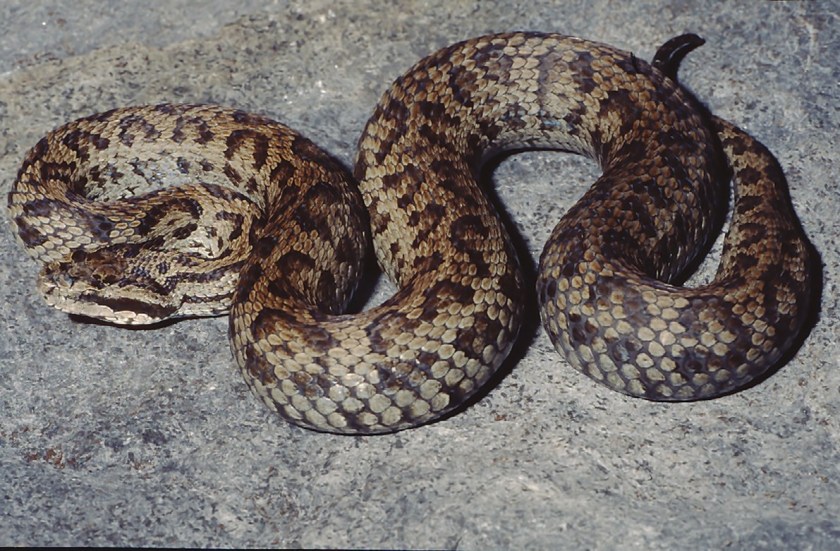
Published in ZooKeys, a recent study revises the Himalayan pit viper group using a combination of fresh and historical DNA, morphology, skeletal anatomy, and ecological observations.

The high mountain ranges of Asia remain among the least biologically explored regions of the continent. Now, an international team of researchers has shown that one of their most elusive venomous snakes, long treated a single species, is in fact a complex of five distinct species, three of which are new to science.

Published in the open-access journal ZooKeys, the study revises the Himalayan pit viper group using a combination of fresh and historical DNA, morphology, skeletal anatomy, and ecological observations. The data reveals that what scientists had long treated as a single widespread species, the Himalayan pit viper first described in 1864, actually consists of multiple deeply distinct evolutionary lineages.

The analyses identified five clearly distinct species-level lineages, i.e. the Himalayan pit viper in the strict sense, Gloydius chambensis described in 2022, and three previously unrecognised species from different parts of Pakistan and Nepal. Alongside genetic divergence, these lineages exhibit distinct morphological and skeletal variations.

Phylogeny and distribution of five pit viper species in the Himalaya and Hindu Kush. Image credit: Dr Daniel Jablonski

“These mountain systems still harbour overlooked vertebrate diversity and hold important clues to the biogeography of Asia,” says Daniel Jablonski of Comenius University Bratislava, who has been conducting extensive research in Pakistan and Afghanistan for many years.

“By combining modern field sampling with data from historical museum specimens, we uncovered evolutionary lineages that had remained hidden for more than a century after the original description of the Himalayan pit viper.”

Daniel Jablonski

A key element of the discovery was the integration of newly collected material with a powerful source of evidence: DNA extracted from museum specimens collected in the 19th and early 20th centuries. This included the original type specimen of the Himalayan pit viper, allowing the researchers to clarify the identity of the species in its strict scientific sense.

The study underscores the enduring scientific value of natural history collections. Indeed, specimens gathered by earlier generations of explorers and preserved in museums are still helping scientists solve modern biological puzzles, especially in regions where fieldwork remains difficult.

In fact, part of the discovery had been waiting in plain sight. “Museum specimens are not just records of the past. They are active research tools and essential infrastructure for future science,” says Sylvia Hofmann from the Museum Koenig as part of the Leibniz Institute for the Analysis of Biodiversity Change, who has comprehensively worked in the Himalaya and Tibetan Plateau during the past 20 years.

“Some of the key evidence had been sitting in museum collections for more than a hundred years. We just didn’t have the tools to recognise it. As analytical methods continue to improve, the scientific value of these collections will only grow and revealing biodiversity we didn’t even know was there.”

Sylvia Hofmann

Representatives of the herpetofauna play an important role in the ecosystem, particularly as ecological indicators, within the food chain, and as predators in pest control. A group of top predators in the region consist of pit vipers adapted to mountainous environments, which have so far been studied only very inadequately in the Himalayan region.

“Our work aims to close these gaps in knowledge and to lay the groundwork and provide inspiration for further, in-depth studies on this ecologically and medically relevant group.”

Frank Tillack of the Museum für Naturkunde Berlin, Leibniz Institute for Evolution and Biodiversity Research

Tillack maintains close ties with Nepalese colleagues and has been collaborating with them for 35 years on projects concerning the biodiversity of herpetofauna in the Himalaya.

An important part of the study is the osteology of these snakes, including the skull anatomy of the lectotype BMNH 1946.1.19.64 of Gloydius himalayanus, collected more than 160 years ago.
Image credit: Kristin Mahlow-Tillack.

The study also emphasises how much remains to be discovered in regions that have long been difficult to access for scientific research. “Pakistan’s high mountains are still full of biological surprises,” says Rafaqat Masroor of the Pakistan Museum of Natural History, the country’s leading herpetologists.

“This finding highlights how little we still know about a region long shaped by socio-political instability.”

Rafaqat Masroor

Beyond taxonomy, the findings also carry an important conservation message:

“Each of the newly recognised species seems to occupy a relatively restricted range in fragile mountain environments, highlighting new ecological and evolutionary questions.”

Daniel Jablonski

Without recognising such diversity, it would be impossible to assess it accurately or protect it effectively.

Original study:

Jablonski D, Tillack F, Mahlow-Tillack K, Petzold A, Wilzo M, Das A, Idrees M, Baniya CB, Masroor R, Hofmann S (2026) Integrative taxonomy reveals previously undescribed diversity within the Gloydius himalayanus complex (Squamata, Viperidae, Crotalinae) from the Himalaya and Hindu Kush. ZooKeys 1280: 83-153. https://doi.org/10.3897/zookeys.1280.182768

The Emerald Forest: The middle Magdalena river Valley in Colombia, a biodiversity treasure hidden until recently

Lowland tropical rainforests, especially in South America, harbour the world’s most diverse flora – including a wide array of neotropical trees.

Guest Blog Post by M. Alejandra Jaramillo

The Mountains

In May 2022, we went on our first expedition to Serranía de Las Quinchas. To reach the Serranía, we turned west in the municipality of Chiquinquirá (known by its beautiful Cathedral, dated 1796), Boyacá department.

Little by little, we left behind the farmland and paved roads, reaching the deep green forest patches a few miles after the town of Otanche (one of the main sites of Emerald commerce).

Serranía de las Quinchas, a well-conserved forest in the middle of emerald production. Photo by Juan Pablo Alarcón.

Leydi Galvis and her parents, Don Lucindo y Doña Edilsa, greeted us with kind smiles and hot coffee, and we subsequently set up the camp to prepare for the next day’s expedition. We spent three days walking up and down the slopes, finding beautiful plants wherever we looked.

Accompanying our group of students from Universidad Militar was Dayro Rodriguez, a young botanist with an incredible eye for plants and a perceptive photographer. It was like visiting the Chocó Region –  very humid, green, and diverse!

In our first expedition, we collected most of our plants, including a new species of peltate leaves belong to pepper family (Piperaceae); “caipe” (Orphanodendron gradiflorum C. Cast. & G.P. Lewis), and Romeroa verticillata Dugand.

Interestingly, our Piper quinchasense M. A. Jaram., has now been spotted in several localities in the middle Magdalena Valley. The enigmatic legume Orphanodendron, meanwhile, derives its generic name from its classification within a subfamily of the Fabaceae. However, “caipe” is a locally common tree used for timber.

Romeroa, on the other hand, is a monospecific genus of trees in the Bignoniaceae with unifoliolate leaves. It is a Colombian endemic taxon, known exclusively in wet forests, such as the Las Quinchas region, located in the Boyacá, Cundinamarca, and Santander departments. The genus has been collected only a few times after its description 70 years ago.

Thus, the flora at Las Quinchas is an exciting combination of species with affinities to the Andes, Chocó Region, and the North West Amazon, with many endemics that make the area a deep, green paradise.

Left, flower of “caipe”, Orphanodendron grandiflorum (Leguminosae). On the right, Romeroa verticillata (Bignoniaceae). Photos by Dayro Rodriguez.

 Subsequent expeditions to the site have consistently yielded discoveries of new and rare plant species. These efforts are supported by a close collaboration with Gerardo Aymard, an expert botanist whose unrivaled ability to review collections and identify new taxa is essential to our work.

Gerardo’s botanical expertise has allowed him to identify two new species to science: Grias lucindoae Aymard & M. A. Jaram. (Lecythidaceae) and Schlegelia longirachis Aymard & M. A. Jaram. (Schlegeliaceae). Both rare genera are often missed by collectors or remain untouched in Herbaria.

Sarcaulus paujuliensis M. A. Jaram & T. D. Penn. Photo by Andres Majin-Ladino.

The Lowlands

In 2024, we had the opportunity to visit the lowlands in the same region. A team of faculty and students from Universidad Militar Nueva Granada visited Reserva “El Paujil”.

Lizette Sierra, Paula Lara, and Luisa Suarez came across a tree species with a unique flower that, no doubt, turned out to be a new taxon. Again, by the joint efforts of the young and inquisitive Andres F. Majin-Ladino, and the expert eye of Gerardo Aymard, we decided it was a rare Sapotaceae – this is one of those families for which indeterminate specimens pile up in herbaria around the world, as botanists just do not find flowers or the courage to identify species.

We consulted the world expert in Sapotaceae, Terrance D. Pennington (The Royal Botanical Gardens, Kew), who was puzzled by the flowers he did not recall. Andres F. Majin-Ladino, with support from Fundación Proaves, visited the locality several times to collect additional samples. We conducted molecular sequence analyses, and the four of us henceforth described a new species of Sarcaulus, S. paujilensis M. A. Jaram. & T. D. Penn, now published in the open-access journal PhytoKeys.

Local naturalist Lucindo Galvis with botanist M. Alejandra Jaramillo. Photo by Juan Pablo
Alarcón.

The Bigger Picture

It is noteworthy that the Serranía de las Quinchas is at the heart of Emerald’s business in Colombia. Mining has been the fundamental activity in the region for very long time, not only of emeralds but also coal. We ought to thank the locals for conserving the remaining beautiful forests. More exploration is needed in the region to uncover its diversity, and efforts should be made to provide alternative economic activities for the community if we want to curb deforestation.

Currently, Las Quinchas region represents a complex and fragile spot of biodiversity that remains largely uncharted, even after centuries of exploration. Humans have long modified the environment and examples of overexploitation and associated species eradication are well-documented.

Forest ecosystems, such as the Magdalena River valley, are the most important global repository of terrestrial biodiversity, with more than half of tree species at risk of extinction. Quantifying the current global forest biodiversity is therefore an essential step towards mitigating global biodiversity loss and restoring biodiversity in severely affected areas.

Tree species diversity underpins forest ecosystem functionality and services, as well as the diversity of assemblages of flora, fauna, and microbes. Therefore, characterising and describing tree species diversity (i.e., Sarcaulus paujilensis), as well as its spatial patterns, is also crucial for safeguarding global ecosystem functioning, food, water, energy security, and our well-being.

Sarcaulus paujilensisA. Flowering branch; B. Seed; C. Fruiting branch; D. Immature fruit; E. Mature fruit; F, G. Transversal section of fresh fruit. Photos by A. Lizette Sierra, Paula Lara, and Luisa Suarez; B–G. Andrés F. Majín-Ladino.

We are confident that many new plant species of the common families (i.e., Burseraceae, Lecythidaceae, Leguminosae, Meliaceae) of these wet forests will reveal themselves as we visit the locality and walk along the ridges with our eyes open.

Key to our discoveries is our passion for exploring the forest. Indeed, we have young students like Andrés Majin, and young botanists like Dayro Rodriguez on our side. Don Lucindo is equally attentive to let us know about flowering and fruiting periods and rare plants to examine. The contribution of young botanists and local experts has been key to our discoveries!

Original source:

Jaramillo MA, Pennington TD, Aymard-Corredor GA, Majin-Ladino AF (2026) Morphological and genetic evidence for the Sarcaulus brasiliensis complex (Sapotaceae, Chyrsophylloideae) reveals a new species from the rainforests of the Middle Magdalena Valley, Colombia. PhytoKeys 273: 37-54. https://doi.org/10.3897/phytokeys.273.175192

A New Spiny Frog Discovered in the Ecuadorian Andes

This visually striking species emphasises the need for habitat protection in the Ecuadorian cloud forests.

A gruelling two-day trek into the remote upper Pastaza basin has revealed a new inhabitant of the Ecuadorian Andes: Pristimantis fergusoni. In a new study published in the open-access journal ZooKeys, a research team led by Juan Pablo Reyes-Puig of Fundación EcoMinga and the Instituto Nacional de Biodiversidad (INABIO) has recently described this fascinating species of spiny frog.

Taxonomy and Fieldwork

Reyes-Puig discusses the primary motivations behind the team’s study:

“Due to its great diversity, Pristimantis is a genus that requires constant taxonomic work, especially in remote and little-studied areas. One such area is the upper Pastaza basin in the central Andes of Ecuador.

Although we have studied this region for almost two decades, each new exploration brings surprises, such as the case of the new Pristimantis fergusoni.”

This constant taxonomic revision stems from the sheer scale of the genus; frogs of the Pristimantis group currently comprise 626 species. Historically, limited scientific funding meant that many of these were described primarily on the basis of morphological evidence.

Fortunately, this has been increasingly remedied over the last decade as a growing community of taxonomists in Colombia, Ecuador, and Peru combine molecular and morphological data to identify and classify new species.

However, carrying out fieldwork in these remote regions remains a formidable challenge. Reyes-Puig highlights the physical demands of conducting herpetological research in the upper montane forests of the eastern Ecuadorian Andes:

“First, it is quite challenging to reach the location after nearly two days of hiking. Then, the cold and almost constant humidity are physical limitations after fatigue, but observing a habitat untouched by humans and species never seen before, such as Pristimantis fergusoni, are a real reward.”

That reward is visually striking. While many frogs in the Pristimantis genus rely on camouflage to blend into the forest floor, P. fergusoni carries a distinct flash of color. The species exhibits notable sexual dimorphism: males are more muted, whereas females possess a bright scarlet belly.

Pristimantis fergusoni. (Photo credit: Juan Pablo Reyes Puig).

The exact reason for this vivid coloring remains a mystery, though Reyes-Puig notes a few plausible theories:

“Knowledge about the behavior and natural history of the new species is very limited, but we believe that the bright colors could serve for communication during courtship or as part of their reproductive strategies.”

Notably, this new species is named after Robert T. Ferguson II, an amateur naturalist who dedicated his life to protecting reptiles and amphibians. As a citizen scientist, Ferguson mapped wildlife in the US and helped fund the protection of rainforests in Latin America. Through his photography and work with groups like Rainforest Trust, he inspired others to care for the wild.

Pristimantis fergusoni. (Video credit: Juan Pablo Reyes Puig).

A Biodiversity Hotspot Under Pressure

The discovery of P. fergusoni is likely just the beginning, with the upper Pastaza basin serving as a taxonomic frontier where many more species await identification. Reyes-Puig estimates that at least eight more new species of amphibians are currently waiting to be described in this region alone.

For now, Pristimantis fergusoni is listed as “Data Deficient” by the IUCN because it has only been found in two locations close to one another – the Cerro Candelaria and Chamana Reserves – leaving scientists without the population data needed to determine its level of risk. However, the team is already working to ensure the frog’s future isn’t left to chance.

“Taxonomic work is usually limited to describing new species,” says Reyes-Puig. “We have gone a step further by ensuring the protection of the new species’ habitat through the declaration of protected areas.”

While this work happens on the ground in the Llanganates-Sangay Ecological Corridor, Reyes-Puig stresses that protecting these species requires global awareness. Climate change and habitat loss are universal threats to amphibians, and local conservation efforts rely on broader environmental responsibility: 

“Small actions such as recycling, waste management, and sustainable activities are important. We know that climate change is a problem that affects amphibians worldwide, but small actions [from the public] are also crucial.”

Pristimantis fergusoni. (Photo credit: Juan Pablo Reyes Puig).

The presence of P. fergusoni is a testament to the region’s immense biodiversity, and a reminder that in the underexplored Andes, discovery and conservation must move at the same urgent pace.

Original source:

Reyes-Puig JP, Yánez-Muñoz MH, Ron SR, Venegas PJ, Ortega J, Carrión-Olmedo JC, Reyes-Puig C (2026) A new spiny frog of the genus Pristimantis (Anura, Strabomantidae) from the eastern slopes of the Ecuadorian Andes. ZooKeys 1269: 83-105. https://doi.org/10.3897/zookeys.1269.162260

For more articles on zoology, visit the ZooKeys website and follow the journal on BlueSky and Facebook.

Commemorating a conservation trifecta: Three new species of Glossoloma honoring a donor, a family of forest stewards, and a conservation visionary

Three new Andean plant species, discovered in a single day, stand as living proof that collaborative conservation and local stewardship work.

Guest blog post by John L. Clark

In 2016, I was in the midst of a major professional transition. After years in a tenured university position, I had moved into independent-school teaching and was directing my first extended international field course for the Lawrenceville School in New Jersey. My goal was simple: give students firsthand experience in how biodiversity research actually happens—how field observations become scientific knowledge.

That March, I led 13 students into Ecuador’s Pastaza Valley on the eastern slopes of the Andes. We established two remote camps along a steep trail beginning near the Pastaza River and hiked toward Páramo, the high-elevation grasslands above treeline. The programme focused on documenting plant diversity: observing carefully, photographing plants, recording habitat data, and learning why details matter.

High camp during the 2016 Lawrenceville School Ecuador field course. (Photo credit: John L. Clark).

We expected a rewarding day of exploration in a spectacular landscape. What we did not expect was to encounter three plant species unknown to science, all in a single day along the same trail.

Those discoveries became the basis of a newly accepted PhytoKeys paper describing three new species of Glossoloma (Gesneriaceae) from the Cerro Candelaria Reserve. But this story is about more than taxonomy. It also illustrates how conservation works in practice, through visionary leadership, local stewardship, and sustained support.

Meet Glossoloma: upside-down flowers and unexpected climbers

Glossoloma is a genus of Neotropical plants recognised for resupinate flowers, meaning the blossoms appear upside-down relative to the typical orientation. Most species are stout, unbranched terrestrial subshrubs with colorful flowers that stand out in Andean forests.

The three species we discovered are unusual because they are nomadic climbers. Instead of remaining self-supporting, they germinate in the soil and climb nearby vegetation, sometimes persisting higher on trunks and branches.

Three new species of Glossoloma (Gesneriaceae) from Cerro Candelaria: A–B, Glossoloma recalde; C–D, Glossoloma puroanum; E–F, Glossoloma jostii. (Photo credit: John L. Clark).

The setting: Ecuador’s rich, complex and vulnerable Pastaza Valley

The upper Río Pastaza Valley is one of the Andes’ most remarkable biodiversity regions. Moist air from the Amazon Basin rises through this deep valley and meets successive mountain ridges, creating steep gradients in rainfall, temperature, and habitat over short distances. These transitions foster exceptional diversity and endemism.

Yet the region has experienced significant forest loss since the 1970s due to agricultural expansion and land-use change. Much original forest now survives only in fragments, making protected reserves essential. The forest where these species were found persists because of a unique alignment of conservation efforts—a true “conservation trifecta.”

Why these names? Conservation stories written into taxonomy

Scientific names can honor the people and partnerships that make discovery and conservation possible. Each of the three new species recognises a different kind of contribution.

Glossoloma jostii honors Lou Jost, botanist, conservationist, and co-founder of Fundación EcoMinga. His work has helped establish reserves and bring international attention to the Pastaza Valley as a biodiversity hotspot, demonstrating how scientific insight and persistence can translate into lasting protection.

Glossoloma puroanum honors Puro Coffee, founded by Andy Orchard, whose support through the World Land Trust helped establish and sustain the Cerro Candelaria Reserve. Conservation depends not only on research but also on reliable financial support for land protection, management, and the people safeguarding these forests.

Glossoloma recaldeorum honors the Recalde family of El Placer, long-time park guards and local stewards. Their daily presence, including monitoring trails, observing wildlife, and protecting the reserve, illustrates how conservation ultimately relies on committed local guardianship.

Brothers Luis and Jesus Recalde walking in the forest. (Video credit: John L. Clark).

Discovering three species in one day

Rather than promising immediate discovery, field courses aim to teach observation and critical thinking. Yet along the Cerro Candelaria trail, each unfamiliar plant raised the same question: could this really be undescribed? As evidence accumulated, curiosity turned into excitement.

For students, the realisation was powerful, as  biodiversity shifted from a classroom abstraction to a live and evolving data set. Meanwhile, for me, after nearly a decade studying Glossoloma, finding three new species on a single trail was both thrilling and humbling. It emphasises how much remains unknown, even in relatively well-studied groups, and how urgent documentation can be in threatened landscapes.

Montane forest and type localities at Cerro Candelaria Reserve. (Photo credit: John L. Clark).

Why taxonomy matters

Taxonomy is sometimes misunderstood as simply naming organisms. In reality, it provides the framework that allows biology and conservation to function. Before a species can be protected, we must first know it exists and understand where it occurs.

By linking these plants to the people who helped protect their habitat, I hope this work does more than add three names to a checklist. It shows that taxonomy makes biodiversity visible, measurable, and ultimately protectable, while recognising the collaborative efforts that allowed these species, and their forest, to persist long enough to be discovered.

Conservation is a shared effort

The Cerro Candelaria Reserve exists because leadership, funding, and local stewardship converged. These three new Glossoloma species are living evidence of what such collaboration can safeguard.

If there is one lesson from this discovery, it is that conservation works best when it is shared across scientists, communities, donors, and organisations, and sustained over time.

Original source:

Clark JL (2026) Commemorating a conservation trifecta: Three new species of Glossoloma (Gesneriaceae) honoring a donor, a family of forest stewards, and a conservation visionary. PhytoKeys 271: 173-185. https://doi.org/10.3897/phytokeys.271.181141

An island, a classification, and a handful of botanists

Vegetation classification is complex and often subjective, shaped by diverse perspectives. The 4th EDGG Field Workshop in Sicily underscored these challenges, highlighting the need for collaborative observation and the ongoing refinement of ecological definitions in an ever-changing landscape.

Guest blog post by Riccardo GuarinoThomas BeckerIwona Dembicz & Jürgen Dengler

Long before any field workshop, before any grant application and academic unfairness, before any politely worded review that praises the dataset while questioning the premises, there was a man standing on a slope of sunburnt clay, wondering whether vegetation really wished to be classified at all.

That man knew (though he rarely said it aloud) that vegetation classification is an act of faith disguised as method. Like all faiths, it requires ritual (the plot, the relevé, the cover estimate), a shared language (alliances, orders, classes), officiants (distinguished professors), and a community small enough to agree without ever fully agreeing. He also knew, with a lucidity bordering on pessimism, that this faith is always betrayed by arithmetic: too few observers, too many species, too much heterogeneity compressed into too small a square of ground. Even if Sicily was overrun by phytosociologists, the resulting map would still be a pale approximation of what the vegetation actually is: a shimmering, restless negotiation among climate, soil, disturbance, chance, and time. These ideas would later harden into equations and arguments, written with some disenchantment in a paper about classification efficiency and sustainable compromise (Guarino et al., 2022).

Botanists sampling of a nested plot in a dry grassland in western Sicily
Careful sampling of a nested plot in a dry grassland in western Sicily during the EDGG Field Workshop 2012. Photo credit: Thomas Becker, 2012

But in 2012, there was still considerable unease. Unease, however, can be productive. Schopenhauer would have called it the friction between Will and Representation; Calvino might have imagined it as a labyrinth of syntaxonomic schemes; a vegetation ecologist would simply recognize it as the moment when field reality refuses to align with inherited categories. In Sicily, this moment occurs often. Annuals and perennials intertwine like disputing narratives. Communities appear discrete in full summer, when annuals almost disappear, and blur by the next spring. The same slope, revisited a year later, tells a different story with the same protagonists.

It was from this discomfort – and not despite it – that the idea emerged to invite outsiders. Not reviewers, not authorities, but colleagues shaped by different landscapes and different traditions: Central and Northern European vegetation ecologists accustomed to recording every detectable species within a plot, mosses and lichens included, trusting that completeness might tame ambiguity. Bringing them to Sicily was an experiment in epistemology: what would Mediterranean vegetation look like through Central European eyes?

Would the preconceptual separation into separate sampling units, Lygeo-Stipetea versus Stipo-TrachynieteaAmmophilion versus Alkanno-Maresion nanae, survive such scrutiny? Or would they collapse into something less Manichean, but perhaps more honest?

Thus, the fourth EDGG Field Workshop was organized, quietly radical in its intent (Guarino et al. 2012). The island became a laboratory of perspectives. On coastal sands, inland clays, volcanic substrates, and evaporitic hills, small squares of ground were subjected to a level of attention usually reserved for more anthropocentric (eco?) systems. Every terricolous autotrophic organism was invited to the census. The plots filled with names, then with doubts, then with discussions that were sometimes technical, sometimes philosophical, in a distinctly Pirandellian sense: Which community is this? And who am I to decide?

Botanists searching for a suitable plot in a dry grassland on the eastern flank of Mt. Etna (Sant’Alfio)
Searching for a suitable place for a nested plot in dry grasslands on the eastern flank of Mt. Etna (Sant’Alfio) at 1200 m a.s.l. Photo credit: Iwona Dembicz, 2012

The reader knows how this story ends, because it has already been written several times. The analyses would show higher diversity than expected, blurred boundaries where syntaxonomical schemes promised clarity, and clusters that made ecological sense without offering metaphysical comfort. The separation between annual and perennial grasslands, so carefully defended in Mediterranean sampling tradition, would refuse to emerge cleanly when confronted with comprehensive data. The resulting paper, gestated over years of reflection and discussion, would eventually articulate these tensions with composure (hopefully…), acknowledging both the power and the limits of any classification.

And yet, the true outcome of the 4th EDGG Field Workshop was not a dendrogram or a table of diagnostic species. It was the confirmation of a long-harboured suspicion: that objectivity in vegetation science is not a destination, but a direction. One walks toward it, knowing it will never be reached, much like the horizon across Sicilian hills. The value lies in the walking, in the shared protocols, the disagreements conducted in good faith, and the willingness to see one’s own landscape through new eyes.

From the outside, the decision to organize an international field workshop might appear strategic, even confident. In truth, it is an existential gesture: a way of saying that if classification is inevitably subjective, then the only ethical response is to multiply viewpoints; if approximation is unavoidable, then one must at least approximate together.

Vegetation, after all, does not care how it is classified. But vegetation ecologists do. And in that caring, temporally limited, often contested, and persistently unfinished, lies both the burden and the dignity of their work.

Group photo of the botanists from the  4th EDGG Field Workshop in Mt. Etna
In spring, there was still a bit of snow on Mt. Etna, giving the team of the 4th EDGG Field Workshop the chance to present themselves in front of the EDGG logo carved in the snow. Photo credit: Thomas Becker, 2012

Original study:

Guarino, R., Becker, T., Iwona Dembicz, Dolnik, C., Kozub, Ł. and Dengler, J. (2025). Dry grasslands of Sicily: Multi-taxon diversity and classification challenges. Vegetation Classification and Survey, 6, pp.301–327. doi: https://doi.org/10.3897/VCS.175402


If you wish to know how the author team, 13 years after the field sampling, combined their contrasting viewpoints into a joint perspective, please visit our paper (Guarino et al. 2025). If you are interested in the EDGG Field Workshops, you can find information on the EDGG webpage at https://edgg.org/fw/overview. More details about sampling methodology are available in Dengler et al. (2016). To understand how the Field Workshops in general contribute to the understanding of the diversity patterns of Palaearctic open habitats, you might visit the GrassPlot Diversity Explorer (https://edgg.org/databases/GrasslandDiversityExplorer; see also Biurrun et al. 2021). There have been 21 EDGG Field Workshops since the first event in Transylvania in 2009 (Dengler et al. 2012). They often give rise to influential papers on biodiversity patterns (e.g., Turtureanu et al. 2014; Cancellieri et al. 2024) and syntaxonomy (e.g., García-Mijangos et al. 2021; Vynokurov et al. 2024). In 2025, there were two great Field Workshops, one in the Maritime and Ligurian Alps of Italy and one in the Turku Archipelago of Finland (Miskova et al. 2025). In 2026, there will again be one or two Field Workshops, one in conjunction with the Eurasian Grassland Conference in Bulgaria (Vynokurov et al. 2025), the second still to be discussed. If you are interested in more details, please consult the webpage or contact Jürgen Dengler, the Deputy Field Workshop Coordinator.


References:

  • Biurrun, I., Pielech, R., Dembicz, I., Gillet, F., Kozub, L., Marcenò, C., Reitalu, T., Van Meerbeek, K., Guarino, R., (…) & Dengler, J. (2021) Benchmarking plant diversity of Palaearctic grasslands and other open habitats. Journal of Vegetation Science 32: e13050. https://doi.org/10.1111/jvs.13050  
  • Cancellieri, L., Sperandii, M.G., Rosati, L., Bellisario, B., Franceschini, C., Aleffi, M., Bartolucci, F., Becker, T., Belonovskaya, E., (…) & Filibeck, G. (2024) Drivers of vascular plant, bryophyte and lichen richness in grasslands along a precipitation gradient (central Apennines, Italy). Journal of Vegetation Science 35: e13305. https://doi.org/10.1111/jvs.13305
  • Dengler, J., Becker, T., Ruprecht, E., Szabó, A., Becker, U., Beldean, M., Bita-Nicolae, C., Dolnik, C., Goia, I., (…) & Uğurlu, E. (2012): Festuco-Brometea communities of the Transylvanian Plateau (Romania) – a preliminary overview on syntaxonomy, ecology, and biodiversity. Tuexenia 32: 319–359.
  • Dengler, J., Boch, S., Filibeck, G., Chiarucci, A., Dembicz, I., Guarino, R., Henneberg, B., Janišová, M., Marcenò, C., (…) & Biurrun, I. 2016. Assessing plant diversity and composition in grasslands across spatial scales: the standardised EDGG sampling methodology. Bulletin of the Eurasian Dry Grassland Group 32: 13−30.
  • García-Mijangos, I., Berastegi, A., Biurrun, I., Dembicz, I., Janišová, M., Kuzemko, A., Vynokurov, D., Ambarlı, D., Etayo, J., (…) & Dengler, J. (2021) Grasslands of Navarre (Spain), focusing on the Festuco-Brometea: classification, hierarchical expert system and characterisation. Vegetation Classification and Survey 2: 195–231.
  • Guarino, R., Becker, T., Dembicz, I., Dolnik, C., Kącki, Z., Kozub, Ł., Rejžek, M., Dengler, J. (2012) Impressions from the 4th EDGG Research Expedition to Sicily: community composition and diversity of Mediterranean grasslands. Bulletin of the European Dry Grassland Group 15: 12–22.
  • Guarino, R., Guccione, M., Gillet, F. (2022) Plant communities, synusiae and the arithmetic of a sustainable classification. Vegetation Classification and Survey 3: 7–13. https://doi.org/10.3897/VCS.60951
  • Guarino, R., Becker, T., Dembicz, I., Dolnik, C., Kozub, Ł., Dengler, J. (2025) Dry grasslands of Sicily: Multi-taxon diversity and classification challenges. Vegetation Classification and Survey 6: 301−327. https://doi.org/10.3897/VCS.175402
  • Miskova, O., Borovyk, D., Dengler, J., Fahs, N., Mussaari, M., Nikolei, R., Rabyk, I., Skobel, N., Tyshchenko, O., Vynokurov, D. (2025) Diversity of grasslands and other open habitats in the Turku Archipelago, Finland: Impressions from the 21st EDGG Field Workshop, 28 June to 6 July 2025. Palaearctic Grasslands 65: 36-51. https://doi.org/10.21570/EDGG.PG.65.36-51
  • Turtureanu, P.D., Todorova, S., Becker, T., Dolnik, C., Ruprecht, E., Sutcliffe, L.M.E., Szabó, A. & Dengler, J. 2014. Scale- and taxon-dependent biodiversity patterns of dry grassland vegetation in Transylvania (Romania). Agriculture, Ecosystems and Environment 182: 15–24.
  • Vynokurov, D., Aleksanyan, A., Becker, T., Biurrun, I. Borovyk, D., Fayvush, G., García-Mijangos, I., Magnes, M., Palpurina, S., (…) & Dengler, J. (2024) Dry grasslands and thorn-cushion communities of Armenia: a first syntaxonomic classification. Vegetation Classification and Survey 5: 39–73. https://doi.org/10.3897/VCS.119253
  • Vynokurov, D., Dengler, J., Vassilev, K., Velev, N. (2025) Announcement of the 22nd EDGG Field Workshop – Pirin Mountains, Bulgaria, 14-18 July 2026. Palaearctic Grasslands 65: 14-15.