A new study published in the open-access Biodiversity Data Journal suggests that spider webs – particularly those incorporating environmental debris – can serve as natural, non-destructive collectors of fungal material in agricultural ecosystems. The findings show that viable fungi can be recovered from these structures, including lineages that may represent previously undocumented diversity.
“Spider webs are often overlooked structures in the environment, yet they can function as natural collectors of biological material. Our findings suggest that they can be used as a complementary approach to access microbial communities without disturbing the surrounding ecosystem.”
Thanakron Into (Student at Thammasat University)
Researchers from Thammasat University and the National Center for Genetic Engineering and Biotechnology (BIOTEC), Thailand, investigated whether the adhesive and particle-trapping properties of spider silk could be used to capture and culture fungi associated with airborne and environmental particles. Unlike DNA-based methods, which detect genetic material regardless of viability, this approach allows for the recovery of living organisms that can be further studied.
The study focused on tropical rice fields, using webs of the orb-weaving spider Cyclosa mulmeinensis, a species known for constructing distinctive “trashline” decorations – linear accumulations of plant fragments, insect remains, and other debris within the web. These structures can intercept a variety of particles, some of which may carry fungal propagules.
Representative orb webs of Cyclosamulmeinensis illustrating web architecture and debris decoration. Image credit: Thanakron Into et al.
Webs were collected from rice-field embankments in Pathum Thani, Nakhon Nayok, and Phetchaburi provinces using sterile techniques. In the laboratory, material retained on the silk was gently removed and cultured, yielding 112 viable fungal isolates. These isolates were grouped into 23 taxa across six genera, including Alternaria, Aspergillus, Cladosporium, Fusarium, Penicillium, and Talaromyces.
“We were particularly surprised that many of the fungi recovered from the webs remained viable and could be cultured. This enables further investigation beyond presence or absence, including their biological characteristics.”
Thanakron Into
Locations of paddy fields where Cyclosamulmeinensis spider webs were collected in Thailand (left). Composition of culturable fungal taxa across genera in individual sampled webs, expressed as the number of taxa recovered per web (right). Image credit: Thanakron Into et al.
Some genetic lineages – particularly within Cladosporium and Talaromyces – did not match currently described species in available databases, indicating that additional, undocumented diversity may be present in these systems.
Conventional approaches to fungal monitoring typically rely on soil, air, or plant sampling, or on molecular methods that may not distinguish between living and non-living material. In this context, spider webs may provide a useful supplementary sampling surface for capturing biologically relevant particles.
Because spider webs are naturally maintained and, in some species, periodically rebuilt, this method can be applied with minimal disturbance to both the organisms and their environment. Importantly, the spiders themselves were not harmed during sampling, as only small sections of the web were collected.
“The ability to recover living fungi from these naturally occurring structures adds a practical dimension to biodiversity studies. It provides a way to link environmental sampling with downstream biological work.”
Thanakron Into
The idea that something as familiar as a spider web could quietly capture a hidden layer of biodiversity highlights how much of the natural world remains overlooked in plain sight.
While further work is needed to evaluate how broadly this approach can be applied, the study demonstrates the potential of spider webs as an additional tool for exploring microbial diversity in agricultural landscapes.
Diagram displaying an overview of the study. Image credit: Booppa Petcharad.
Once again, Pensoft joined the ESP conference as an open-access scholarly publisher, publishing services provider, and a partner at Horizon Europe consortia.
Conference Organising Committee’s Davina Vačkářová thanks the ESP2026EU’s sponsors, exhibitors and partners. Photo courtesy of the ESP.
From 18 to 22 May 2026, the historic city of Prague, Czechia, hosted the 6th European Conference of the Ecosystem Services Partnership (ESP). Set against a backdrop of global turning points, such as biodiversity declines and climate uncertainty, the event served as an important forum for discussing how ecosystem services can cultivate a sustainable and equitable future.
This year’s ESP European conference ran under the theme “Advancing ecosystem services knowledge for achieving a nature- and people-positive Europe.” Photo courtesy of the ESP.
The conference ran under the theme, “Advancing ecosystem services knowledge for achieving a nature- and people-positive Europe.” Attendees focused on how to translate major policy frameworks, including the EU Biodiversity Strategy 2030 and the new Nature Restoration Law, into inclusive and effective action that respects both nature and healthy ecosystems. A major talking point at the event was also the new path ahead of the ESP as it officially becomes an independent international community later in 2026. An election of a new Steering and Executive Committee has already been scheduled for October 2026.
For Pensoft, the ESP 2026 European conference was not only a wonderful occasion to meet once again many long-time partners and friends, including the ESP team itself; editors and loyal authors of our journals; and members of the international project consortia, where we are involved, but also an exciting opportunity to talk with new members of the ESP community and learn about the needs, interests and passions of a new generation of researchers in a rapidly changing scientific field.
Pensoft’s stand at the ESP 2026 Europe conference in Prague, Czechia.
As an open-science publisher well embedded in environmental research through its dozens of journals covering ecology, biodiversity conservation and other related fields, Pensoft Publishers also actively participated in the week’s dialogues, contributing unique perspectives on scientific communication.
The Karolinum: the seat of Prague’s Charles University hosted the pre-conference training sessions, the Opening ceremony and the Welcome reception on Monday. Photo courtesy of the ESP.
The sixth European installment of the conference kicked off on Monday, 18 May, at the Karolinum, the historic seat of Charles University. The energy of a dynamic, highly engaging week was set perfectly by a lavish evening ceremony filled with speeches from renowned local figures, traditional music, and cultural performances. Yet, long before the opening notes played, the Karolinum was already buzzing, having hosted a full slate of pre-conference training sessions throughout the day.
A get-together for the editors and loyal authors of the open-access peer-reviewed One Ecosystem – the Ecology and Sustainability Data Journal took place on Monday at the Karolinum (Prague, Czechia).
Just ahead of the opening ceremony, our team at Pensoft hosted a semi-formal get-together for the editors and loyal authors of the open-access peer-reviewed One Ecosystem – the Ecology and Sustainability Data Journal. This year, the scholarly outlet, launched in collaboration between Pensoft, the ESP and the ESMERALDA Horizon 2020 project, now succeeded by the Horizon Europe-funded project SELINA, celebrated its tenth anniversary.
Chaired by Editor-in-Chief Prof. Benjamin Burkhard and Pensoft’s Head of Journal Development and PR Iva Boyadzhieva, the meeting recapped the best moments from One Ecosystem’s first decade and inspired discussions and ideas for the journal’s future. They also referred to the recently published editorial titled “Ten years of innovation and the way ahead in scientific publishing in One Ecosystem”. The piece reflects on the journal’s journey since its 2016 launch and addresses modern challenges in academic publishing, such as reviewer fatigue and the rapid rise of generative artificial intelligence.
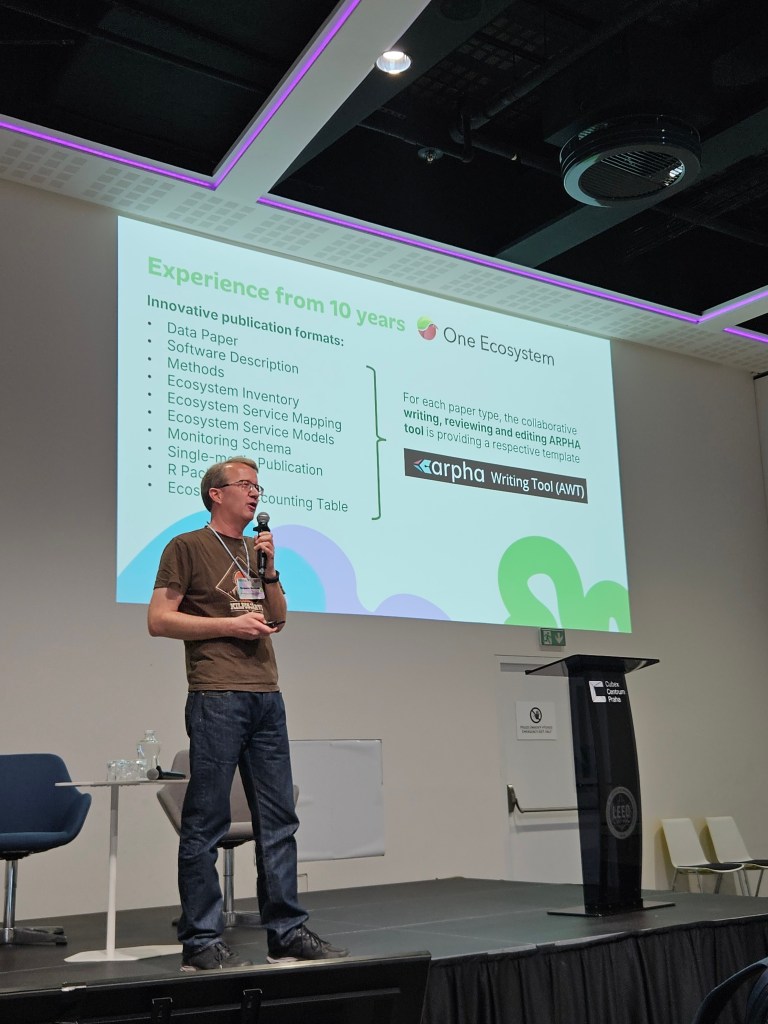
Over the last ten years, One Ecosystem has established itself as a unique journal in the field, thanks to its commitment to openly sharing the research data underpinning each publication. It also offers a versatile range of article types. These include traditional formats (e.g. Research Article, Review Article, Data Paper), innovative options (e.g. Software Description, R Package, Single-media Publication), as well as ones specifically devised for the community, such as Ecosystem Inventory, Ecosystem Service Mapping and Ecosystem Accounting Table.
So far, the journal has published over 200 papers authored by scientists from all continents, accumulating more than 1,500,000 views, 600 citations, and 6,000 online mentions. Today, the journal’s editorial board comprises 50 experts representing diverse geographies and professional fields. One Ecosystem is indexed in over 60 relevant scholarly databases, including Scopus and Web of Science, and holds a Q1 ranking on Scopus. Authors also benefit from a swift turnaround time, with an average of just 2.5 months from submission to acceptance, and articles typically published within three months of submission.
Keynote speeches at the first conference day were delivered by Jakub Kronenberg (University of Lodz), Alessandra La Notte (Senior consultant on natural capital accounting) and Ben Delbaere (LIFE Programme).
On Tuesday, the main schedule opened with inspiring keynote speeches, with Jakub Kronenberg (University of Lodz) examining the transition towards relational values of nature, Alessandra La Notte (Senior consultant on natural capital accounting) sharing two decades of insights into natural capital accounting, and Ben Delbaere (LIFE Programme at ELMEN EEIG) demonstrating how the European LIFE Programme supports a nature- and people-positive society.
Later in the day on Tuesday, Pensoft’s Iva Boyadzhieva, Head of Journal Development and PR, gave a talk on the topic of scholarly communication as part of a session organised and hosted by the Early Career Researchers (ECR) division of the ESP: Young Ecosystem Services Partnership (YESS) and focused on building practical skills and fostering careers for young researchers.
Pensoft’s Iva Boyadzhieva gave a talk titled “Scholarly Communication: Lessons from the publisher’s kitchen” as part of the YESS session “The Early Career Lab: Skills, Identity, and Growth for the Next Generation of Ecosystem Services Researchers”.
Boyadzhieva shared insights into how authors and publishers can work collaboratively to transform scholarly publications into scientific knowledge that is accessible to everyone, everywhere, regardless of professional background or expertise, by drawing on real-life examples and automated publication processes.
One Ecosystem’s Editor-in-Chief Prof. Benjamin Burkhard.
One Ecosystem’s Editor-in-Chief Prof. Benjamin Burkhard at the ESP session “The Changing Landscape of Academic Publishing on Ecosystem Services Research: Editors’ Perspectives.”
The One Ecosystem journal took center stage once again on Friday afternoon during a panel session titled, “The Changing Landscape of Academic Publishing on Ecosystem Services Research: Editors’ Perspectives.” The event brought together the Editors-in-Chief of the three ESP-associated journals for an engaging open discussion about the shifting dynamics of scientific literature. Sharing insights gained from One Ecosystem’s 10-year journey, Burkhard highlighted how authors of research who work closely with their publishers can support knowledge sharing and empower researchers. In the case of One Ecosystem, this collaboration translates to increased visibility, discoverability, reusability and citability of the published work, as well as rapid and hassle-free authoring and peer review experience, all thanks to the automated workflows and human-centric approaches provided through the publishing solutions of the ARPHA publishing platform.
It is worth issuing a reminder that manuscripts submitted in 2026 and accepted for publication in One Ecosystem journal are eligible for a 10% discount on the article publication charge (APC).
Despite excellent on-site organization, many sessions struggled to accommodate the massive turnout.Photo courtesy of the ESP.
Throughout the week, the daily program featured eight parallel session tracks covering a wide range of topics, many closely aligned with ESP Working Groups and National Networks. A dedicated poster session took place on Wednesday afternoon.
One of the field excursions offered ESP 2026 Europe delegates the challenge of an intense, half-day climbing experience in a nature park just outside Prague. Photo courtesy of ESP.
On Thursday, delegates had the opportunity to join one of several field excursions. These ranged from a visit to the unique rewilding reserve located in the former military area in Milovice, to a walk through the Prague Pasture: one of the city’s most remarkable natural sites, and an intense climbing experience just outside Prague.
Zdeněk Ent was awarded Best Poster for his poster, “Experiencing Ecosystem Services: Art, Sensory Engagement and Transformative Learning in Peri-Urban Landscapes”. In a yearly tradition, part of the award includes a free publication in the One Ecosystem journal.
Following an ESP tradition, the three highest-voted posters were recognised during Friday’s closing ceremony, with the first-prize winner receiving a free publication in One Ecosystem, sponsored by Pensoft. This year, the Best Poster Award went to Zdeněk Ent from Prague Institute of Planning and Development for the poster “Experiencing Ecosystem Services: Art, Sensory Engagement and Transformative Learning in Peri-Urban Landscapes”.
During the week, Pensoft’s exhibition stand welcomed dozens of inquiries regarding the publisher’s tailored journal portfolio. Visitors also expressed keen curiosity about the publishing services and self-developed platform available to journal owners, book authors, and conference organizers. Meanwhile, delegates showed notable interest in several titles, both well-established journals like Nature Conservation, NeoBiota, Metabarcoding & Metagenomics and One Ecosystem, and newly launched ones, including Individual-based Ecology and Advances in Pollinator Research.
A lot of Pensoft stand’s visitors were also pleased to see that there was a new player amongst the journals of Pensoft aimed at an emerging field in ecology. The recently rebranded Agricultural and Ecological Modelling (AEM) provides a unique scholarly outlet thanks to its modern approach to publishing by increasing transparency, giving credit to research objects across the entire modelling research lifecycle. This is achieved through publishing specialised article types, such as: Formal Model, Model Testing and Calibration, Model Implementation and Documentation, Data Papers and Software Descriptions. These new publishing formats are designed to keep pace with advances in Modelling research and to make it FAIR (Findable, Accessible, Interoperable, and Reusable) by enabling scholarly credit for diverse research outputs, often created by different groups of authors. For the time being, AEM remains a Diamond Open Access journal, meaning that it will not charge authors for open-access publication.
AEM also has a focus on open science and reproducibility; it is currently archived in four databases (CLOCKSS, Zenodo, Portico, and Zendy) and indexed in over 40 services, including AGRICOLA, CABI, ChronosHub, CNKI, FAO AGRIS, ResearchGate, and Swisscovery, among others. You can learn more about AEM in the latest editorial.
For those who missed the opportunity to sign up for the journals’ newsletters at the stand, they can do this by filling in their email address from the homepage of the journal they are interested in, or by updating their profiles in the Pensoft system.
Undoubtedly, amongst the greatest highlights at the Pensoft’s stand was the Horizon Europe-funded GREEN TALENT project, where our Project Department leads the project’s Work Package dedicated to Communication, Dissemination and Exploitation.
The conference delegates were intrigued to learn about the international initiative’s aim to build biodiversity and climate capacity at national, trans-European and global levels, with a focus on Widening Countries. The partners at Green Talent: both from academic and non-academic backgrounds, are to contribute expertise, training, and secondments and connect pilot projects to broader EU and global networks. One of the ways the GREEN TALENT consortia does this is by designating four Demonstration Pilots (a.k.a. Demo Hubs) in four Widening countries: Malta, Greece, Cyprus and Bulgaria, where secondees can benefit from real-world experience and foster partnerships across sectors, while working on scalable solutions to climate and biodiversity challenges, acting as collaboration hubs between academic and non-academic sectors.
Members of the Horizon Europe-funded GREEN TALENT project consortium. Photo courtesy of ESP.
Having only kicked off a year ago and set to run for four years in total, there are many new developments and results yet to be announced from GREEN TALENT, including a Capacity-Building Platform that will allow users to browse various opportunities and events meant to help them improve their skills; to get in touch and foster collaboration with other experts; and to learn about best practices from across different institutions and relevant companies. This is why we strongly recommend visiting the GREEN TALENT, signing up for the project’s newsletter and following the initiative on BlueSky and Linkedin.
GREEN TALENT’s project coordinator, Prof. Dr. Mario V. Balzan, presented at a session dedicated to sustainable and inclusive approaches to ecosystem services tailored to the needs of islands.
In addition to the various GREEN TALENT information brochures and promo materials present at the Pensoft stand, people at the conference could spot quite a few of the project’s members around the ESP venue. There were several talks by GREEN TALENT representatives, including the project’s coordinator: Prof. Dr. Mario V. Balzan (Ecostack Innovations). His talk, part of the session “Islands at the forefront of sustainable and inclusive ecosystem services approaches” examined governance and knowledge gaps in pollinator ecosystem services on small islands, where he used Malta as a case study.
The signature journal stickers by Pensoft were once again a common sight at the ESP conference in Prague. Photo courtesy of ESP.
Ultimately, the conference successfully highlighted the tools needed to drive sustainable development across Europe. Through active contributions to both the overarching policy discussions and the targeted skill-building sessions for the next generation of researchers, Pensoft continued its commitment to making environmental science open, transparent, and globally accessible.
A global analysis of more than 12,000 bird and mammal species reveals that ecosystems do not share energy evenly across body sizes and human activities influence this.
A global analysis of more than 12,000 bird and mammal species reveals that ecosystems do not share energy evenly across body sizes. Small species dominate in numbers, but in high-productivity regions their abundance is spread so thinly across many species that larger animals end up capturing more energy per species. Human activity compounds these patterns by selectively eroding large-bodied diversity.
How does an ecosystem distribute its energy across body sizes? A new study suggests the answer depends on where you are – and how much humans have altered the landscape. Analysing communities of birds and mammals worldwide, researchers show that larger-bodied species can, on average, capture more energy per species than smaller ones, particularly in highly productive environments. The work also reveals that human impacts restructure these patterns by disproportionately removing large-bodied species from local communities.
Why body size matters for how ecosystems share energy
Workflow diagram to predict the individual density per km2 of mammal and bird species across a one-degree cell grid globally. A. Global density of data points of empirical estimates of species abundance used for model training; B. Example of 80% training and 20% testing blocks used per fold in our modelling framework; C. Global maps showing the sum of predicted abundance per km2 of all species across one-degree cells; D. Global estimations of species body mass-abundance relationships (MAR-SPP), individual mass distributions (IMD) and richness mass distributions (RMD). Credit to Camacho & Araújo, 2026.
Ecologists have long observed that larger species tend to have smaller populations: a bigger body requires more energy to sustain, so fewer individuals can be supported. A slope of −0.75 in the log–log relationship between body mass and abundance has been proposed as a null expectation – the point at which every species, regardless of size, commands an equal share of ecosystem energy. Yet testing this idea globally has been difficult because abundance data are patchy across regions and taxa.
This study tackles that limitation head-on. By combining large global datasets of abundance and distributions of species, the authors model local populations of birds and mammals across the planet and ask: is ecosystem energy concentrated in a few large organisms, or dispersed among many small ones – and how does that change from place to place?
What the team did
Using extensive abundance datasets and species trait information, the authors modelled population densities (individuals per km²) for 12,057 terrestrial bird and mammal species on a global grid at one-degree resolution. This enabled them to reconstruct community structure across environments and to examine three complementary signatures of how body size relates to energy and diversity within communities: the body mass–abundance relationship across species (how abundance declines with body size), the individual mass distribution (how individuals are distributed across body sizes regardless of species identity), and the richness mass distribution (how species richness is distributed across body sizes). They then related these patterns to two major global drivers: ecosystem productivity (net primary productivity) and human pressure (human footprint index).
Key findings
Relationship between species body mass and abundance (dark blue), individual mass distribution (light blue) and species-richness mass distribution (orange) in communities across one-degree cells as a function of global gradients of net primary productivity (NPP) (A, C) and human footprint (B, C). MAR-SPP, IMD and RMD slopes represent the exponent in power law relationships. Panel A shows the NPP effect on MAR-SPP, IMD and RMD values adjusted for human footprint and panel B shows the human-footprint effect adjusted for NPP. In A and B, the graph uses a boxplot format where the white central section represents the interquartile range between 25% and 75%, the central line denotes the median and the shaded areas indicate the whiskers. Outliers are omitted for clarity. The dashed line depicts a reference of slope = -0.75. Boxplots were calculated in intervals of 0.001 for NPP and every unit of human footprint raised to the 1/4 power. Lines were smoothed with a loess regression with a 0.06 span (α). The boxplots were drawn from the mean value per one-degree cell across 10 global datasets. In A and B, thicker lines represent the mean slopes of 10,000 general linear model (GLM) iterations (1000 iterations on 10 data sets), based on random samples of 20 one-degree cells. In C, GLM slopes are shown across the combined effects of NPP and human footprint. GLM slopes (thick lines in A and B and coloured areas in C) appear to depict non-linear relationships because of back-transformation of NPP and human footprint, which were squared-root and fourth-root transformed for GLM. Credit to
1. Productive ecosystems tilt energy capture towards larger species.
As productivity increases, the study finds that small-bodied species become more diverse without a matching rise in total abundance. Individuals are effectively “spread thinner” across more small-bodied species, reducing the average energy share per small-bodied species. Meanwhile, large-bodied species – fewer in number but less diluted by richness – end up capturing more energy on average. The body mass-abundance slope ranged from approximately −0.69 in the least productive environments to −0.35 in the most productive, consistently shallower than the −0.75 null expectation.
2. Human pressure reshapes community organisation, with lasting consequences.
Human activity produces a shift in these relationships that resembles – but is mechanistically distinct from – the productivity effect. Human impact operates primarily by reducing both the abundance and, more strongly, the species richness of large organisms. This likely reflects the well-documented disproportionate extirpation of large-bodied species by human activities, leaving a persistent imprint on how energy and diversity are distributed across body sizes.
3. Energy distribution and ecological opportunity vary independently.
Across the globe, patterns of energy flow across body sizes and the opportunities for diversification (how many species exist at each body size) can decouple. Interestingly, the distribution of species richness across body sizes was more stable across environments than the distribution of energy – yet it had a stronger influence on the body mass–abundance relationship. This helps explain why simple, one-size-fits-all expectations about body size and abundance often fail at large scales.
Why it matters
The authors argue that body mass–abundance–richness relationships can serve as a functional metric of ecological change – capturing not just how many species are present, but how ecosystems allocate individuals and energy across body sizes. This matters for biodiversity assessments because losing large-bodied diversity can reorganise ecosystems in ways that species counts alone cannot reveal. Specifically, these patterns may help improve biodiversity offset strategies and address the risk of underestimating the ecological importance of large-bodied species.
Small-bodied animals still dominate numerically, but in productive ecosystems they are divided among many more species. That dilution changes the per-species share of individuals and, by extension, energy.
Luis F. Camacho, first author
Human pressure does not just remove species; it reshapes the functional organisation of communities. Looking at body size, abundance, and richness together reveals structural changes that standard indicators miss.
Official group photo of the delegates at ESP11 (Darwin, Australia). Courtesy of the Ecosystem Services Partnership.
Between 22nd and 26th June, the 11th Ecosystem Services Partnership World Conference (ESP11) brought about 250 international delegates from diverse backgrounds: professional and demographic alike, to the Darwin Convention Centre in the capital city of the Northern Territory, Australia.
Amongst the central topics of the event were the integrations of local and indigenous values and knowledge into the understanding of ecosystem services and their sustainable management; the implementation of nature-based solutions into practice; and the collaboration of scientists with policymakers, practitioners and other stakeholders.
Cultural diversity was specially celebrated at both the opening and the closing ceremonies, as well as the special conference dinner. Attendees enjoyed multiple traditional performances from the region, but also from other parts of the world. They also had the chance to hear directly from members of Darwin’s indigenous communities about their own perspectives on ecosystem services and their sustainable management.
Indigenous Australian performance at the opening ceremony at ESP11 (Darwin, Australia).
During the week, each day would open with keynote speeches by renowned scientists from around the world. The programme would then continue with a set of six parallel sessions. The conference also included poster sessions, a conference dinner and field trips meant to provide the conference participants with a face-to-face encounter with Australian natural phenomena, including close-up encounters with the signature Northern Territory fauna, such as crocodiles, birds and sea turtles.
One of the field trips took participants to the uninhabited Bare Sand Island where they got the chance to see up close a Flatback sea turtle coming out of the water, making her nest and laying her eggs before making her way back to the waves under the cover of the night.
At the Pensoft stand, delegates met Pensoft’s Head of Journal development and PR: Iva Boyadzhieva, who would answer their questions about the various publishing opportunities and scholarly resources by the publisher, but also about the latest activities and results of the Horizon Europe-funded project SELINA (an acronym for Science for Evidence-based and Sustainable Decisions about Natural Capital).
Pensoft’s stand at the ESP11 conference in Darwin, Australia.
Having started in 2022 and set to run until 2027, SELINA comprises 50 partner organisations coordinated by the Leibniz University Hannover and Prof. Dr. Benjamin Burkhard (Leibniz University Hannover, Germany), who is also co-Chair of the ESP and Editor-in-Chief of the One Ecosystem journal. As an experienced science communicator and open-science publisher, at SELINA, Pensoft has been assigned to lead the project’s communication and dissemination activities.
The transdisciplinary project aims to provide smart, cost-effective, and nature-based solutions to historic societal challenges, such as climate change, biodiversity loss, and food security. One of the consortium’s main objectives is to identify biodiversity, ecosystem condition, and ecosystem service factors that can be successfully integrated into decision-making processes in both the public and private sectors.
Most recently, the consortium launched SELINA’s Communities of Practice initiative to promote collaborative learning and knowledge integration across Europe. This digital platform provides a forum for scientists, policymakers, practitioners, and business representatives to exchange knowledge and further engage with its real-life application. On the Communities of Practice, visitors may explore how SELINA is driving change across Europe.
Once again, all around the venue one could easily catch a glimpse of both local and exotic biodiversity that had taken cover on the laptops of the participants. The vivid stickers have become a signature Pensoft freebies that feature scientific illustration of species discussed in publications from across the publisher’s scholarly portfolio in a nod to the authors who have chosen a journal from the Pensoft scholarly portfolio.
Those who have missed the opportunity to sign up for those journals’ newsletters at the stand, can do this by filling in their email address from the homepage of the journal they fancy or by updating their profiles in the Pensoft system.
Understandably, the highlight in the Pensoft’s journal portfolio for ESP11 delegates was One Ecosystem, which was once born in a collaboration between Pensoft, the predecessor of SELINA: ESMERALDA, and the ESP community itself.
Since its launch in 2016, the open-access peer-reviewed journal has published about 200 research papers, including field-specific research outputs typically falling outside of what traditional scientific journals would see as a publication. These include Software description, Methods, Ecosystem Services Mapping, Ecosystem Accounting Table amongst others. You can find about the origins of One Ecosystem in the 2016 launching editorial. A few years ago, the journal became part of the scholarly literature databases of both Scopus and Web of Science. In fact, the latest Scopus CiteScore of One Ecosystem places the journal in Q1 in all five categories it has been assigned to.
At a special session within the ESP11 programme, Editor-in-Chief Prof. Dr. Benjamin Burkhard welcomed various questions concerning the One Ecosystem journal.
As part of the ESP11 programme, a session dedicated on the open-science approach of One Ecosystem that relies on opening up diverse research outputs and data, in order to prompt transparency, reusability and interdisciplinary in ecological research. Together, Pensoft’s Iva Boyadzhieva, Editor-in-Chief Prof. Dr. Benjamin Burkhard and subject editor Dr. Paulo Pereira talked about the journal and addressed the questions of the audience, while also providing general advice on scholarly publishing and editorial work to early career researchers at the session.
The session also presented the announcement that in 2025, ESP members are eligible for a 10% discount on the APC at One Ecosystem.
As usual, the conference closed with an engaging and heart-warming ceremony, where the organisers paid another tribute to local communities and volunteers who made the event an unforgettable experience for everyone. The ceremony finished with the awards for the three best posters presented at ESP11.
Hamid Arrum Harahap was awarded first place for his poster “Ecosystem-Based Adaptation (EbA) to Climate Change for Indigenous Women in the Mentawai Islands and Aceh Singkil, Sumatra (Indonesia)”.
Hamid Arrum Harahap (Universitas Andalas, Indonesia), Nicole Boyd (Charles Darwin University) and Gail Sucharitakul (Imperial College of London, United Kingdom) were recognised for their research posters.
“My poster highlights the climate knowledge of Indigenous women in the Mentawai Islands and Aceh Singkil. Their voices are often underrepresented in climate discourse, despite contributing the least to climate change and being among the most affected by its impacts”
said first-place sitter Hamid Arrum Harahap about his poster, titled “Ecosystem-Based Adaptation (EbA) to Climate Change for Indigenous Women in the Mentawai Islands and Aceh Singkil, Sumatra (Indonesia)”.
“In regions where downscaling climate models is difficult, intergenerational knowledge passed through indigenous women is critical. Our study highlights that while our climate models from modern science are built on numbers and projections, Indigenous women’s climate memories are rooted in stories and emotions—together, they offer complementary insights for understanding and adapting to climate change.”
In addition to the prizes handed by the ESP, he received a waiver for a free publication at One Ecosystem from the journal’s publisher Pensoft.
“I plan to use this opportunity to publish my research on Indigenous knowledge and ecosystem services. I am currently working on two studies: one on the relational values of ecosystem services governance with Indigenous Batak communities, and the other on ecosystem-based adaptation and the vulnerability of ecosystem services to climate change, focusing on Indigenous women in Sumatra and Far North Queensland, Australia. I believe One Ecosystem is an ideal platform for this work, as it offers an innovative and accessible forum for multidisciplinary studies like mine and focusing on sustainability of the ecosystem.
he added.
Third-placed Gail Sucharitakul received a copy of “Mapping Ecosystem Service”: a best-seller in Pensoft’s scientific book portfolio, edited by Prof. Dr. Benjamin Burkhard and Dr. Joachim Maes (European Commission DG Environment): both well-renowned in the field and the ESP community scientists. Maes is also a Deputy Editor-in-Chief at One Ecosystem.
Now that the ESP11 World Conference has turned into a wonderful memory, we set our sights on the 2026 European conference, which will be taking place in historic Prague, Czech Republic. See you there!
VALOR is to prompt better understanding of our relationship with pollinators. Pensoft will lead activities related to co-developing tools for expanding engagement and interaction, and support communication, dissemination, and exploitation activities.
Animal pollinators have become a flagship for biodiversity conservation, largely due to their globally recognised role in supporting broader biodiversity, ecosystem functioning, and human well-being.
Despite this recognition and the widely acknowledged benefits of pollination, many of the pressures on pollinators persist. As a result, there is growing evidence of localised yet significant deficits in pollination services, affecting both crop pollination and other communities.
Coordinated by Dr Tom Breeze (University of Reading) and funded by Horizon Europe, VALOR is a multi-actor project that will develop a comprehensive, systems-based approach to gaining a deeper understanding of the cascading impacts of pollinator shifts from flower to fork and beyond.
The project will examine the effects of pollinator shifts on ecosystems, farm businesses, and local communities through primary research and modelling.
VALOR’s coordinator Dr Tom Breeze (UREAD) gave an introductory presentation during the project’s kick-off meeting in February (Reading, United Kingdom).
The project aims to empower actors to develop a deeper comprehension of relationships with pollinators and will produce a range of co-developed tools for landowners, businesses, and policymakers.
These tools will facilitate a better understanding of pollination-related risks and enable users to conduct their own studies by replicating the project’s methods and applying its models. To ensure comprehensive data collection without compromising scale, VALOR will adopt a systems-based approach, employing a series of in-depth case studies in focal regions to assess the importance of pollinators.
VALOR launched in January 2025 and will be running until the end of 2028.
To achieve its goals the VALOR project has six objectives:
Co-develop a better understanding of stakeholder knowledge needs around pollinators.
Better understand the dependence of societyand the economy on pollinators.
Measure and model the cascading impacts of plant-pollinator networks on ecosystems and human well-being.
Explore the consequences of pollinator loss through value chains.
Forecast the resilience of pollinator networks and human benefits under future conditions.
Co-develop tools to engage and empower actors about pollinator conservation.
Pensoft’s role
Building on its experience in communication, dissemination, and exploitation of results, Pensoft will focus on maximising the project’s impact and long-term legacy. This involves a broad scope of activities, including the development of the project’s visual identity and online presence, as well as the translation of research findings into policy recommendations.
As a leader of the work on co-developed tools for expanded engagement and interaction, Pensoft will support the development of a spatially explicit tool to allow users to explore the fine-scale changes in pollinator abundance and diversity, as well as pollination services resulting from a change in landscape management.
Moreover, Pensoft will assist the VALOR project in contributing to the Safeguard Knowledge Exchange Hub (Safe-Hub).
Pensoft will also facilitatecollaboration opportunities with other projects, leveraging its expertise in numerous EU-funded projects. These efforts will be directed towards VALOR’s sister project: BUTTERFLY (101181930).
International consortium
The VALOR consortium comprises partners from thirteen European institutions, along with three associated partners, including China and Australia.
The consortium spans a wide and diverse range of scientific disciplines, from pollinator ecology, sociology, and economics to stakeholder engagement and communications.
Pensoft will lead the communication, dissemination and exploitation activities of the Horizon Europe project, which aims to reverse pollinator population declines and reduce impacts of pesticides.
Plant protection products (PPP), also known as pesticides, have been identified as one of the primary triggers of pollinator decline. However, significant knowledge gaps and critical procedural limitations to current pesticide risk assessment require attention before meaningful improvements can be realised. The functional group is currently represented by only one species, the honey bee, which does not necessarily share other species’ biological and ecological traits.
Coordinated by The Social-Ecological Systems Simulation (SESS) Centre, Aarhus University and Prof. Christopher J. Topping, PollinERA (Understanding pesticide-Pollinator interactions to support EU Environmental Risk Assessment and policy) aims to move the evaluation of the risk and impacts of pesticides and suggestions for mitigationbeyond the current situation of assessing single pesticides in isolation on honey bees to an ecologically consistent assessment of effects on insect pollinators.
This will be achieved through the development of a new systems-based environmental risk assessment (ERA) scheme, tools and protocols for a broad range of toxicological testing, feeding to in silico models (QSARS, toxicokinetic/toxicodynamic, and ALMaSS agent-based population simulations).
Using a strong stakeholder co-development approach, these models will be combined in a One System framework for risk assessment and policy evaluation including an international long-term monitoring scheme for pollinators and pesticides.
The One System framework builds on the recent roadmap for action on the ERA of chemicals for insect pollinators, developed within the IPol‐ERA project, funded by the European Food Safety Authority (EFSA). The framework will expand the ERA tools currently used for honey bees to include wild bees, butterflies, moths and hoverflies.
With an overall goal of reversing pollinator population declines and reducing the harmful impacts of pesticides, for the next four years, PollinERA will follow four specific objectives:
Fill ecotoxicological data gaps to enable realistic prediction of the source and routes of exposure and the impact of pesticides on pollinators and their sensitivity to individual pesticides and mixtures.
Develop and test a co-monitoring scheme for pesticides and pollinators across European cropping systems and landscapes, developing risk indicators and exposure information.
Develop models for predicting pesticide toxicological effects on pollinators for chemicals and organisms, improve toxicokinetic/toxicodynamic (TKTD) and population models, and predict environment fate.
Develop a population-level systems-based approach to risk and policy assessment considering multiple stressors and long-term spatiotemporal dynamics at a landscape scale and generate an open database for pollinator/pesticide data and tools.
Between 17 and 18 January 2024, experts from various realms of knowledge – from pollinator ecology, pesticide exposure and toxicological testing, to stakeholder engagement and communications – gathered in Aarhus, Denmark, to officially launch PollinERA. The two-day event seeded fruitful discussions on the project’s specific objectives, mission, methodology, outcomes and expected results.
With more than 20 years of experience in science communication, Pensoft is leading Work Package 6: Communication, Dissemination and Exploitation, that will ensure the effective outreach of PollinERA to its multiple target audiences. Based on the tailor-made communication, dissemination, exploitation and engagement strategies, Pensoft will provide a recognisable visual identity of the project, along with a user-friendly website, social media profiles, promotional materials, newsletters, infographics and videos. Pensoft will also contribute to the stakeholder mapping process and the organisation of various workshops and events.
PollinERA’s coordinator Prof. Christopher J. Topping (The Social-Ecological Systems Simulation Centre, Aarhus University) gave a warm welcome during the kick-off meeting of the project in Aarhus, Denmark.
Coordinated by Prof. Denis Michez (University of Mons), WildPosh aims to significantly improve the evaluation of risk to pesticide exposure of wild pollinators, and enhance the sustainable health of pollinators and pollination services in Europe.
Collaboration mechanisms between the PollinERA and the WildPosh projects include joint communication activities and events, joint data management strategy and alignment of activities to solidify the quality of final outputs.
Prof. Denis Michez (University of Mons), the coordinator of PollinERA’s sister-project WildPosh, presented the missions, objectives and methods, as well as the similarities, differences and collaboration potential between the two projects at PollinERA’s kick-off meeting in Aarhus, Denmark.
“It is fantastic that the European Commission puts so much effort into preserving wild pollinators and the countless benefits they bring to our society! The One System framework will hopefully become a fundamental part for the environmental risk assessment of chemicals for insect pollinators. I am really looking forward to implementing this insightful project, in close collaboration with its sister project WildPosh, where Pensoft is leading the dissemination efforts as well.”
says Teodor Metodiev, Principal Investigator for Pensoft at both PollinERA and WildPosh.
The PollinERA consortium comprises partners from eight European countries that represent a diverse range of scientific disciplines spanning from pollinator ecology, pesticide exposure and toxicological testing, to stakeholder engagement and communications.
As a leader of the Work Package 6: “Dissemination, Multi-stakeholder outreach and synergies,” Pensoft is tasked to build an involved community around OBSGESSION.
Pensoft is to contribute to the OBSGESSION consortium with expertise in science communication by taking care of stakeholders engagement, thereby supporting its goal of improved terrestrial and freshwater biodiversity monitoring. As a leader of the Work Package 6: “Dissemination, Multi-stakeholder outreach and synergies,” Pensoft is tasked to build an involved community around OBSGESSION.
Terrestrial and freshwater biodiversity has been declining at an alarming rate due various factors such as intensification of anthropogenic activities and climate change.
Coordinated by the Finnish Environmental Institute (Syke), OBSGESSION aims to reveal the drivers of biodiversity loss, pinpoint important indicators of ecosystem health and inform sustainability policy.
The OBSGESSION consortium at the kick-off meeting in January 2024 (Tuusula, Finland).
The project officially kicked off with the first consortium meeting in Tuusula, Finland, between 30th January and 2nd February.
For the coming four years, the joint mission before the newly formed consortium is to integrate biodiversity data sources, such as Earth Observation, with in-situ research, and also cutting-edge ecological models. These will all be made into a comprehensive product for biodiversity management in both terrestrial and freshwater ecosystems.
The project will also spearhead an innovative approach for assessing Essential Biodiversity Variables (EBVs) and their resilience to errors. Through purposely propagating error into biodiversity estimates and comparing the resulting models with ones using correct estimates, the EBV case studies aim to investigate model uncertainties and identify approaches that are more sensitive. Thus, they will inform policy and management about the optimal EBVs, and their key thresholds for conservation.
To demonstrate the implementation of the techniques and methodologies they are to develop within the project; and to respond to the needs of the EU Biodiversity Strategy for 2030, the consortium will focus on six distinct pilot activities:
Investigating and predicting biodiversity change in the European Alps: multi-scale, multi-modal and multi-temporal investigation using remote and in-situ data integration.
Improving habitat classification models: going beyond state-of-the-art in terms of accurate high-resolution mapping of Europe’s habitats, powered by machine learning.
Forecasting ecosystem productivity under disturbances & climate change:incorporating remote sensing EBVs to assess metrics of ecosystem structure and health.
Supporting temperate and boreal forest protection & restoration: through assessing ecosystem conditions via eDNA & image spectroscopy.
Monitoring freshwater ecosystems under disturbances & climate change: utilizing the novel Thematic Ecosystem Change Indices (TECIs).
Ecosystem functioning of the Kokemäenjoki estuary – assessing freshwater & transitional water quality incorporating both in-situ and Earth Observation data.
Through its pilot studies, methodological assessments, data stream integration, and investigating land use cover changes across Europe, OBSGESSION will help improve our understanding of ecosystem vulnerability across a range of specific habitat types, identify driversand pressures to ecosystem change and improve planning and prioritization of restoration measures.
“At Pensoft, we are eager to be part of the bright OBSGESSION consortium and look forward to offering our expertise and experience in raising awareness towards the project and contributing to the high impact of the resulting outputs, methodologies and policy recommendations that aim to strengthen our understanding of biodiversity change,”
says Gabriela Popova, science communicator at Pensoft and leader of the Work Package #6: “Dissemination, Multi-stakeholder outreach and synergies” at OBSGESSION.
International Consortium
The interdisciplinary OBSGESSION consortium consists of 11 partnering organisations from seven European countries, who bring diverse expertise spanning from remote sensing and Earth observation, to freshwater ecosystems, programming and science communication. Many partners represent acclaimed scientific institutions with rich experience in collaborative EU projects.
There has been an increasing need to support the exchange of research related to the conservation and sustainable management of estuarine ecosystems by means of new-age technologies and approaches.
Where freshwater rivers meet seas and oceans lies a scientifically intriguing and ecologically important type of ecosystem. As estuarine ecosystems provide various and diverse services to humanity and the planet at large, including food security and natural buffers and filters in the events of storms and water pollution, there has been an increasing need to facilitate and support the exchange of research findings and ideas related to their conservation and sustainable management by means of new-age technology and novel approaches.
This is how a team of renowned and passionate scientists, headed by Dr. Soufiane Haddout (Ibn Tofail University, Morocco), took the decision to launch a brand new open-access, peer-reviewed scholarly, aptly titled Estuarine Management and Technologies. They explain the rationale behind the journal in a new editorial, published to mark the official launch of the journal.
Having already worked closely with the scientific publisher and technology provider Pensoft on the fine touches of the concept of the new academic title, the team opted to use Pensoft’s publishing platform of ARPHA. As a result, the new journal provides a seamless, end-to-end publishing experience, encompassing all stages between manuscript submission and article publication, indexation, dissemination and permanent archiving.
Within the collaboration between the journal’s and Pensoft’s teams, Estuarine Management and Technologies will take advantage of various services offered by the ARPHA platform, including full-text automated export in machine-readable and minable JATS-XML format to over 60 relevant databases for scientific literature and data; semantically enriched and multimedia-friendly publications accessible in HTML; and rich statistics about the outreach and usage of each published article and its elements (e.g. figures and tables), including views, downloads, online mentions, and citations.
The publishing platform’s in-house indexing team will continue their close work with the journal’s editors to ensure that the scholarly outlet retains highest quality and integrity, so that it covers the criteria for indexation at additional key databases that require individual evaluation. In the meantime, ARPHA’s technical and editorial teams will provide technical and customer support to authors, editors and reviewers. The marketing and promotion team of ARPHA will be also joining forces with the journal to boost the visibility and image of the new academic title.
During the launch phase, content accepted for publication following double-blinded peer review will be made public right away for free to both authors and readers, where the journal will be operating under a continuous publication model.
Estuarine Management and Technologies welcomes studies from a wide spectrum of disciplines, including physics, chemistry, geology, biology, and hydrology, with a focus on interdisciplinarity, multifaceted approaches and holistic perspectives.
“One crucial aspect of estuarine management is the sustainable use of resources to balance conservation with human needs. Striking this delicate equilibrium requires a holistic understanding of the intricate web of ecological interactions within estuarine environments. Advanced technologies, such as isotopic techniques, environmental DNA (eDNA) analysis, can provide insights into the biodiversity of estuarine ecosystems with unprecedented precision,”
explain Dr Haddout and his colleagues in the opening editorial.
Amongst the unique features of the new journal are several additional publication types, such as Expert View, Video Paper, Rapid Communication, Mini Review and Estuarine Scientists, where these have been added to traditional publication outputs (e.g. Research Paper, Review Paper, Data Paper) to foster collaboration between researchers and other stakeholders in the field.
The journal is also running an annual Trailblazing Talent in Estuarine Management and Technologies award intended to recognise and encourage young scientists and engineers at the forefront of cutting-edge research in estuarine management and technologies. Nominations and applications are currently open.
Estuarine Management and Technologies also welcomes applications for guest editors in order to further expand the journal and its immediate expert network.
“I am delighted to see the Estuarine Management and Technologies journal already live on the ARPHA platform. We are confident that this particularly important, yet so far quite overlooked area of study will greatly benefit from this highly promising journal,”
says Prof. Lyubomir Penev, CEO and founder of Pensoft and ARPHA.
“I am pleased to announce the launch of the Estuarine Management and Technologies journal on ARPHA, a decision rooted in our commitment to advancing the field. We believe that this strategic partnership will not only enhance the visibility and accessibility of our journal, but will also foster collaboration and innovation within the estuarine management and technologies community. We expect this alliance to be a catalyst for scholarly excellence, providing a robust platform for researchers and practitioners to share insights, address challenges, and propel the field forward. Together with ARPHA, we are confident in the positive impact our journal will have on shaping the future of estuarine management and technologies.”
says Dr. Soufiane Haddout, Editor-in-Chief and founder, Estuarine Management and Technologies.
***
You can visit the journal website and sign up for its newsletter from the homepage.
You can also follow Estuarine Management and Technologies onX (formerly Twitter).
“Not only does it mean that content is persistent in merit and quality, but that innovative research outputs are already appreciated within academia,” says Editor-in-Chief Prof Dr Benjamin Burkhard
Seven years after its official launch in May 2016, the One Ecosystem journal has successfully completed the rigorous quality and integrity assessment at Web of Science.
The news means that One Ecosystem might see its very first Journal Impact Factor (JIF) as early as 2024, following the latest revision of the metric’s policies Clarivate announced last July. According to the update, all journals from the Web of Science Core Collection are now featured in the Journal Citation Reports, and thereby eligible for a JIF.
“Giving all quality journals a Journal Impact Factor will provide full transparency to articles and citations that have contributed to impact, and therefore will help them demonstrate their value to the research community. This decision is aligned to our position that publications in all quality journals, not just highly cited journals, should be eligible for inclusion in research assessment exercises,” said back then Dr Nandita Quaderi, Editor-in-Chief and Editorial Vice President at Web of Science.
“We are happy to learn that Web of Science has recognised the value and integrity of One Ecosystem in the scholarly landscape. Not only does it mean that the scientific content One Ecosystem has been publishing over the years is persistent in merit and quality, but that innovative research outputs are already widely accepted and appreciated within academia.
After all, one of the reasons why we launched One Ecosystem and why it has grown to be particularly distinguished in the field of ecology and sustainability is that it provides a scholarly publication venue for traditional research papers, as well as ‘unconventional’ scientific contributions,”
“These ‘unconventional’ research outputs – like software descriptions, ecosystem inventories, ecosystem service mappings and monitoring schema – do not normally see the light of day, let alone the formal publication and efficient visibility. We believe that these outputs can be very useful to researchers, as well as practitioners and public bodies in charge of, for example, setting up indicator frameworks for environmental reporting,”
“In fact, last year, we also launched a new article type: the Ecosystem Accounting table, which follows the standards set by the the System of Environmental-Economic Accounting Ecosystem Accounting (SEEA EA). This publication type provides scientists and statisticians with a platform to publish newly compiled accounting tables,”
Previously, One Ecosystem has been accepted for indexing at over 60 major academic databases, including Scopus, DOAJ, Cabell’s Directory, CABI and ERIH PLUS. In June 2022, the journal received a Scopus CiteScore reading 7.0, which placed it in Q1 in five categories: Earth and Planetary Sciences; Ecology; Nature and Landscape Conservation; Agricultural and Biological Sciences (miscellaneous); Ecology, Evolution, Behavior and Systematics.
Ambitious goals have been set by the European Union, in order to tackle the biodiversity conservation challenges over the coming decade. No less ambitious are the goals of the Horizon Europe project SELINA, which is one of the current major initiatives looking in the same direction.
SELINA (Science for Evidence-based and Sustainable Decisions about Natural Capital) is a transdisciplinary project aimed at promoting the conservation of biodiversity, enhancing ecosystem conditions, and supporting the sustainable use of the environment through evidence-based decision-making.
As an experienced science communicator and open-science publisher, Pensoft will be leading the project’s communication and dissemination activities.
“Ecosystem services is one of the topics that Pensoft has been involved in for more than 10 years, so it was only natural for us to continue our work as a communicator of scientific information in the ambitious SELINA project as well,”
says Prof Pavel Stoev, COO at Pensoft.
“We have already collaborated with many of the partners within the earlier EC Horizon 2020 project ESMERALDA, which concluded with the launch of a pan-European network of scientific institutions engaged with biodiversity conservation and ecosystem services. In addition, Pensoft has been strongly connected to the community through the scholarly journal One Ecosystem, which is supported by Ecosystem Services Partnership, and offers an opportunity for scientists in the field to publish their results in a new and innovative way.”
he adds.
The project
SELINA was launched in July 2022 and will run for 5 years. Having received EUR 13 million in funding, the project is seen as an unprecedented opportunity for smart, cost-effective, and nature-based solutions to historic societal challenges such as climate change, biodiversity loss, and food security.
One of the project’s main objectives is to identify biodiversity, ecosystem condition, and ecosystem service factors that can be successfully integrated into decision-making processes in both the public and private sectors.
To achieve this objective, SELINA will develop, test, and integrate new and existing knowledge, including methodological approaches to improve biodiversity, ecosystem condition, and ecosystem service information uptake by decision-makers.
In addition, the project will utilise EU-wide workshops and multi-disciplinary Communities of Practice involving a wide range of stakeholders, including scientists, policymakers, business leaders, and civil society organisations.
The project will also organise Demonstration Projects on biodiversity, ecosystem condition, and ecosystem service integration in decision-making and co-create a Compendium of Guidance that will allow stakeholders to make full use of the project’s results and fit-for-purpose recommendations with real-world applications in policy-making and business decisions.
International consortium
SELINA project brings together experts from 50 partnering organisations across all European Union member states, Norway, Switzerland, Israel, and the United Kingdom.
The project comprises a Pan-European and transdisciplinary network of professionals from the academic and non-academic sectors with various (inter)disciplinary backgrounds – including ecologists, economists, social scientists – who have agreed to work collaboratively to support transformative change based on evidence-based decision-making related to the management of natural resources.
Find out more about the project on the SELINA website: project-selina.eu/.