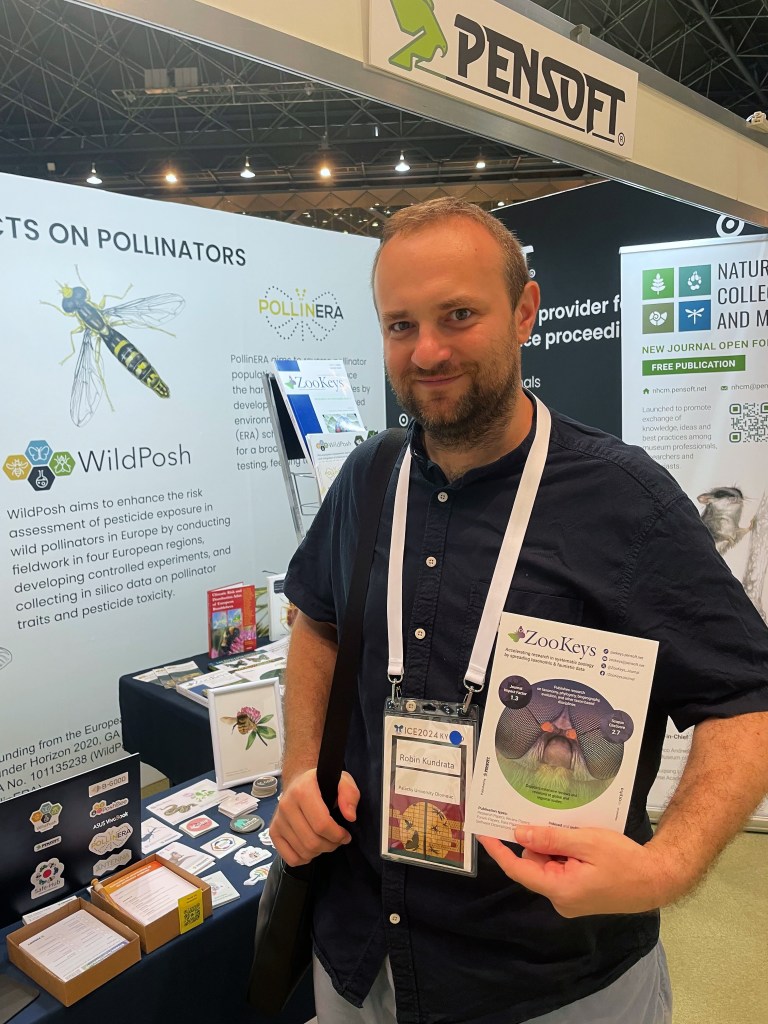
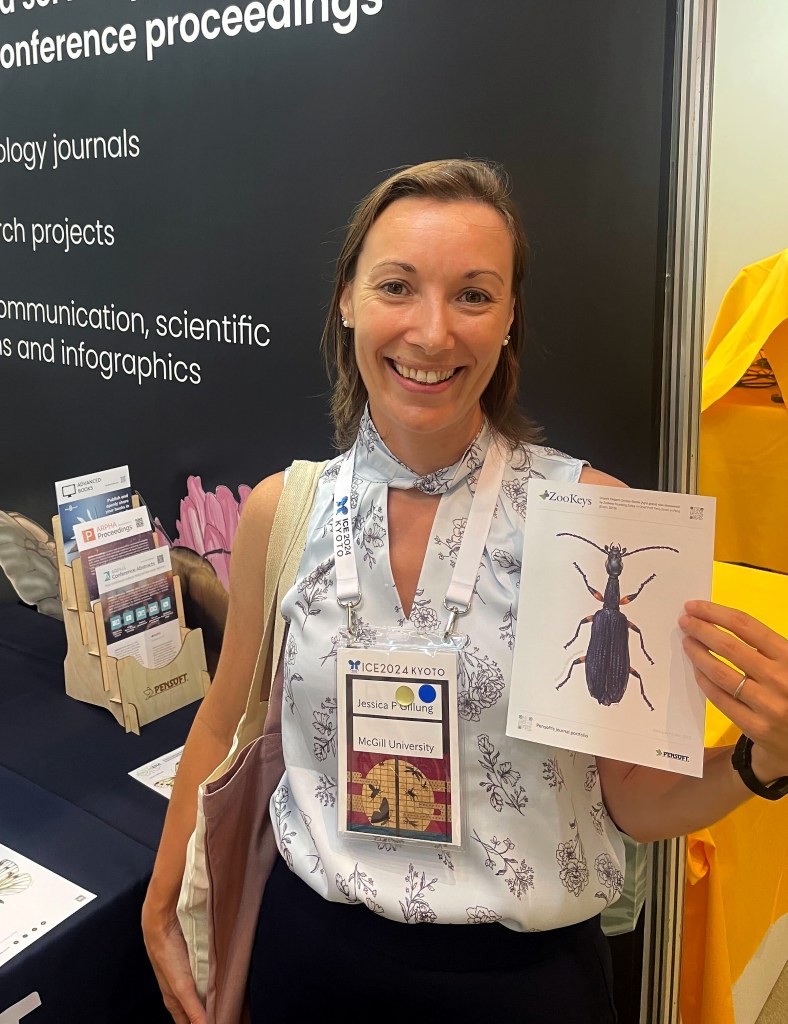
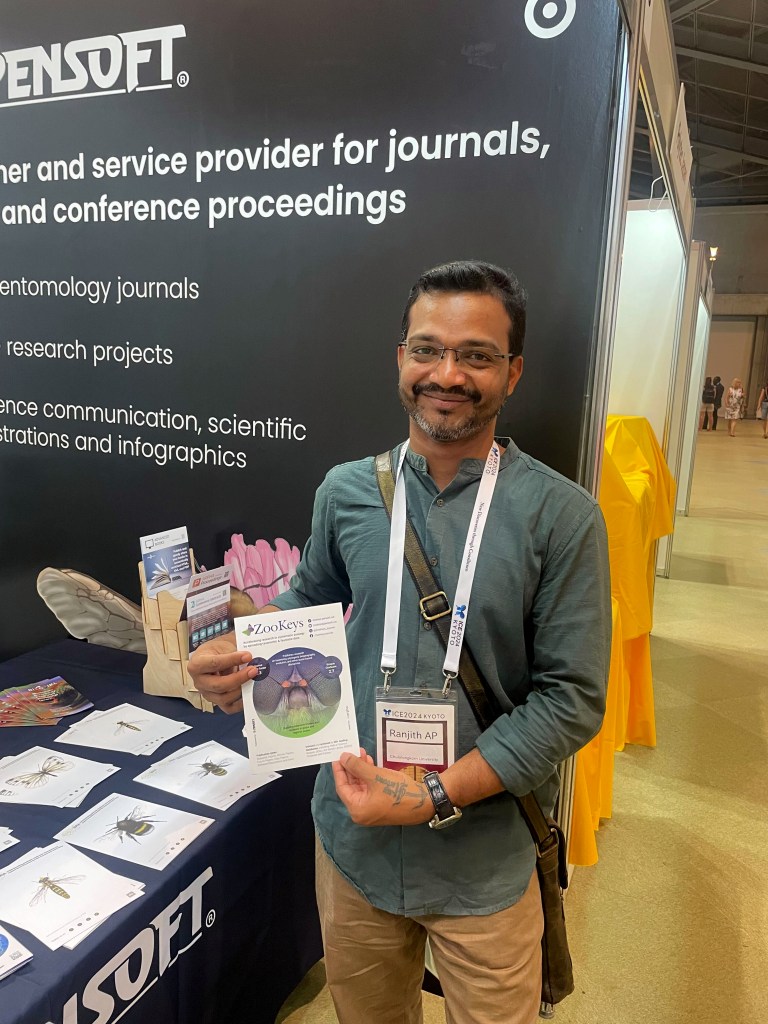
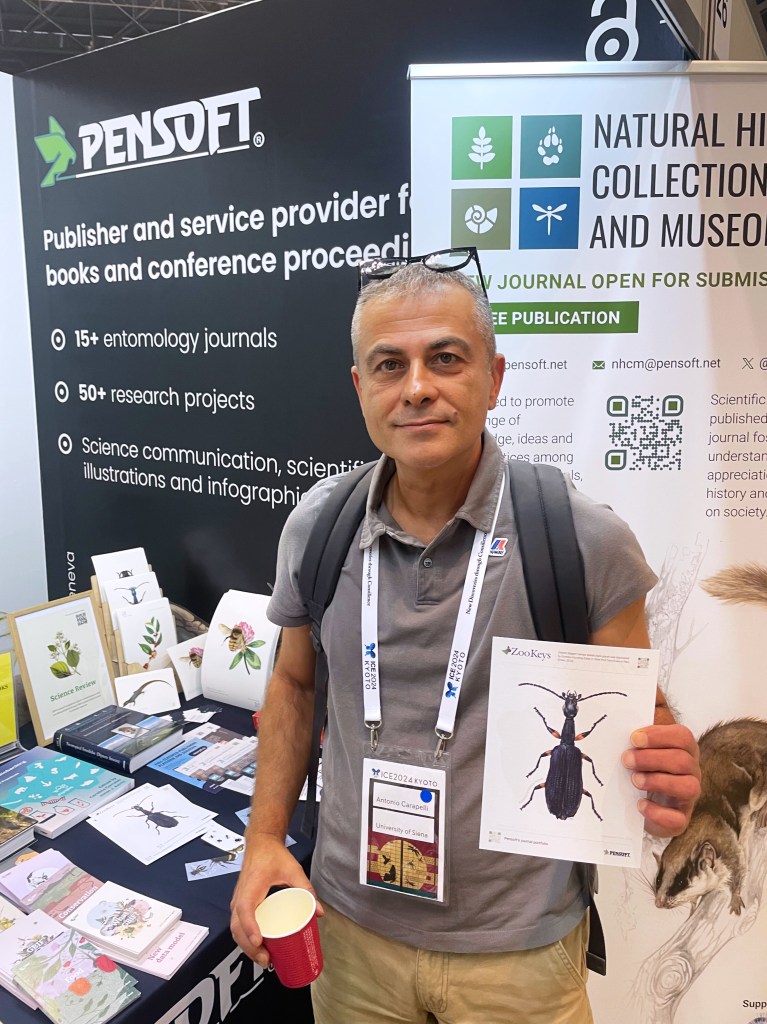
Pensoft participated in this year’s 9th European Conference on Tropical Ecology (ECTE 2026) and signed a Memorandum of Understanding with the Society for Tropical Ecology (gtö).
Under the theme ‘Species-Ecosystems-People,’ the conference offered a multidisciplinary perspective through 175 oral presentations and 42 posters across 17 thematic sessions, bridging the gap between fundamental ecological research and the sustainable restoration of vital ecosystems.
From the very first day and throughout the week, the Pensoft booth was buzzing with people and activities. Attendees had the chance to explore our diverse portfolio of journals, many of which align seamlessly with the ‘Species-Ecosystems-People’ theme, including:
Editors of existing or yet-to-be-launched Diamond and Gold Open Access journals were also invited to visit the Pensoft stand to learn more about the process and benefits of migrating to or launching a journal on the ARPHA Platform.
Developed by Pensoft to power its own well-renowned scientific journals, ARPHA is now a globally recognised end-to-end solution for innovative, technologically advanced scientific publishing that comes with multiple in-house human-provided services.
Beyond browsing journals and discussing publishing opportunities, visitors engaged with our interactive “Pin Your Favourite Species” board and took promotional materials and stickers featuring the stunning artwork of Pensoft’s in-house scientific illustrator Denitsa Peneva, which proved to be a major visual draw.
A milestone partnership
Dr. Katarina Sam, president of the Society for Tropical Ecology (gtö) at Pensoft’s booth.
On 24th of February, Dr. Katerina Sam (gtö) signed the partnership. This MoU aims to promote research activities and optimise the dissemination of scientific knowledge within the tropical ecology community to ensure that important research findings reach a global audience through robust publication support.
One major highlight of this year’s conference was the signing of a Memorandum of Understanding (MoU) between the Society for Tropical Ecology (gtö) and Pensoft during the general assembly.
Keynote speakers
Our team on-site was delighted to meet several Pensoft authors who took the stage as keynote speakers to share their expertise.
On February 24th, Prof. Alexandre Antonelli of the Royal Botanic Gardens, Kew delivered a compelling lecture on “Illuminating Biodiversity Darkspots,” reminding us that over 90% of fungi remain unknown and 45% of plants are at risk of extinction.
Prof. Antonelli during his keynote talk at ECTE 2026.
Prof. Antonelli during his keynote talk at ECTE 2026.
That same day, Dr. Maria Fungomeli of the National Museums of Kenya presented her keynote on “Biodiversity Patterns in the Kenyan Coastal Forests,” highlighting the vital links between coastal ecosystems, culture, and community.
A valued author and reviewer for VCS, Dr. Fungomeli has also contributed to several journals powered by ARPHA Platform, including Pensoft’s Biodiversity Data Journal and ZooKeys, as well as Senckenberg’s Contributions to Entomology.
Dr. Fungomeli during her keynote talk.
Dr. Fungomeli at Pensoft’s booth.
On February 25th, Prof. Rob Marchant of the University of York, an author in our open-access journal African Invertebrates, delivered his talk, “Embedding the Past for Balanced Future Tropical Mountain Social Ecological Systems.”
He explored how shifts in human-nature interactions over the last 6,000 years can help researchers understand the complex transitions from original forest extents to our modern landscapes. See Prof. Marchant’s paper in African Invertebrates here.
Her presentation, “Aromatic delight: Revealing diversity and function of fruit microbiome in seed dispersal,” proposed a fascinating shift in ecological understanding.
During her talk, she suggested the potential that microbes co-evolved with animals and plants to support scent-driven seed dispersal effectively transforming a traditional bipartite interaction (plant-animal seed dispersal) into a tripartite one.
Dr. Chronopoulou received a waiver for a free publication in any open-access journal within the Pensoft portfolio.
After a fantastic week in Passau at ECTE 2026, Pensoft is now looking forward to the 10th European Conference on Tropical Ecology, which will take place in Aarhus, Denmark. There, Pensoft plans to establish further partnerships and continue its support for open science in insect research. See you there!
The conference facilitated valuable networking opportunities, meeting us with old friends but also giving us a chance to discuss potential future collaborations.
Between 30 June and 3 July, Pensoft’s team attended the LifeWatch ERIC Biodiversity & Ecosystem eScience Conference (BEeS) in Heraklion, Greece. The event was organized by the LifeWatch ERIC Infrastructure with the aim of tackling the Triple Planetary Crisis (climate change, biodiversity loss, and pollution) through eScience and European Research Infrastructures (RIs). With almost 200 registered participants, the conference discussed “how cutting-edge eScience and European Research Infrastructures can work together to develop innovative solutions for a sustainable future.”
Hosted by the Hellenic Centre for Marine Research, BEeS convened 193 registrants, featured 59 presentations, 36 posters, and provided 12 training sessions, highlighting the vital role of technology, data, and collaborative efforts in confronting global environmental challenges.
On the first day, a closed-door meeting was held with the aim of adopting a Declaration of Intent (the Crete Declaration) between the involved RIs, e-infrastructures, EU-relevant projects, and Pensoft, as a scientific publisher. The objective was to advance the One Health approach—a strategy that optimizes the health of people, animals, and ecosystems. The Declaration outlines four key strategic commitments:
strengthening strategic collaboration
advancing data integration and FAIR (Findable, Accessible, Interoperable, Reusable) principles
supporting Open Science Ecosystems
informing policy and practice
Christos Arvanitidis, the president of LifeWatch ERIC, came to the Pensoft stand to meet with our staff and discuss our agenda.
Pensoft was also invited to present the outcomes of the BiCIKL project, on which we partnered with LifeWatch ERIC, as part of the Mapping Life on Planet Earth: Biogeography in a Changing World session.
The indexing is one of the major outcomes from the partnerships within the Horizon 2020-funded project Biodiversity Community Integrated Knowledge…
Teodor Georgiev, Chief Technology Officer of Pensoft, delivered the presentation, titled The BiCIKL project traverses obstacles to FAIR and linked biodiversity data usage.
The BiCIKL project, which concluded on 30 April 2024, aims to catalyse the culture change in the way biodiversity data are identified, linked, integrated and re-used across the research lifecycle. Key outcomesinclude the creation of uni- and bi-directional links between biodiversity RIs, the establishment of best practices for Persistent Identifiers (PIDs), recommendations for interoperability between RIs, and the development of automated tools and workflows for published data liberation and FAIR-isation. The presentation also introduced the Biodiversity Knowledge Hub, a one-stop portal for understanding the complex, but increasingly interconnected landscape of biodiversity RIs.
Georgiev also delivered a poster presentation, discussing SOLO: a collaborative open-review and publishing platform supporting the EU Soil Mission.
SOLO, a Horizon Europe project in which Pensoft is involved, aims to identify current knowledge gaps, drivers, bottlenecks, and novel research and innovation approaches to be considered in the European Soil Mission research and innovation roadmap. Hosted on Pensoft’s ARPHA publishing platform and integrating the ARPHA Writing Tool, SOLO engages researchers, practitioners, citizens and other stakeholders in the development and review of ‘living’ open-access documents supporting the EU Mission “A Soil Deal for Europe.” Pensoft’s contribution to SOLO encompasses communication, dissemination, data management, and the crucial development of the platform itself.
Fifteen research infrastructures and 15 projects were officially represented at BEes, including two other Horizon Europe projects where Pensoft is a partner: ANERIS, which focuses on scientific tools and methods for marine life-sensing and monitoring, and BMD, which offers a single access point to high-throughput biodiversity monitoring tools.
Pensoft joins the ANERIS consortium as an expert in science communication with the goal to engage stakeholders and build an active community…
Berta Companys of the Spanish National Research Council introduced ANERIS with an insightful presentation on the project’s innovative technologies, workflow, and overall approach. Her talk highlighted the key challenges connected to marine biodiversity and monitoring sea and ocean ecosystems that ANERIS is tackling and outlined the solutions the project is developing to address them, such as the implementation of Operational Marine Biology (OMB) data products.
The conference facilitated valuable networking opportunities, meeting us with old friends but also giving us a chance to discuss potential future collaborations. Pensoft engaged with partners from other European Research Infrastructures, sharing a dedication to collaborative research and the development of open-access resources addressing global environmental challenges.
The International Congress of Entomology 2024 (ICE2024), which took place on August 25-30 2024 in Kyoto, Japan, was arguably the biggest entomology event of the year. For the Pensoft team, it was an excellent chance to catch up with our authors and editors and discuss new partnerships.
At the Kyoto International Conference Center, entomologists visited lectures, symposia, and poster presentations, but they also enjoyed insect-themed haikus, origami, and artworks, and got to sample some edible insects.
— International Congress of Entomology 2024 Kyoto JP (@ice2024kyoto_jp) August 27, 2024
Meeting our authors in person was a chance for us to gather valuable feedback and make sure we are doing our best to provide entomologists with a frictionless process that makes their published research shine.
Robin Kundrata, author in ZooKeys
Deepa Pureswaran, author and editor in NeoBiota
Alain Roques, author and editor in NeoBiota
Jessica Gillung, author in ZooKeys
Ranjith AP, editor in Check List and author in ZooKeys and Journal of Hymenoptera Research
Scientific illustrator Denitsa Peneva’s beautiful works adorned Pensoft’s stand; Mostafa Ghafouri Moghaddam, subject editor at ZooKeys and Biodiversity Data Journal and author at a number of Pensoft-published journals even got to take one of her prints home after winning a raffle that Pensoft organised. He won a beautiful illustration of Bombus fragrans on Trifolium pratense.
Pensoft’s founder and CEO and one of the founding editors of the company’s flagship journal ZooKeys, Prof. Lyubomir Penev, was there representing the company and meeting with fellow entomologists.
Prof. Penev with Evgeny Zakharov of the Centre for Biodiversity Genomics
Prof. Penev with researchers Jadranka Rota, Niklas Wahlberg, Alexander Konstantinov, and Michael Schmidt
Prof. Penev with researcher Caroline S. Chaboo
They also got the chance to learn about the ARPHA Platform, a next-generation publishing solution that offers a streamlined and efficient workflow for authors, reviewers, and editors.
At ICE2024, Pensoft also presented its newest open-access jorunal, Natural History Collections and Museomics. A peer-reviewed journal for research, discussion and innovation of natural history collections, NHCM will publish under a diamond open access model, allowing free access to published content without any fees for authors or readers.
In addition to its publishing endeavors, Pensoft also presented some of the EU-funded pollinator projects that it takes part in such as Safeguard, PollinERA, and WildPosh.
ICE2024 was a chance to advance entomological science and foster collaboration within the global scientific community. For those who missed the chance to connect with Pensoft in Kyoto, the company’s journals and platforms remain accessible online, offering opportunities to read and produce groundbreaking research in insect diversity and ecology.
Towards the end of July 2024, members of the Pensoft team travelled to Madrid for the XX International Botanical Congress, where an estimated 3,000 botanists gathered for the biggest event of the year.
Held once every six years, the congress has enlarged its scope over more than a century to become an integrated forum for knowledge on the plant and mycological world.
Proceedings kicked off with a fantastic lecture from PhytoKeys Editor-in-Chief Sandy Knapp titled, “Why botany? Why now?” The following day, Thorsten Lumbsch, Editor-in-Chief of MycoKeys, gave a keynote lecture titled, “Unravelling diversity and evolution of lichens in the genomic era.”
In fact, many authors, editors and readers of Pensoft’s journals were in attendance. And several gave presentations, including a plenary talk by renowned PhytoKeys editor, Pamela S. Soltis, on the changing face of herbarium collections.
Denitsa Peneva greeting researchers at the Pensoft stand.Lyubomir Penev giving a presentation to PhytoKeys editor.
The Pensoft team welcomed attendees with a bespoke stand, complete with print copies, illustrations and various promotional materials depicting beautiful species featured in PhytoKeys.
Lyubomir Penev, founder of Pensoft and founding editor of PhytoKeys, hosted a gathering of PhytoKeys editors at the stand, where he presented the story, latest results and highlights of the journal.
Researchers who found their publications on display at the Pensoft stand.
The congress included numerous lectures, symposia sessions, workshops and meetings across a variety of subject matters, all of which can be found on the IBC 2024 website. The major topics of the event were:
Systematics, phylogenetics, biogeography and evolution
Ecology, environment and global change, including invasive species and plant-animal interactions
Biodiversity and conservation
Structure, physiology and development, including Evo-Devo
Genetics, genomics and bioinformatics
Plants and Society
At the closing ceremony, multiple awards were presented, including Pensoft’s Early Career Researcher Talk Award. Sandy Knapp presented the award to Sonia Molino for her talk on a global study of the genus Parablechnum, a lineage of ferns of the family Blechnaceae. The award grants her a free publication in PhytoKeys.
What a way to end @ibc2024 ! I can't believe how lucky I was to get the Early career researcher talk award on taxonomy or systematics by @Pensoft for my talk at the conference. And delivered by my admired @SandyKnapp! Thank you so much! See you in Cape Town! pic.twitter.com/Y79U1xcKxj
Describing her study, Sofia Molino said: “To date there has been no study that takes into account all the centres of diversity of the genus at the same time, and what we have found is that it has a very complex evolutionary history, with several cases of cryptic diversity, hybridisation and rapid radiation.”
On her plans to use her free publication for a pending study on a series of novelties within Parablechnum in Bolivia, she added: “Although this is probably the country in South America where Parablechnum has been studied the most, after one expedition we have still found a lot of new things, such as several undescribed species, hybrids and new localities of some species that were only known from type material.”
The next International Botanical Congress is in 2029 and will take place in South Africa, where the Pensoft team looks forward to seeing plenty of new faces and old friends!
October and November 2023 were active months for the Pensoft team, who represented the publisher’s journals and projects at conferences in Europe, North America, South America, Oceania and Asia.
Let’s take a look back at all the events of the past two months.
The Biodiversity Information Standards Conference 2023
The annual gathering is a crucial platform for sharing insights, innovations, and knowledge related to biodiversity data standards and practices. Key figures from Pensoft took part in the event, presenting new ways to improve the management, accessibility, and usability of biodiversity data.
Prof. Lyubomir Penev, founder and Chief Executive Officer of Pensoft, gave two talks that highlighted the importance of data publishing. His presentation on “The Biodiversity Knowledge Hub (BKH): A Crosspoint and Knowledge Broker for FAIR and Linked Biodiversity Data” underscored the significance of FAIR (Findable, Accessible, Interoperable, and Reusable) data standards. BKH is the major output from the Horizon 2020 project BiCIKL (Biodiversity Community Integrated Knowledge Library) dedicated to linked and FAIR data in biodiversity, and coordinated by Pensoft.
Prof. Lyubomir Penev, Pensoft founder and CEO.
He also introduced the Nanopublications for Biodiversity workflow and format: a promising new tool developed by Knowledge Pixels and Pensoft to communicate key scientific statements in a way that is human-readable, machine-actionable, and in line with FAIR principles. Earlier this year, Biodiversity Data Journal integrated nanopublications into its workflow to allow authors to share their findings even more efficiently.
Chief Technology Officer of Pensoft Teodor Georgiev contributed to the conference by presenting “OpenBiodiv for Users: Applications and Approaches to Explore a Biodiversity Knowledge Graph.” His session highlighted the innovative approaches being taken to explore and leverage a biodiversity knowledge graph, showcasing the importance of technology in advancing biodiversity research.
Metabarcoding and Metagenomics editor-in-chief, Florian Leese.
The theme of the conference was “Monitoring Biodiversity for Action” and there was particular emphasis on the development of best practices and new technologies for biodiversity observations and monitoring to support transformative policy and conservation action.
Metabarcoding & Metagenomics’ editor-in-chief, Florian Leese, was one of the organisers of the “Standardized eDNA-Based Biodiversity Monitoring to Inform Environmental Stewardship Programs” session. Furthermore, the journal was represented at Pensoft’s exhibition booth, where conference participants were able to discuss metabarcoding and metagenomics research.
#geobonconf2023 was great as it linked different actors performing #biodiversity monitoring. Today we discussed #eDNA standardisation. We need formal standards, QA/QC, guidance, 🌐harmonisation to facilitate uptake. Cool to see our @DNAquaNet practical guide in this context. pic.twitter.com/eTOtr3yug8
Following the conference, Metabarcoding & Metagenomics announced a new special issue titled “Towards Standardized Molecular Biodiversity Monitoring.” The special issue is accepting submissions until 15th March 2024.
Asian Mycological Congress2023
The Asian Mycological Congress welcomed researchers from around the world to Busan, Republic of Korea, for an exploration of all things fungi from 10-13 October.
MycoKeys Best Talk award (winner not pictured).
Titled “Fungal World and Its Bioexploitation – in all areas of basic and applied mycology,” the conference covered a range of topics related to all theoretical and practical aspects of mycology. There was a particular emphasis on the development of mycology through various activities associated with mycological education, training, research, and service in countries and regions within Asia.
As one of the sponsors of the congress, Pensoft proudly presented a Best Talk award to Dr Sinang Hongsanan of Chiang Mai University, Thailand. The award entitles the winner to a free publication in Pensoft’s flagship mycology journal, MycoKeys.
Joint ESENIAS and DIAS Scientific Conference 2023
The ESENIAS and DIAS conference took place from 11-14 October and focused on “globalisation and invasive alien species in the Black Sea and Mediterranean regions.” Pensoft shared information on their NeoBiota journal and the important REST-COAST and B-Cubed projects.
Polina Nikova receiving the NeoBiota Best Talk Award.
Polina Nikova of the Bulgarian Academy of Sciences received the NeoBiota Best Talk Award for her presentation titled “First documented records in the wild of American mink (Neogale vision von Schreber, 1776) in Bulgaria.” The award entitles her to a free publication in the NeoBiota journal.
XII European Congress of Entomology
Pensoft took part in the XII European Congress of Entomology (ECE 2023) in Heraklion, Crete, from 16-20 October. The event provided a forum for entomologists from all over the world, bringing together over 900 scientists from 60 countries.
Carla Stoyanova, Teodor Metodiev and Boriana Ovcharova representing Pensoft.
The ECE 2023, organised by the Hellenic Entomological Society, addressed the pressing challenges facing entomology, including climate change, vector-borne diseases, biodiversity loss, and the need to sustainably feed a growing world population. The program featured symposia, lectures, poster sessions, and other types of activities aimed at fostering innovation in entomology. For Pensoft, they were a great opportunity to interact with scientists and share their commitment to advancing entomological research and addressing the critical challenges in the field.
🐝Today at #ECE2023, Prof Denis Michez & Sara Reverté are running a workshop on bee identification!
Throughout the event, conference participants could find Pensoft’s team at thir booth, and learn more about the scholarly publisher’s open-access journals in entomology. In addition, the Pensoft team presented the latest outcomes from the Horizon 2020 projects B-GOOD, Safeguard, and PoshBee, where the publisher takes care of science communication and dissemination as a partner.
Group photo of XIV International Congress of Orthopterology 2023 participants.
Hosted for the first time in Mexico, it attracted experts and enthusiasts from around the world. The congress featured plenary speakers who presented cutting-edge research and insights on various aspects of grasshoppers, crickets, and related insects.
Pensoft’s Journal of Orthoptera Research was represented by Tony Robillard, the editor-in-chief, who presented the latest developments of the journal to attendees.
Symposia, workshops, and meetings facilitated discussions on topics like climate change impacts, conservation, and management of Orthoptera. The event also included introductions to new digital and geospatial tools for Orthoptera research.
The 16th International Conference on Ecology and Management of Alien Plant Invasions
4th International ESP Latin America and Caribbean Conference
The 4th International ESP Latin America and Caribbean Conference (ESP LAC 2023) was held in La Serena, Chile, from 6-10 November. Focused on “Sharing knowledge about ecosystem services and natural capital to build a sustainable future,” the event attracted experts in ecosystem services, particularly from Latin America and the Caribbean.
Organised by the Ecosystem Services Partnership, this bi-annual conference was open to both ESP members and non-members, featuring a hybrid format in English and Spanish. Attendees enjoyed an excursion to La Serena’s historical center, adding a cultural dimension to the event.
The conference included diverse sessions and a special recognition by Pensoft’s One Ecosystem journal, which awarded full waivers for publication to the authors of the three best posters.
Magaly Aldave receiving the Best Poster Award.
Magaly Aldave of the Transdisciplinary Center for FES-Systemic Studies claimed first prize with “The voice of children in the conservation of the urban wetland and Ramsar Site Pantanos de Villa in Metropolitan Lima, Peru.” Ana Catalina Copier Guerrero and Gabriela Mallea-Rebolledo, both of the University of Chile, were awarded second and third prize respectively.
The event featured in-person and online participation, catering to a wide audience of researchers, academics, and students. It included workshops, presentations, and discussions, with a focus on enhancing understanding in biosystematics.
Pensoft awarded three student prizes at the event. Putter Tiatragu, Australian National University, received the Best Student Talk award and a free publication in any Pensoft journal for “A big burst of blindsnakes: Phylogenomics and historical biogeography of Australia’s most species-rich snake genus.”
Helen Armstrong, Murdoch University, received the Best Student Lightning Talk for “An enigmatic snapper parasite (Trematoda: Cryptogonimidae) found in an unexpected host.” Patricia Chan, University of Wisconsin-Madison, was the Best Student Lightning Talk runner-up for “Drivers of Diversity of Darwinia’s Common Scents and Inflorescences with Style: Phylogenomics, Pollination Biology, and Floral Chemical Ecology of Western Australian Darwinia (Myrtaceae).”
–
As we approach the end of 2023, Pensoft looks back on its most prolific and meaningful year of conferences and events. Thank you to everyone who contributed to or engaged with Pensoft’s open-access journals, and here’s to another year of attending events, rewarding important research, and connecting with the scientific community.
For the Pensoft team, September 2023 was a busy and exciting month filled with conferences. Travelling across Europe, they promoted journals, connected with the scientific community, and rewarded exceptional research with free article publications.
Let’s take a look back at all the events of the past month.
Pensoft representatives Mrs. Boriana Ovcharova and Mrs. Anna Sapundzhieva, ready to greet attendees in the sun.
The conference looked at evolutionary adaptations from the perspective of behavioural ecology, reproduction biology, genetics, physiology, as well as nature conservation. It particularly focused on the pressing issues of wildlife research and species conservation in the context of global environmental change. Most of the ≈100 participants were young scientists from more than 30 countries.
The Pensoft team greeted fellow attendees with an exhibition stand and presented the conservation and ecology-focused journals Neobiota, Nature Conservation, One Ecosystem, and Biodiversity Data Journal. Pensoft also advocated for EuropaBon, who are designing an EU-wide framework for monitoring biodiversity and ecosystem services, and REST-COAST, whose mission is to provide the tools to restore environmental degradation of rivers and coasts. Within both European-funded initiatives, Pensoft is a key dissemination partner that contributes expertise in science communication, scholarly publishing, and the development of digital tools and platforms.
Joao Pedro Meireles posing with his Best Poster award.
Pensoft presented Joao Pedro Meireles from Utrecht University with the Best Poster Award for his research on pair compatibility in okapis, entitling him to a free publication in one of Pensoft’s open-access journals.
“My study looked at pair compatibility in the zoo breeding programme of Okapi. During breeding introductions, sometimes the male becomes aggressive towards the female and we decided to investigate the potential factors. We ran a survey among all zoos that house the species in Europe and we found that differences in husbandry were linked to the aggressiveness performed by the males.”
Joao Pedro Meireles, Utrecht University
GfÖ Annual Meeting 2023
From the 12th to 16th of September, the German Centre for Integrative Biodiversity Research hosted the 52nd Annual Meeting of the Ecological Society of Germany, Austria and Switzerlandin Leipzig, Germany. The meeting welcomed more than 1,100 participants from around the world, including scientists, policymakers, educators, and environmental enthusiasts.
This year’s meeting was held with the theme: “The future of biodiversity – overcoming barriers of taxa, realms and scales.” There was a particular emphasis on future challenges and opportunities facing biodiversity, and how to address and manage these in an interdisciplinary and integrative way.
Mrs. Boriana Ovcharova (Pensoft) with Neobiota Editor-in-Chief Prof. Dr. Ingolf Kühn.
Conference participants were welcomed at the Pensoft stand, where they could learn more about the projects EuropaBon and SELINA, which deal with biodiversity, ecosystem and natural capital topics.
Also in Leipzig, the European Conference on Ecological Modellingtook place between the 4th and 8th of September. The event focused on the transformation of how societies deal with natural resources in a world where biodiversity and ecosystem services are at high risk.
The ECEM 2023 continued a series of conferences launched by the European chapter of ISEM, the International Society for Ecological Modelling. ISEM promotes the international exchange of ideas, scientific results, and general knowledge in the areas of systems’ analysis and simulations in ecology, and the application of ecological modelling for natural resource management.
The Bundesinstitut für Risikobewertung team presented a poster on the Formal Model format and potential new MiDox formats, unique publication types that can be submitted to Pensoft’s Food and Ecological Modelling Journal.
118th Congress of the Italian Botanical Society
Speakers at the 118th Congress of the Italian Botanical Society.
Pensoft was proud to sponsor the 118th Congress of the Italian Botanical Society, which took place in Pisa, Italy from the 13th to 16th of September. Experts in various fields of Botany gathered to share their research on the following topics:
Journals promoted by Pensoft at the 94th Annual Meeting of the Paläontologische Gesellschaft.
Summer may be well and truly over, but as a new academic year begins, Pensoft looks forward to attending more conferences, rewarding more incredible research, and connecting with more of the scientific community. Thank you to everyone who contributed to or engaged with Pensoft’s open-access journals this year, and here’s to a successful final quarter of 2023.
Given scientific conferences present academics with the fantastic opportunity to meet up and discuss their latest work, as well as share their vision for the future of their field, it’s no wonder that, historically, the majority of ground-breaking science can easily be traced back to a particular event.
This said, don’t you think that we need to do everything within our powers toensure the visibility, dissemination and long-term accessibility of research presented and linked to these wonderful drivers of scientific progress that conferences are? Similarly to the care conference organisers take to make sure the event runs smoothly and the attendants are happy with the programme and enjoy themselves, the organisational committee should also be thinking how to preserve all those promising pieces of research well after the event is over.
Here at Pensoft, an open-access scholarly publisher, founded by scientists, we’ve been contemplating for a while now how to encourage and support the community to efficiently open up the valuable outputs to researchers and readers well beyond the publication of abstracts in an abstract book of the conference.
As a result, we came up with several simple, yet efficient publishing solutions for scientific conferences to collect and contextualise various research outputseither presented at or resulting from the event.
Bear in mind that with any solution, all publications enjoy the benefits seen in conventional research papers, such as:
Crossref registration and individual DOI to ensure preservation;
Publication in PDF, semantically enhanced HTML and data-minable XML formats to improve readability, accessibility and findability;
Indexing and archiving at multiple, industry leading databases to increase visibility;
PR and social media promotion to boost outreach to various audiences.
Collections of conference abstracts, posters and presentations
Conference (video) abstracts, posters and presentations are easily the first to fall victims of the ephemerality of an event, yet these are too often the stepping stones to major scientific discoveries. This is why a few years back we launched ARPHA Conference Abstracts (ACA), where conference organisers can open their own collection and provide the participants with submission, review and publication of their abstracts ahead of the conference.
Furthermore, these abstracts can be handled editorially in sub-collections, e.g. the convenors of symposia or working groups within a conference will take care of the abstracts submitted to them, thus spreading the editorial workload across larger teams of editors and organisers.
Not only will conference organisers spare themselves the worries about providing a special platform for abstracts submissions, but this will also facilitate presenting authors, who will be able to easily point to their contribution before, during or after their presentations. On the contrary, the abstracts are assigned with DOIs, published in human-readable PDF and HTML and machine-actionable JATS XML, permanently preserved on ARPHA and Zenodo, and easy to find, access and cite, just like a conventional research paper, providing authors with full credit for their work early on.
Further, with ACA, the conference abstracts can be enhanced into what we call “extended abstracts”, meaning they can also include data, images, videos and multimedia. After the conferences, we can add video recordings of the presentations or graphic files of posters, so that these are visualised on the page of each abstract.
About the time we launched ACA, we also created ARPHA Proceedings, in order to also find a place for full-text conference papers. Similarly, the platform supports dedicated collections, where conference attendants are invited to submit and publish dynamically articles under the imprint of the event.
Conference papers in ARPHA Proceedings can also include data, figures and citations, and can also be updated with video recordings, posters and presentations following the conference.
Article topical collections and special issues resulting from conferences
Naturally, papers resulting from a particular conference are contextually linked, so a one-stop place to discover topical studies sharing one and the same topic would be greatly appreciated by readers and future researchers. In turn, this would lead to better viewership and citability of the papers in the collection.
With our user-friendly, dedicated workflow for special issues and permanent topical article collections, we’ve made it easy for guest editors across our journals to pitch and manage article collections, in order to bring together valuable and related studies. Using such a collection under the theme of your conference in a suitable journal, you can invite your conference’s participants or, better yet, all scientists working within the field, to submit their work in a nice package of topical science. We’d be happy to assist you with the identification of the most suitable journal for your conference, authors and goals.
Bringing together traditional and non-conventional research outputs, (e.g. research ideas, grant proposals, conference materials or workshop reports) with RIO Journal’s article collections
Undoubtedly, valuable research outcomes come in many shapes and sizes well beyond research papers, conference abstracts, posters and proceedings. We are firm supporters that every research item, even early and interim outputs, could be of value to the scientist next in line within a particular study.
This is why we launched the award-winning journal Research Ideas and Outcomes(RIO), where your collections can include both conventional and non-traditional research outputs, such as research ideas, posters, workshop reports, forum papers, policy briefs, software and data management plans to name a few. Furthermore, in RIO,you can even link articles or preprints published elsewhere to your collection via their metadata. Similarly to other Pensoft journals, in RIO, you will have the full control to whom you are opening your collection for submissions, allowing you to either limit it to the outcomes coming from your conference or welcome submissions from other researchers as well.
A permanent topical collection in RIO Journal may include a diverse range of both traditional and unconventional research outputs, as well as links to publications from outside the journal (see What can I publish on the journal’s website).