The newly described aquatic insects, belonging to the genus Hydropsyche, help close substantial knowledge gaps regarding the biodiversity of Azerbaijan, Iran, and Türkiye. Caddisflies (order Trichoptera) are vital components of freshwater ecosystems, and the Hydropsyche genus is among the most diverse and ecologically important, comprising more than 8% of all Trichoptera species recorded in the Western Palaearctic region.
The Two New Caddisfly Species
Hydropsyche fitesa, credit to Dr. Halil Ibrahimi
Hydropsyche hindrajab, credit to Dr. Halil Ibrahimi
Both new species were found in habitats characterized by stone, pebble, and fine sediments with sparse riparian vegetation. Hydropsyche fitesa was discovered in Iran, specifically near the Shalmash Waterfalls on the Chamyaman River, a tributary originating in the Zagros Mountains; the epithet fitesa honors the first author’s wife, in recognition of her lifelong support of caddisfly research. Hydropsyche hindrajab was found across multiple river localities in Azerbaijan, Iran, and Türkiye, and was named in honor of Hind Rajab, a five-year-old girl whose life was lost amid the Israeli-Palestinian conflict.
Authored by Halil Ibrahimi (University of Prishtina, Kosovo) and Dora Hlebec (University of Zagreb, Croatia), the study highlights the challenges of identifying morphologically similar species. Because both new insects belong to the Hydropsyche guttata species cluster, a group whose members look strikingly alike, the team employed an integrative taxonomic approach.
By combining traditional morphological examination with advanced DNA analysis (specifically, sequencing of the mitochondrial cytochrome c oxidase subunit I, or COI gene), the researchers confirmed that H. hindrajab represents a distinct evolutionary lineage. H. fitesa was distinguished based on unique morphological differences in its physical structure compared to its closest relatives.
Future Explorations
Distribution of Hydropsychehindrajab sp. nov. (red squares), Hydropsychefitesa sp. nov. (green square), Hydropsychesciligra (yellow squares) and Hydropsychetigrata (green squares), based on data used for the current study. Credit to Ibrahimi and Hlebec, 2026.
The discovery underscores how much of the region’s aquatic life remains undocumented. The authors note that the type localities in West Azerbaijan Province, Iran, are known for harboring rare aquatic insects, and they believe the area likely holds additional undescribed species yet to be found. Currently, 23 Hydropsyche species are known in Iran, 67 in Türkiye, and 12 in Azerbaijan, but the potential for new discoveries remains high.
A new study published in the open-access Biodiversity Data Journal suggests that spider webs – particularly those incorporating environmental debris – can serve as natural, non-destructive collectors of fungal material in agricultural ecosystems. The findings show that viable fungi can be recovered from these structures, including lineages that may represent previously undocumented diversity.
“Spider webs are often overlooked structures in the environment, yet they can function as natural collectors of biological material. Our findings suggest that they can be used as a complementary approach to access microbial communities without disturbing the surrounding ecosystem.”
Thanakron Into (Student at Thammasat University)
Researchers from Thammasat University and the National Center for Genetic Engineering and Biotechnology (BIOTEC), Thailand, investigated whether the adhesive and particle-trapping properties of spider silk could be used to capture and culture fungi associated with airborne and environmental particles. Unlike DNA-based methods, which detect genetic material regardless of viability, this approach allows for the recovery of living organisms that can be further studied.
The study focused on tropical rice fields, using webs of the orb-weaving spider Cyclosa mulmeinensis, a species known for constructing distinctive “trashline” decorations – linear accumulations of plant fragments, insect remains, and other debris within the web. These structures can intercept a variety of particles, some of which may carry fungal propagules.
Representative orb webs of Cyclosamulmeinensis illustrating web architecture and debris decoration. Image credit: Thanakron Into et al.
Webs were collected from rice-field embankments in Pathum Thani, Nakhon Nayok, and Phetchaburi provinces using sterile techniques. In the laboratory, material retained on the silk was gently removed and cultured, yielding 112 viable fungal isolates. These isolates were grouped into 23 taxa across six genera, including Alternaria, Aspergillus, Cladosporium, Fusarium, Penicillium, and Talaromyces.
“We were particularly surprised that many of the fungi recovered from the webs remained viable and could be cultured. This enables further investigation beyond presence or absence, including their biological characteristics.”
Thanakron Into
Locations of paddy fields where Cyclosamulmeinensis spider webs were collected in Thailand (left). Composition of culturable fungal taxa across genera in individual sampled webs, expressed as the number of taxa recovered per web (right). Image credit: Thanakron Into et al.
Some genetic lineages – particularly within Cladosporium and Talaromyces – did not match currently described species in available databases, indicating that additional, undocumented diversity may be present in these systems.
Conventional approaches to fungal monitoring typically rely on soil, air, or plant sampling, or on molecular methods that may not distinguish between living and non-living material. In this context, spider webs may provide a useful supplementary sampling surface for capturing biologically relevant particles.
Because spider webs are naturally maintained and, in some species, periodically rebuilt, this method can be applied with minimal disturbance to both the organisms and their environment. Importantly, the spiders themselves were not harmed during sampling, as only small sections of the web were collected.
“The ability to recover living fungi from these naturally occurring structures adds a practical dimension to biodiversity studies. It provides a way to link environmental sampling with downstream biological work.”
Thanakron Into
The idea that something as familiar as a spider web could quietly capture a hidden layer of biodiversity highlights how much of the natural world remains overlooked in plain sight.
While further work is needed to evaluate how broadly this approach can be applied, the study demonstrates the potential of spider webs as an additional tool for exploring microbial diversity in agricultural landscapes.
Diagram displaying an overview of the study. Image credit: Booppa Petcharad.
Once again, Pensoft joined the ESP conference as an open-access scholarly publisher, publishing services provider, and a partner at Horizon Europe consortia.
Conference Organising Committee’s Davina Vačkářová thanks the ESP2026EU’s sponsors, exhibitors and partners. Photo courtesy of the ESP.
From 18 to 22 May 2026, the historic city of Prague, Czechia, hosted the 6th European Conference of the Ecosystem Services Partnership (ESP). Set against a backdrop of global turning points, such as biodiversity declines and climate uncertainty, the event served as an important forum for discussing how ecosystem services can cultivate a sustainable and equitable future.
This year’s ESP European conference ran under the theme “Advancing ecosystem services knowledge for achieving a nature- and people-positive Europe.” Photo courtesy of the ESP.
The conference ran under the theme, “Advancing ecosystem services knowledge for achieving a nature- and people-positive Europe.” Attendees focused on how to translate major policy frameworks, including the EU Biodiversity Strategy 2030 and the new Nature Restoration Law, into inclusive and effective action that respects both nature and healthy ecosystems. A major talking point at the event was also the new path ahead of the ESP as it officially becomes an independent international community later in 2026. An election of a new Steering and Executive Committee has already been scheduled for October 2026.
For Pensoft, the ESP 2026 European conference was not only a wonderful occasion to meet once again many long-time partners and friends, including the ESP team itself; editors and loyal authors of our journals; and members of the international project consortia, where we are involved, but also an exciting opportunity to talk with new members of the ESP community and learn about the needs, interests and passions of a new generation of researchers in a rapidly changing scientific field.
Pensoft’s stand at the ESP 2026 Europe conference in Prague, Czechia.
As an open-science publisher well embedded in environmental research through its dozens of journals covering ecology, biodiversity conservation and other related fields, Pensoft Publishers also actively participated in the week’s dialogues, contributing unique perspectives on scientific communication.
The Karolinum: the seat of Prague’s Charles University hosted the pre-conference training sessions, the Opening ceremony and the Welcome reception on Monday. Photo courtesy of the ESP.
The sixth European installment of the conference kicked off on Monday, 18 May, at the Karolinum, the historic seat of Charles University. The energy of a dynamic, highly engaging week was set perfectly by a lavish evening ceremony filled with speeches from renowned local figures, traditional music, and cultural performances. Yet, long before the opening notes played, the Karolinum was already buzzing, having hosted a full slate of pre-conference training sessions throughout the day.
A get-together for the editors and loyal authors of the open-access peer-reviewed One Ecosystem – the Ecology and Sustainability Data Journal took place on Monday at the Karolinum (Prague, Czechia).
Just ahead of the opening ceremony, our team at Pensoft hosted a semi-formal get-together for the editors and loyal authors of the open-access peer-reviewed One Ecosystem – the Ecology and Sustainability Data Journal. This year, the scholarly outlet, launched in collaboration between Pensoft, the ESP and the ESMERALDA Horizon 2020 project, now succeeded by the Horizon Europe-funded project SELINA, celebrated its tenth anniversary.
Chaired by Editor-in-Chief Prof. Benjamin Burkhard and Pensoft’s Head of Journal Development and PR Iva Boyadzhieva, the meeting recapped the best moments from One Ecosystem’s first decade and inspired discussions and ideas for the journal’s future. They also referred to the recently published editorial titled “Ten years of innovation and the way ahead in scientific publishing in One Ecosystem”. The piece reflects on the journal’s journey since its 2016 launch and addresses modern challenges in academic publishing, such as reviewer fatigue and the rapid rise of generative artificial intelligence.
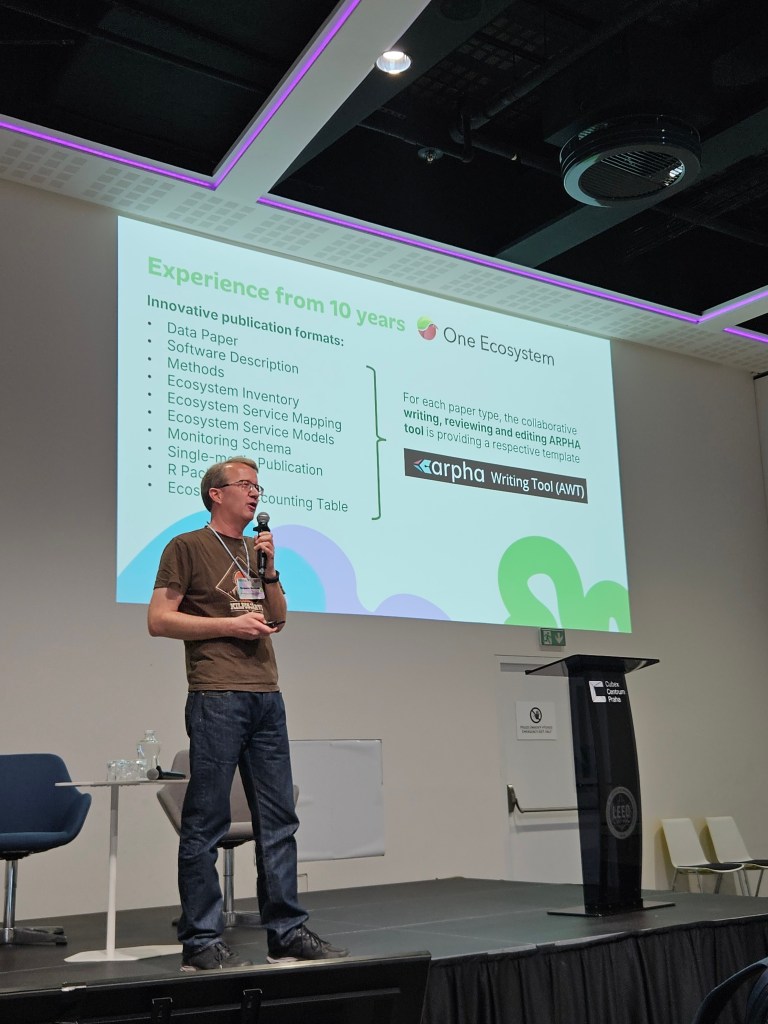
Over the last ten years, One Ecosystem has established itself as a unique journal in the field, thanks to its commitment to openly sharing the research data underpinning each publication. It also offers a versatile range of article types. These include traditional formats (e.g. Research Article, Review Article, Data Paper), innovative options (e.g. Software Description, R Package, Single-media Publication), as well as ones specifically devised for the community, such as Ecosystem Inventory, Ecosystem Service Mapping and Ecosystem Accounting Table.
So far, the journal has published over 200 papers authored by scientists from all continents, accumulating more than 1,500,000 views, 600 citations, and 6,000 online mentions. Today, the journal’s editorial board comprises 50 experts representing diverse geographies and professional fields. One Ecosystem is indexed in over 60 relevant scholarly databases, including Scopus and Web of Science, and holds a Q1 ranking on Scopus. Authors also benefit from a swift turnaround time, with an average of just 2.5 months from submission to acceptance, and articles typically published within three months of submission.
Keynote speeches at the first conference day were delivered by Jakub Kronenberg (University of Lodz), Alessandra La Notte (Senior consultant on natural capital accounting) and Ben Delbaere (LIFE Programme).
On Tuesday, the main schedule opened with inspiring keynote speeches, with Jakub Kronenberg (University of Lodz) examining the transition towards relational values of nature, Alessandra La Notte (Senior consultant on natural capital accounting) sharing two decades of insights into natural capital accounting, and Ben Delbaere (LIFE Programme at ELMEN EEIG) demonstrating how the European LIFE Programme supports a nature- and people-positive society.
Later in the day on Tuesday, Pensoft’s Iva Boyadzhieva, Head of Journal Development and PR, gave a talk on the topic of scholarly communication as part of a session organised and hosted by the Early Career Researchers (ECR) division of the ESP: Young Ecosystem Services Partnership (YESS) and focused on building practical skills and fostering careers for young researchers.
Pensoft’s Iva Boyadzhieva gave a talk titled “Scholarly Communication: Lessons from the publisher’s kitchen” as part of the YESS session “The Early Career Lab: Skills, Identity, and Growth for the Next Generation of Ecosystem Services Researchers”.
Boyadzhieva shared insights into how authors and publishers can work collaboratively to transform scholarly publications into scientific knowledge that is accessible to everyone, everywhere, regardless of professional background or expertise, by drawing on real-life examples and automated publication processes.
One Ecosystem’s Editor-in-Chief Prof. Benjamin Burkhard.
One Ecosystem’s Editor-in-Chief Prof. Benjamin Burkhard at the ESP session “The Changing Landscape of Academic Publishing on Ecosystem Services Research: Editors’ Perspectives.”
The One Ecosystem journal took center stage once again on Friday afternoon during a panel session titled, “The Changing Landscape of Academic Publishing on Ecosystem Services Research: Editors’ Perspectives.” The event brought together the Editors-in-Chief of the three ESP-associated journals for an engaging open discussion about the shifting dynamics of scientific literature. Sharing insights gained from One Ecosystem’s 10-year journey, Burkhard highlighted how authors of research who work closely with their publishers can support knowledge sharing and empower researchers. In the case of One Ecosystem, this collaboration translates to increased visibility, discoverability, reusability and citability of the published work, as well as rapid and hassle-free authoring and peer review experience, all thanks to the automated workflows and human-centric approaches provided through the publishing solutions of the ARPHA publishing platform.
It is worth issuing a reminder that manuscripts submitted in 2026 and accepted for publication in One Ecosystem journal are eligible for a 10% discount on the article publication charge (APC).
Despite excellent on-site organization, many sessions struggled to accommodate the massive turnout.Photo courtesy of the ESP.
Throughout the week, the daily program featured eight parallel session tracks covering a wide range of topics, many closely aligned with ESP Working Groups and National Networks. A dedicated poster session took place on Wednesday afternoon.
One of the field excursions offered ESP 2026 Europe delegates the challenge of an intense, half-day climbing experience in a nature park just outside Prague. Photo courtesy of ESP.
On Thursday, delegates had the opportunity to join one of several field excursions. These ranged from a visit to the unique rewilding reserve located in the former military area in Milovice, to a walk through the Prague Pasture: one of the city’s most remarkable natural sites, and an intense climbing experience just outside Prague.
Zdeněk Ent was awarded Best Poster for his poster, “Experiencing Ecosystem Services: Art, Sensory Engagement and Transformative Learning in Peri-Urban Landscapes”. In a yearly tradition, part of the award includes a free publication in the One Ecosystem journal.
Following an ESP tradition, the three highest-voted posters were recognised during Friday’s closing ceremony, with the first-prize winner receiving a free publication in One Ecosystem, sponsored by Pensoft. This year, the Best Poster Award went to Zdeněk Ent from Prague Institute of Planning and Development for the poster “Experiencing Ecosystem Services: Art, Sensory Engagement and Transformative Learning in Peri-Urban Landscapes”.
During the week, Pensoft’s exhibition stand welcomed dozens of inquiries regarding the publisher’s tailored journal portfolio. Visitors also expressed keen curiosity about the publishing services and self-developed platform available to journal owners, book authors, and conference organizers. Meanwhile, delegates showed notable interest in several titles, both well-established journals like Nature Conservation, NeoBiota, Metabarcoding & Metagenomics and One Ecosystem, and newly launched ones, including Individual-based Ecology and Advances in Pollinator Research.
A lot of Pensoft stand’s visitors were also pleased to see that there was a new player amongst the journals of Pensoft aimed at an emerging field in ecology. The recently rebranded Agricultural and Ecological Modelling (AEM) provides a unique scholarly outlet thanks to its modern approach to publishing by increasing transparency, giving credit to research objects across the entire modelling research lifecycle. This is achieved through publishing specialised article types, such as: Formal Model, Model Testing and Calibration, Model Implementation and Documentation, Data Papers and Software Descriptions. These new publishing formats are designed to keep pace with advances in Modelling research and to make it FAIR (Findable, Accessible, Interoperable, and Reusable) by enabling scholarly credit for diverse research outputs, often created by different groups of authors. For the time being, AEM remains a Diamond Open Access journal, meaning that it will not charge authors for open-access publication.
AEM also has a focus on open science and reproducibility; it is currently archived in four databases (CLOCKSS, Zenodo, Portico, and Zendy) and indexed in over 40 services, including AGRICOLA, CABI, ChronosHub, CNKI, FAO AGRIS, ResearchGate, and Swisscovery, among others. You can learn more about AEM in the latest editorial.
For those who missed the opportunity to sign up for the journals’ newsletters at the stand, they can do this by filling in their email address from the homepage of the journal they are interested in, or by updating their profiles in the Pensoft system.
Undoubtedly, amongst the greatest highlights at the Pensoft’s stand was the Horizon Europe-funded GREEN TALENT project, where our Project Department leads the project’s Work Package dedicated to Communication, Dissemination and Exploitation.
The conference delegates were intrigued to learn about the international initiative’s aim to build biodiversity and climate capacity at national, trans-European and global levels, with a focus on Widening Countries. The partners at Green Talent: both from academic and non-academic backgrounds, are to contribute expertise, training, and secondments and connect pilot projects to broader EU and global networks. One of the ways the GREEN TALENT consortia does this is by designating four Demonstration Pilots (a.k.a. Demo Hubs) in four Widening countries: Malta, Greece, Cyprus and Bulgaria, where secondees can benefit from real-world experience and foster partnerships across sectors, while working on scalable solutions to climate and biodiversity challenges, acting as collaboration hubs between academic and non-academic sectors.
Members of the Horizon Europe-funded GREEN TALENT project consortium. Photo courtesy of ESP.
Having only kicked off a year ago and set to run for four years in total, there are many new developments and results yet to be announced from GREEN TALENT, including a Capacity-Building Platform that will allow users to browse various opportunities and events meant to help them improve their skills; to get in touch and foster collaboration with other experts; and to learn about best practices from across different institutions and relevant companies. This is why we strongly recommend visiting the GREEN TALENT, signing up for the project’s newsletter and following the initiative on BlueSky and Linkedin.
GREEN TALENT’s project coordinator, Prof. Dr. Mario V. Balzan, presented at a session dedicated to sustainable and inclusive approaches to ecosystem services tailored to the needs of islands.
In addition to the various GREEN TALENT information brochures and promo materials present at the Pensoft stand, people at the conference could spot quite a few of the project’s members around the ESP venue. There were several talks by GREEN TALENT representatives, including the project’s coordinator: Prof. Dr. Mario V. Balzan (Ecostack Innovations). His talk, part of the session “Islands at the forefront of sustainable and inclusive ecosystem services approaches” examined governance and knowledge gaps in pollinator ecosystem services on small islands, where he used Malta as a case study.
The signature journal stickers by Pensoft were once again a common sight at the ESP conference in Prague. Photo courtesy of ESP.
Ultimately, the conference successfully highlighted the tools needed to drive sustainable development across Europe. Through active contributions to both the overarching policy discussions and the targeted skill-building sessions for the next generation of researchers, Pensoft continued its commitment to making environmental science open, transparent, and globally accessible.
New Formal Model in the open-access Agricultural and Environmental Modelling journal contributes to a more realistic soil ecology modelling at the landscape level.
Soil health is a core priority of the EU Soil Strategy for 2030, and soil organisms like Collembola (springtails) play a fundamental role in sustaining it. With an estimated 100,000 individuals per square meter in healthy soils, these invertebrates drive essential processes like nutrient cycling, organic matter fragmentation, and microbial regulation, while also serving as crucial prey for predators like spiders and mites. Despite their ecological importance and their distinct chemical exposure pathways compared to earthworms, they remain underrepresented in landscape-level environmental risk assessments, which often rely on simplified laboratory studies.
Moving beyond simplified tests
A framework for assessing multiple ecosystem stressors. Image credit to Liyan Xie.
Traditional ecotoxicological testing, such as standard OECD laboratory tests, has provided valuable baseline data for over 60 years, but these tests are typically conducted under constant, highly controlled conditions. While informative, this approach overlooks the dynamic nature of environmental drivers like temperature and soil moisture, which jointly shape physiological performance.
For example, existing population models often ignore soil moisture entirely or rely on simplistic constant temperatures. Addressing this gap requires advanced modelling tools that can represent non-linear life-history processes, such as stage transitions and vital rates, under realistic, fluctuating conditions.
To achieve this, the researchers utilized the Animal, Landscape and Man Simulation System (ALMaSS), a spatially explicit modelling framework that integrates static landscape features like soil types with dynamic, daily components like hourly weather data, crop management practices, and vegetation growth to simulate realistic environments for species populations
A mechanistic model of a soil species
In a recently published Formal Model in the open-access Agricultural and Environmental Modelling journal, researchers developed a spatially explicit stage-structured population model for the springtail Folsomia candida within the ALMaSS framework. The model explicitly represents egg, juvenile, and adult life stages, linking development, reproduction, and survival to environmental conditions using empirically parameterized thermal performance curves and dose-response functions.
A key highlight of the model is its advanced estimation of surface soil water potential, which integrates high-resolution ERA5 weather data, evapotranspiration, and physical soil properties. By grounding these processes in biological mechanisms and factoring in food quality, the model provides a highly realistic representation of how soil populations respond to their environment
Scaling up: from local processes to landscapes
Spatial and temporal populations modelling. Image credit toLiyan Xie.
The model is spatially explicit, simulating populations across large agricultural landscapes, typically 10 km by 10 km, divided into detailed polygons and grid cells.
Using daily time steps for simulations lasting up to five years, the model captures subpopulation dynamics at a high-resolution spatial scale of 100 square meters. It even incorporates realistic, density-dependent dispersal behaviors, triggering adult springtails to migrate to surrounding cells when population densities exceed 100,000 per square meter or when food availability is severely restricted
This allows local environmental conditions to shape subpopulations, which together determine broader population dynamics. Such an approach enables exploration of how small-scale processes propagate to landscape-level patterns, including population persistence and recovery.
A foundation for future risk assessment
Even though the current version of the model focuses purely on environmental stressors without chemical exposure, its flexible structure serves as a foundational framework that can be easily extended. By eventually integrating toxicity modules, the model will enable the investigation of population-level impacts driven by agrochemical usage, such as pesticides and fertilizers, across different European farming practices. This mechanistic framework improves the interpretation of standardised laboratory and higher-tier mesocosm tests, providing a crucial tool for assessing the impact of multiple stressors under environmentally realistic scenarios.
Why this matters
This work highlights the critical importance of developing robust, process-based ecological models before introducing the additional complexities of chemical stressors. By carefully balancing biological realism with empirical data availability, the model provides actionable outputs, such as population growth rates, spatial distributions, and population recovery times, which serve as essential indicators of relative environmental risk. Ultimately, models like this offer a pathway towards more scientifically grounded, realistic assessments of ecosystem health in a changing environment
Study in Metabarcoding and Metagenomics investigated the availability of intact fish cells in water as a source of high-quality eDNA, using live and dead Rainbow Trout.
Fish naturally release their DNA into surrounding waters, a phenomenon that has long powered environmental DNA (eDNA) analysis for detecting species without direct observation. Now, we are aiming for a leap beyond simple species identification toward fine-scale genomic analysis – a frontier that demands much higher-quality DNA samples.
Environmental DNA analysis as a biodiversity assessment tool
Environmental DNA (eDNA) analysis is a non-invasive technique that extracts and detects the genetic material of target species from environmental samples such as water and soil, and it has rapidly transformed biodiversity monitoring. Compared to traditional tools, like catch-and-release or visual surveys, this technique possesses remarkably higher sensitivity, demonstrating unparalleled utility in detecting rare, elusive, or invasive species. Because it is cost-effective and highly efficient, eDNA analysis has become a new biodiversity assessment tool for mapping species distribution on a broad scale.
However, the current primary objective of eDNA analysis largely remains at qualitative species identification – simply asking “what species are here?” – making it an urgent priority to advance the technique toward extracting detailed and much deeper ecological information.
The importance of the “individuality” of cells for further development
The next great frontier for eDNA analysis is its application to population genetics. To understand the health, evolutionary history, genetic diversity, inbreeding, or to identify hybrid individuals within specific populations, extracting high-quality genomic information across multiple genes (multilocus) is essential.
Chum salmon. Photo credit to Jeff Duda, one of the co-authors of the study.
However, free-floating DNA in the environment (bulk eDNA) is rapidly degraded by microbial activity and environmental factors, leaving it highly fragmented. Furthermore, because it is a “genetic soup” mixed with shredded DNA from hundreds of different individuals, the loss of physical linkage – the “individuality” of the genetic material – remains the greatest roadblock.
To solve this, we focused on capturing “intact cells.” A physically undamaged cell membrane acts like a biological shield, protecting the fragile DNA inside from the harsh, degrading environment outside. By isolating these intact cells from environmental water and performing single-cell analysis, it would make it possible to read the complete, uncorrupted genetic fingerprint of a single individual. The study is now available in the open-access journal Metabarcoding & Metagenomics.
eDNA from dead fish is not just noise
To establish a method to specifically detect and quantify intact cells from environmental samples, we conducted a five-day laboratory experiment using live and dead Rainbow Trout (Oncorhynchus mykiss).
Experimental tanks used in the study. Photo by Hiroki Yamanaka, Ryukoku University.
Experimental tanks used in the study. Photo by Hiroki Yamanaka, Ryukoku University.
To distinguish the DNA inside intact cells from the free-floating, degraded DNA in the environment, we utilized propidium monoazide (PMA), a photoreactive DNA intercalating dye. PMA permeates into broken cell membrane and binds the DNA inside off the cell as well as the free-floating DNA outside of the cells; when exposed to strong visible light, it forms cross-links with DNA molecules that physically block subsequent PCR amplification. This effectively silences the “noise,” allowing us to selectively quantify only the pristine DNA protected inside intact cells with healthy membranes.
Rainbow Trout waiting for the introduction to the experimental tanks. Photo by Hiroki Yamanaka, Ryukoku University.
The results of this experiment were a revelation that flips conventional understanding in eDNA analysis. Historically, fish carcasses were viewed as a significant nuisance-biological noise that sheds massive amounts of DNA, causing false-positive detections or distorting biomass estimates.
But, this study demonstrated that carcasses release significantly higher concentrations of both total eDNA and PMA-resistant (intact-cell) eDNA compared to living fish. Particularly on Day 2 and Day 3 of the experiment, tanks containing carcasses yielded roughly 30 times more intact-cell DNA than tanks with live fish. In short, carcasses proved to be a promising source for the high-integrity cells that researchers desperately need.
Cell-by-cell analysis opens the door for the future
Counting and measuring Rainbow Trout used in the study. Photo by Hiroki Yamanaka, Ryukoku University.
This discovery presents a paradigm shift in our understanding of environmental sampling strategies for advanced genomic analysis. To acquire pristine genetic data, sampling waters during or immediately after known mass mortality events in nature-such as the natural die-offs after Pacific salmon migrate and spawn-could be a highly effective approach.
Access to perfectly preserved intact cells paves the way for a revolution in environmental monitoring. By integrating single-cell genomics with eDNA technology, we can overcome the loss of physical linkage that has plagued population genetics. Instead of looking at a mixed picture of DNA from multiple individuals, isolating individual cells for analysis makes it possible to compute exact inbreeding coefficients, map out local population structures, and identify hybrid species. This effectively bridges the gap between basic species detection and highly advanced ecological tracking, providing a technological foundation to deeply monitor the genetic health of entire ecosystems from just a few liters of water.
Limitations and further efforts required
Illustration of Double Helix DNA Structure. Credit to Sumali Ibnu Chamid via Canva.
While this research provides pioneering insights, vital challenges requiring further validation remain. First, because this was a carefully controlled laboratory experiment using a single species (Rainbow Trout), further empirical studies involving a diverse array of taxa in complex, unpredictable natural environments are needed to ensure universal application.
Second, the technological tools – specifically the PMA dye method – require fine-tuning. Our observations confirmed that it sometimes struggles to fully suppress the PCR amplification of extracellular DNA, particularly when targeting the very short DNA fragments (short amplicons) often used in fish eDNA assays. Additionally, as a biological reality, DNA self-degradation by internal cellular enzymes continues even inside the cell. Thus, scientists still need to quantitatively evaluate and model the exact decay rates of DNA housed inside these protective cell membranes.
Despite these technical hurdles, the approach of harnessing the intact cells shed by organisms after they die brightly illuminates a highly promising path toward unlocking the full, high-resolution genetic story of our natural world with parallel development of single cell analysis on the cells from water shed by multicellular organisms.
Note:single cell analysis is commonly conducted on microbes which are unicellular organisms. However, single cell analysis on environment-medium derived multicellular organisms is very scarce for now. The main purpose of the current work was to determine a good timing / good location for cell collection to assure higher concentration of cells with high quality DNA to make the technical tests easier for the single cell analysis development on environmental samples.
The Mistelgau clay pit near Bayreuth, Germany, is known for its well-preserved marine fossils, particularly its abundance of ichthyosaurs. These large marine reptiles resembled modern dolphins in appearance and lived worldwide during the Early Jurassic period, around 180 million years ago.
The ichthyosaur from Mistelgau now under investigation belongs to the genus Temnodontosaurus. Several parts of its skeleton have been preserved: fragments of the skull and lower jaw, the shoulder girdle, forefins, the spine, and over 100 teeth. The exceptional three-dimensional preservation allows researchers detailed insights into anatomical structures that have rarely been documented before, such as those in the palate, orbital region, and the fins.
Comparisons reveal clear similarities, but also differences to Temnodontosaurus trigonodon—animals of this species are among the largest known ichthyosaurs. Based on its skull length of 1.5 meters, the animal is estimated to have been about 6.6 meters long. These findings are published in the open-access journal Zitteliana.
Fossil Temnodontosaurus cf. trigonodon (UMO BT 011237.00), viewed from below, showing the skull and body plate, including all isolated bones and teeth recovered from the surrounding sediment. Image credit: Urwelt-Museum Oberfranken.
“Our Temnodontosaurus fossil is one of the youngest finds of this ichthyosaur genus to date. Until now, representatives of this genus have mainly been known from older geological layers, such as the Posidonia Shale of Holzmaden. The discovery from Mistelgau now shows that these large marine reptiles survived longer in the Southwest German Basin than previously documented.”
Dr. Ulrike Albert, SNSB paleontologist
Albert conducts research at the Urwelt-Museum Oberfranken in Bayreuth, one of ten museums belonging to the Bavarian State Collections of Natural History. The team at the Urwelt-Museum Oberfranken has been conducting regular excavations in Mistelgau since 1998. The fossils recovered there are prepared at the Urwelt-Museum and subsequently subjected to scientific analysis.
Particularly striking are several modifications to the skeleton, presumably caused by injuries, including those affecting the reptile’s shoulder and jaw joints.
“The injuries likely significantly limited the animal’s ability to catch prey. The fact that it nevertheless survived is evidenced, among other things, by its heavily worn teeth and gastroliths, which we were able to identify in the abdominal region.”
Stefan Eggmaier, preparator at the Urwelt-Museum
Ulrike Albert and Stefan Eggmaier from the Urwelt-Museum Oberfranken at the excavation site in Mistelgau. Image credit: Mathias Orgeldinger.
Gastroliths are extremely rare in ichthyosaurs such as Temnodontosaurus. Eggmaier speculates that the animal may have had to change its diet in order to survive its injuries.
The current findings are part of ongoing research into the ecology of the Jurassic Sea in Upper Franconia. Analyses of teeth and bone structures are planned, with the aim of better understanding the ecology of these animals and their habitat.
Despite the intensity of modern exploration, the eastern Mediterranean continues to yield unexpected discoveries. On the small Greek island of Kastellorizo, researchers have documented a previously unknown cave cricket thriving within a network of man-made tunnels.
The species, named Dolichopoda balrogi, was described by researchers from Greece and published in the open-access Journal of Orthoptera Research. This discovery highlights how even small and seemingly ordinary habitats can shelter unique and previously unknown life.
Individuals of the newly discovered Dolichopoda balrogi sp. nov. in the artificial tunnel of Kastellorizo on 17 October 2025 – Male individual. Photo credit: Konstantinos Kalaentzis.
Juvenile. Photo credit: Konstantinos Kalaentzis.
A mysterious cricket in underground tunnels
The new species belongs to the genus Dolichopoda, a group of cave crickets that inhabit dark, humid environments such as caves, crevices, and underground spaces across southern Europe and the eastern Mediterranean. These insects are well known to evolutionary biologists because their isolated populations often evolve into distinct species on islands or in separate cave systems.
On the easternmost Greek island of Kastellorizo, researchers surveyed an artificial tunnel that serves as the island’s sole accessible land cave. To their surprise, they encountered a population of cave crickets bearing characteristics of the cave-dwelling genus Dolichopoda.
Detailed morphological and molecular study confirmed that the specimens represented a species new to science.
Artificial tunnel of Kastellorizo. Photo credit: Konstantinos Kalaentzis.
Why “balrogi”?
The species name balrogi was inspired by the Balrog, a legendary fire-demon from J.R.R. Tolkien’s The Lord of the Rings. In Tolkien’s story, the Balrog is an ancient creature hidden deep beneath the mountains, emerging from darkness. Its discovery is a fitting parallel; the cricket’s preference for deep, dark tunnel systems kept it outside the known record for decades.
The name also alludes to the circumstances of discovery of the species, which was found exclusively in a man-made tunnel. In Tolkien’s narrative, the Balrog is revealed only after the Dwarves “delved too deep”; similarly, Dolichopoda balrogi was discovered on Kastellorizo due to anthropogenic excavation on Mount Vigla, as the island lacks accessible caves. The epithet thus symbolically links deep excavation with the revelation of hidden subterranean fauna.
Fortunately, unlike Tolkien’s fearsome creature, Dolichopoda balrogi is harmless – although equally well adapted to life in darkness.
Hidden biodiversity in unexpected places
Kastellorizo is a very small island, covering only about 9 square kilometers. Yet its position in the eastern Mediterranean between Asia and Europe makes it an important biogeographic hotspot.
The discovery of D. balrogi demonstrates that even small islands can host unique endemic species. It also suggests that artificial underground environments, such as tunnels and abandoned infrastructure, can function as refuges for specialised cave-dwelling organisms.
“These findings remind us that biodiversity discoveries are not limited to remote tropical forests or deep oceans. Even familiar landscapes and human-made structures can harbour species that have remained unnoticed.”
Konstantinos Kalaentzis
Protecting small and fragile ecosystems
Cave-adapted organisms like Dolichopoda crickets often have very restricted distributions, sometimes occurring in only a single cave or underground system. Because of this, they can be particularly vulnerable to habitat disturbance. The authors suggest that documenting and understanding these hidden species is an important first step toward their conservation.
Bayesian inference phylogenetic tree based on mitochondrial COI sequences of Dolichopoda species. Image credit: Konstantinos Kalaentzis.
As research continues across the Mediterranean, the researchers note that the countless Greek islands – many still poorly explored biologically – are likely to hold many more hidden biodiversity treasures awaiting discovery.
Cover image:
Newly discovered Dolichopodabalrogisp. nov. in the artificial tunnel of Kastellorizo on 17 October 2025 – Female individual. Photo credit: Konstantinos Kalaentzis.
Original source:
Kalaentzis K, Alexiou S, Christopoulos A, Minoudi S, Koutsogiannopoulos D, Kotselis C, Triantafyllidis A (2026) Delving too deep: Morphological and molecular description of the cave-dwelling Dolichopoda balrogi sp. nov. (Orthoptera, Rhaphidophoridae) from Kastellorizo Island, Greece. Journal of Orthoptera Research 35(2): 259-266. https://doi.org/10.3897/jor.35.187943
New study in Metabarcoding and Metagenomics shares results from FRESHBAR, the first large-scale barcode reference for Nordic benthic freshwater diatoms.
Diatom DNA metabarcoding holds great potential for biodiversity monitoring and ecological assessment, particularly within the EU Water Framework Directive (WFD) and the recently introduced EU Nature Restoration Law (NRL). However, several challenges remain, among which gaps in reference databases have been identified as a major obstacle, especially for understudied habitats and ecoregions.
Ribbon-shaped chains representing colony formation of Eunotia implicata Nörpel, Lange-Bertalot & Alles. Credit to Maria Kahlert.
Stacked chain colonies of Eunotia incisa W.Smith ex W.Gregory. Credit to Maria Kahlert.
In this context, we present results from the national barcoding project (FRESHBAR), conducted between 2019 and 2023 and focusing on benthic freshwater diatoms of Sweden, a key organism group for both ecology and environmental assessment. The study was recently published in the open-accessMetabarcoding and Metagenomics journal. A primary goal of the project was the publication and vouchering of all data, materials, and results to support further research.
Pin-cushion-like colonies (tufts of upright cells sharing a common pad of mucilage at the base) of Eunotia cf. seminulum Nörpel-Schempp & Lange-Bertalot. Credit to Maria Kahlert.
Pin-cushion-like colonies of cells of the Eunotia flexuosa/ pseudoflexuosa/ latitaenia – group. Credit to Maria Kahlert.
The project established a total of 312 diatom cultures, with a focus on oligotrophic and acidic habitats. The cultures were sequenced for two barcodes (rbcL and 18SV4) and identified using light microscopy, while selected strains were additionally examined by scanning electron microscopy. All data, including sampling metadata, barcode sequences, images, and voucher material, were published in accordance with the FAIR principles, and a subset of cultures was archived in diatom culture collections.
Chain-forming colonies in bracelet form of the Eunotia flexuosa/ pseudoflexuosa/ latitaenia – group. Credit to Maria Kahlert.
Nearly all strains were successfully sequenced, identifying 51 taxa across 17 genera. A notable highlight was the relatively high proportion of Eunotia taxa, a genus poorly represented in diatom databases yet frequently encountered in Swedish freshwaters. Beyond molecular and morphological data, we also captured images of colony formation and sexual reproduction stages from living cultures, information that is only rarely documented.
Sexual reproduction (auxospore formation) and ribbon-shaped chains representing colony formation of Eunotia sp. Credit to Maria Kahlert.
Sexual reproduction (auxospore formation) and ribbon-shaped chains representing colony formation of E. myrmica Lange-Bertalot. Credit to Maria Kahlert.
FRESHBAR represents the first large-scale effort to generate barcode reference sequences for Nordic benthic freshwater diatoms. As all data are publicly available, we are confident that the added sequences and morphological information will contribute to more accurate species-level identification, help resolve taxonomic relationships within diatoms, and improve reference databases for environmental monitoring and research.
The peer-reviewed, open-access Endocrinologia Journal, published by the Bulgarian Society of Endocrinology is moving to ARPHA, the publishing platform developed by Pensoft.
Focusing on research in basic and clinical endocrinology and metabolic disorders, the journal publishes review articles in Bulgarian, alongside original papers and case reports available in both English and Bulgarian. The paper issues of the journal are published quarterly while the electronic online versions of the papers are published as soon as final approval is granted and formatting is completed.
Due to the generous support of the Bulgarian Society of Endocrinology, publication in the journal is free to all authors.
Homepage of the Endocrinologia Journal.
In addition to a refreshed, user-friendly design, the Pensoft-developed publishing platform ARPHA provides its signature fast-track, end-to-end publishing system to the benefit of its users: authors, reviewers and editors alike.
Each submitted manuscript is carried through the review, editing, publication, dissemination and archiving stages without leaving ARPHA’s collaboration-focused online environment. The articles are available in PDF and machine-readable XML formats, so that they are easy to discover, access, cite and reuse. Endocrinologia Journal is indexed in Scopus, CrossRef, EMBASE, and the Bulgarian Citation Index, and archived through CLOCKSS and Zenodo.
Endocrinologia Journal
The introduction of an online platform for submitting manuscripts will contribute to improved management of the publishing activities of the journal Endocrinology and will help the journal, as the official publication of the Bulgarian Society of Endocrinology, meet current standards for full integration into international scientific databases,
commented Prof. Maria Orbetzova, the journal’s Editor-in-Chief.
Endocrinologia Journal brings a rich legacy of peer-reviewed endocrinology research to our portfolio, and we are excited to support its next chapter. Through ARPHA, we hope to give the journal’s authors, reviewers and editors the tools they need to publish faster, reach further, and make a greater impact,
added Prof. Lyubomir Penev, founder and CEO of Pensoft and ARPHA.
About the Bulgarian Society of Endocrinology:
Founded in 1958, the Bulgarian Society of Endocrinology (BSE) is a professional medical organization dedicated to advancing endocrinology in Bulgaria. Its core mission encompasses the continuous education of endocrinologists, trainees, GPs, and other specialists, alongside the development of national screening programmes for diabetes, obesity, hypertension, and dyslipidaemia, and the establishment of Bulgarian clinical guidelines on diabetes management. The BSE supports both healthcare professionals, through Schools of Endocrinology and specialist symposia, and patients, via public education courses and media outreach. It hosts annual scientific congresses and publishes the peer-reviewed journal Endocrinologia.
About ARPHA:
ARPHA is a full-featured, end-to-end publishing platform for journals, books, conference materials and preprints. ARPHA offers flexible operating and business models, and a wide-range of automated and human-provided services. The ARPHA team places a special focus on its scholarly communication solutions designed to leverage the visibility and outreach of academic output, while promoting inclusivity and engagement.
Founded in 1992 “by scientists, for scientists”, the academic open-access publishing company is well known worldwide for its novel cutting-edge publishing tools, workflows and methods for text and data publishing of journals, books and conference materials. Back in 2010, Pensoft became the first scientific publisher to introduce semantic enrichments in scholarly publications. Through its Research and Technical Development department, the company is involved in various research and technology projects.
This tiny nudibranch, which measures less than three millimetres in length, was first spotted by lead author Ho-Yeung Chan during a recreational dive in 2019.
“Taiwanese divers call it ‘sesame’ in Chinese and it is also small like a sesame seed, hence the name,” the research team explained regarding their decision to honour the local nickname in the scientific nomenclature. This tiny nudibranch, which measures less than three millimetres in length, was first spotted by lead author Ho-Yeung Chan during a recreational dive in 2019.
Thecacerasesama sp. nov. Details of appearance and morphological features, hand-drawn on a tablet PC by Chen-Lu Lee.
The discovery was a stroke of luck that began during Chan’s undergraduate studies:
“During a recreational dive in the summer during the undergraduate study of HY Chan in 2019, he accidentally discovered Thecacera sesama sp. nov. in northern Taiwan waters.”
The Research Team
Despite its unique appearance, the importance of the find was not immediately obvious. In a modern twist on traditional taxonomy, Chan “never realised Thecacera sesama was a new species until he consulted the sea slug expert ‘Hsini Lin teacher’ on Facebook.”
Living specimens of Thecacerasesama sp. nov. Image credit: Ho-Yeung Chan et al.
Documenting the species proved to be a significant logistical feat due to the volatile environment of the Keelung coast. The research team noted that the most challenging part of the study was the unique weather conditions of the region.
Taiwan experiences frequent typhoons in the summer and large waves during the winter monsoon season, with sea temperatures often dropping below 16 degrees Celsius. These factors mean that diving for nudibranch research is only possible for about four months of the year, making sightings of such tiny creatures entirely a matter of chance.
Living specimens of bryozoan with Thecacera species. Image credit: Ho-Yeung Chan et al.
The life of T. sesama is remarkably focused, as the researchers observed that the species exhibits only four primary behaviours: feeding, searching, mating, and laying eggs on bryozoans, which are tiny aquatic invertebrates often called “moss animals”. Interestingly, the specific bryozoan that T. sesama calls home may itself be a species new to science.
From a broader ecological perspective, these vibrant molluscs play a vital role in the marine environment:
“Nudibranchs are one of the key players in the marine food web. They are extremely colourful and can be spotted on coral reef ecosystems. However, many nudibranchs are very small in size and are extremely difficult to spot underwater with the naked eye.”
The Research Team
The researchers believe that the discovery of T. sesama is just the tip of the iceberg for Taiwanese marine biology. Because many species are so small, many more are likely awaiting discovery and formal study. The full research on Thecacera sesama was published in the open-access journal ZooKeys on 11 May 2026.