Unfortunately for Tobold, and me, and anyone else who hankers after the slower pace of our MMO salad days, the likelihood of any major game developer deciding to release a triple-A MMORPG in which the majority of the appeal relies on a two thousand hour journey from creation to cap appears remote. The developer meta for these things tends to thrash around in attempt to hit all the targets but for some while now the prevailing wind has blown towards accessibility. It's all about facilitating social play rather than giving players a giant mountain to climb and letting them get on with it.
The current orthodoxy holds that commercial success in the field rests firmly on supporting (or exploiting) the bonds players form between themselves. With that comes an overriding desire to ensure that players who come to a new MMO must at all costs be able to find, meet and play with their friends. There's also an assumption, which goes virtually unquestioned, that all players whether or not they come pre-equipped with a set of gaming buddies will, as a first priority, require a Guild or a Clan.

When new cultural forms arise incrementally and haphazardly, as appears to have been the case with online roleplaying games, sifting cause from effect can be tricky. I do wonder whether the pre-eminence of Guilds as the social structure for MMORPGs might not have more to do with the very difficulty and inaccessibility of the content in those early games than with any innate desire among the players for meaningful social contact. The difficulty of soloing in Everquest has often, in my opinion, been exaggerated, but it's beyond question that those who wanted to progress faster, more efficiently or further certainly benefited enormously from having a network of like-minded players for mutual support.
I do sometimes wonder what the hobby would be like now had it come into existence back at the stub end of the 20th century with the concepts and attitudes that underpin Guild Wars 2 in place rather than those that derived from MUDs. How would things have played out if back then gameplay in the very first MMOs had been designed scrupulously to avoid almost every aspect of competition? If every resource, from crafting nodes to experience and loot gained from killing mobs or completing quests, was not just shared around but handed out equally to anyone participating, regardless of the extent of their contribution?
What if, in addition to these communitarian principles, completing the actual content itself had been as simple and manageable as it is today? If a new player coming to a new MMO could expect to progress pleasantly, productively, efficiently alone, all the way to the level cap? Had things been that way from the beginning, had the infrastructure of the games themselves automatically provided everything a player needed to succeed, would players still have chosen to form numerous, discrete, collective organizations just to have an identity larger than the individual?

Perhaps ironically, the all-pervasive online social networks that have changed the culture far more broadly and profoundly than anything within gaming could ever have done scarcely existed when the early MMOs had their brief ascendancy. Even WoW's breakout success pre-dates the adoption of Facebook and Twitter as mainstream global communication media. The extent to which awareness of that always-on connectedness now informs the design decisions underlying all forms of entertainment would be hard to overstate. Had we not, in those more benign and kindly worlds that might have been, needed to create Guilds so we could huddle together for mutual protection, perhaps in the end we'd simply have imported our Facebook groups and Twitter followers instead, with much the same effect.
Somehow I doubt it. Gamers, especially those coming from the RPG end of the spectrum, seem surprisingly resistant to drinking the social networking Kool-Aid. I have my suspicions that in an alternative history of MMORPGs that began with the emphasis on inclusion rather than competition we'd now be looking at something very much like the culture of playing alone together we've been moving towards this last half-decade but without even the nominal nod to socialization that Guilds provide.
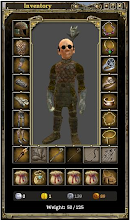
All of which brings me to Shards, the as-yet barely-existent glimpse of what might one day become a new twist on the MMORPG rope. It's brought to you by Citadel Studios (aka The Company Formerly Known As Mythic). The "teaser video" is largely useless but this Massively piece is more informative.

The idea of what we might call Minimally Multiple Online Roleplaying Games is an intriguing one. These player-run servers, catering for dozens rather than thousands of players, might be a route back to the good old golden age days of 2000 hour leveling paths and reputation that counts for something for the few hundred people who still miss all that. It would also, neatly for my thesis, preclude the necessity for Guilds, given that the population cap for the entire server would scarcely meet the requirements of a modern-day "small family guild".
John Smedley recently raised a similar possibility for H1Z1, SOE's soon-come entry into the ever more crowded zombie survival market and while no-one knows what Landmark will grow up to be, one theory is that it could become a "make your own MMO" machine. It's all just one more step along the path to niche, a path we now seem to be traveling down at such speed that last year's Big New Idea, crowd-funded MMOs aimed at special interest groups numbering in the tens of thousands, is already beginning to look old-fashioned and unwieldy.
I have to wonder, if we keep on heading in this direction, will we eventually find we've re-invented the single-player RPG? And if the StoryBricks AI is as good as they say it is, would we even notice? Then again, perhaps that's all some of us ever wanted anyway...

 Posts
Posts