Song for the Western Ghats

What is it that draws us to the quiet, to the green? To the mist-curtained mountains, where everything is crystal clear – leaves in high definition even against an overcast sky. Where leopards leave their mark in soft mud, and you smell where an otter has walked.

Do we bow down to how humbling it is, to live in these places, and breathe this air? Our days here end when the moon’s begins, and then we cede this ancient land to the wild. Would we dream of living in reverence like this, in our gray, densely packed cities? We give to nobody there; we do not share the land with myriad life forms the way we do here, in our mountains and forests.

What do we do when it rains here, in these forests?

The Anamalai Hills, shrouded in mist_Ganesh Raghunathan
The Anamalai Hills, shrouded in mist. Credit: Ganesh Raghunathan

Sometimes, I let it touch my skin, kiss and caress me, because I am a stranger here still, and this rain overwhelms me. The land is ruled by the elements — the mist, fog, rain, and wind visit as often as the sun and the moon. Life doesn’t pause here for the rain; its diverse forms are no strangers to the monsoon — the whistling thrush still sings, the cicadas abound, and so I watch.

Leopard in human-use area_Ganesh Raghunathan
Leopard in human-use area. Courtesy: Ganesh Raghunathan

Continue reading this here, in the Yale Environment 360 magazine. This piece was placed second in the Yale Young Writers Awards 2020.
When forests are not forests at all, can fire be used to better manage them?

In the last week of February, Bandipur Tiger Reserve lost over 60 square kilometres of forest to a massive fire, despite the best efforts of hundreds of people who tried to put it out. The incident was widely covered in the news, with sensational pictures of supposedly charred animals, grabbing everyone’s attention. The loss of forest land was lamented as irretrievable and devastating.

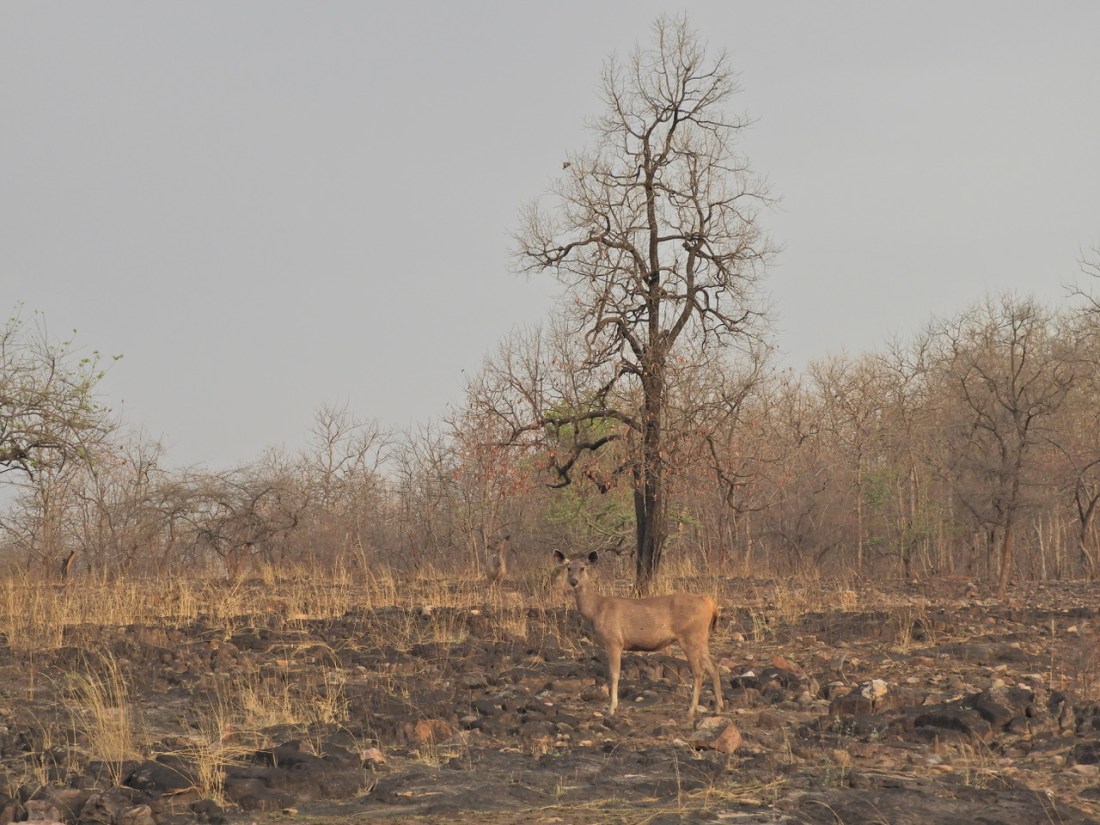
The grassy forests of Bandipur, however, like many dry deciduous “forests” in south India, are not forests at all. The trees here are adapted to fire and the dry grasses fuel it frequently in the dry months between monsoons. These ecosystems are more open than closed canopy forests and the hardy vegetation found here can withstand drought conditions.

Majestic teak (Tectona grandis) and Arjuna (Terminalia arjuna) trees dominate the skyline and these natural ecosystems support a wide variety of birds, mammals, reptiles and invertebrates, contrary to the belief that they are wastelands or degraded forests.

Jayashree Ratnam, associate director of the wildlife biology and conservation programme at the National Centre for Biological Science, said that these forests are mesic savannas. “Having worked for a while in African savannas and being very familiar with the idea that mixed tree-grass ecosystems were distinctive from forests, when we returned to India and started visiting various field sites, we were struck by the similarities of these sites with African savannas,” she said.

Mesic savannas receive more rainfall than some other iconic savannas of the tropics, but such ecosystems the world over are characterised by frequent burning and drought. India, however, has a blanket fire-suppression policy in place and this is doing more harm than good to these tree-grass ecosystems, find a series of studies.

DSCN1243
Credit: Abi Vanak

Read the full story here at Mongabay India.