
One Child’s Heart – RPG

It is wonderful that there are so many great role-playing games (RPG) available these days, an ever increasing collection of new ideas for settings and mechanics. Like many gamers I have too many games to play, crafting projects and models to paint, yet I was still thrilled when I came across the new Kickstarter https://www.kickstarter.com/projects/camdon/one-childs-heart/

One Child's Heart About

“One Child’s Heart is a tabletop roleplaying game about empathy, hope, and human connection in the face of childhood crisis.”

Quite an intriguing and inspiring summary of the game’s goals, and having listened to several actual plays I think the idea really holds up. The setting has an interesting premise:

 “There are pivotal moments in every child’s life that shape who they become. One Child’s Heart is a tabletop roleplaying game that invites players to take the role of child welfare professionals participating in a new mental health care memory exploration experiment. The Central Limbic Engagement Recovery System (CLERS – pronounced, “clears”) brings characters into the memories of these key moments to give support and guidance to a child who needs both.”

Whilst there are various media that have explored ideas of examining interacting with memories I think a quick mainstream reference to contrast with is this game is that it is not like Inception. The player characters are not invading a person’s mind to plant a memory seed. One Child’s Heart takes a professional and ethical approach to the concept of interacting with a child and their memories:

 “You are playing child welfare professionals who are going into the memories of a traumatised child to try and teach that child resilience and make emotional connections with them.”

One Child's Heart The Team

Camdon Wright, the creator, along with Kate Bullock, project manager, have assembled an impressive team for the game. Plus as multiple stretch goals have been unlocked even more people have joined the project, another reason to look at this games Kickstarter. After being hooked by the game’s premise, looking at the team members and stretch-goals sealed my interest. The Kickstarter has had regular updates, I have particularly appreciated reading about the people involved via the Meet the Team updates.

I’m sure most people would agree that memory is a fascinating and complex subject. For example memory is not a straightforward recording of events; each memory is heavily dependent on our moment to moment state of mind, as well as our beliefs, biases and emotions. Those are all dependent on a multitude of factors, and so on. Interestingly memory seems to be editable, when we recall something we might also alter it, we might not. How memories connect to each other are also important considerations. My own fiction and RPG writing is focused on mental health and memory. Besides studying psychology, I have some experience volunteering with assisting vulnerable youth, I’ve taught a variety of skills to people of all ages, and I used to work as an admin in social services and was studying to be a social worker before my health problems interrupted things. To make it clear I am not attempting an argument from authority, I am far from being an expert, I’m just trying to emphasis why I am so invested in this project and intrigued to see how it develops.

I appreciate that trauma and mental health are complex, diverse and sensitive topics, so anyone attempting this subject has an exceptionally difficult task in order to address things respectfully and with consideration. For example: the team has already taken on-board feedback regarding the game term “Permanent Damage Threshold”. I suspect this is a case of building upon the concept of health points, whilst this sort of tracking system is a classic game convention, the label does not quite fit this game’s intent. I do not know any of the designers, yet I still feel confident suggesting that I think the game’s explanation, as well clarifications, communicates the team’s sincerity. This can also been seen with this core game statement:

“This is not a game about trauma or an invitation to tragedy tourism. One Child’s Heart is intended to be an empathy-building experience with a message of hope and human connection. It’s a game where the characters’ only goal is to support and love an imaginary child who is struggling with their life circumstances.”

From a Rules Clarification post:

“At no time can the Professionals deliberately traumatize or harm the child.”

The artwork I’ve seen so far is beautiful. From the cover art, profession symbols, the section headers, to the dice and token examples, I love the aesthetic. Also a special mention for managing to make the heart symbol anatomical correct, but without making them seem shocking/nauseating.
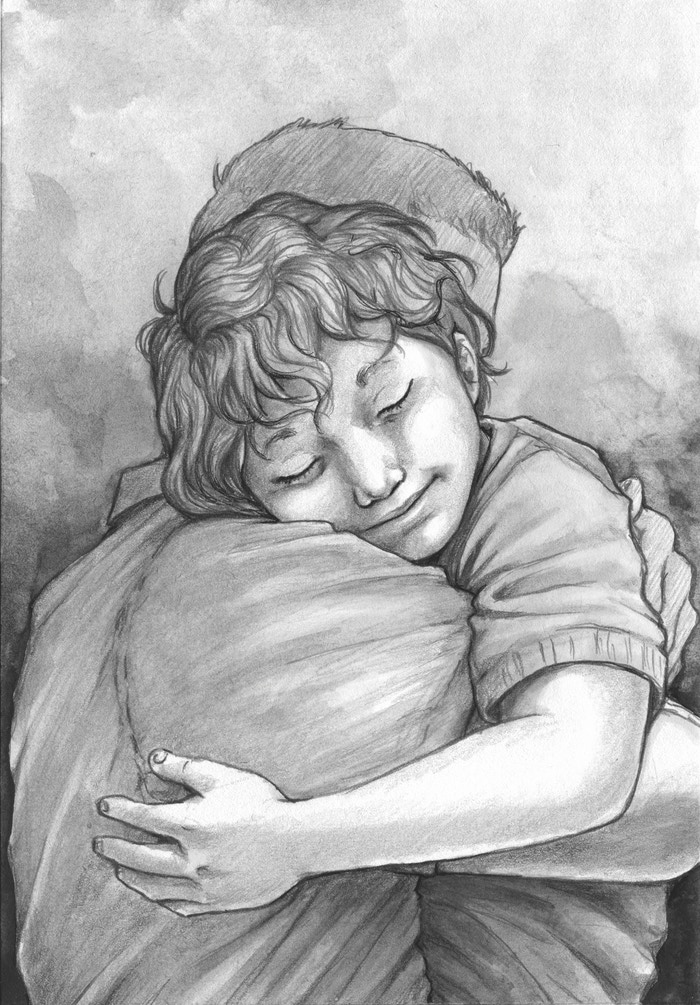
One Child's Heart Art by Serena Verde

Mechanics? I think they nicely follow the idea of minimising tests, I like this nonintrusive approach and think it helps convey the game’s goals. If you really need to know more, then please check out the Kickstarter page.

Even if you are currently sure you are unlikely to play this game in the next few years I think it is still worth investing in. I’m always a fan of expanding my #RPGMentalToolKit. In other blogs posts for various Kickstarters I’ve explained how I approach each project with consideration as to how integrate ideas/mechanics into existing games. Very handy if you have players that prefer to play long campaigns/story arcs, prefer a specific system, etc. Besides playing the game unmixed, I am pondering ideas about adding CLERS to many games, such as Cyberpunk or World of Darkness, in particular Mage the Ascension or Changeling the Dreaming (no Edgelord nonsense of course, Mage 20th nicely emphasised the horror of abusing Mind Magick).

Please check-out this project, I urge you to become a backer as well. I think this another great example of the many innovative creators in #IndieRPG scene doing something thought-provoking and exciting.

https://www.kickstarter.com/projects/camdon/one-childs-heart/

I’m going to attempt a Vlog about this now. My usual pain and lack of sleep, so should be fun 🙂
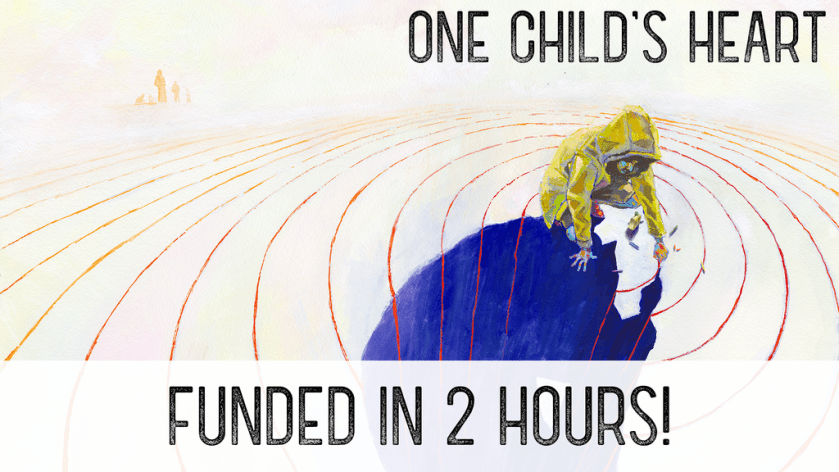
One Child's Heart Kickstarter

Impressive Reboot of Trinity

I love so many role-playing games and in particular the old Trinity universe. So I was ecstatic when the Kickstarter for a new version was announced, it’s called Trinity Continuum, from Onyx Path Publishing. The old White Wolf Game Studio published the original Æon Trinity in 1997; the game became known as Trinity due to a lawsuit with MTV due to their Aeon Flux, something that I recall helped spread word about the game at the local games shop I worked at. Set in the 22nd century Trinity was about humanity rebuilding after the Aberrant wars, with the game focusing on psychic humans call Psions. Over the years the Trinity Universe was expanded over the years to include Aberrant (Supes) and then Adventure! (Pulp) A d20 version in 2004. There was also a Trinity Battleground wargame (see end for poster collection). Then it was gone…

Like so many others I’ve been running the same Trinity campaign for many years, linking characters across multiple timelines. A big part of the appeal of the old games is their diverse settings and how they relate to each other, however, the old games were clearly not designed to fit neatly together, which put some people off. The Trinity Continuum Kickstarter has revealed that how Trinity Continuum fits together was a core design, and having read the new manuscripts I am very impressed. The multiverse of Trinity Continuum generates Flux, which besides being a great joke about old lawsuits, very nicely gives a basis to the luck and powers of the people in the different eras. This also makes any Trinity setting cannon, allowing Onyx to publish different products without violating anyone’s campaign deviations. This was never a problem for me, I would buy things and adapt them, but I appreciate many gamers felt the old vast metaplot made new products irrelevant to them.

Trinity Continuum will be using the new Storypath system, which I think is a big improvement on the old Storyteller system. For example: the introduction of the Momentum is a great mechanic that gives failures now add to the Momentum pool, which the party can use to overcome problems later. Momentum can also be used to power skill Tricks. There is more to Storypath system, so definitely check it out. I saw a negative post about somebody not liking the idea of Momentum and “failing forward”, personally I think this is a great addition. As normal for me and my group if we want to tweak things we do, and I already contemplating testing these mechanics in other games like L5R and GURPS; all part of the RPG mental toolkit 😉

The Storypath system is also used by Scion, but each game universe has its own tweaks. I love this because it will enable easy transition between different game universes, whilst allowing each game universe to have specialised mechanics to enhance the gameflow envisioned by the designers.

The core Trinity universe eras have been expanded in the Trinity Continuum. The Kickstarter is for the core rules, with a focus on modern day games. This has been done with foresight, allowing for games ranging from things like the Bourne Identity, Chuck (2007, TV), A Town Called Eureka (2006, TV), Fringe (2008, TV). There is nothing stopping a group from playing less action and super science games, such as focusing on the Æeon Society in the modern day that links to an era spanning campaign about the organisation over time.

A Kickstart add-on is Trinity Continuum: Æon book. This covers the original Trinity 22nd era, but there are a few tweaks, 99% of which I love. What is particularly impressive is how the Unity part of the setting is being given rules to help demonstrate the point, designer Ian Watson explained in an interview about how Psions can empower another Psion, like in Orpheus. One of my players always emphasises reasons for teamwork and they are going to love this tweak.

In a Polyhedron interview there were many gems such as a future settings of Anima, which will be set in 2084 (Total Recall, Remember Me) emphasising Implants and Memory Tech, and focusing on questions of identity. Another focus is people retreating to virtual realities after the Aberrant War, I wonder if full-borg conversions will be an option, or at least remote controlled androids, something like Surrogates. There was also mention of an era set in the ancient world, a Sword & Sandals style game; this was inspired by the Adventure! game notes of Doctor Primoris (who later became Divis Mal).

Another important point discussed in the interview was how diverse the old Trinity games were due to the global scale of the setting; it’s always great to have more game specific material. The new version will be building upon this legacy, which will include an expanded look at Africa, which never got its own sourcebook back in the old days in part due to them having so much to expand on; I’m sure it would have eventually if the games had not been cancelled.

Trinity Aberrant Books

There was such much I wanted to write about this Kickstarter, I had planned on summarising my own games but that would be too big a project and miss the point of highlighting what other people need to know about the Trinity setting. Thankfully lots of information is now available about the Trinity Continuum as well as the Storypath system via the Kickstarter. So before I end I will give a few campaign ideas that I have been pondering.

Psions Lost In Space / ST: Voyager: A Jumpship takes a group of people to a new colony, but they end up lost and so far away they are cut off from Earth. A campaign emphasising survival and testing the Unity ideas of the people aboard.

Paramorph Time War: empowered by the Trinity Continuum’s Flux, and assisted by many books, films as well as my trusty GURPS reference books. A vast Time War. Since leaving my old job games master job running Play-By-Mail games, one of the designs I have part finished is a way of tracking dynamic timelines, but due to how grand the game goal was I had to strip it back, and focus on a smaller project. I also have work from old Suzerain game focusing on time travel in tabletop games. Running a single player campaign would be much easier, imagine playing a character like Max Mercer seeing the sheer scope of the cosmos and trying to figure out how to help our species, add in the complication of other time travellers doing the same thing. This could be done for a group, maybe the group need to combine powers to jump.

Attack of the Titans / Kaiju Planet / Pacific Rim: Maybe set after the Aberrant War in a world that was even more devastated. Maybe beastlike Aberrants are left behind on Earth, but they have mutated further to become giant mindless entities. Can humanity defeat these Kaiju, and if so at what cost in lives and further global devastation?

Nova Terminators: Maybe the Op-net was destroyed not just because two Novas had a war, maybe there was a 3rd Nova that planned on world domination by initiating WW3 and ruling the remains like Skynet (SkyNova). In this world SkyNova succeeded and humans are now fighting a losing battle against Terminators. Maybe this game focuses on Daredevils and Psiads?

Æon Amber: Last year I finally got around to reading the Amber series by Roger Zelazny, Arthurian style court drama on a multiverse scale. Although travelling between every universe fighting other powerful factions is a bit too grand in scale; the TV series Sliders is a good example of this. Given that I am also looking forward to Changeling: The Lost 2nd Ed, maybe I can add this in as well? A nice way of cramming on more epic gaming in to limited playing time.

Lords of Light: Another Roger Zelazny book in which a human crew arrives at a planet but struggles to survive, so they alter themselves becoming vastly powerful entities. The crew masquerade as Hindu Gods subjugating the planet’s native inhabitants. A very interesting story following Sam trying to overthrow the crews control of the planet. This story would likely make a better fit for a Nova/Aberrant style game.

I’m sure many gamers are contemplating other campaign ideas, particularly the classic: Atlantis, Roman era, ancient Egypt dynasties, Aztecs, Mystic China, etc.

Trinity Battleground

At the time of publishing there are 19 hours of the Kickstarter left. There are lots of stretch goals unlocked, so join in and reap the benefits even if just for the new PDFs and the $15 for most of the old 1st Edition Trinity books. I think Trinity Continuum seems to balancing the modern RPG approach of specialised rules whilst not sacrificing a broad ability to run so many games, this alone is a great reason to join in. https://www.kickstarter.com/projects/200664283/trinity-continuum-aeon-rpg/description

I dug out my old posters, publisher catalogue from working at Tower Models and the Trinity Battlegrounds wargame.

Trinity and old White Wolf Posters


Kickstarter Sigmata RPG p2

This follows on from Kickstarter Sigmata RPG.

I am currently playing about with campaign ideas for this game, as well as future ideas merging with other games. Chad’s previous game Cryptomancer included a suggestion about a mechanical bolt on approach for other games, hence my thinking along this line for Sigmata. If you’ve not checked out the Sigmata Kickstarter page yet, here is a quick overview. The game is linking together serious and silly ideas, drawing upon numerous political ideas, people movements like the Arab Spring, as well as 80s pop culture. Major influences include things like Synthwave, plus films like Akira along with Saturday morning cartoons like Transformers and G.I. Joe.

Sigmata is an RPG in the Cyberpunk genre of games, joining the likes of famous RPGs like Shadowrun and Cyberpunk. For a few people defining Cyberpunk is an almost religious process. My simple take on the subject is that Cyberpunk is a broad encapsulating term that includes all sorts of products; I agree with the following genre overview:

Cyberpunk is a subgenre of science fiction in a futuristic setting that tends to focus on “a combination of low life and high tech” [1] featuring advanced technological and scientific achievements, such as artificial intelligence and cybernetics, juxtaposed with a degree of breakdown or radical change in the social order.[2]

Sigmata allows players to play as Cybernetic badasses, who have access to diverse and interesting capabilities. Players (receivers) receive their powers via hearing signals, which are broadcast via radio towers. When the players have access to a very strong signal they are akin to superheroes in power level. The game includes a campaign tracking system, which in particular intrigues me.

I plan on running Sigmata by itself first, so I can get a good appreciation for the game and the practical experience of the rules. Additionally the Sigmata Kickstarter already has many goals unlocked, which includes alternate time periods to play in. This alone should keep the majority of gamers engaged for years to come. Lots of game options at launch, most impressive.

Merging with other RPGs

Whilst Sigmata is much more than just resistance tracking and signal towers giving powers, but these two ideas in particular are what I am very keen on exploring in other games. Following on from my previous post and my habit of mentioning RPG mental tool kit/belt, I’ll provide a list of ideas, like I wrote for my Changeling Kickstarter blog.

I love the idea of adding the Signal to a fantasy game, whether a high fantasy setting like D&D’s: Forgotten Realms, Ravenloft, Planescape, etc., or a grim-dark setting like Warhammer. Part of my thinking is that Sigmata could provide Avatar-like potential, as well as an extra level of campaign goals, but with mechanics of how to track such things. Whilst I have run very politically and rebellion focused campaigns in D&D previously, it was a long-time ago, and I didn’t make any mechanics for tracking resistance movements.

Consider how many fantasy settings have tyrannical rulers, but not just mortal monarchs, but also Magocracy or Theocracy, etc. Many magical settings include abilities empowering communication, speed of travel, as well as divination, all of which would really mix things up. However, what if magic cannot be trusted, and the party has to travel to hand deliver importance evidence, trying to avoid a scrying government, relying more on individual power, charm and guile. In a world of rare powerful magic the Signal could provide the party a much needed edge. Whether playing Rokugan with the Legend of the 5 Rings system, or the D20 system, there is interesting potential for Sigmata crossover.


Cthulhu mythos could take the Sigmata into dimensional territory, as well as paranoia and insanity. Imagine a game with cults having infiltrated tyrannical governments, so not only do the players need to resist things, but the fate of the world is at stake. Players (receivers) wondering where the signal comes from, and whether their newfound power cost something like sanity, or worse!


The World of Darkness is a game setting has all sorts of potential. The Signal could be related to any one of the existing supernatural groups, or something new. A Changeling campaign based in the Dreaming could have tyrannical Sidhe ruling commoners with an ‘iron’ fist, maybe the Signal allows a commoner to overcome the increased power of their innate nobility that Sidhe have in the Dreaming. A Werewolf game could have Garou being empowered by the Signal, which could be a new techno-spirit, providing new tools in the fight against the Wyrm. The same applies to a Mage centric game, but the metaphysical debates and paranoia regarding the Signal would be what I would want to focus on. An interesting twist to the Jyhad, such as Anarch vampires fighting Camarilla Elders, or Hunters avoiding Kindred. This could also work with the Chronicle of Darkness games.


Although the Trinity Continuum is about to be relaunched in the near future, the Trinity, Aberrant, Adventure settings of old included a powerful signal altering people. I am currently running Trinity and will be for a while yet, so I may start including things.


GURPS Riverworld, this setting is based upon a great sci-fi novel, which has its own sort of towers and effects on the world. I will avoid spoilers here; I guess most of those that have read it will appreciate where I am going with my thoughts. For me the wonderful GURPS reference books epitomise the RPG mental tool kit, so there is easily infinite scope regarding Sigmata ideas added into the GURPS system.


Shadowrun or R. Talsorian’s Cyberpunk games should be quite easy to merge with Sigmata due to the genre closeness and the typical adversarial nature of Corporations. Since powerful cybernetics already exist in these games, imagine if they were further empowered, which radically alters things. The magic in Shadowrun could also be enhanced, maybe in a way like with the D&D ideas I mention above.


I hope I’ve convinced you to at least check out the Kickstarter page for more information. Join in and #RepeatTheSignal.

Kickstarter Sigmata RPG

At the time of writing there is a week to go for the Sigmata RPG Kickstarter. The main designer is Chad Walker, and this alone is reason for me to be interested; I’d like to persuade you as to why this should spike your interest. It’s worth noting that I’ve written about Chad’s Cryptomancer game previously; a great game idea plus it adds something original to the role-playing community.

I am a big fan in reading practically anything to expand my RPG mental tool kit/belt; I need to work out some comedy picture ideas to demonstrate this point 😉 Since Cryptomancer added important real life concepts like Cyber security to RPGs, and Chad is a big believer in life gamification, I am quite optimistic regarding what he plans to add to the RPG community with Sigmata.

From the Kickstarter overview:

“SIGMATA: This Signal Kills Fascists” is a cyberpunk tabletop role-playing game about ethical insurgency against a fascist regime, taking place in a dystopian vision of 1980’s America.

Players assume the role of Receivers, the superheroic vanguard of the Resistance, who possess incredible powers when in range of FM radio towers emitting a mysterious number sequence called “The Signal.” When the Signal is up, Receivers lead the charge against battalions of Regime infantry and armor or serve as the People’s Shield, protecting mass demonstrations from the brutality of a militarized police force and neo-Nazi hooligans. When the Signal is down, however, Receivers are mere mortals, desperately fleeing from a powerful state that senses their weakness.

It’s called the Sigmata, a Signal-induced stigmata, because it is a both a blessing and a curse. At least when you’re marked by the state, you can’t sit on the sidelines anymore.

Just based upon the full Sigmata title it should be clear that Chad takes the concept of life gamification seriously, just from daring to mention the word fascist. Politics is always a complicated subject and now it seems to be even more complicated. Personally I’d say political actions/events always matter, but cycles vary and some actions/events matter even more. I think it is reasonable to state that the current cycle matters in particular, so it’s no surprise to read comments questioning Chad’s reasoning for attempting such a project; especially since some view RPG as politically neutral, but I’ll write about that tricky subject another time.

I love the fact Chad is tackling such a tricky subject. Even though I have played a lot of political heavy RPG games, I am sure this forthcoming specialist game will present a more sophisticated game world to explore than the typical RPG. The mechanical explanations Chad has given reassure me that the rules will support the narrative/game goals. I am sure Sigmata will be adding a powerful mental tool to my RPG mental tool kit/belt.

There is a lot to unpack with Sigmata, and I plan to do so over the next few blogs. Meanwhile I hope I’ve convinced you to check out the Kickstarter page for more information. Join in and #RepeatTheSignal.

Kickstarter – Changeling: The Lost

At the time of posting the Kickstarter for the role-playing game Changeling: The Lost 2nd edition has just 14 hours to go. This is a project that I strongly recommend to get involved with, especially now so many stretch goals have been unlocked.

The game is part of the Chronicles of Darkness, from Onyx Path Publishing (previously staff from the old White Wolf company). Changeling: The Lost is a deep and fascinating game, taking the classic World of Darkness’s Changeling: The Dreaming and substantially changing it; this was achieved by ramping up the bleakness, adding more than a sprinkle of bizarre Lovecraftian torment, all leading to memory and identity issues. The Lost is closer to the mythological Changelings: a human child being stolen by fairies and replaced with a duplicate.

For anyone that does not know the previous edition, or for those that are familiar but undecided, I would strongly recommend at least reading the Kickstarter page. If you still not sure then I will try to provide you with an extra reason: I have mentioned in my previous blogs the concept of maximising our ‘role-playing mental toolkit’. Even if we never play a game, simply reading the setting and rules can provide incredible inspiration, as well as game fusion potential. Like the GURPS gaming line, many of the World of Darkness and Chronicle of Darkness books can provide very diverse and well-presented information. I very much consider all of the Changeling games to be worth buying because of the interesting themes and differences to most other role-playing games. For just $10 a backer can get most of the Changeling: The Lost 1st books in PDF format, which alone is a bargain.

Changeling

My Campaign Ideas

Before I run any role-playing games with my group we have a discussion about the sort of ideas and characters they’d like to explore. Given how much gaming we have all done they are often happy with the answer of “Surprise us.” I have been playing around with ideas for Changeling: The Lost campaign for quite a while, and I eagerly await the 2nd edition’s release. I have a few different campaign ideas for the players to vote on; since role-players have no problems coming up straightforward ideas, here are some more quirky ones:

Taking the inspiration from the film Contact (1997). The idea being that a team uses a new device to contact aliens, but it is the Gentry. When they finally escape it would be like the ending of contact, but the PCs know that they shared an experience.

Drawing upon the book Roadside Picnic, or the Stalker game series, a strange zone where the laws of physics seem to be broken. The twist for Changeling could be a seemingly ordinary group of friends come across a strange zone that does not break the laws of physics, but that of consciousness.

A game focusing on escaping The Village, but in the style of Patrick McGoohan’s The Prisoner TV series. This series’ obsession with questions and information gave the lead character and the show overall a strong identity. Adding the surreal elements helped to add the psychological disturbance.

The PCs are at a games Convention participating in a Cthulhu LARP, unaware that they are drawing attention from the True Fae (Gentry), or maybe they previously had and are about to remember.

“Hey, look, a Dungeons & Dragons ride!” Whether running a game taking inspiration from the cartoon series, a convention LARP, or the Gentry running their RPG. This doesn’t have to be run as zany and there is a lot of richness in D&D to draw upon.

Taking inspiration from the film Melancholia (2011), a beautiful psychological sci-fi that is a bit of a flawed gem. This is an extremely slow film that takes some dysfunctional moments between friends and family and becomes a realistic portrayal of depression, and then it oddly adds what amounts to a supernatural element.

Predator & Prey: pitching the players a cross between the movie Predator and The Running Man; maybe Alien or going full AvP craziness. Why am I writing Sci-Fi pitches? Well the party alternate between the roles of predators and prey, keeping one of the Gentry entertained as they try to figure out how to escape. In one scenario they are heavily armed hunters, in the next they are running away a lot, and in some they are both.

Cthulhu Fae: running the game in the style of one of the many Cthulhu games. The lower the PCs sanity the more the real world is revealed to them.

If I’ve not convinced you yet, consider that my ramblings are not doing the game justice, and check out the Kickstarter page anyway.

Disclaimer: Artwork is copyright 2017 Onyx Path Publishing http://www.theonyxpath.com

#RPGaDay 14

If you are not familiar with #RPGaDay, then please read this page first. For the 14th day of #RPGaDay the question is:

Which RPG do you prefer for open-ended campaign play?

My tweeted answer is: #RPGaDay 14 #RPG try games with lineages #Pendragon #L5R #Birthright #DnD, adapt any game #Vampire #Cyberpunk etc

I give some examples below that I hope will help inspire some role-players, but I’ll start by building upon the answers I gave for Day 8 and Day 9: “Any game can work, don’t feel restricted by setting or system. Use the opportunity…” Since there are so many games available, and many of them have sections written about different types of campaigns, any of them should make a great foundation for an open-ended campaign.

Going back to the early days of RPG, that default stance was that of an open-ended campaign, but this was certainly not a rule, and I am sure there were countless intentionally short games back in the 70s and 80s. Even in game like Call of Cthulhu, were the idea of the party surviving for very long was almost a joke, yet I still met gamers that played the same Cthulhu character for years in the same campaign. Given how many gamers there are, I quickly learned not to be surprised by odd stories; like everything else, RPGs have bell-curve outliers.

Batjutsu RPG dice scene

Pendragon, and its somewhat D&D equivalent of Birthright, practically sets out from the start that the players will build towards a long campaign that covers lifetimes. With this sort of time scale, things like marriage and children are not just important, they are brought to the front of game and character goals. I was introduced to Pendragon with “That campaign really gets going by your 3rd character.”

Given the lethality of Legend of the 5 Rings (L5R), it was no surprise to read a section in the first GM screen booklet about recommending to players about family connections to replace characters. Given the cultural gravitas of family in Rokugan, as well as a setting in which some characters are willing to kill themselves, a player being able to play one of their now dead character’s family, or fellow Clan members helps to take the sting out of death, and keep the campaign momentum. Even in the case of a Total Party Annihilation (TPA (TPK, TPW)) this method can work well.

A setting like the World of Darkness is one that could make for an ideal open-ended campaign, with its vast game options and history to draw upon. Playing an immortal creature, like a Vampire or Spirit, allows for sessions covering many different time periods, which could keep going. Back in the 90s I ran a multiplayer Vampire Methuselah PBM game, the plan being the players would play for years carefully moving against each other. Amusingly one player went to war quickly, and things were gloriously complicated. This led to a second game and longer game, WoD: Night City (I used Cyberpunk’s Night City sourcebook). It was overall great fun, and these games were part of the reason I got a job working at KJC Games.

I am currently running Secret Rage, another PBM game in the cWoD with an epic campaign length planned; the game begins at the dawn of time. I’ll be blogging about that after the #RPGaDay month, along with more on my RPG Game Types series.

I am a firm believer in buying and trying many different RPGs to make my mental tool belt more diverse. The more tools on the belt the better, as well as learning to recognise which RPG tool for which RPG, plus game/group needs.

Over the years this attitude has helped me more easily adapt rules between games, as well as ways of thinking about different ways to approach and run/play games. For a group that has not played games like those listed above, I am sure they could have a lot of fun incorporating ideas like those of Pendragon in to any game.

With things like Cyberpunk or Cthulhu, were lethality is both in the setting and the mechanics, you could consider using an organisation (Corporation/Secret Society) as the pool for the PCs. This approach would also work well for a Supers game, whether needed due to a more lethal style, or playing a Supers team over different eras, or following a Supers bloodline.

Your RPG is Yours, Not Mine

As I started writing about the two role-playing campaigns that helped me get a job as a Games Master (GM), I realised that some readers might take exception to me claiming I ran a complete, or united, World of Darkness games. The old World of Darkness was not designed to fit neatly together, and for years crossover rules were non-existent. I don’t recall when the first official guide was released, possibly The Chaos Factor in 1993; it could be argued a guide was needed since Samuel Haight had caught the attention of so many different supernatural types. I don’t count the 1993 release of Under a Blood Red Moon, as it was Vampire and Werewolf focused. These guides were quite lacking, being more suggestions of things to think about, but at least it was something. I found my own path in fitting things together, and things worked well enough for me in some complex games.

With Paradox Interactive’s purchase of White Wolf IP, the World of Darkness (WoD) labels have been changed. The old(oWoD) is now called classic (cWoD), and the new(nWoD) from 2004 is now called Chronicles of Darkness (CofD).

My article’s title is to emphasise that I do not claim to represent the ‘only way to play the World of Darkness’, nor how crossover rules have-to-be done.  To some readers it may feel redundant for me to clarify my reasoning, but from personal experience I’ve met enough players that fixate on this, as well as reading numerous posts on the Net, to really impress upon me that a clarification is useful. Although this issue particularly applies to the cWoD, it also applies to every other RPG when we get past the gaming group level.

white-wolf-publishing

I have had a lot of experience with this topic, whether locally, at game conventions, or Live Action Role-Play(LARP), so I appreciate why it is an important subject for a lot of role-players. In my late teenage years I changed my phrasing to emphasise “I prefer”, or “in my games, I feel”, since I appreciated that it was a subjective topic, never mind that some people want to win the chat. Add to this that it’s all too easy to end up talking at cross-purposes, especially if people fail to mention they are not emphasising an interpretation, but they have ventured in to house-rules, or changes to the setting; it’s understandable if you consider how over time it is easy to forget the list of tweaks carried out. I am reminded of common role-play encounters, which I’ll write about and link here later.

Obviously people having different opinions should not be a surprise, since it happens with practically everything. Crucially the old White Wolf company repeated the point that each game belonged to the players playing the game in each of the core rulebooks, as well as elsewhere. This covered everything, whether it was an opinion about the mechanics to the game’s setting, covering everything from cosmology to theme emphasis. So it could be argued, that between the game lines being designed without a focus on connectedness, and the rules promoted debates because of The Golden Rule:

“This game should be whatever you need it to be…”

I appreciate the Golden Rule is abhorrent to some role-players, but that is too big a topic for this post. I’ll go in to detail on this topic in my future role-playing guide.

I do appreciate why standardisation matters, and I am all for it for specific situations, since talking at cross purposes is a time sink and can balloon up in to bad blood. It can be bad enough when a new player joins a group, but this is a much bigger problem when at conventions, or large LARP. Years ago I used to play continuing convention campaigns like the Dungeons & Dragons Living Greyhawk, D&D Sarbrenar (Forgotten Realms) and later Living Force (Star Wars). Roughly: you played the same character at each game, earning XP, being part of loose collection of connected stories with other PCs that over the years you may play with on multiple occasions.  Those games were quite accessible, in large part towards having an emphasis on clear rules interpretations. There were a lot of players that had been playing together for years, and overall I found there were a friendly community; the opposite of the anti-social label role-players are often labelled. Directly related to the point of this blog is that at conventions I found players only really cared about games they were involved in, they were rarely interested (if ever) in the anecdotes of another random player.

There has already been plenty of debate about how the new One World of Darkness could work, as well as how some people think it should work. Since very little is known, it is understandable that people are passionately debating. After all so many players already have invested years in to the official three different versions: old, new, Monte Cook’s WoD. Also we should keep in mind the experience of so many WoD LARPers, they have been a major part of the WoD scene going back to Mind’s Eye Theatre in 1993; an important point when you consider Martin Ericson’s LARP passion and experience.

Returning to the article’s title, no matter what happens with the oWoD make it ‘Your World of Darkness (yWoD)’. Personally I am not worried about the future of the World of Darkness, and whilst I am somewhat impatient to get specific information about the One World of Darkness (WoD), I am not panicking.

ywod

Humanity has been repeating and altering stories since the dawn of civilisation, from simple tales to epic myths. In addition to retelling the ancient classics, consider the countless versions of Shakespeare’s work alone, or the comics-industry’s obsession with reboots and alternate realities. So it is normal human behaviour for role-playing to be receiving the same treatment via new editions, and even complete cosmology redesigns. Since there are already different versions of the World of Darkness, I have no issue with having something new to explore, again. Following on from this is an often cited opinion about the importance of legacy. Personally, I find debating the legacy of things to be odd, more so when the logic involves highlighting different predictions as part of any rationale. I don’t feel that my past experiences are invalidated, and certainly not by alterations to a product after the fact.

Even if you don’t like a version, tweak it, borrow from it, and let your passion guide you to new inspiration; add to your #RPGMentalToolKit. After all creativity is a key aspect of role-playing, welcome the freedom.

Design a site like this with WordPress.com
Get started