

Honda City Key Specs
- 1498 cc
Engine - 17.77 kmpl
Mileage - 119 - 125 bhp
Power - Petrol /Hybrid
Fuel - 506 litres
Boot Space - 145 Nm
Max Torque - FWD
Drive Train
The updated Honda City facelift features enhanced design, technology, safety, and hybrid options, starting at ₹11.99 lakh.Read Full Story
The 2026 Honda City facelift includes sharper design, improved features, and a refined hybrid powertrain, maintaining its sedan appeal.Read Full Story
Honda launched the 2026 City facelift in India, competing with Skoda Slavia in features, performance, and pricing.Read Full Story
Honda updates the City sedan for 2026, enhancing features, introducing ADAS, larger screens, and hybrid options, starting at ₹12 lakh.Read Full Story
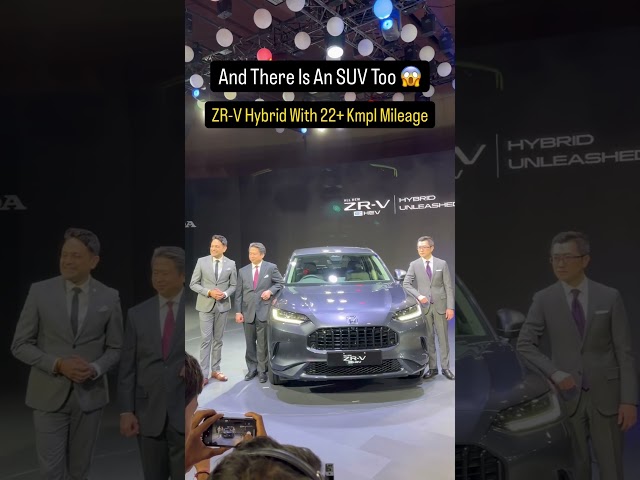
Honda has launched the 2026 City facelift and ZR-V hybrid SUV, boasting improved fuel efficiency and modern features.Read Full Story
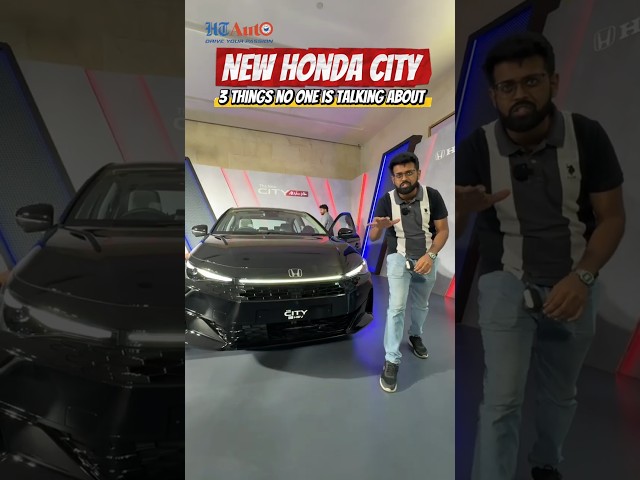
The Honda City has received a major update for 2026. While this is not an all-new generation model, Honda has made enough changes to keep the sedan fresh and more appealing in today’s market. We recently drove the updated City in Bangalore to see what has changed and whether it still makes sense against the growing popularity of compact SUVs.
The biggest changes are at the front. The new Honda City now gets redesigned headlights along with a full-width LED light bar. Thankfully, Honda has kept the design clean, and the lighting setup actually makes the sedan look more premium and modern.
The bumper and grille have also been updated, giving the car a sportier appearance than before. From the side, not much has changed, but there is a new design for the 16-inch alloy wheels, now finished in black.
At the rear, the updates are more subtle. The tail-lamps now get a clear lens effect, and there is a small spoiler on the boot lid. Honda has also revised the rear bumper styling to match the front, making the overall design look sharper and more balanced.
A new black exterior shade has also been introduced. Along with that, Honda has removed most of the chrome elements from the car. While many may like the blacked-out look, the darker colour does hide some of the City’s design details. Shades like grey, white or red still suit the car better in my opinion.
Inside, the layout remains mostly the same, which is not a bad thing. The dashboard design is simple and easy to use, and the part-digital instrument cluster still feels well designed and easy to read. The steering wheel is also unchanged, and that is perfectly fine because it still feels great to hold and uses good-quality materials. In fact, it remains one of the nicest steering wheels in the segment in terms of driving position and comfort.
The biggest update inside is the new 10.1-inch infotainment screen. It is now a floating-style unit and looks much more modern than before. Honda has also finally added ventilated front seats and a proper built-in wireless charging pad. Earlier, the wireless charger used to be offered as an accessory, and it never felt properly integrated into the cabin.
That said, I am not fully convinced by the new infotainment setup. The screen quality itself is decent, but the angle at which it is positioned creates a lot of glare during the day. At times, especially in the afternoon, it becomes difficult to read properly.
The new 360-degree camera system is another weak point. The camera quality feels average, and combined with the screen glare, visibility is not always great in daytime conditions. Since Honda specifically updated this system as part of the facelift, I honestly expected better. The visibility does improve in lower-light conditions, but overall, this is one area where the City could have done much better.
The rear seat experience continues to be one of the City’s strongest points. For 2026, Honda has updated the cabin upholstery with a new ivory shade. Yes, keeping lighter interiors clean can become a headache, but there is no denying that it makes the cabin feel far more airy and premium.
The upholstery itself is leatherette rather than real leather, but the quality feels nice to touch and seems like something that should also be fairly easy to maintain over time.
Since this is a facelift and not a completely new model, the dimensions remain unchanged. That also means there is no change to boot capacity.
The hybrid version we drove offers 308 litres of boot space because the battery pack is placed behind the rear seats and eats into the luggage area. The regular petrol version, meanwhile, offers a much larger 518 litres of boot space.
One good thing worth pointing out is that both versions continue to offer a spare wheel, even if it is a 15-inch space saver. That is still far more practical than getting only a puncture repair kit.
During our drive, we tested the City e:HEV hybrid version. It uses a 1.5-litre petrol engine paired with two electric motors and an eCVT gearbox. Power output stands at 124 hp and 253 Nm.
In terms of driving experience, this powertrain feels genuinely impressive. The hybrid system works very smoothly. The car automatically switches between EV drive, hybrid mode, and engine drive depending on the situation, and the transitions are almost impossible to notice.
Acceleration feels quick thanks to the instant response from the electric motor, but unlike a full EV, the power delivery feels smooth and progressive rather than aggressive.
The moment you sit inside the City, it immediately feels familiar and comfortable. Everything from the seating position to the steering wheel placement feels natural and easy to get used to.
Ride quality is another big highlight. The suspension feels properly sorted, especially on highways. The car stays stable at speed and does not feel overly soft or bouncy like some older Honda models. Cabin insulation has also improved. Road and tyre noise are much better controlled now compared to older generations of the City.
The City continues to offer Honda Sensing, which is Honda’s ADAS package. Features include lane keep assist, autonomous emergency braking, lane departure warning, and more.
During our drive, the system worked very well and felt properly calibrated for Indian driving conditions. In fact, it remains one of the better ADAS systems currently available in this segment.
So, should you buy the 2026 Honda City? Honestly, most of the updates Honda has made feel meaningful and justified, apart from the 360-degree camera system. The sharper design, improved features list, refined hybrid setup, and sorted ride quality all help the City remain one of the strongest options in the mid-size sedan segment.
And if you are someone confused between buying a compact SUV and a sedan like this, my suggestion would actually be to consider the regular petrol version instead of the hybrid. The hybrid setup sacrifices a sizable amount of boot space, and practicality is one of the biggest reasons why many eventually choose SUVs in the first place.
| 1 & above | |
| 2 & above | |
| 3 & above | |
| 4 & above | |
| 5 rating |
| Airbags | Yes |
| Body Type | SUV |
| Max Torque | 145 Nm |
| Keyless Entry | Yes |
| Transmission | Manual,Automatic |
| Mileage | 27.26 kmpl |
| Engine | 1498 cc |
| Fuel Type | Petrol,Hybrid(Electric + Petrol) |
| Sunroof | Yes |
Popular Honda Cars
Latest Cars in India 2026
Popular Cars in India 2026
Upcoming Cars in India 2026
Copyright © HT Media Limited All rights reserved.