Beginnings Suck, and That’s Okay

One session into a campaign of Hero’s Banner, which my gaming pal Hans introduced me to and which I’m knowing GM’ing for a small group. It’s a neat game, hot from the fires of the now-defunct Forge community, and I encourage you to check it out. It’s all about tragic heroism in a faux-medieval settings, full of passions and self-destructive melodrama. Good stuff.

But starting a campaign in it made me reflect on one of my least favorite parts of campaign play: the beginning. The start. Episode One. Why? Because roleplaying games fundamentally differ from practically every other kind of medium in what beginning-relevant information is conveyed and how it is conveyed. More traditional linear forms of narrative media have a whole library of methods and devices for this kind of stuff; the opening crawl, the in medias res, the exposition dump, and many far more refined but less codified methods. When watching a film or reading a book, there’s a certain assumption that what the audience needs some kind of narrative hand-holding to be properly introduced to the story and characters. More often than not, powerful opening draw their power from clever interaction with both audience knowledge and audience ignorance. At no point in a story is it more important to balance the audience’s expectations with what’s delivered.

Thus, we get establishing shots. We get the first moments where characters set precedent for our future expectation of their behavior. All that good “show, don’t tell” stuff creative writing instructors make a (justified) fuss about. Beginnings get a lot of attention from storytellers, audiences and analysts alike because of the simple fact that they matter.
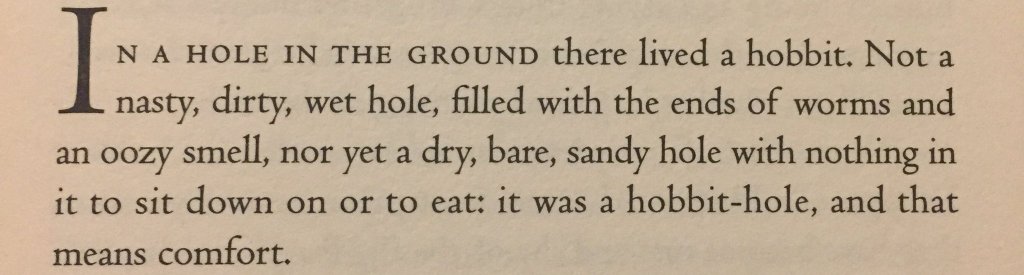
Can’t go wrong with the classics.

Yet one of roleplaying’s idiosyncrasies is exactly its interactive nature, and the fact that we don’t actually have an identifiable audience who are consuming the story. What even is the “story”? I think beginnings clearly illustrate that as far as roleplaying games are concerned, the “story” is merely the fiction as it unfolds at the table in strict narrative terms. If that were the case, where do the pages of character background, the worldbuilding notes, the collaborations that occur before dice are even rolled fit in? They don’t really, is the issue here. A lot of exchange of information takes place before the proper narrative begins to unfold. And a lot of it is exactly the kind of stuff we’d see worked into opening crawls, exciting action openings, or any other of the previously-mentioned devices. In roleplaying, they are redundant. Everyone at the table already knows what such sequences would convey.

What we want to get to in roleplaying is how player decisions, GM (if there is one) decisions, and the system drive play. Many of the traditional building blocks of edited storytelling fall flat. Their assumptions don’t hold true at the gaming table. So obviously the game’s “beginning” should dive into some exciting moment that facilitates, well, roleplaying. That’s what we’ve all shown up for.

The inaugural session of a campaign can, obviously, be exciting and engaging. It better be, in fact! But younger me’s frustration was in how my roleplaying games seemed to lack that punch, that narrative finesse, that exciting feeling of being drawn into a new world. When looking at the story (taking the story here to be mean “in-fiction as it occurs due to play”), beginnings looked stale and stilted, even outright undramatic. And for good reason – all the important stuff a book or film needs to establish has already been made clear to all relevant parties involved! I felt my campaign openings were weak because I didn’t realize this distinction before far too late in my gaming career. It killed my enthusiasm for a few games back in the day. Because when looking at it, from the lens of conventional narrative wisdom, most rolepaying game campaign beginnings do appear to suck. And suck bad! They are arbitrary, random, often borderline nonsensical, confusing and convoluted. Or at least, they appear so.

Because roleplaying doesn’t actually use the same vocabulary of narrative content and devices. In so many ways, it’s its own thing, and that thing is an amorphous interaction that blurs the line between author, audience and participant. If its beginnings appear awful by the criteria of other media, so be it. Let your beginnings “suck” as much as they need to. The campaign will most likely still be awesome.

The Big Story and the Small Story in Roleplaying and Wargames

I’ve been on a binge listening to interviews with Rick Priestley, the original designer of Warhammer 40k, and co-designer of Bolt Action and various other miniature wargames and products. He is a man worth listening to. The Cast Dice Podcast has several episodes where he features, and they’re great.

Priestley emphasizes that miniature wargames are, for him, very much about the emergent story. Balance isn’t a huge concern for him. And story, or at least a certain understanding of story, is very much in the lifeblood of modern miniatures wargaming too. The juggernaut of Warhammer 40k and its galaxy of lore and tie-in novels attest to that.

All that, however, is story separate from the procedural and practical experience of the game, even if it does inform these aspects. The quirks of a Space Marine captain may be reflected in their stats, or a scenario may model a particular episode in a grander sequence of events. But when the dice start rolling and the procedural, gameable aspects of the experience kick in, we’re giving the whims of fate free rein to influence the story’s direction as it emerges through gameplay.

Because when playing these types of games, we’re really engaging with two layers of “story”: The framework in which the game supposedly takes place, and the actual course of events as they unfold based on player choices, randomness, and rules procedures.

Let’s call the former the Big Story. This is the stuff from the Warhammer 40k novel and background sections of codices. It’s Tolkien’s Legendarium if playing a Middle-Earth battle. But it’s also the context of a historical game. It’s all the logistics and politicking of World War II when playing an East Front offensive. The intricacies of Napoleonic conflict when faced with Borodino or Waterloo. And so on. The issue is that historical Big Stories can be, well… They can be messy.

I’m an enthusiastic historical wargamer, and I think an important part of engaging with that hobby is taking seriously the issue of real-world horribleness. War is awful. War is, frankly, fucking terrible. To me, that’s part of what makes it worth understanding and engaging with, even recreationally – and that too has its limits. I don’t mind playing the Axis in a WW2 game, but I probably wouldn’t want that to even be an option if I were playing with my deceased grandfather, who fought in the Danish resistance. I don’t mind playing the damnable Confederacy or British invaders or Japanese imperialists. Not because I sympathize or want to sympathize with their positions, but because engaging with those positions can deepen one’s understanding of the historical pressures (often ugly) that precipitated their actions.

Some Big Story stuff is just too recent, too fresh in memory, or casting too long shadows over current situations that it’s hard to engage with them this way. And I don’t begrudge anyone who’d rather fucking not play a fascist power in their toy soldier games. How anyone decides what they are willing or unwilling to play is their prerogative. (Side note: the YouTubers at Little Wars TV have an interesting discussion on the subject vis-a-vis a wargame based on the battle of Fallujah, in which some of the participating players actually fought).

Depressing grand politics aside, Big Stories tend to occur on the grand strategic level, more suited for hex-and-counter wargames than miniature tactics. Here, the Small Story shines. The Small Story isn’t about geopolitics or ideology, it’s about maneuver, kinetic relations, and immediacy. And very often, the Small Story is all about making sure Your Guys get to Their Thing while hindering the Opposing Guys in doing Their Thing. Small Stories are tangible, right in front of you, and full of uncertainty and excitement.

A certain type of gamer doesn’t care much for the Big Story. They just want to play out the Small Story and see their toys do cool things. In a similar vein, some gamers are fine viewing whatever way the Big Story informs the Small Story as mere color, background that can be glazed out to more quickly get to the meat of the capital-g Game.

Roleplaying’s relationship to the Small Stories of miniature wargaming is well-attested and has been better told elsewhere. But what I found so fascinating about listening to Priestley discuss these issues was his apparent disappointment that many people wanted their games of Bolt Action to be as historically precise and reflective of the Big Story as possible. Priestley doesn’t care; he quite openly says that if you’d rather not playing World War II, you can just paint up your army to reflect some fictional nation and have battles of some made-up war against other fictional countries. And I thought that was just amazing.

Sequences of Small Stories can inspire an emergent Big Story – that’s how we got original D&D, really. But what I found so inspiring about Priestley’s comments was this refreshingly grounded and uncomplicated approach to the hobby. In a space so often dominated by lore nitpicking, historical debate on morality and/or logistics, peppered by the implicit pressure to make your personal games as epic and memorable and marketable (blergh) as possible, this was a message I think I needed to hear. This call to the rediscover the simple joy of moving little metal or plastic people around a shoddily (but passionately) crafted landscape, roll dice, and be immersed in the excitement of the Small Story unfolding right there, in front of you – not elsewhere, not on the world stage, not anywhere else but in the alchemical space of humans interacting with systems and imagination – that’s the good stuff.

Hobbies like roleplaying, wargaming, miniature painting, and so on tend to chronically suffer from the impulse to overcomplicate themselves. I’m certainly guilty of that. It’s good there are people out there to remind to de-complicate ourselves and remember that the downers Big Stories so often tell doesn’t mean we can enjoy our private Small Stories to their fullest and funnest.