Beginnings Suck, and That’s Okay

One session into a campaign of Hero’s Banner, which my gaming pal Hans introduced me to and which I’m knowing GM’ing for a small group. It’s a neat game, hot from the fires of the now-defunct Forge community, and I encourage you to check it out. It’s all about tragic heroism in a faux-medieval settings, full of passions and self-destructive melodrama. Good stuff.

But starting a campaign in it made me reflect on one of my least favorite parts of campaign play: the beginning. The start. Episode One. Why? Because roleplaying games fundamentally differ from practically every other kind of medium in what beginning-relevant information is conveyed and how it is conveyed. More traditional linear forms of narrative media have a whole library of methods and devices for this kind of stuff; the opening crawl, the in medias res, the exposition dump, and many far more refined but less codified methods. When watching a film or reading a book, there’s a certain assumption that what the audience needs some kind of narrative hand-holding to be properly introduced to the story and characters. More often than not, powerful opening draw their power from clever interaction with both audience knowledge and audience ignorance. At no point in a story is it more important to balance the audience’s expectations with what’s delivered.

Thus, we get establishing shots. We get the first moments where characters set precedent for our future expectation of their behavior. All that good “show, don’t tell” stuff creative writing instructors make a (justified) fuss about. Beginnings get a lot of attention from storytellers, audiences and analysts alike because of the simple fact that they matter.
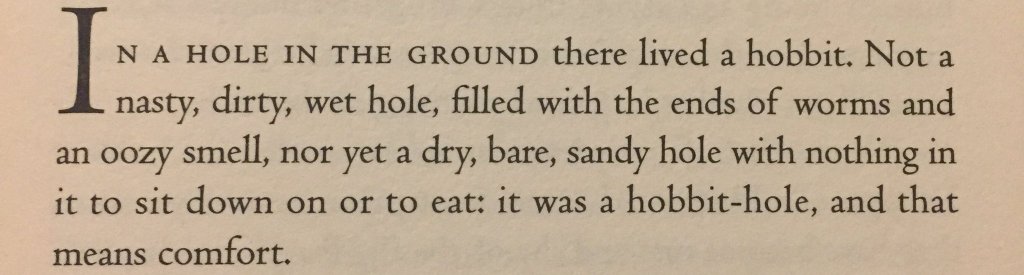
Can’t go wrong with the classics.

Yet one of roleplaying’s idiosyncrasies is exactly its interactive nature, and the fact that we don’t actually have an identifiable audience who are consuming the story. What even is the “story”? I think beginnings clearly illustrate that as far as roleplaying games are concerned, the “story” is merely the fiction as it unfolds at the table in strict narrative terms. If that were the case, where do the pages of character background, the worldbuilding notes, the collaborations that occur before dice are even rolled fit in? They don’t really, is the issue here. A lot of exchange of information takes place before the proper narrative begins to unfold. And a lot of it is exactly the kind of stuff we’d see worked into opening crawls, exciting action openings, or any other of the previously-mentioned devices. In roleplaying, they are redundant. Everyone at the table already knows what such sequences would convey.

What we want to get to in roleplaying is how player decisions, GM (if there is one) decisions, and the system drive play. Many of the traditional building blocks of edited storytelling fall flat. Their assumptions don’t hold true at the gaming table. So obviously the game’s “beginning” should dive into some exciting moment that facilitates, well, roleplaying. That’s what we’ve all shown up for.

The inaugural session of a campaign can, obviously, be exciting and engaging. It better be, in fact! But younger me’s frustration was in how my roleplaying games seemed to lack that punch, that narrative finesse, that exciting feeling of being drawn into a new world. When looking at the story (taking the story here to be mean “in-fiction as it occurs due to play”), beginnings looked stale and stilted, even outright undramatic. And for good reason – all the important stuff a book or film needs to establish has already been made clear to all relevant parties involved! I felt my campaign openings were weak because I didn’t realize this distinction before far too late in my gaming career. It killed my enthusiasm for a few games back in the day. Because when looking at it, from the lens of conventional narrative wisdom, most rolepaying game campaign beginnings do appear to suck. And suck bad! They are arbitrary, random, often borderline nonsensical, confusing and convoluted. Or at least, they appear so.

Because roleplaying doesn’t actually use the same vocabulary of narrative content and devices. In so many ways, it’s its own thing, and that thing is an amorphous interaction that blurs the line between author, audience and participant. If its beginnings appear awful by the criteria of other media, so be it. Let your beginnings “suck” as much as they need to. The campaign will most likely still be awesome.

In Search of Perfection, Hindered by Reflection

Che Webster’s recent blog post titled Why Buy Another Game? tackles a situation common to the RPG-enthused: the acquisition of more and more games and systems. The reflections he shares are worth discussing. I strongly urge to read the post itself, but to summarize, Che articulates a feeling I think many share (I certainly do) of searching for some abstract measure of “perfection” among available games and in the process ironically disconnecting from the RPG hobby because they can’t seem to replicate that original spark that drew them in and fired their imagination.

I certainly went through a similar journey in my post-D&D 3.5 period. I was sampling system left and right. I leaned towards universal systems like GURPS and Savage Worlds because I then still believe that I could in fact find that perfect, “one size fits all” ruleset. This white whale system needed to do two things: It needed to match my imagination (which, I like many adolescents, held as far more amazing than it really was), and it needed to support all the types of play I wanted to explore. Dungeon crawling, domain building, interpersonal drama, deep inner conflict, exploration, space and castles and kaiju and magic and psionics and existentialist dread and immersive worldbuilding whatever was the geeky flavor of the week for younger me.

Naturally, this search was destined to fail, and I tended to principally blame myself for the failure of my games. Some was missing, I’d always think. That’s because the system is bad! I’d then reason, and I’d tinker and try out something else. And then, feeling once more let down, the cycle would repeat.

Playing roleplaying games is an intrinsically social endeavor (solo RPGs excepted). Thinking about roleplaying games, on the other hand, can easily turn into a solitary exercise in reflection. Bias and perceived inadequacies in ourselves color these reflections. For someone like myself, predisposed to anxious and depressive thought patterns, the result cocktail is often toxic. A constant sense of not doing well enough looms over game thoughts and eventually over the actualized game itself. We drown in anxieties and in a way, we forget how to play with earnestness and excitement.

Why? Because we don’t trust ourselves to do as well as we’d, and by extension, we don’t trust others to do well. This isn’t some misanthropic or deliberate mistrust, merely a consequence of toxic brain patterns. And it’s ludicrously destructive.

Think about it – in a social hobby, where the central actualizing activity is about personal interaction with other individuals, we trust neither ourselves or our peers to help attain the (impossibly) high standard our neuroses set for us. So, we look to other factors for reassurance. We look to the setting, the system, the rules. We look to the game as a product and an item, unrealized in terms of its intended use. And time and time again, we feel let down, because we fail to engage with the glue that holds our entire hobby together: connections with others and trust in them.

Roleplaying is pretty much a form of social alchemy, and in our private ruminations, that sociality can be neglected and forgotten because we’d rather focus on things we can master and control. Rules and systems. They mean something, and are anything but immaterial to enjoying our hobby – yet they are ultimately merely tools for the experience of connecting and playing.

And playing earnestly, openly, excitedly, and with empathy is liberating beyond words.

Over the years, I’ve started to regain trust in myself and my gaming peers. I still buy more systems and rulesets than I have time to run, of course, but I’ve (mostly) ditched the twisted compulsory undertone. I’ve played with wonderful people who’ve reinvigorated my faith in what gaming can do, and I cannot express my gratitude to them properly.

The “perfect” game isn’t the one we theorize about or uncover in some new system or book. The “perfect” game is the one that materializes in play, with other people, in the creative and social vortex mind-meld alchemy rawness of roleplaying.

Thinking About A Tapestry

Azathoth, by Pedro Sena.

Roleplaying sessions and campaigns can be insular affairs. Game worlds, no matter how vividly imagined, can have very short lifespans if a game lasts a handful of sessions or just one. For focused experiences all about getting into the weeds of a genre aesthetic or a specific situation and experience, this works wonders. Longevity doesn’t suit every game or every world.

I can’t help but feel a bit nostalgic for the countless worlds constructed and fleshed out only to be discarded and left in imagination limbo. This isn’t some multiverse theory stuff – the world is only living insofar we agree it is in the secondary reality. Worlds left behind can be revisited again, or they can spend the rest of their non-existence suspended and frozen.

But unfreezing some worlds sound like fun.

I’ve grown increasingly excited about a multiverse of games and settings and systems. About a Moorcockian series of worlds interlocking in subtle or not so subtle ways. It is a daunting prospect, because worldbuilding processes so often want us to think about the Big Picture and the grand scale. I have a slight distaste for story-worlds that obscure their context in buildup to some planned “Gotcha!” moment whose grandness and importance more often than not trivializes and belittles where we started. I don’t want to play in a multiverse where the only stories that truly matter are those of the Eternal Champion or the tales of the greatest gods and heroes. I want to play in something that feels like history.

Depictions of Moorcock’s Eternal Champion(s), by Goran Gligovic.

The Lesson of History

It sounds trite, but history is very much a tapestry of stories great and small. And they all have their potential power and importance. The trials and experiences of those not privy to great games of power are worth telling too. I want a multiverse that respects this and appreciates it. The connections between two individual pieces can be tenuous, trivial even, as they sometimes are in history. After all, the particulars of pottery smuggling in the Aegean of antiquity were hardly of much concern to Burgundian mercenaries in the Hundred Years War, and yet both are rich in potential for emotion and stories. The World Wars does not mean we should not engage with more local, but just as immediately meaningful, stories and situations.

My multiverse shouldn’t be meticulously planned. I want it to draw on the creative energies present around the table as I would with any other game. The metaphor that has helped me conceive this is a tapestry. Why? Because tapestries are grand and expansive. They contain many smaller vignettes and scenes that each carry the promise of a deeper story. And they contain negative space, and spaces where our eyes aren’t immediately drawn. Only later, when we take a step back, may the connections between the constituent scenes be visible.

History is like that. Full of elements that interlock and can be understood in cliff notes form, but each containing a depth of experience we can dive into.

That’s what I want my multiverse to feel like. Empowering instead of oppressing in its expansive scope. And full of possibilities for stories both grand and local.

Inspirations

One obvious route to go with is that of Planescape or Spelljammer or similar settings, where the multiverse aspect is foregrounded and players are encouraged to jump between worlds from the beginning. Moorcock’s Eternal Champion stories provide similar fodder in that regard.

It’s cool stuff. Judd’s Sigil 6 campaign is a great example of an exciting campaign premise that owns that idea and uses it for all kinds of cool things. Read his notes on it; it’s good stuff.

The meta-setting of The Wanderer’s Psalms on the All Things Under Heaven and Earth blog is another stunning example of multi-world campaign chronicle. Reading those chronicles has been hugely inspiring and certainly helped shape my attitudes about what I would want from a multiverse game.

The fiction of CJ Cherryh have been on my mind a lot as well. She is an absolute master at creating meaningful stories that interface with larger worlds without compromising the meaning or integrity of the more local narrative. Cherryh deliberates writes this way. The stories are intended to be readable independently, but taken together, they create a fuller and broader world.

Goals

Reflecting on these influences, I’ve decided on some “design goals”.

  1. I do not want games focused on planes/world-hopping – at least not until the worlds have been played in individually.
  2. I want to emphasize recurring motifs and themes over excessive continuity obsession.
  3. I want every game and world to work without relying on the multiverse aspect explicitly.
  4. I want emergent properties and creative decisions informed by the actual gameplay and conversation.
  5. I want planets. I want stars. I want a cosmology where cosmic energies are real and mysterious.
  6. I want strangeness to explore, unpleasantness to overcome, and hard triumphs to win. I want darkness and hope.
  7. I want a catalogue of gameable concepts of worlds that can be drawn upon to explore different genres and situations while still feeling connected to some expansive whole.
  8. I never want the tapestry to overshadow or undermine player agency and decisions.
  9. Most of all, I want this to be fun.

My recently-launched Against the Darkmaster game, set on the planet Aökas after a celestial realignment catastrophe, seems to be the first thread. How the the tapestry will expand is left to be found out by playing.

The Guilt-Free TPK

This musing on the idea of the “guilt-free TPK” was inspired by an exchange with Judd Karlman and Eric Nieudan on Mastodon. Judd’s text on the subject is on his blog, Githyanki Diaspora, here.


TPKs (“total party kills”) get a bad rep. A classic horror story is that of a spiteful or vengeful Referee who engineers a no-win situation or simply dumps a near-guaranteed party killer for their players. Such experiences, or the impression that such motivations were in play, understandably leave a bad taste in the mouth of players, and just as understandable make them cry foul at the very thought of “being TPK’d”. The obliteration of their lovingly crafted characters was not an emergent occurrence, but something deliberately inflicted upon them by an abusive Referee.

These experiences make it easy to think of the TPK as a tool, a gamemastering weapon that can (but probably shouldn’t) be deployed to… Teach those pesky players a lesson, maybe? Assert control? In any case, blech.

I firmly believe that TPKs have their place in roleplaying games, and that place is not as a tool, but as an outcome. I have had heart-wrenching, nail-biting sessions that ended in glorious last stands made all the more heroic because it was not ordained or planned and it was the emergent result of player and Referee decisions combined with dice. The chain of events that caused the situation was clear to all, and the Referee could think back on it without remorse. After all, there was nothing to be remorseful or guilt-ridden about. The game, as they say, worked as intended.

But for the game to work this, the Referee must also play a certain way. Play the world authentically. Be excited about your players and their characters. Telegraph danger. Make clear that you too are a participant at the table, and not a decider of results. Frame exciting adventure and action, invite player agency. Disclaim responsibility for where exactly everything will go. Wing it, don’t rig it. A rigged game cheapens the players’ successes and turns their failures fatalistic.

Trust is required, as it is in all gaming. But if the players trust that the Referee is playing the world and the adventure authentically and fairly, and the Referee trust his players’ judgment and their emotional investments, the web of decisions and randomness that coalesced into the TPK will be all the more clear to everyone. Because, as mentioned, a TPK should not be something decided, but something emerging. It should loom as a possible, but not probable, outcome of actions affecting other actions. When it is clear the party’s defeat at the claws of the hungry dragon was the result of collective engagement in play, the finger-pointing can subside, and all that’s to blame is the story that emerged from the alchemy of play.

“But,” said the erstwhile player of the 8th-level fighter turned dragon food, “our characters are dead! The campaign is over!”

Such an assertion is understandable, but ultimately myopic. A campaign, and especially one built on OSR principles, exists beyond the immediacy of the PCs. Surely there are stones unturned, corners unexplored, and many possibilities for adventure, play, and story. That’s how Game of Thrones stayed on the air for many seasons despite regularly trimming its cast of characters the hard way. That’s how the blood feuds and heroic vengeance stories of the Icelandic Sagas are launched. That’s how history itself labors on, despite the Ides of March, sacks of Troy and battles at Agincourt. Let defeat create possibilities.

With a well-established and played-in campaign world, there’s sure to be someone ready to pick up the torch – perhaps even literally, to go delve and recover the bodies of a certain group of fabled freebooters (and to snatch their magical swag, of course). Runaway hirelings, player character heirs, loved ones, apprentices, even just wannabe heroes enamored with the now-deceased heroes’ story all make great fresh start characters. Or start new characters in a corner of the world you’ve all been itching to explore afresh, far from the recent tragedy. Player characters may not always survive, but the game can. After all, wouldn’t we be terrible adventurers if we let some pesky trifle like being killed stop us?