“Seven Against Thebes” by Aeschylus

[All excerpts quoted taken from the translation by Michael Ewans, published by Everyman]

It hath the primal eldest curse upon’t,
A brother’s murder. 

There is something particularly horrific about the murder of a brother, something about brotherly strife that appears to poison the very concept of human nobility. In the Bible, it is the first evil committed after the Fall. We find this evil elsewhere too: just in the Book of Genesis, after Cain and Abel, we have the fraternal strife between Jacob and Esau, and between Joseph and his brothers. Shakespeare’s plays are full of brotherly hate, and even of brotherly murder. In Arthurian mythology, we have the tragic tale of brothers Balan and Balyn; and at a climactic point in the Mahabharata, Karna – a tragic hero, albeit from a literary culture in which the concept of tragedy did not really exist – is slain in battle by his brother Arjuna. It is a common tragic theme; even when it appears in a comedy – in As You Like It, say – it has tragic potential.

It is the central theme in Seven Against Thebes also. Yet, strangely, Aeschylus holds it back until we are some two thirds of the way into the play. To begin with, the tragic theme seems to be that of a city threatened with destruction, and of its inhabitants facing death or enslavement. Thebes is besieged, and its chorus, the young women of the city, naturally fear the worst. When we first see them, they are in a state of terror

I shriek, I’m terrified.

Their army is let loose; they’ve left the camp;

hundreds of horsemen stream in front.

Before this chorus enters, we have seen the ruler of Thebes, Eteokles. Unlike The Persians, this play has a principal character, a principal tragic protagonist, and he establishes his presence at the very beginning. He is in command, and is aware of the heavy responsibility he carries upon his shoulders. We see him carrying out his duties, giving orders to fight off the attackers. And yet, when left on his own, he makes a passing reference to something that is new, and, it may be, extraneous to the immediate crisis:

Oh Zeus and Earth and city gods

and mighty Curse and Fury of my father Oidipous,

do not root out and destroy my city now

and make it captive to the rest of Greece.

The Curse and Fury of Oidipous. Seven Against Thebes is the final play of a trilogy, the first two parts of which have been lost. What we are witnessing is but the last episode of a tragedy, a tragedy that spans three generations – that of Laios (subject of the first play); of his son Oidipous (subject of the second); and now, finally, of the third generation, of which Eteokles is the representative. Aeschylus’ audience, having seen the first two parts, would know of the terrible curse spoken by Oidipous, and they would, no doubt, have expected it to be fulfilled in this, the final act of the tragic drama. And yet, the curse is mentioned here almost, as it were, in passing: apart from this relatively early passage, it isn’t referred to again till the final scenes of this play. Till then, it is the danger to the city that is of primary concern.

Also not mentioned until some two thirds of the play is Eteokles’ brother, Polyneikes. It is not merely that he does not appear: he is not even referred to. This is rather strange, given that, by the end, fraternal strife, and the fulfilment of Oidipous’ curse that is a consequence of this strife, turn out to be at the heart of the work. Yet, for most of the play, we get virtually nothing of any of this: there is a just single passing reference to the curse, and no reference at all to the brother.

The focus, instead, appears to be upon the immediate crisis. Eteokles quells the terror of the chorus, promising to fight in person. And, at the centre of the play, there is a long scene, ceremonial in its formality, in which a scout, in seven speeches, tells of the seven warriors poised to attack each of the seven gates of Thebes, and Eteokles’ replies to each of the scout’s speeches, describing the Theban warriors he has assigned to meet these several assailants. In each instance, a Theban defender is selected best placed to counter the attacker; in each instance, Eteokles may have chosen himself; and in each instance, he does not. Six times, the opportunity to evade the curse of Oidipous is offered, but missed.

But then the final warrior, the seventh, is described: it is Eteokles’ own brother, Polyneikes. We are now approaching the end of the play, and only now, for the first time, is Polyneikes’ name mentioned. The effect is electric. A formal pattern had been set: first, a speech of the scout, describing the Argive attacker; then, Eteokles’ response, describing the Theban defender chosen specifically to counter the attacker; and finally, a short response from the chorus. Six times we see this pattern repeated – a sort of formal and ceremonial procession towards doom. And with the seventh, the nature of the doom becomes apparent: the curse of Oidipous now seems about to be fulfilled, and the pattern we have observed repeated six times is broken. Eteokles, instead of responding formally to the scout as he had done six times before, breaks into a lament:

Oh maddened, greatly hated by the gods,

Oh utterly hated race of Oidipous!

Oh me, for now my father’s curses are fulfilled.

And there is no choral response.

But Eteokles’ fate, whatever it is, must be faced. Six times he had had the opportunity to evade it, and six times that opportunity had not been taken. And now, there is no escape.

After the exit of Eteokles, the chorus is left on their own, and they deliver a magnificent ode of tragic intensity. In contrast to the panic and the terror of their first entrance, what they speak now is contained and reflective; and their theme is no longer the imminent danger to their city, but, rather, the fulfilment of the curse. And Aeschylus’ imagery is unexpected:

A foreigner sets out the lots,

a visitor from Skythia,

a bitter arbitrator for their goods.

His name is Iron; savage-hearted, he’s

dividing the earth for them

to have when dead, without a share

in these great plains.

This is knotty, as it is in all the other translations I have consulted. No doubt this reflects the knottiness of the original. The foreigner from Skythia is, no doubt, the iron swords that will kill the two brothers; but, in personifying the weapons in such a manner, an impression is give of this “foreigner” being more than that. This foreigner seems to represent some mysterious force, foreign to humanity itself, that puts an end to our earthly endeavours; that, far from giving the brothers shares in the great plains in which they had been born, gives them merely enough of these plains to be buried in.

Thebes is saved: in that sense, the prophecies and the curses – that had predicted the destruction of the city – have not proved true. But the brothers have killed each other. Some “foreigner” – Death, presumably, foreign to all that we may think of as human – has put an end to what they might have had on earth. Brotherly strife has put an end to all that might have been. It has the primal eldest curse upon it.

[See here for Amateur Reader’s post on Seven Against Thebes.]

“The Persians” by Aeschylus

[All excerpts quoted taken from the translation by Michael Ewans, published by Everyman]

The tragedies that have survived from Ancient Athens all have mythological themes – all except one, that is: The Persians, now believed the be the earliest of these tragedies (and, hence, the earliest surviving play from any culture, anywhere in the world) deals with a historic event. And very recent history, at that: the play depicts the aftermath of the Battle of Salamis, which had taken place only eight years earlier, and where the invading Persian forces, led by their king Xerxes, were defeated by the much smaller Greek forces. Whether this focus on recent history rather than on mythology makes The Persians unusual among Greek tragedies is difficult to say, given how few of them have survived; but it certainly makes it unique among existing tragic dramas.

Not surprisingly, we need to adjust our modern expectations of drama quite considerably. There is no confrontation: the action of the play – if it may be called “action” – seems, to modern expectations at any rate, static. It consists of the chorus grieving. And of the Persian queen Atossa, also grieving. The ghost of the previous Persian king, Dareios (I am using the spellings as used in Michael Ewans’ translation) then appears, and he too is grieving. And finally, King Xerxes himself appears. And he also grieves. This is not what a modern audience expects from drama.

And yet, in one sense at least, it is surprisingly modern. The main events of the drama – at least in the sense that all that we see and hear is a reaction to it – is the Battle of Salamis, and the subsequent destruction of the Persian army; and not only does this happened offstage, it has happened before the action of this play begins. So we don’t see any of this in the play; what we see instead are the characters’ reactions to all this, and their understanding, or their coming to an understanding, of what it all signifies. We are all used to this sort of thing nowadays: many of Ibsen’s plays – Ghosts, for instance, or Rosmersholm – are similarly structured, in that most of the events of the story have already taken place before the rise of the curtain. Eugene O’Neill’s Long Day’s Journey Into Night is some three hours and more of four people endlessly brooding on past events. This kind of structure draws the focus of the drama away from the events themselves, and to the characters’ growing understanding of these events, and of what they signify. Such a concept of drama may seem quite modern to us, but here it is, right here, in the earliest play we know of.

If the play appears to us somewhat unrelieved in tone, that clearly is Aeschylus’ intention. It would have been perfectly natural say, to have presented the chorus initially as optimistic and bullish, and then to have dashed this tone with the messenger’s narration, thus achieving a theatrically effective reversal. But Aeschylus eschews this: the chorus is apprehensive from the beginning:

But will the king come back

and will his teeming army?

I am disturbed

By premonitions of disaster.

The Queen, King Xerxes’ mother, then enters, and she offers no relief to this sense of foreboding; instead, she intensifies it by narrating an ominous dream of hers. Quite clearly, unity of tone, even perhaps uniformity of tone, was more important to Aeschylus than any sense of contrast or of reversal.

The messenger’s four long speeches narrate the disasters, but rather interestingly, while the names of the Persian lords are listed, those of the Greeks are not:  presumably, this is because it is not the Greeks who are the focus of this drama. The focus is on those who suffered. The Greeks, whom Aeschylus could easily have named had his primary intention been to celebrate their heroism and their triumph, remain an almost impersonal, and certainly nameless force. Indeed, in the last of the four speeches of the messenger, it’s not even the Greeks who defeat the Persians, but, rather, the forces of nature; or, what is perhaps much the same thing, the gods. Many, we are told, “died from thirst and hunger”.  And then the final disaster, where the ice on the frozen River Strymon cracks, and drowns the soldiers:

… That night, some god

aroused unseasonable winter weather, so the stream

of sacred Strymon froze right over; soldiers who before

that time believed the gods are nothing then began

to pray, prostrate before the earth and sky.

After the troops called out repeatedly the gods

they went across the icy frozen stream.

But the belated prayers to the gods do not save them: soon, “the sun-god sprayed his rays”, melting the ice, and drowning those who were upon it. Throughout this final narration, it’s the gods, not the Greeks, who bring disaster upon the Persians. Queen Atossa says this directly immediately after the messenger’s narration:

Terrible god, your foot has crushed

The whole race of the Persians.

But why do the gods visit so terrible a fate upon the Persians? In the next scene, the ghost of Dareios, Xerxes’ father, appears. Xerxes had been guilty of hubris, of reaching for more than the gods will allow. Dareios is horrified to hear that his son had bridged the Hellespont with ships. “Some daimon,” says the queen, was “partner to his will”; “a daimon great enough to warp his mind,” the ghost of Dareios responds.

Aeschylus is playing as fast and loose with history here as he does with mythology in his other plays, adapting what is given to his dramatic needs: for Dareios himself had, in his life, bridged the same Hellespont. But the dramatic need here is to present Xerxes as over-reaching, his mind warped by a daimon, while Dareios himself, for the sake of contrast, is presented as having been prudent. This, I think, is the heart of the drama: Xerxes had over-reached; he had flouted the will of Zeus; and for this, he is punished. Given the very structure of this drama, the point is not so much what happened, but why it happened.

Xerxes himself, who had through his hubris brought this disaster upon his people, enters in the final scene, a broken man. Once again, Aeschylus defies our expectations: one might have expected an exchange between Xerxes and his mother, the queen, but Aeschylus has the Queen Atossa leave before her son enters: the relationship between Atossa and Xerxes is not the point; the point is the punishment the gods inflict for hubris, and the immense suffering entailed.

***

The Persians is not an easy play for those us accustomed to modern expectations of drama. It appears as a series of tableaux depicting defeat and lamentation; what variety there exists comes from depictions of different aspects of that defeat, and what drama there is comes from the characters coming to an understanding of why this terrible fate has been visited upon them. We may find it lacking in just about everything we nowadays think of as dramatic; but it is clearly, I think, what Aeschylus had intended.

[See here for Amateur Reader’s post on The Persians.]

On Imposture

I often worry that I may not be qualified enough to have Impostor Syndrome.

Here I am, blithely writing often long and detailed posts on some of the most complex and most intensely analysed of literary works, and I haven’t even studied literature formally since leaving school. I tell myself that it doesn’t really matter: I don’t, after all, make any claims of being anything I am not, and those who think I am talking uneducated nonsense have the option of not reading. But a nagging worry does remain, and not merely at the back of my mind: what can I have to say about these works that could possibly be of interest to anyone? It is unlikely, after all, that I could say anything about, for instance, the plays of Shakespeare that has not been said before, and said more eloquently; or explore some aspect of those dramas that has not already been explored to far greater depths. I worry especially that someone really learned in these fields may chance upon these writings, and, at best, smile indulgently; and at worst – well, let’s not even go there. I worry about those who regularly mark students’ essays chancing upon these, and mentally awarding my posts a C minus. If I’m lucky.

But at least when I write about Shakespeare – or Dickens, or Ibsen, or Wordsworth, or any of those other writers who mean the world to me – I can at least claim that I have been immersed in these writers’ works for the greater part of my lifetime, and have spent more time than is perhaps entirely healthy thinking about these works, albeit in an informal and unstructured manner; and that, given this immersion, even my informal and unstructured thoughts may not be entirely without interest. But why should similar indulgence be extended to my posts on those writers with whose works I am not so well acquainted? I felt this very strongly when I read Dante’s Commedia recently: I was aware even when reading that what I was taking in was barely adequate, and that, given the vast range and depth of Dante scholarship so easily available to anyone interested, my stuttering record of my meagre understanding could really be of no interest to anyone. And, worse, to those who have actually made a proper study of Dante, even my attempting to write something on the Commedia may even appear embarrassingly presumptuous.

I could, of course, restrict myself to merely summarising what happens. Give a précis of the plot. But doing that would be even worse than boring the reader: that would also bore me.

So ultimately, I decided on silence. I think I wrote a post explaining why I couldn’t write about Dante – a pointless post if ever there was one. But I am not sure this was my best option. Why have a blog, after all – and a blog devoted mainly to literature – if I am to remain silent on what I read?

Late last year, Tom, that is, Amateur Reader of the Wuthering Expectations blog, proposed reading through all the existing Greek plays – 44 in all, apparently – in (as far as can be ascertained) chronological order. One a week, thus taking up the better part of the year. It seemed too good a proposal to turn down. I have read most of these plays before, but nonetheless, my acquaintance with these works may best be described as “nodding”. And the proposal to read these monuments of world literature in the company – even virtual company – of so fine a reader as Tom seemed far too good to turn down. So far, in the four weeks on January, I have read the four plays of Aeschylus that are not part of The Oresteia. (Or, rather, three plays by Aeschylus, and one, though traditionally attributed to him, that is unlikely to be his work.) And I have felt too intimidated to put cursor to screen.

In short, I hit upon the problem I faced after I had read Dante. What the hell could I write about it? Should I remain quiet again? This isn’t really a reasonable option, since, among other things, I have promised Tom that I would accompany him with the reading, and since we cannot meet up in person to exchange our impressions, writing online – that is, writing in our respective blogs – is really the only feasible option. And if that means I write stuff that will make scholars smile and shake their heads, or even wince, well, so be it. Why start a blog anyway if I’m not prepared to make a fool of myself?

So, as soon as I put up this post, I will be starting on a longer post jotting down my impressions of The Persians, Seven Against Thebes, The Suppliants, and also the one that may not be by Aeschylus, Prometheus Bound. This may no doubt make me an impostor, but dammit, this stuff is too good to be left only to specialist scholars!

Caricature and Characterisation: the Sausage and the Rose

There are certain words that, though frequently used, remain, for me at least, uncertain in meaning, and while this isn’t usually a problem in everyday conversation, where approximate meanings tend to be good enough, it becomes more of a problem in areas where a greater degree of precision is required. Literary criticism, for instance. Now, what on earth are we to make of that oft-used term “realism”? It is a word used with almost reckless abandon in literary criticism without anyone ever bothering to define what it means. Or even what they take it to mean.

The dictionary is of limited use here. The Oxford English Dictionary goes through the various different meanings in different contexts, and the one that comes closest to its use in literary criticism is as follows:

Close resemblance to what is real; fidelity of representation, rendering the precise details of the real thing or scene.

As a dictionary definition that is possibly about as good as we can get, but when we try to apply it to individual cases, problems arise. Ghost stories, we may assume, aren’t real, since the reality of ghosts, though believed in by many, remains unproven. But are we therefore to describe Hamlet as “unrealistic”? Indeed, since people in real life do not speak in blank verse, should the entire works of Shakespeare be labelled “unrealistic”? We tend not to think of Shakespeare’s plays in such terms, rightly recognising that through this highly stylised (and hence, unrealistic) form, profound realities about our human lives are revealed; and hence, in that sense, at least, these plays are “realistic”. But once we recognise this, the dictionary definition given above doesn’t prove very useful. If terms such as “realism” or “realistic” are to be in any way significant, we must first of all define what we take them to mean in the context of our argument. Otherwise, one person may say that Animal Farm is realistic because it accurately depicts political realities; while another may say Animal Farm is unrealistic because it depicts talking animals; and they would both be right.

That reality can be addressed through the deliberate use of what is unreal is, of course, a fundamental principle in art, but that does mean we have to use the terms “realism” or “realistic” very carefully. And, in much that I encounter, they aren’t. Even in many scholarly works I have read, the term “realism” is used without any attempt at definition, and with the blithe assumption that, even without a working definition, we are all agreed on what is meant by it. And this imprecision leads to all sorts of questionable conclusions. One of the most persistent, I find, is the conclusion that characterisation – that is, “three dimensional” characterisation, as defined by Forster in Aspects of the Novel – is realistic, and hence Good; while caricature is unrealistic, and hence Bad. Or, if not Bad, as such, less Good than three-dimensional characterisation.

Before we discuss this, I think we need at least some working definitions of “characterisation” and of “caricature”. No, really. I insist. In brief, Forster described “three-dimensional characterisation” as that in which we may see the fictional characters from different perspectives, and, as a consequence, view that character as a complex of different, and sometimes contradictory, traits. A “caricature”, on the other hand, is “flat”. We are shown only a few traits, or sometimes just one trait, and, as a consequence, the character lacks the complexity of a fully three-dimensional character. And hence, in terms of literary artistry, is inferior to the three-dimensional character.

This seems, on the surface at least, entirely reasonable. Characterisation reveals the complexity of reality; caricature simplifies that reality by flattening it out. And if the aim of the art is to depict reality, then clearly the former is superior. Alternatively, if depiction of reality isn’t the aim of the art, then whatever that art is aiming for is clearly a lesser aim. Why? Well – it just is, that’s all. We may admire the caricatures of Gillray or of Daumier, but let’s not compare them to the portraiture of Rembrandt.

We should, at this point, note two distinct strands in this tangle. The first is the contention that works of art that do not aim to illumine reality in any way are necessarily inferior to those that do. According to this contention, a ghost story by M. R. James, whose ambition extends no further than to frighten the reader, must by definition (i.e. by the way we have chosen to define it) be aesthetically inferior to a ghost story by Henry James that uses the supernatural to depict real depths of the human mind. I don’t personally accept the contention that leads to such a conclusion, but let us leave this to one side for now, and address the other strand: is a rounded three-dimensional characterisation necessarily superior to a caricature for the very reason that it is three-dimensional, and, hence, a truer representation of reality?

Such a view, though admittedly coherent, seems to me to leave much to be desired. It seems self-evident nonsense to describe Gogol’s Dead Souls, say, as inferior literature – as we must if we are to consider caricature aesthetically inferior to characterisation. It seems perverse to describe Mrs Bennet, Mr Collins, Aunt Norris, and Mr Elton as among Austen’s lesser achievements because they are caricatures rather than fully rounded characters. If our view of aesthetics is to be derived from what we find aesthetically satisfying, as seems to me reasonable, we must revisit the view that regards these creations as inferior.

To try to understand why the caricatures of Austen or of Gogol aren’t inferior creations, we need to consider the impact they make on us. That, after all, is the starting point of any aesthetic inquiry. And here, we run into problems. For the words we use to describe the impact these “flat” characters make on us – vivid, vital, striking, and so on – are not very easily defined. We recognise these qualities when we encounter them, but explanations aren’t easy. We recognise, for instance, that Fagin is a striking creation, and “comes alive” on the page in a way that Monks from the same novel doesn’t, but there seems no way of expressing that in objective terms, or in terms that would convince someone who fails to respond to Fagin in such a manner.

But I think it isn’t irrelevant to note that vast numbers of readers, from different eras and from different cultural backgrounds, have found Fagin striking and more memorable than any number of three-dimensional and well-rounded characters in any number of other novels. The subjective view of one reader, or of a group of readers, may not be admissible evidence, but when that view is shared by so many readers from so many different backgrounds and so many different generations, it does, I think, command some attention. That the caricatures of Gogol, of Austen, of Dickens, have captured and continue to capture so many imaginations is not easily dismissed. So let us accept then that there is indeed something about these characters which, though it cannot be captured in objective terms, strikes readers forcibly, and imprints itself upon the memory. And that the ability to create such characters is indeed a gift, for few are capable of doing so. The ball then is back in the court of those who insist on the inferiority of caricatures to explain why this gift – this gift of creating striking and vivid caricatures – should be any less in value than the gift of creating fully rounded characters.

I think my personal view on this matter is fairly obvious by now, but I might as well say it explicitly: the ability to create good caricatures – that is, characters that, despite being “flat” and exhibiting only a small handful of traits, have a life of their own, are striking and memorable, and emerge from the page with vitality and vigour – is every bit as remarkable as the ability to create complex, fully-rounded characters. It is a different kind of skill, but I know of no metric whereby it may be judged to be of lesser value. Of course, there is the contention that the fully-rounded characters depict reality more accurately, but I don’t know that contention amounts to much given that the depiction of reality through the employment of that which is unreal is, quite demonstrably, often in the very nature of art.

In short, I love Dickens as much as I love Tolstoy. Further, I think they were, in their different ways, equally great novelists. And if we really are to insist that art must illumine reality, then I would argue that Dickens, through his unique stylisations, illumines reality just as brightly as Tolstoy does – that Bleak House holds up the mirror to nature every bit as remarkably as does Anna Karenina. Dickens’ mirror happens to be a distorting mirror, but it’s a mirror all the same.

Orwell, in his famous essay on Dickens, says at one point that it is pointless trying to compare Dickens and Tolstoy: it’s like comparing a sausage to a rose – their purposes barely intersect. I remain grateful that I encountered both at an impressionable age, and the powerful impressions made then on my malleable mind have remained there imprinted after all these years.

A very happy Christmas, and New Year

Well, here we are again. This is the time of year when book bloggers compile their lists of the Best of the Year, their Top Ten, and what not. But I doubt I’m capable of doing that: I don’t think I’ve read ten books this year.

Mind you, what I have read has been pretty substantial. I actually finished Finnegans Wake, and I’m still patting myself on the back over that. And Dante’s Commedia, in Clive James’ translation. I doubt I got as much out of either as I should have done, but at least I tried my best. There are posts earlier in this blog describing my experiences with these monumental works.

And speaking of monumental works, I re-read Goethe’s Faust too (there’s a post somewhere on what I made of that strange second part). I also read Pushkin’s Eugene Onegin, and, I must admit, I found it more congenial to my tastes and sensibilities, Add to that some dozen plays by Shakespeare (I’m still readimg one a month), and about half of Tale of Genji by Murasaki Shikibu (to be completed next year some time), as well as Sheila Hale’s massive biography of Titian, i guess I haven’t been doing too badly.

But my blogging has, I realise, dropped off considerably. Laziness, I suppose. I’ll try to do better next year – honestly, I will.

As for reading plans – yes, there are always reading plans. I need to finish Tale of Genji for a start: it is a book I’m finding absorbing, but difficult. Its cultural background I am entirely unfamiliar with, and its literary aesthetics are very different from anything I have encountered before: I am finding it difficult merely keeping up, and am not at all sure that I’ll have anything to say of any great interest should I decide to blog about it once I have finished.

And similarly for a few other books I am planning to read: they are generally departures from my usual reading, and I am diffident about having any particular insight to offer. I’d like to read Chaucer’s Canterbury Tales and Troilus and Criseyde, both in the original text rather than in modern translations. And I’d like to tackle Rabelais. I’ve acquired Gargantua et Pantagruel in translations by Thomas Urquhart and Pierre le Motteux (le Motteux completed what Urquhart had left unfinished when he died), and by Donald Frame, and I plan reading them both – the latter because it is a modern translation reputed to be scholarly and accurate; and the former because, despite the looseness that, I understand, was quite common in translations of the seventeenth century; and, further, despite many passages that are, seemingly, Urquhart’s own invention; this translation is often declared to be a masterpiece in its own right. Since I wanted to read both an accurate version, and also to enjoy Urquhart’s contributions, the best solution seemed to be to read both.

In addition, I plan to read, along with Tom of the much esteemed Wuthering Expectations blog, all the existing Greek plays – one a week (there is an itinerary here). Maybe that is just what I need to get back into blogging again on a regular basis.

I plan also to continue reading one Shakespeare play a month, although, given how much I have written about Shakespeare’s plays on this blog over the years, I doubt I’ll be blogging about them unless I have anything very specific to say.

And that’s about it, really. So best wishes to all for a very Happy Christmas and New Year. And I’ll try to ge a bit more productive next year.

“Nativity” by Fra Angelico, cortesy of Museo dimSan Marco, Florence.

“Titian” by Sheila Hale

We are still, I think, wedded to an image of the great artist as someone who is single-minded, who is not prepared to compromise, who, with mind focused on visions beyond the merely worldly, is prepared to suffer for his art. He is a Michelangelo chiselling the rippling muscles and veins of Moses in a sort of divine fury; he is Beethoven struggling with the demons of fugual counterpoint; and so on, and so forth. We have trouble with those artists – especially if they are artists whose works are indisputably great – who are of a more down-to-earth and worldly nature; who are, indeed, businessmen. Shakespeare was probably one such. And Titian certainly was. His art studio was a successful business venture in that most commercial of cities, Venice, and, while he certainly created some very great works of art – some of the very greatest, indeed – he often seemed quite content to let works pass out of his studio that weren’t always up to the highest standards.

Take, for instance, his group portrait of the male members of the Vendramin family, now hanging in the National Gallery, London. It is a vast and imposing canvas: Titian had been working on it on and off for a few years, and he must have known that he was creating a masterpiece. And yet, he seemed perfectly happy to allow a studio assistant to paint three boys in the bottom left corner in such a way as to make nonsense of the painting’s spatial unity. Why would he allow this? Presumably, the request to paint in the boys was received late, and the customer had to be satisfied. But given that Titian had failed to meet his deadline anyway (and not for the first time either, nor the last), the obvious solution would have been to expand the canvas to the left to create a suitable space for the boys. But what we have instead is a clumsy blot on what is otherwise a breathtaking masterpiece. Somehow, one cannot imagine an artist of Michelangelo’s temperament allowing something like that.

The comparison with Michelangelo is bound to come up, firstly because Michelangelo and Titian were the two leading figures of the 16th century Italian High Renaissance (Raphael was of the same generation, but he died when still in his thirties, leaving the field open, as it were, to the other two; and Leonardo was a generation older); and secondly because they had such sharply contrasting artistic styles, and aims, and temperaments. Titian had seen Michelangelo’s work, and, while no direct quotes exist on the matter, it is clear he was deeply impressed; indeed, as Sheila Hale points out, the pose of the woman in the early Miracle of the Jealous Husband (in the Scuola del Santo in Padua) is the exact mirror image of the pose of Eve reaching for the forbidden fruit in the Sistine Chapel. It’s unlikely to be a coincidence.

Michelangelo, on his part, had seen Titian’s portrait of Alfonso d’Este in Ferrara, and, according to Vasari, looked at it in “stupefaction”. The only recorded meeting between the two was in 1545, when Titian was passing through Rome. According to Vasari, Michelangelo saw and expressed admiration for Titian’s painting of Danaë, but, on leaving, muttered that it was a shame that Venetians don’t learn how to draw. This story has now become famous, but it’s hard to discern how accurate it is: Vasari, after all, had his own biases on the matter. But this does lay out, albeit in crude terms, the very different aims of the Florentine and the Venetian schools, and, in particular, of Michelangelo and of Titian, the leading representatives of these two schools. Put crudely, the Florentines were interested in draughtsmanship, in accuracy of line, in the creation of space according to the law of perspective, in the sculptural solidity of figures and objects situated within that space; while the Venetians, on the other hand, were interested in light, in shadings, in textures, and, above all, in colour.

The two sets of interests are not mutually exclusive, of course. Sheila Hale insists that, no matter what Michelangelo may or may not have said, Titian was indeed a very fine draughtsman: there are too many examples in his work of very fine draughtsmanship to think otherwise. Take, for instance, that superbly drawn figure of Actaeon at the left of the painting of Actaeon and Diana (now jointly owned by the National Gallery of Scotland, Edinburgh, and the National Gallery, London). Here, Actaeon, out hunting, chances upon the private woodland bower of Diana, goddess of the hunt and of chastity, and sees what he, a mere mortal, shouldn’t. We see him moving away a hanging drapery as if it were a curtain on a stage, screening a tableau vivant behind. And the draughtsmanship here is quite exquisite.

“Diana and Actaeon”, courtesy National Gllery of Scotland, Edinburgh, and National Gallery, London

And yet, what are we to make of the very strange figure of Diana in the same painting? Her head appears too small. We appear simultaneously to be seeing her side profile and her back – which is anatomically impossible. Is his not indeed poor draughtsmanship? This had long troubled me: how could the artist who had created the rest of this miraculous painting with such breathtaking skill mess up so badly at this point? But, Sheila Hale tells us:

Titian took immense trouble with the figure of Diana, first painting her realistically from the side, and only at the end deciding on the anatomically impossible pose – a deliberate solecism that was unprecedented in European painting – that shows the breast in profile as well as the whole of her back. Her averted head, too small for her body, gives a snake-like venom to her pose.

In short, it wasn’t that he couldn’t: he didn’t. The distortions are deliberate. And it is for us to determine why Titian chose to distort in this manner.

I personally think it is because Titian wants us to see Diana as Actaeon sees her. He doesn’t see much of her head, as Diana very quickly hides it. Diana also turns away from him. So Actaeon, in the brief moment that he sees her, has a fleeting vision of her side profile, and of her back. It is this momentary view, startled and confused, that Titian chose to depict. As for showing both the side profile and the back at the same time, modern viewers, used to cubism, should have no problem with that: it’s the fact that we are seeing this in a sixteenth century Renaissance painting that, I think, throws us. (At least, that, I think, is what threw me.) There is much in Titian’s artistic vision, or, rather, in his artistic visions, that can still throw us.

But Titian was, nonetheless, a businessman, and a very successful one too. He was also a man widely respected and admired as an artist: no starving in the garret for him. His art was in demand by princes, by cardinals, by the wealthiest of families, and even by Emperor Charles V himself. (And, after Charles’ death, by his son, Philip II, who was something of a connoisseur.) The famous anecdote about Emperor Charles V picking up a paintbrush for him that he had accidentally dropped is, most likely, apocryphal, but the very existence of such an anecdote reveals the extent to which he was esteemed by even the most mighty and the most powerful. However, although we know much of the history of the times – political social, cultural – there doesn’t really seem to be much about Titian the man. What letters remain by Titian are mainly business letters. (Titian, like most artists, was apprenticed to a studio at an early age, and was not the most well lettered of people: he would often ask his friend, the flamboyant and larger-than-life figure Pietro Aretino, to draft formal letters he sometimes had to send to princes and clerics). We know nothing about what Titian thought on politics, on religion, on social matters, or even on art. Indeed, we find more biographical details in Hale’s book of Titian’s friend Pietro Aretino than we do of Titian himself: Aretino’s life is far better recorded. We may infer from all this that Titian, despite his social stature, and despite his closeness with some of the most powerful men of his time (including the Holy Roman Emperor himself), kept, by and large, a low profile. However, his close and long-lasting friendship with a man as erudite and intellectual as Aretino does suggest that Titian’s was not a dull personality; and his closeness with the highest and the mightiest indicates a man possessed of tact and of courtly manners. Further, the success not merely of his studio, but also of his interventions in the family business, suggest a man who was commercially shrewd. And that’s about as much as we know of his personality.

We know also of his repeated attempts to find an ecclesiastical livelihood for his elder son Pomponio, and also of Pomponio’s reluctance to lead such a life; we know also of the eventual estrangement between father and son. But beyond this, there isn’t really much to tell.

This means that Hale has to focus not so much on the details of Titian’s life, but more on the times – on the various wars and political upheavals, on the social and cultural aspects, on the various religious disputes, and so on. These were momentous times. Of course, any period in history will have its fair share of wars and conflicts, and of various political manoeuvrings, but the sixteenth century saw also the beginnings of Protestantism. In 1517, Martin Luther famously nailed the text of his “95 Theses” to the castle church door in Wittenberg. It was not as dramatic an act as it might now seem: nailing theological theses to the church door was quite common practice. Luther himself was unlikely to have anticipated what this seemingly simple act would eventually lead to, but to describe the aftermath of his act as “seismic” doesn’t seem an overstatement.

The era of the Reformation, and also of the counter-Reformation that followed, is among the most crucial periods of European history, and scholars may spend entire lifetimes studying it. I am not a historian, and my understanding of this era may with justice have been described as “sketchy”. However, while great works of art may well transcend their times (and I, for one, believe that they do), they are also, paradoxically, products of their time; and so, to come to even an adequate understanding Titian’s works, we must have some understanding, at least, of the times in which they were created. This Hale gives us: not an in-depth picture of the Reformation and the counter-Reformation (that is not what this book is about), nor an in-depth analysis of the various political power struggles, the various wars, the various territorial and trade disputes, and all the rest of it; but as much of it as is needed for a layman like myself to make at least some sense of the era in which these masterpieces were created.

But of Titian the Person, who lived through it all, we don’t really know much more than we do, say, of Shakespeare the Person. Except that, despite the picture we may still have of what great geniuses ought, at least, to be, they were both shrewd and successful businessmen.

Which leaves, of course, the art.

For any artist whose creative life spans so many years (and Titian’s spans over 60), the nature of the art has to keep renewing itself; otherwise, it becomes stagnant and the fire dies. Titian’s art did most certainly renew itself over the years: the early masterpieces are very different from the later ones. There was a period, when Titian was around 50 or so, when he seemed content merely painting portraits of rich and powerful people – although, perhaps, I shouldn’t use the term “merely”: these portraits are, without exception, magnificent: Titian ranks with the likes of Holbein or Rembrandt as among the greatest of portrait painters. However, he could easily have continued his thriving business painting merely these portraits. But one does not become a great artist without having some sort of artistic vision burning inside, no matter how shrewd a businessman one may be, and Titian, no less than his contemporary Michelangelo, had such fires burning inside. But the essence of these fires is not easy to apprehend, let alone describe.

“The Assumption of the Virgin”, courtesy Santa Maria Gloriosa dei Frari

What strikes one immediately about Titian’s paintings – and especially, I think, his early paintings – is the brilliance and vibrancy of his colours. While Luther was preparing those ninety-five theses that he famously nailed to the church door, Titian, then in his late twenties, was at work on one of the monumental masterpieces of Catholic art – The Assumption of the Virgin for the Santa Maria Gloriosa dei Frari church in Venice, where it still hangs. It is a vast work, almost 7 metres in height, and depicts the moment when the Virgin Mary is taken up into Heaven. It is a subject that had been treated before by other artists, but never like this. Raphael had painted the subject some fifteen or so years earlier, and the contrast between the two is instructive. Raphael’s is a calm and serene affair, with the disciples in the lower half of he painting standing in an orderly line, looking up reverently into a heavenly world that is distinctly different from their own earthly world. In this heavenly world, the Virgin Mary, eyes demurely downcast in worship, is being crowned. Titian’s vision, though, is very different. The first thing one notices – at least, the first thing I noticed – was the colour. Instead of casting the scene in the sober and muted hues of Raphael, Titian chose a much warmer palate, and saturated the canvas with the most vivid of colours. Particularly striking is the flame-like red in which he chose to dress the Virgin (rather than in the more traditional blue), and the repetition of that same shade of red in the gowns worn by two of the disciples below: these three figures form an isosceles triangle, with Mary at the apex. And behind Mary is the most extraordinary golden light, which dazzles the viewer as much as it appears to dazzle Mary. Now, how one can paint an unearthly light using what are, after all, merely earthly paints, I do not know, but I cannot think of any light in any other painting I have seen that seems so insistently to belong to another world.

And, again in contrast to Raphael’s painting, there is a sense of drama. The figures here are not idealised representations: these are real, natural people, albeit witnessing a seemingly unreal and supernatural event. Of course, they are in turmoil. Most of the disciples are in the shade: the few whose faces we can see look up in bewilderment. The postures of the others suggest disorientation and confusion. What they are witnessing maybe an other-worldly vision, but it is here – right here, on earth. The heavenly world may be different from the earthly one, but the boundary is not as strictly defined as it is in Raphael’s more ordered vision: here, the muscular arm of one of the disciples seems almost to touch that other world.

And neither is there anything calm and collected about Mary’s reaction: her posture, with her hands raised, may be seen as one of religious ecstasy, but it is also, I think, the posture of an earthly creature startled by the sudden revelation of the Eternal. Caravaggio is the artist often credited with placing people from the real world into his religious scenes, but, on the basis of this painting, I’d say Titian had got there almost a century earlier.

Masterpiece followed masterpiece: religious scenes, mythological scenes, genre scenes, portraits, group portraits, small canvases, large canvases, monumental canvases – all painted with a mastery that seemed able to adapt itself to whatever was required. The tragic, the joyful, the everyday – nothing seemed beyond his scope. Even the erotic. Perhaps, in seeking to distance the sacred calling of Art from mere fleshly lust, we have tried to downplay this aspect of Titian’s art, or, maybe, sublimate it into something that may be thought of as nobler and loftier; but Titian clearly loved the nude female form, and was quite unabashed by it. When Mark Twain described Venus of Urbino as “the foulest, the vilest, the obscenest picture the world possesses”, I think he had a pretty good idea of what Titian was depicting. Indeed, I find it hard to see Titian’s nudes, in poses that often anticipate those of Playboy, and miss the delight he took in the female body. From the agony of Christ’s Passion to the voluptuous delights of the female nude: nothing in life was too sacred or too profane for his art.

Titian’s depictions of light, of various types of lights, are still as breathtaking now as they must have seemed back then; his figures are endowed with tremendous life and with vitality, his textures are exquisite, and his colours are like nothing seen before. Of course, other artists have also used vivid colours, but Titian, to a greater extent, I think, than just about any other artist I can think of, seemed to depict a world in which the vividness of the colours seems to define the dynamism and the radiance of life itself.

When an artist’s work ranges so widely, it becomes difficult to identify, let alone describe, the nature of his artistry, or of his artistic vision. The very range of Titian’s work is dazzling: it seems hard to imagine an artist less single-minded. But it is quite sobering to realise that much of what Titian had painted, including many regarded as among his greatest masterpieces, is now lost. The Assassination of St Peter Martyr, for instance, was regarded by many as Titian’s greatest masterpiece: it was destroyed completely by fire in 1867, and what hangs now in its place is a copy made in 1691 by a Johann Carl Loth. How well or otherwise this copy communicates what the original painting had communicated can only be a matter of conjecture.

But looking through the astonishing treasures that remain, I really don’t know that it is possible to pick a single painting as the “greatest” masterpiece. And, contrary to the myth of great artists being recognised only after their deaths, the art of Titian (as of Michelangelo) was recognised in his own times.

Titian was patronised even by the Emperor Charles V, and, after his death, by his son Philip II, both of whom liberally commissioned works from him – portraits of themselves and of their families, and subjects both religious and mythological. It was for Philip that, in the mid-1550s, Titian painted a set of six paintings, now collectively known as “Poesie”, based on episodes from Ovid’s epic poem Metamorphoses. Hale describes them as:

… first and foremost about erotic passion (or in the case of the Diana pictures about its negation) which for better or worse changes us and determines our destiny. And just as Ovid edited the much older and more detailed Greek myths in order to dramatize that underlying theme, so Titian took liberties with Ovid to convey, in a way that would be rivalled only by Shakespeare, the many manifestations of the most primitive and overwhelming of human emotions: the sadness of anticipated loss, the suspense, danger, cruelty and unfairness, and the sheer anarchic fun. It was in these paintings that Titian … showed himself to be the dispenser of all emotions and the plenipotentiary of the senses.

The series consists of; Danaë (the version currently in Apsley House, London, is now believed to be the one presented to Philip); Venus and Adonis (Prado, Madrid); Perseus and Andromeda (Wallace Collection, London); Rape of Europa (Isabella Stewart Gardner Collection, Boston); and two paintings featuring Diana, now shown in rotation in the National Gallery of Scotland, Edinburgh, and the National Gallery, London – Diana and Actaeon, and Diana and Callisto. Lucian Freud once described these two Diana paintings as simply “the most beautiful paintings in the world”.

Though now scattered around different galleries, in 2020, somewhat delayed by the pandemic, they were they brought together and exhibited in a single room. This exhibition toured the world, and I saw it when it came to the National Gallery, London. The exhibition was titled, perhaps rather cheesily, Love, Desire, Death. Big themes, certainly, and perhaps themes that all major artists have to address. But there was no sense of portentiousness. I felt little sense of awe or of reverence that one often feels in the presence of art of this stature. Rather, what I felt was a sense of exhilaration, of elation; a sense of being in the midst of the most extraordinary whirl of colours and of movement. Or, as Sheila Hale puts it, a sense of “sheer anarchic fun”.

But, along with the anarchic fun, there is also cruelty. And it seems to me that as Titian entered into his old age, this element of cruelty started becoming an increasingly salient feature in his work. Not that Titian hadn’t depicted tragic themes before, but the vibrancy of his colours and the exuberance of his compositions communicated in those earlier works an intoxicated sense of elation, of exhilaration, that seemed somehow to counteract the tragic. But in his later paintings, the tone seems to me to become darker, both literally and metaphorically. The palette becomes more restrained, the brushwork rougher, the finish less glossy; and there seems less radiance in the light. At times, indeed, he seems to be depicting wat Milton later famously referred to as “darkness visible”: rather than a brilliant or a gracious light bathing the world, we seem at times, in his very late work, to be enveloped in some profound murk lit only fitfully by spots of light spontaneously bursting and dying in the air.

“The Crowning of Thorns”, courtesy Louvre, Paris

To see the contrast most clearly, one may compare two paintings of his on the same subject – The Crowning of Thorns. The earlier version, now hanging in the Louvre in Paris, dates from around 1540, when Titian was around 50 or so (his exact date of birth is uncertain); the later, now hanging in the Alte Pinakothek in Munich, was painted some thirty-five years later in extreme old age. The composition is much the same in both, but where, in the earlier painting, the vibrancy of the colours and of the light involves us in the sense of movement, there is no mistaking the terror and the despondency of the later vision, painted with brushstrokes that are far less smooth, and seen seemingly through broken shards of light. The vision has, without doubt, darkened.

“The Crowning of Thorns”, courtesy Alte Pinakothek, Munich

Not that the turn was sudden, of course. Even in the “Poesie”, we had had more than a few hints of the tragic. Take, say, the painting of Diana and Callisto: In Ovid’s poem, Callisto was one of Diana’s handmaiden, but was banished after she was judged to have broken her vow of chastity. (Never mind that she had been raped by Jupiter.) In Titian’s painting, against a dramatically darkening sky, the pregnant Callisto is dragged before Diana by the other handmaidens, and right at the very centre of the composition is Diana’s imperiously outstretched finger, condemning without sympathy. If the mood isn’t quite tragic, it isn’t, perhaps, too far off.

“Diana and Callisto”, courtesy National Gallery of Scotland, Edinburgh, & National Gallery, London

But this was not the last painting by Titian about Diana, and neither is this the last time Diana passes her divine and inhuman judgement on an uncomprehending humanity. In one of the paintings in the “Poesie” he had painted for Philip, he had shown Actaeon stumbling upon Diana’s bower; The Death of Actaeon, now hanging in the National Gallery, London, shows its terrible aftermath. Actaeon is transformed into a stag, and is torn to pieces by his own hounds.

“Death of Actaeon”, courtesy National Gallery, London

Whether Titian had intended this as an addition to the series is not known. My guess is that it isn’t, as its tone, far from projecting a sense of dizzying intoxication, is now grim. The palette is far more restricted than it had been – even though a forest scene, there’s barely any trace of greenery – and the whole thing seems oppressive and airless. The goddess, faceless (her facial features are not seen) delivers a terrible judgement on humanity that can make no sense to human sensibilities.

This was one of the paintings still in the studio at the time of Titian’s death, and there is some controversy about whether it is finished, but I am not sure it matters. Over his last two decades or so, Titan had moved away from the highly finished works of his earlier years to something much newer and much more innovative: in a great many paintings now, not only are the individual brush-strokes not hidden, they’re not meant to be hidden: we’re supposed to see the internal workings, as it were; the very textures of the brush-strokes is part of the effect these pictures are intended to create. I am no art historian, but I think this was new, and was taken up afterwards by entire generations of artists.

Titian had painted tragic subjects before, but comparing his earlier tragic works to his later is a bit like comparing Romeo and Juliet to King Lear. The exuberance has gone; in its stead has descended a profound gloom, as mankind suffers dumbly under divine judgements that, to human standards, can make no sense. The Flaying of Marsyas, now in the State Museum of Kroměříž in the Czech Republic, was also one of the paintings still in Titian’s studio at the time of his death, and depicts the story from Ovid’s Metamorphoses of the satyr, Marsyas, who had challenged the god Apollo to a contest of musical skill. Marsyas had lost, of course, and the punishment divinely deemed suitable for his transgression was for him to be skinned alive. In this painting, right down the central vertical axis, we have the startling and rather grotesque image of the satyr Marsyas hung upside down, his goat’s legs prominent. The hideous act is skinning alive has already begun, and a puppy sniffs at the blood that is soaking the ground. To the left, a musician, possibly Apollo himself, plays a stringed instrument (a lira di braccio), gazing upward, and seemingly oblivious to the atrocity carried out right under his nose. And to the right, King Midas looks down upon the skinning: there is no trace of horror either in his posture or in his expression. These figures are all painted close to the plane of the canvas, taking up the foreground; and what little space there is between these figures is painted with textures so thick as to appear airless. The colours are bright, but not really in harmony: they appear garish. And the light is dense and murky. I saw this painting when it was exhibited in London nearly twenty years ago, and it seemed to me then, and seems to me still, as grotesque and as disturbing as anything I’ve seen. It projects a sense of terror that I have experienced only one other time in the presence of art – when I stood before the Black Paintings of Goya in the Prado.

“The Flaying of Marsyas”, courtesy State Museum of Kroměříž

There’s a late Nymph and Shepherd hanging in the Kunsthistorisches Museum in Vienna, but we’re far from a pastoral idyll here: the shepherd holds his pipe, and the nymph smiles at him, but the landscape these two traditional lovers inhabit, far from evoking the pastoral, seems to speak of some apocalyptic devastation. It’s as if Titian had deliberately seized upon the traditional images of pastoral grace precisely in order to subvert them. But to what purpose he subverts them in such a manner, it is for us to decide.

Pietà“, courtesy Gallerie dell’Academia, Venice

And there is the enigmatic and terrifying Pietà, which Titian, seemingly, had intended to be placed over his own tomb. There seems a sort of nostalgic glance back at the graceful and radiant paintings of Giovanni Bellini, who had been active in Venice when Titian had been starting out: Bellini had often set his figures within a niche, with an arch overhead. (The San Zaccaria Alterpiece is a very beautiful example of Bellini’s art.) In Titian’s painting, we have, once again, the arch and the niche, but there is nothing graceful or radiant about this. The arch itself seems constructed of large, ugly stone, roughly put together. The light, once again, is unreal, but it is no heavenly light; we seem, rather, in some unearthly region, as far as can be imagined from the light of Paradise that had greeted Mary on her assumption in that painting from over fifty years earlier. The paintwork here is rough: the paint on the chest of the dead Christ seems to have been applied with the fingers rather than with a brush. Mary looks upon her dead son in quiet contemplation, but, towering over her and forming the apex of an assymetrical triangle, is the gigantic figure of Mary Magdalene, screaming into the dark. Standing before this extraordinary painting in the Gallerie dell’Academia in Venice is a chilling experience: one feels in the presence of death itself. One feels the need immediately afterwards to go over to the Frari church to see again The Assumption of the Virgin to remind oneself of what Titian’s vision once had been.

It is hard to say why Titian’s vision darkened. From the evidence of his paintings, it was a gradual rather than a sudden change. But I don’t know that biographical reasons, even assuming they exist, could take us any closer to the heart of this vast and magnificent body of work. Great artists will always look beyond what is immediately in front of them: studying what is immediately in front of them can be instructive, but we mustn’t expect that to unlock the mysteries that all great art contains.

It is hard to see how Sheila Hale’s biography of Titian could possibly be bettered. She tells us what little we know of him as a person, without passing judgement on any aspect of it; and, more importantly, she gives us, with great scholarly rigour, a fascinating picture of the historic and cultural background against which Titian created these magnificent works. Reading this book, we come to understand these works in the context of their times; but if we are to understand how these works – from the profound sensuality and exuberance of his earlier paintings to the dark and comfortless vision of the later – we must, as ever, look for ourselves. The miracles are right there, before us: all we need to do is to look. Look, and wonder.

The Nighttime madness of “Finnegans Wake”

Given that we spend some one third or so of our lives asleep, it may seem incongruous that writers of fiction devote so little time to exploring our sleeping states. Incongruous, perhaps, but not surprising. For one thing, while we know that we do dream, we very often cannot remember what we dream about: at best, we remember – and even then, partially – only what we were dreaming about immediately before waking; more often, our remembrance slips away from our grasp within moments of our daytime consciousness assuming control, and all that remain, if anything, are the feelings and emotions our dream had evoked rather than the dream itself. And even if we do remember our dream, we don’t know what to make of them – weird jumbles that they are of our current concerns, our memories (both those still fresh in the mind and those long buried), our hopes and, more frequently (for me at any rate) our fears, all mixed up with fragments and pieces and bits and bobs we have picked up from books, from newspapers, from television, from conversation, etc. – all that detritus floating rather pointlessly upon the disordered surfaces of our minds. None of this seems sufficiently malleable into a formal coherence that is, whether we like it or not, a requirement of art.

This hasn’t, of course, prevented writers from attempting to enter the world of dreams. In ancient literatures, dreams were things that came into our mind from the world outside, usually from divinities warning us of what is yet to come; often, they required skilled interpreters – a Joseph or a Daniel – to extricate their true meaning. Later, a dream was seen not so much as an intrusion from an outside world, but as a fantasia played out with material that is already within the dreamer’s mind: in that astonishing passage in Richard III in which Clarence narrates his dream, for instance, Shakespeare presents not a divine foretelling, but the writhings of a guilt-tormented mind.

Later still, writers and thinkers – especially those fascinated by the essential irrationality of human mind, e.g. Poe, Dostoyevsky, Strindberg – attempted to understand this strange phenomenon better. Famously, Freud attempted to formulate systematically what our dreams mean. But even then, in fiction, at any rate, dreams played, at best, a peripheral part: they were too vague, too intangible, too formless and too indifferent to artistic and to thematic unities, to be incorporated satisfactorily into something that demands formal coherence. It was like trying to sculpt with water.

And this, I think, is the challenge Joyce set himself in Finnegans Wake. Having depicted in Ulysses the daytime consciousness, as well as the daytime unconsciousness, of the waking mind, could he now turn his attention to the profound mysteries of the mind in its sleeping state? Not, as had been done already, as episodes in an otherwise daytime narrative, but as the very substance of the work? Could the work itself be a presentation of a dream miraculously remembered, with all its irrationalities, all its indifference to the unity or even to the consistency of time and of space, both of which are, effectively, banished? Could he dispense even with characters? And what about thematic unity, or structure? Are these things too, to vanish?

The answers to all these questions aren’t unambiguously “yes”:  in some cases, it’s unambiguously “no”. Characters cannot be dispensed with: without characters, there can be no narration, and, hence, no fiction. But in a dream narration such as this, characters may merge one into another; they may change identity; they may split themselves into different characters, and reassemble, possibly into something different. Time, too, cannot be dispensed with entirely: the children’s games in Part Two certainly break out of their ostensible timeframe, but the children’s lessons follow these games in time. And neither can space be banished completely: in Book Three Shaun disappears, but turns up as Jaun in another place; and later, Jaun too disappears, an turns up as Yawn, again, in another place.  The longest chapter is set in a bar, and, despite various episodes that seem to take us out, we remain quite firmly, I think, within it. Character and time and space may all be fluid, but the concepts cannot completely be dispensed with.

And, Joyce decided early on, structure most certainly could not be dispensed with either. The book may often seem like random meanderings, but it isn’t: unlike our real dreams, Finnegans Wake, like Ulysses, is very intricately structured. The point was not to create a work that was merely random meanderings, as dreams are, but, rather, to give an impression of formlessness: this impression of formlessness is important since our dreams themselves are formless, but structure is important also because Finnegans Wake is also a work of art, and art cannot exist without structure.

For Ulysses, Joyce had famously turned to Homer’s Odyssey for his structure, but that sort of linear narrative structure building towards a cathartic climax would not have worked here: dreams are not oriented towards any particular end. So he turned instead to the writings of the Italian philosopher Giambattista Vico, who had proposed (so I’m told: I don’t pretend to have read his work) instead of a linear view of history, a cyclical view. To begin with, according to Vico, we have a theocratic age, where humans are ruled by the divine, whose essence is seen on earth in the forms of giants and heroes, and whose word is brought down to us by visionaries and prophets; then, the religious element starts to vanish, and we have an aristocratic age, where we are ruled by an elite that does not necessarily seek the sanction of divine will; then follows the democratic age, but with such multiplicity of voices each striving for attention, a certain sense of an overriding purpose is lost, a certain debasement is apparent, and things fall apart; and, at this point, according to Vico, we have the ricoroso – the return again to divinities, and the theocratic age, and the whole cycle begins all over again. Whether Joyce accepted such a view of history doesn’t really matter (I rather suspect he didn’t): the point was that this gave him the sort of cyclical structure he had been looking for. For Finnegans Wake isn’t end-oriented: it starts in mid-sentence with the run of a river, and ends in mid-sentence, in the middle of a majestic passage describing the river flowing into the sea. But the river flowing into the sea in not the end: for the clouds that form above the sea drift back landwards, and the entire cycle starts all over again. The river continues to flow. The unfinished sentence at the end is completed by the unstarted sentence at the beginning, so, once one has reached the end, one can (in, theory, at least: I’d be surprised indeed if anyone has actually done this in practice) turn right back to the beginning and read the book all over again.

This cyclical view of time fits well with one of the major themes of the book – the succession of human generations, with each new generation superseding and supplanting the previous, and yet, somehow, mirroring the previous. Not in exact terms, of course: but the journey from youth to middle age to old age and finally to death is the common lot of us all, whatever generation we may be part of; for all of us, whatever visionary gleam we may have to begin with fades into the light of common day, and we repeat, in somewhat different forms, no doubt, the patterns that had gone before – as if our whole vocation were endless imitation.

But it is not perfect imitation. In each of the stages of the Viconian cycle, there has been a decline, of sorts, from the previous stage. The aristocracy could not compare with gods in terms of stature, and neither can democracy, the Age of the People, undirected and pulling simultaneously in all directions, compare with the aristocracy. Such a schema makes little sense, of course, as political analysis, but in structural terms, it suits Joyce’s purpose: there are three stages, each forming a major part of the book, and each marking a decline in terms of stature, of “bigness”, from what had previously been, until a short last chapter, the ricorso, takes us back to where we had started.

So far, I have been discussing all of this in the language of daytime – our waking language. And, for the purposes of this post, I shall continue to do so. But this language is inadequate for Joyce’s purpose, for this waking daytime language has built into it a logic that serves us for our daytime activities, but is quite unsuitable for the night-time state that Joyce is representing – a dream that will not, by its very nature, admit any kind of waking daytime logic. So Joyce took the most radical (and still deeply controversial) step of creating his own language. The result, according to many, is simply gibberish. Well, yes: dreams are simply gibberish as well, if it comes to that. But one cannot read hundreds of pages of mere gibberish: at some level, it has to make at least some sort of sense.

The language Joyce created for himself is multilingual. Being himself an accomplished linguist, he took elements not merely of English, but of various languages from across Europe, from the Middle East, from India (though he appears not to have ventured into the languages of Africa, the Far East, or of the Americas), and combined them together to create what often seem to be nonsense words, but which, looked more closely, reveal a multitude of different meanings. This allows him to say multiple things at the same time, and also – and this, I think, is important – to hide meaning. For dreams are obscure: from the Prophet Joseph to Sigmund Freud, we have felt the need to interpret dreams, because they do not, can not, by their very nature, give up their secrets openly. To criticise the book for its obscurity is to miss the point. A dream that is not obscure is no longer a dream.

And it is not just the multilingual aspects that create the obscurity. Embedded into the prose are references to all sort of things – from learned exegeses of the Book of Kells, to ballads, to popular music hall songs, to philosophical and theological concepts, to historic events and personages, to mythology and to folklore – all the various fragments and pieces and bits and bobs that Joyce had floating on the surface of, or stored in the depths of, his own prodigiously capacious mind.

All very well, but were does this leave the reader? Especially those readers without Joyce’s linguistic abilities, and without his massive erudition? True, there are available now many fine guides to this book – guides without which, frankly, I’d have floundered quite hopelessly. Roland McHugh’s Annotations to Finnegans Wake breaks down the multi-lingual vocabulary of the various compound and portmanteau words line by line with an extraordinary and exacting thoroughness, while A Skeleton Key to Finnegans Wake by Joseph Campbell and Henry Morton Robinson gives us a fine picture not so much of the individual details, perhaps, but of the narrative flow. Neither should one overlook Anthony Burgess’ splendid writings on this book that, throughout his literary career, he had exalted and had encouraged us all at least to try. But even with all this help, there are passages – often long passages – that seemed to me to make little sense, and where, despite my best intentions, I was most certainly tempted to regard merely as “gibberish”, and to give up. This, I think, is where we need to open our ears. For Finnegans Wake is, perhaps above all, a very musical book. We need to sound the words to our inner ear, pick out the various assonances and dissonances, the various internal rhymes and metres and rhythms. And it is quite astonishing how much these sounds and sonorities and rhythms convey when the meanings of the words themselves remain unclear. And if it still seems obscure – well, it is, after all, a dream.

But whose dream? Ostensibly, it is the dream of a publican in the Chapelizod area of Dublin, probably named (as we discover towards the end), Porter. But it can’t be: if the material of a dream cannot be other than what is already contained within the head of the dreamer, it is quite inconceivable that this Mr. Porter could carry around in his head such vast multi-lingual and multi-cultural erudition. Furthermore, towards the end of the book, Mr. Porter wakes up, but the language does not wake up with him: it remains the dream language that Joyce had invented. So, most likely, this is Joyce’s own dream. Perhaps. But I think Joyce’s ambition was aiming higher. If this is anyone’s dream at all, it is the collective dream of everyone, of the whole of mankind. Here Comes Everybody.

Although this may sound megalomaniac on Joyce’s part, it is not, I think, fanciful on ours. Joyce’s intention was, indeed, to write a work that would encompass the whole of mankind. But no-one, not even Joyce, could write a novel whose dramatis personae includes all humans. What he did instead was to focus on a small group of people, a family, and let each member of this family take on a multiplicity of roles. This is a dream, after all, and identities need not be fixed.

There is the father, a publican in the Chapelizod area of Dublin. His daytime name is, probably, Porter, but his night-time dream name is the simultaneously grandiose and somewhat absurd Humphrey Chimpden Earwhicker. Humphrey because he is also Humpty Dumpty, who has a great fall (and who, in Through the Looking Glass, introduces the concept of the “portmanteau word” – one word that is the composite of many others, and takes on all their meanings); Chimpden because … well, I’m not quite sure to be honest; and Earwhicker because among other things, it suggests an “earwig”: we’ll come to the significance of that later. His wife too has a rather wonderful dream name – Anna Livia Plurabelle: Livia because she is, among other things, the River Liffey that runs through Dublin (and, by extension, she is all the rivers in all the world); Plurabelle because she is beautiful in a plurality of ways. Throughout this narrative are embedded the initials HCE and ALP in all their various forms. HCE we encounter right at the end of the first paragraph: Howth Castle and Environs. He is also Haveth Childers Everywhere; he is also Here Comes Everybody. He is the eternal father figure of us all, and also the eternal everyman. If it seems rather fanciful to elevate an ordinary Dublin publican to such grandiose heights, it is, perhaps, no more so than elevating an advertising canvasser to be the great Ulysses himself. And after all, this is a dream: anything is possible.

 ALP will make her presence felt later. Just as her husband is present somewhere nearby when HCE crops up, so is she present every time we encounter ALP. There are such leitmotifs scattered throughout the text, in a rare attempt, perhaps, on Joyce’s part to guide us through this nighttime maze.

They have three children – twin boys Jerry and Kevin, and a daughter, Isobel. Jerry and Kevin appear throughout in various forms – most often as Shaun the Post, and Shem the Penman. Both are, in their different ways, incomplete (and hence, inferior) epigones of their father. Shem is the writer: in the chapter describing him, Joyce gives us what is in effect a witty self-portrait. He also presents Shem in the most unflattering, even scurrilous of terms:

Shem’s bodily getup, it seems, included an adze of a skull, an eight of a larkseye, the whoel of a nose, one numb arm up a sleeve, fortytwo hairs off his uncrown, eighteen to his mock lip, a trio of barbels from his megageg chin (sowman’s son), the wrong shoulder higher than the right, all ears, an artificial tongue with a natural curl, not a foot to stand on, a handful of thumbs, a blind stomach, a deaf heart, a loose liver, two fifths of two buttocks …

And so on. Shem the Penman may be Joyce himself, the writer of the book we are reading, but he is not the book’s hero. (Later, we shall see him bear false witness against his brother Shaun, who has been accused of his father’s crime.)

Neither is Shaun the hero. He is the Post – not someone who can wield the pen, but who can deliver what has been written. He is the extrovert – the captain-of-the-school-team type, a ladies’ man, much beloved by the girls (who revile Shem). Shaun and Shem appear throughout as opposites – as opposites, furthermore, at war with each other. A picture on the wall of the Porters’ house depicts the Archangel Michael defeating Lucifer: this is the cue needed to transform Shaun and Shem into the Archangel and the Devil – into Mick and Nick (Shaun being the splendiferous archangel, of course, and Shem the Devil). They re-appear as Burrus and Caseous (butter and cheese) – both in love with Margareen; as the Mookse and the Gripes, in a fable that, among other things, rehearses the incorporation of the Irish Church into the wider Church of Rome; as the Ondt and the Gracehoper, in a charming parody of Aesop’s fable (“Ondt” is the Norwegin for evil – obviously!); and so on.

In all these presentations of fraternal warfare, of battles between the opposites, another Italian philosopher is invoked: Giordano Bruno, who spoke of opposites being eventually reconciled to form a greater whole. Bruno was born in Nola, in southern Italy, and Bruno the Nolan becomes transformed quite easily into Brown and Nolan, a firm of Dublin publishers and booksellers. Brown and Nolan appear in various forms throughout the text as a leitmotif referring to brotherly hate, of warring opposites awaiting eventual reconciliation to become whole again.

And there’s Isobel, the daughter. Sometimes – for, once again, this is a dream – she becomes split into two: her own sweet self, and her mirror image, a nubile temptress. She is the twenty-ninth of the “calendar girls” (numbers play an important role in this book). There are twenty eight other girls, each representing one day of a month in the calendar (presumably this dream is taking place on a February night), with Isobel herself appearing as the twenty-ninth, the leap year girl. It’s these twenty nine who enthusiastically cheer on Mick in his battles against Nick, and revile Nick in his defeat. It’s these same twenty-nine girls to whom Shaun (in the guise of a debased Christ figure Jaun) later delivers seemingly pious but deeply cynical homilies, declaring them to be his Church.

Isobel is also Iseult of Celtic myth, or Isolde, as she appears in Wagner’s opera. (And we must remember that this dream is being dreamt in Chapelizod – the Chapel of Iseult.) In the myth, there are actually two Iseults – the one with whom Tristram (Tristan in Wagner’s opera) falls in love, and Iseult-la-Belle, whom Tristram later marries. So it is only reasonable – insofar as reason has any place here – that Isobel should also split herself into two – her own self, and her mirror image. In her form as temptress, she tempts, rather disturbingly, her brother Shaun, and also, equally disturbingly, her father, HCE himself. HCE – or Mr Porter, or what you will – is getting on in years, losing his sexual prowess; his wife, too, now in middle age, is not the beauty she had once been (though, being Plurabelle, she has other kinds of beauty too). It is not surprising that HCE, in one last throw of the dice, as it were, should be, at least, tempted by younger women – if only subconsciously. But in this book, where all the characters are effectively played by members of one family, the young woman to tempt HCE can only be his own nubile daughter. This incestuous desire is too terrible to be spoken out loud, even in a dream: so “incest” appears (and reappears) in disguise, as “insect”. Earwhicker comes in the form of an earwig. When rumours about HCE’s sexual misdemeanours spread across the city, a scurrilous ballad appears (Joyce gives us both text and music) – “The Ballad of Persse O’Reilly”. And we all know that perce-oreille is French for “earwig”. Of course we do.

HCE certainly falls, but he wasn’t the first. For, before the aristocratic age, we had, according to the Viconian schema, the theocratic age – and we have here the fall of Finnegan. The Finnegan here is mythic: he is Finn McCool, he is Brian Boru – the great giants and leaders in Irish history and folklore. But equally, he is also an ordinary builder in the popular ballad “Finnegan’s Wake” (the apostrophe in the title of the ballad implying possession, just as the lack of that apostrophe in the title of the novel implies plurality). According to this ballad, this Finnegan falls off his ladder while at work, is thought dead, but comes back to life at his own wake on hearing the word “whiskey”. Joyce describes his fall,

… with larrons o’toolers clittering up and tombles a’buckets clottering down.

(Already we are looking forward to the tale of the Mookse and the Gripes, with Bishop Laurence O’Toole of the Irish Church in the ascendency, and his contemporary Bishop Thomas à Beckett in decline.)

This Finnegan, when introduced, is referred to as “Bygmester Finnegan of the Stuttering Hand”. The “Bygmester” is a reference to Ibsen’s The Master Builder, or, in the original, Bygmester Solness – a work that plays an important thematic role in this novel. Master Builder Solness, or Bygmester Solness, fears being supplanted by the next generation; and towards the end of the drama, at the urging of a temptress far younger than himself and to whom he is clearly attracted, he climbs up his own tower, despite his fear of heights; and, from the top, he challenges the God he has rejected, but whom he still dare not even name, before falling to his death. Both the attraction to a younger woman implied by the reference to Ibsen’s play, and the stutter implied by “Stutterer’s Hand”, are associated in the rest of the novel not with the original Finnegan, but with his successor HCE. But we mustn’t expect consistency of character in a dream: Finnegan has about him elements, at least, of HCE. We shouldn’t be too surprised to see HCE peep out from the mythical Finnegan, nor, later, appear to speak through his sons. HCE is all men, anyway: Here Comes Everybody.

Finnegan dies, but is resurrected. This sets the pattern for the whole book: first the fall, and then the rise, generation after generation. We are born, we die, but then the cycle then starts all over again: we start again only to fin again. HCE falls too, and his fall, significantly, is in Phoenix Park in Dublin (the phoenix, of course, being the mythical bird that rises from its own ashes). But … “O phoenix culprit!” (“O Felix Culpa,” said St Augustine regarding Man’s first fall – “Oh happy crime!”)  

The exact nature of HCE’s fall isn’t clear. We are told he had “behaved with ongentilmensky immodus opposite a pair of dainty maidservants”. The “pair of dainty maidservants” are, of course, played by his own daughter Isobel and her mirror image. It is witnessed also by three soldiers. What this “ongentilmensky immodus” is, we cannot be sure, but rumours begin to spread. HCE protests his innocence, but his guilt – for whatever it was – makes him stutter. In his advancing middle age, he has been attracted by nubile young females: whether or not he had acted on this attraction is, for the purposes of this novel, immaterial. He is “insectuous”. The scurrilous ballad that circulates about him is “The Ballad of Persse O’Reilly” – perce-oreille, earwig. 

Of course, HCE is hardly the first middle-aged man to have been attracted to younger women. There is Master Builder Solness in Ibsen’s play. There is King Mark in Celtic legend, who loved his young wife Iseult, but who was betrayed by the younger Tristram. (Or, rather, Marke, Isolde and Tristan, as named in Wagner’s opera.) There’s Jonathan Swift, who, in his advancing years, exchanged many letters with two young ladies, both called Esther – Esther Johnson (referred to in Swift’s correspondence as Stella) and Esther Vanhomrigh (referred to as Vanessa). Again – two ladies, two ghostly twins, with the same name. And there’s Charles Stuart Parnell, the Irish politician whose career ended after his adulterous relationship with Kitty O’Shea became known. References to all of these (and more) are littered throughout the text of Finnegans Wake, sometimes in the most obscure of forms. (In one brief chapter, HCE actually dreams that he is King Mark.) And they point to the same thing: HCE’s guilt. He protests his innocence, but he cannot hide his guilty stutter, his hesitancy while speaking.

And his hesitancy too becomes a recurring theme. When a journalist Piggott had tried to destroy Parnell’s reputation with a forgery, he had mis-spelled the word “hesitancy” – an error a man such as Parnell would never have made. And this becomes a sort of running gag, as various mis-spellings of the word “hesitancy” punctuate the narrative of Finnegans Wake, acting as yet another leitmotif of HCE’s guilt.

The guilt may have been no more than desire, maybe even unconscious desire, rather than action: we cannot tell. But the stories and rumours swell to gigantic proportions, and HCE is tried, found guilty, and buried under Lough Neagh (or under “lough and neagh”). But yet, like his forebear Finnegan, he rises – begin again to fin again.

But there is one who stands by him: his wife, Anna Livia Plurabelle, the Liffey, the flowing River upon which her husband builds the city.

In the name of Annah the Allmaziful, the Everliving, the Bringer of Plurabilitis, haloed be her eve, her singtime sung, her rill be run, unhemmed as it is uneven!

As HCE is everyman, ALP is everywoman: as the twin sons Shem and Shaun are contained in HCE, so Isobel is contained in ALP. So is Kate, the cleaning woman at the pub, who also appears throughout the novel in various forms. But whatever form she appears in, she is, underneath it all, ALP. She is the river that is ever-changing – we never step into the same river twice, after all – but ever the same nonetheless. Even her final departure into the sea is but a beginning. She protects and nurtures her children, and defends the injured reputation of her husband. When the scandal breaks about his head and he is tried and condemned, ALP writes a letter in her husband’s defence. At least, she composes it: it is her son Shem the Penman who pens it. This letter is lost, but a hen digs it up from under a heap of dirt. When examined, it seems curiously to have transformed itself into the Book of Kells (there follows at this point a pseudo-scholarly exegesis of that work). We only get to see the letter at the very end of the book, as the river flows majestically into the sea: just as Ulysses had ended with Molly Bloom’s triumphant monologue in which she declares Bloom’s victory over his rivals, so this ends with another triumphant monologue, justifying a much-maligned and guilt-ridden humanity. Except, of course, this isn’t the end.

There are other motifs too running throughout the book, each seemingly transformed from the Porters’ daily life. The twelve customers in the pub become transformed into twelve jurymen, trying HCE on the charge, presumably, of “ongentilmensky immodus”. Or they become the twelve months of the calendar hanging on the wall.  Or the twelve disciples. There are four others, who sometimes become the four evangelists. Or, sometimes, the four provinces of Ireland. They are revealed towards the end – when the mists lift slightly – to be the four bedposts of the Porters’ bed. But nothing can keep its shape for long here. In ever-changing patterns, they collide with each other, are transformed, and return, inescapably, in new shapes and new colours. The book itself Joyce describes at one point as a “colliderscape”.

What, in the end, is one to make of all these mountains of myth, of all this madness? There seems little point in claiming it may be read like any other novel. But poring over every word and trying to tease out its meaning gives little sense of its flow. Is it worth it? I guess the answer, for me at least, must be “yes” since I did, after all, spend over a year making my way through it. I was, of course, puzzled a lot. But I also laughed a lot: it is a mistake, I think, to approach Joyce with a furrowed brow when, all too often, a good-natured laugh is more appropriate. It is also often deeply poetic, with its nonsense words and nonsense worlds creating what may without overstatement be described as a sense of exaltation. And nowhere more so, perhaps, than in the final chapter of the First Part, where two washerwomen, on either side of the River Liffey speak in homely, everyday terms about the woman who is also the river they are washing their clothes in. And of her husband, the builder of cities, who built his city upon this river. And of their children, the “daughtersons”, redeemed by their Plurabelle mother from their Earwig father’s guilt. As the river approaches the sea, it becomes wider, and the washerwomen, one on either bank, can no longer hear each other:

Can’t hear with the waters of. The chittering waters of. Flittering bats, fieldmice bawk talk. Ho! Are you not gone ahome? What Thom Malone? Can’t hear with bawk of bats, all thim liffeying waters of. Ho, talk save us. My foos won’t moos. I feel as old as yonder elm. A tale told of Shaun or Shem? All Livia’s daughtersons. Dark hawks hear us. Night! Night! My ho head halls. I feel as heavy as yonder stone. Tell me of John or Shaun? Who were Shem or Shaun the living sons or daughters of? Night now! Tell me, tell me, tell me, elm! Night, night! Telmetale of stem and stone. Beside the rivering waters of, hitheringandthithering waters of. Night!

Previously, at the end of the episode of the Mookse and the Gripes, Shem had turned into a tree, and Shem into a rock – one living and forever growing, though transient; and the other inanimate, but permanent. The washerwomen seem to reflect on this – Shem and Shaun, stem and stone. The Art and the Law, if one likes. Two opposites longing to be one, to become a greater whole. Time itself seems here to stand still, and we seem to be granted a glimpse into some other mode of existence. The mode of a dream, perhaps.
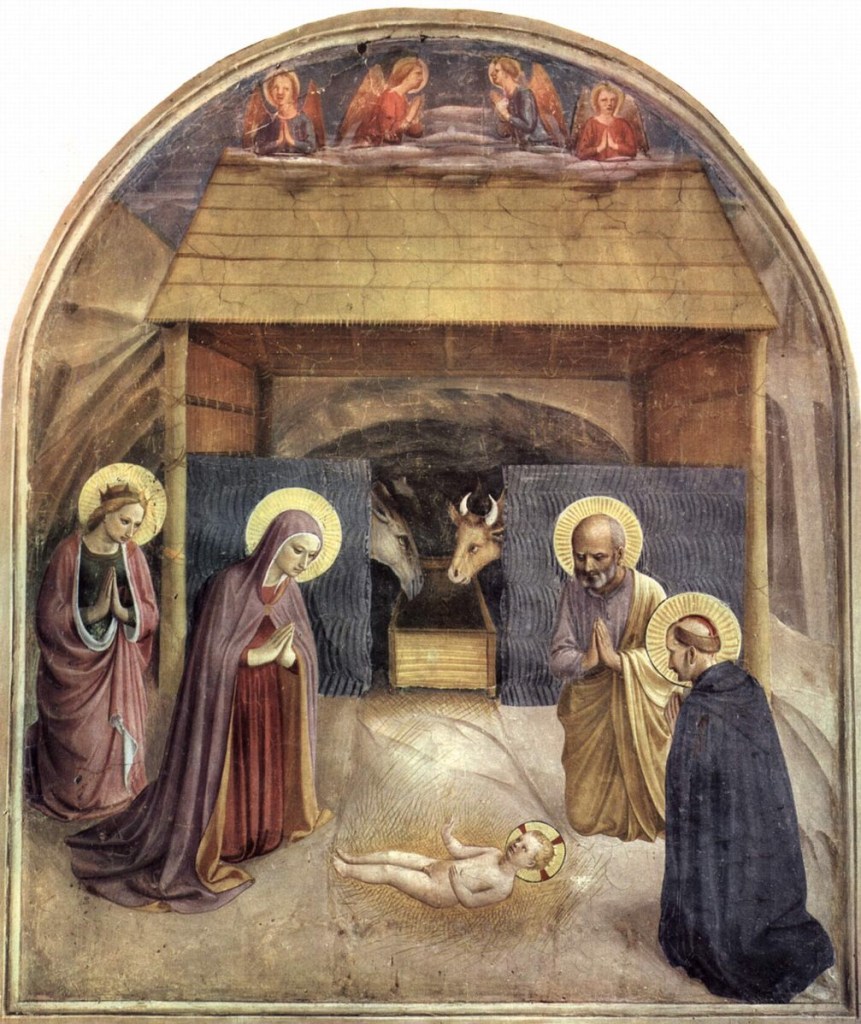
Holmes’ final problems

As is well known, Conan Doyle killed off his creation Sherlock Holmes in the story “The Final Problem” in 1893, but, due, it is claimed, to public pressure, but more, I suspect, because he missed writing these stories, brought him back to life again ten years later in “The Empty House”. The resurrection isn’t s ingenious as is often claimed: there was, after all, no body recovered from the Reichenbach Falls, into which Holmes was supposed to have fallen, locked in deadly combat with Professor Moriarty; and this makes me wonder whether Conan Doyle wanted all along to keep up his sleeve the option of bringing Holmes back at some later date. He tested out the waters, as it were, two years before “The Empty House” with The Hound of the Baskervilles – a story that had presumably taken place before the incident at the Reichenbach Falls – and its spectacular success indicated there was still a strong public appetite for Holmes & Watson. And so, in 1903, back to life Holmes came – not in stories that had taken place before his presumed death, but in the here-and-now. And to the delight of Holmesians both then and now, “The Empty House” was followed in the Strand magazine by twelve others, and afterwards published together in The Return of Sherlock Holmes.

There are those, it must be said, who feel that Holmes wasn’t quite the same after the resurrection – that the earlier stories are superior to what followed. I think this is palpable nonsense. The best stories in this collection are among the finest in the entire canon – “The Priory School”, “The Six Napoleons”, “The Abbey Grange”, etc.; and, looking through the thirteen titles, there doesn’t seem to me to be a single weak link – certainly nothing as weak as, say “A Case of Identity” (in the first collection The Adventures of Sherlock Holmes), or “The Stockbroker’s Clerk” (which is effectively an inferior re-run of “The Red-Headed League”) in the second collection, The Memoirs. Indeed, The Return of Sherlock Holmes may well be the finest and most consistently inspired of the five collections.

However, it is much harder, it seems to me, to defend the fifth ad final collection, The Casebook of Sherlock Holmes. After The Return, instead of publishing planned sets, Conan Doyle wrote and published these stories more sporadically – much as fancy took him. His Last Bow, published in 1917, is a collection of seven of these stories, along with the earlier story “The Cardboard Box”, one of the very finest of the entire canon. (This story had been published in the Strand magazine as early as January 1893, but Conan Doyle had omitted it from the collection The Memoirs of Sherlock Holmes, deeming it unsuitable for younger readers.) With the possible exception of “The Dying Detective”, every single story in His Last Bow seems to me a masterpiece, and two of them – “The Devil’s Foot” and “The Bruce-Partington Plans” – seem to me quite exceptional. The collection wraps up with the title story, “His Last Bow”, a tale of Holmes, now approaching old age, lending his talents to the British secret services, and foiling an espionage attempt on the eve of the First World War.

But despite the title of the last story, Conan Doyle, it seems, couldn’t stop writing about Holmes and Watson. Between 1921 and 1927, twelve more stories were published in Strand, and these, collected together in The Casebook of Sherlock Holmes, gave us, most finally and most definitively, his last last bow. And this final collection, it must be admitted, is harder to defend than the earlier collections had been. However, when you’re a fan, you’re a fan, and even the least of these stories is of interest. And, reading them over recently, I found them far more interesting than I had remembered.

Let us admit first of all – and get it over with – that there are a number of weak stories here. There are two stories here narrated by Holmes himself (“The Blanched Soldier” and “The Lion’s Mane”), and neither of these can be counted great successes. Holmes being the narrator isn’t really new: in two of the stories in The Memoirs (“The Gloria Scott” and “The Musgrave Ritual”), while Watson had provided the narrative framework, it was Holmes who had narrated the bulk of the story, and his storytelling there was certainly better than it is here. Furthermore, the two cases here are solved not by detection, but by Holmes having retained some esoteric facts at the back of his encyclopaedic mind.

“The Mazarin Stone” too, is weak. Conan Doyle was, it seems, attempting to emulate stage productions, so the whole thing emerges as a conversation piece, with the entire exposition, development and denouement all taking place in the same set (Holmes’ front room in 221b Baker Street), and in the time it takes to read the story. It doesn’t really come off, I’m afraid.

“The Three Garridebs” is an inferior re-hash of “The Stockbroker’s Clerk”, which is itself an inferior re-hash of “The Red-Headed League”; but it’s hard to regret this story, especially given the rare moment of tenderness Holmes displays for Watson when his friend is wounded by a gunshot. And while “The Veiled Lodger” doesn’t really display any detection work, it is redeemed by a genuinely interesting and thrilling backstory. And also by this delicious passage:

The discretion and high sense of professional honour which have always distinguished my friend are still at work in the choice of these memoirs, and no confidence will be abused. I deprecate, however, in the strongest way the attempts which have been made lately to get at and to destroy these papers. The source of these outrages is known, and if they are repeated, I have Mr Holmes’s authority for saying that the whole story concerning the politician, the lighthouse, and the trained cormorant will be given to the public. There is at least one reader who will understand.

Throughout this collection, there are tantalising references to other cases – most memorably near the start of “The Sussex Vampire”, where we are told of the case of the Giant Rat of Sumatra – “a story for which the world is not yet prepared”. Heard melodies are sweet, as the poet said, but those unheard are sweeter.

The one story in this collection I find hard to defend is “The Three Gables”. The story itself is pretty thin; and while we are accustomed to Holmes taking the law into his hands and letting the criminal off, it is hard to see why he does so in this case. And it is harder still to defend some of the comments made by Holmes to Steve Dixie – comments which, certainly by modern standards, can only be regarded as racist. (And the fact that Steve Dixie is a vicious thug hardly excuses Holmes’ comments.) Of course, they were different times, and the standards of what is acceptable have changed, but it’s nonetheless disappointing, especially given how warmly appreciative both Holmes and Watson had been of racial tolerance and of racial integration in the earlier (and rather touching) story “The Yellow Face”. If I had to lose just one story in the canon, this, I fear, would be it.

But the other stories in this collection I would strongly defend. “The Retired Colourman” and “Shoscombe Old Place” may not be Holmes and Watson at their best, but they are fine stories nonetheless. (In “Shoscombe Old Place”, Conan Doyle leads Holmes and Watson, quite successfully, I think, into the regions of Gothic horror.) And the much reviled “The Creeping Man” seems to me a splendid science fiction story: it is quite clearly a nod towards Stevenson’s Dr Jekyll and Mr Hyde, and, while the science in the story may not exactly be watertight (any more than in Stevenson’s story), it is worth it if only for Holmes’ rather melancholy observation “When one tries to rise above Nature, one is liable to fall beneath it”.

But I’ve kept the three best ones till the last. If “The Creeping Man” is Conan Doyle’s riff on Jekyll and Hyde, “The Sussex Vampire” is clearly a response to Bram Stoker’s Dracula. And it’s a superb story. As in some other stories that hint at the supernatural (The Hound of the Baskervilles, “The Devil’s Foot”), the truth is entirely rational: Holmes (unlike his creator) will not have it any other way:

“Rubbish, Watson, rubbish! What have we to do with walking corpses who can only be held in their grave by stakes driven through their hearts? It’s pure lunacy.”

But even without the supernatural, Conan Doyle communicates powerfully an atmosphere of fear and of mystery, and this story would not have been out of place in any of the earlier collections. Neither would “The Illustrious Client”, in which Holmes is up against a truly formidable opponent, and which has one of the most thrilling denouements in the entire canon. But best of all, probably, is “Thor Bridge”: reading this intriguing story, with its ingenious solution, it’s like being back in old times again. Place this story in any of the earlier collections, and it would still stand out as one of the best.

So a mixed bag, all in all, and even though, overall, it doesn’t quite match up to the earlier collections, no self-respecting Holmesian would be without it.

There were no more comebacks after this one: this was, most definitely, the final curtain. We needn’t repine: this was the right place to stop. With the possible exception of “The Three Gables” – and even that I think I’d be sorry to lose – there’s not a single one of these fifty-six short stories (and four novels) that I would want to be without. Why? Oh, I don’t know … There are certain things that defy explanation.

Revisiting “Timon of Athens”

Timon of Athens is not a play often revisited, and for rather obvious reasons. A bare outline of the plot, such as it is, seems most unpromising: a wealthy and generous Athenian hosts lavish feasts, and showers his friends, of whom there are many, with extravagant gifts, but when he is in financial trouble himself, his friends decide they aren’t his friends any more and turn their backs on him; and this prodigal Athenian, now disabused, leaves the city to live in the wilderness, cursing mankind till he meets his death, offstage, for reasons unspecified. It’s a rather simple morality tale, pointing to rather trite and simplistic morals: do not be a spendthrift; do not put too much trust in other people; humans are ungrateful by nature; and so on – nothing, one might have thought, to interest a major literary artist. And neither does the plot leave much space for character development: Timon is first one thing, and then its complete opposite. As Apemantus says to him:

The middle of humanity thou never knewest, but the extremity of both ends.

Instead of depicting the dynamic development of a character, we are presented with two contrasting tableaux, neither of which, being static, is particularly dramatic.

It is hard to determine when Shakespeare wrote this, as there is neither a record of a performance in Shakespeare’s own lifetime, nor any Quarto publication; nor even any documentation relating to it before it made its appearance in the First Folio. The themes and imagery that occur seem to suggest that this was written some time in the first decade of the 17th century – a period when Shakespeare was writing some of his most highly regarded tragic masterpieces – that is, when he was at the height of his powers. So this raises the question: what did Shakespeare, at the height of his powers, see in so simplistic a story, devoid of any great dramatic interest, to think it suitable material for a play?

The obvious answer, I think, was that Shakespeare was experimenting. This shouldn’t surprise us: looking through his plays, Shakespeare was frequently experimenting. Those experiments that worked have entered the canon so firmly that we do not think of them as experiments: we tend to take Antony and Cleopatra, say, for granted, rather than see it for the outrageous experiment it is. But not all experiments, of course, are equally successful: it is in the nature of experimentation that some are bound to fail. Or, at least, only partly succeed. Earlier in his career, for instance, Shakespeare experimented in introducing dark and even tragic elements into his comedies, and it doesn’t seem to me that he was uniformly successful in this: Shylock, for instance, is a tragic figure of tremendous power, but he does, I think, overwhelm the comic elements of the play. But no matter: so powerful is the figure of Shylock that top Shakespearean actors queue up to play him rather than play any of the relatively insipid characters populating the more comic strands. It remains, though, an unbalanced play: this particular experiment, while giving us Shylock, was by no means a complete success. Shakespeare was more successful in welding together the brighter and darker elements in Much Ado About Nothing, and succeeded so triumphantly in this respect in Twelfth Night that it becomes impossible to pick the light and the shade apart, so seamless is the construction. But throughout, he was experimenting: his artistic temperament was such that it was attracted to trying out new things, even at the risk of failure.

And Timon of Athens too, I think, is an attempt to try out something new, although, in this instance, it doesn’t quite work – certainly not well enough to create a dramatic figure as powerful as Shylock to compensate for the shortcomings. For the text gives the impression not even so much of an unfinished project as of a project abandoned: true, there are some passages that are quite magnificent, and undoubtedly the work of a great visionary dramatic poet; but equally, there are other passages that seem to cry out for revision, or even for rewriting; and since this is (from the internal evidence of the text) unlikely to be a late work, the fact that Shakespeare left these passages in such a state; coupled with lack of evidence for any performance in Shakespeare’s own time; seems rather to indicate that he had given up on the project: it just wasn’t going well. I’d guess, given Shakespeare’s willingness to experiment, there were many other such abandoned works – experiments that didn’t work – but this one, unlike the others, somehow made it into the First Folio. And that leaves us with some fascinating questions: what was Shakespeare trying to achieve here? And why did he not succeed?

One can only really provide tentative answers to this, based on guesswork: it is, after all, pointless to speculate on what was going on in a mind such as Shakespeare’s, and impertinent to presume to point out where he went wrong. It seems to me that Shakespeare was trying out satire – not satire as an incidental feature of the drama, but one that occupies its very centre; and a satire very different from the kind his friend Ben Jonson was writing at possibly the same time. Shakespeare, I think, was trying to accomplish more than pointing out human folly, and laughing at it. What more he was attempting deserves, I think, some attention.

If pointing out human folly had been Shakespeare’s primary aim, the play could well have finished after Act 3. But it is Timon’s hatred of humanity that takes up the final two acts. These acts are not dramatic since Timon does not develop further, but the intensity of his imprecations against humanity are chilling. Here, for instance, are his words to an army poised to take Athens:

… let not thy sword skip one:
Pity not honour’d age for his white beard;
He is an usurer: strike me the counterfeit matron;
It is her habit only that is honest,
Herself’s a bawd: let not the virgin’s cheek
Make soft thy trenchant sword; for those milk-paps,
That through the window-bars bore at men’s eyes,
Are not within the leaf of pity writ,
But set them down horrible traitors: spare not the babe,
Whose dimpled smiles from fools exhaust their mercy;
Think it a bastard, whom the oracle
Hath doubtfully pronounced thy throat shall cut,
And mince it sans remorse

And so on. These are not merely the words of a man disillusioned with humanity: these are the words of a man in the grips of a genocidal rage. However much we may have sympathised with Timon’s disgust with humanity, it does not seem to me credible that Shakespeare could have intended us to sympathise with speeches such as this. And here, I think, is where Shakespeare’s satire differs from Jonson’s: the object of his satire is not merely human folly, but also revulsion from that same folly. Having invited us to deprecate human behaviour, Shakespeare invites us to deprecate that deprecation. And the emotion imparted is more than mere amusement, or disapproval: lines such as those quoted above inspire in the audience, or in the reader, a sense of horror. We find ourselves revolted by Timon’s revulsion; and Timon’s is a revulsion from the very follies that we ourselves have been invited to find revolting.  

The problem Shakespeare encountered, I think, is that he couldn’t find for this a suitable dramatic form. Comedy he rejected as not an adequate vehicle for conveying such horror, but the tragic form also threw up problems: far from describing a dynamic dramatic arc, the material resolved itself into two static tableaux, the second merely presenting a picture that is a reversal of the first. Yes, there is horror suitable for a tragic work, but there is neither the sense of development nor the complexity of character that Shakespearean tragic drama ideally requires.

The theme of human folly inviting a revulsion that is itself the object of satire was taken up by authors in later generations. Molière took up the theme triumphantly in Le Misanthrope, but he steered clear of horror: he was careful not to transgress the bounds of comedy of manners. Whatever the implications of his drama, he does not stray from the confines of the drawing room. But it was not, I think, Shakespeare’s intention to stay within confines: his protagonist had to break away from the bounds of civic society, and move into the wilderness, as Lear was to do. It was Shakespeare’s intention to present directly the horror to which revulsion from our fellow humans leads us. And it was his intention too, I think, to implicate the audience in that horror.

One author from a later generation who did present this horror directly was, I think, Jonathan Swift: Gulliver’s genocidal rage is quite clearly of the same nature as Timon’s. And like Timon’s, his rage too is a consequence of revulsion from humanity, of disgust of human follies. And in Gulliver’s Travels, we, the reader, are faced with the same dilemma that we are faced with in Timon of Athens: how can we simultaneously sympathise with and yet be revolted by such rage? But Gulliver’s Travels is a prose narration (some would say a “novel”) rather than a play: the problem Shakespeare didn’t solve was giving this theme a dramatic shape. The satire in his plays, both before and after Timon of Athens, was incidental rather than central.

But even the failed experiments of a great writer remain fascinating. It is fascinating trying to understand from what we have, abandoned though it no doubt is, what Shakespeare was, at least, trying to do. It may well be, as I’d conjecture, that there had been many other such failed attempts which are now lost to us: given the experimental nature of Shakespeare’s art, it would have been very surprising if there hadn’t. But I’m certainly glad we have, at least, Timon of Athens: some failures are worth more than any number of successes.

Sense and Sensitivity

It’s always a good thing for those of us who take literature seriously to be sensitive to what they read. Quite often, matters of the most vital import are communicated with subtleties and nuances, and without sufficient sensitivity to these things, one may well miss the development of Emma Woodhouse’s perceptions, or of Lambert Strether’s. Which would be a shame, as these developments are at the very centre of these novels. So yes, let’s have more sensitive readers, by all means. That can only be good for the furtherance of literary values.

However, another expression, similar sounding but very different in meaning, has been making its way quite insistently into my consciousness of late, and this time, I’m not so sure it is very good for the furtherance of literary values. And that’s “sensitivity readers”. Being long of the opinion that any noun may be verbed, I have no objection with the noun “sensitivity” being, as here, adjectivised, but its import, in this instance, leaves me feeling somewhat uneasy. For it is the task of sensitivity readers is to read through texts before publication, and to remove, or at best to tone down, anything they feel might cause offence to the unsuspecting reader. In short, these people are censors, unelected and unaccountable, deciding on behalf of the reader what is offensive, and what isn’t; what we may read, and what we can’t. And the criterion determining this has nothing to do with correcting errors, polishing up the writing style, ensuring there is nothing libellous in the content, etc. – that is, the kind of thing we would expect editors to do: the criterion is to protect our sensitivities. On our behalf.

The political arguments against censorship need not be spelt out here, but the literary arguments perhaps should. For while literature does not need always to be offensive, there are times when it does. It would be tedious to list all those works now considered masterpieces but which have, in their time, been considered affronts to good taste and have fallen foul of censors – Dostoyevsky’s Demons, Joyce’s Ulysses, Lawrence’s The Rainbow, and so on. A general consensus had developed – or so I thought – that censorship is an enemy to literature. Of course, the relaxation of censorship inevitably means that a lot that is rubbish, or even morally repugnant, also sees light of day, but – and I’m sorry to be stating the obvious here – if people choose to read rubbish, even morally repugnant rubbish, then that is entirely their privilege, and no-one as the right to prevent them. This, as I understand it, is the classic liberal argument against censorship, and for freedom of speech.

So it did rather startle me to see an article in a mainstream liberal newspaper, written by someone who is herself an author (and hence, one may assume, someone who values literature), and who would also probably claim to be liberal, claiming that current level of censorship is actually a good thing, but not enough for the longer term:

Increasingly, publishers are using sensitivity readers, which is a good idea but a short-term fix.

In case it is felt I am quoting out of context, this is the article from which it is taken. It concerns the much publicised case of poet Kate Clanchy, whose book Some Kids I Taught and What They Taught Me has recently come under fire for alleged racism. In this instance, the publishers Picador released a statement saying that they would, in this instance, do, as it were, a “sensitivity reading” in retrospect, and rewrite the offending passages. They will, in other words, now determine on our behalf how best to protect our sensitivities.

It may of course be argued – and many already have argued it – that they are removing passages that are racist and rude, and that there can be no objection to that. But firstly, are these passages racist and rude? I am at a disadvantage here as I haven’t read the book, but the examples given – in that article by Monisha Rajesh in the Guardian previously mentioned – leave me unconvinced. Let us go through a few of them one by one.

Someone is described as having a “chocolate skin”. I myself have a chocolate-coloured skin, and am quite happy with it. To see this term in itself as offensive is to see the possession of a “chocolate skin” as something bad, and that certainly would be racist. But if Ms Clanchy does see the possession of a “chocolate skin” as a Bad Thing, there is no indication of that in Monisha Rajesh’s article. Reference to a “chocolate skin” is, in itself, an objective description – “skin the colour of chocolate” – and whether one sees this as offensive or otherwise depends purely on what one thinks of chocolate skins. I, as I said, quite like mine. If describing someone as having “milky white skin” isn’t offensive, then I don’t see why “chocolate skin” should be either – unless one thinks “milky white” to be superior to “chocolate brown”.

Same, I imagine, with a “Jewish nose”. Of course, all Jews don’t have Jewish noses, but there is a recognisable shape of nose that is often found among Jewish people and is associated with them; and, as with a brown skin, as long as one does not ridicule it, or use it to attack or to abuse Jewish people, I can’t really see the problem if it is described in writing. I have myself admired and, indeed, envied many a Jewish nose in my time; and so, it seems, does Kate Clanchy, as, we are told later in this article, she refers to someone else’s “fine Ashkenazi nose”. The adjective “fine” seems to me to imply appreciation rather than otherwise.

And so on. When Monisha Rajesh says she “recoils” when a Somali boy is described as having a “narrow skull”, I assume it’s the description of the fact and not the fact itself that she is recoiling from, but if it’s a physically accurate description, I don’t, once again, see what the problem is, or why this should be termed “racist”. “Racism” – once again, as I understand it – is to hold prejudices about a person, or about a group of people, based upon their ethnicity, and I really can’t see any of that in what appears to be objective physical descriptions. I do hope we’re not at a stage where it is considered acceptable to physically describe white people (“milky white skin”, for instance) but not of non-white people: that would be racism.

Monisha Rajesh does not mention that another girl (from an ethnic minority) was described as having “almond shaped eyes” – presumably because after this expression was held up as an example of Kate Clanchy’s racism, the girl in question publicly identified herself, and said she wasn’t offended at all; that it was merely a case of other people being offended on her behalf. Well, of course she wasn’t offended! “Almond shaped eyes” sounds quite lovely, frankly.

Of course, there may be a problem with all this if the children could be identified from the descriptions, but once again, as I understand it, care has been taken not to reveal their identities. In any case, the charge against the book isn’t that the children are identifiable: the charge is explicitly that of racism. And, from the examples given, at least, I can’t see it. And this despite my being rather sensitive about racism (I am of Indian ethnicity and grew up in Britain in the 1960s and 1970s – not an era associated with racial sensitivity: without, I hope, appearing self-pitying on the matter, I think I have experienced a fair amount of racist abuse in my life – enough, at least, to have a good understanding of what racism is).

However, clearly, in these instances, Monisha Rajesh sees racism where I do not; her sensitivities are clearly different from mine. And herein, I think, lies the problem: since different people can have different sensitivities, whose sensitivities should “sensitivity readers” represent? If their sensitivities are different from mine, why should their sensitivities be allowed to override mine? What right, in short, does anyone have to be offended on my behalf?

The obvious answer to all this is to let the readers decide for themselves whether they find something offensive or not. But of course, for the reader to do that, they must have access to the books in the first place – to the books unredacted by “sensitivity readers”. That, to me, is the liberal position, but the sight of people claiming to be liberal clamouring for more censorship, not less, makes me wonder whether I actually understand the term.

This liberal solution I outline – of publishing books without redacting to protect sensitivities – entails, inevitably, the publication of much that really is indisputably and offensively racist. But readers must be trusted to decide that for themselves. The alternative, it strikes me, is very illiberal indeed. And certainly not in any way conducive to furthering literary values. For those of us who care for such things, that is.