


AI has kicked the door open on web design, and everything we knew is changing fast.
Now, AI promises to write your copy, generate your images, and even design your website in record time. The idea is highly seductive.
Imagine typing a short description and watching a complete site appear before your eyes, with layouts, visuals, and even front-end code ready to go. It sounds like the end of long nights pushing pixels or wrestling with placeholder text. Some even wonder if it means the end of web designers altogether.
Since tools like Shopify’s AI Store and Google’s Stitch entered the spotlight, designers have been debating fiercely whether this technology will elevate their craft or quietly make it irrelevant.
But beneath the glossy promises lies a harder truth. These tools can deliver speed, but speed alone doesn’t equal impact. A website may look polished on the surface and still fall flat, failing to earn trust, engage visitors, and convert. That’s where the real story begins.
While my web design agency in Chicago still relies on human intelligence, I’ve been experimenting with AI website design out of curiosity.
In this article, I want to pull back the curtain on how artificial intelligence is transforming the web design industry right now. From tools that turn prompts into working code to builders that launch full online stores in minutes, the possibilities are expanding fast.
But AI also comes with serious limitations. Generic templates, SEO risks, and missing emotional nuance can hold back your site. Knowing both sides will help you use AI as an advantage, without losing the human touch that makes a website truly work.
Table of Contents:
- When AI Tries to Design a Website
- The Hidden Risks Nobody Mentions
- The Human Edge That AI Cannot Touch
- Where AI and Humans Work Best Together
- The Future of Web Designers in 2025
- The Untold Truth

When AI Tries to Design a Website
Over the past year, new tools have made waves.
- Figma rolled out AI features that analyze real design data to create layouts and cleaner code.
- Shopify launched an AI Store Builder that can set up eCommerce shops from a single prompt.
- Google released Stitch, a system that transforms text and reference images into working UI and front-end code.
On paper, this looks like the future every designer has been waiting for. And to top it off, AI is not only designing layouts but also tailoring user experiences in real time. It can adjust a page depending on your location, your past behavior, and even your mood. That’s a level of personalization humans alone could never deliver at scale.
And yet, beneath all that brilliance, there’s a void.
When I tested one of these AI website builders, the results were impressive at first glance. The typography was sharp, the layout perfectly balanced, the hero section bold. But the site still felt hollow.
AI can remix existing styles beautifully, but it cannot tell a story. It lacks understanding of brand history, cultural nuances, and emotional intent. It does not know how a minimalist color choice will make someone feel, or why a certain phrase resonates with one audience but turns another away.
At the end of the day, AI can build a shell. But only humans can bring it to life.
The Hidden Risks Nobody Mentions
AI in web design can feel like a shortcut to success: Quick layouts, instant content, automated SEO…
On the surface, it all sounds irresistible. But once you look closer, the cracks begin to show. Here are the hidden risks that rarely make it into the marketing pitch.
1. The Illusion of Creativity
Every designer dreams of building something unique. A site that tells a story, captures attention, and feels alive. But when you hand the reins to AI, what you often get is a remix of what already exists. The result is a design that looks fine at first glance but feels painfully generic; polished, but empty of the creativity that makes a website memorable.
2. SEO That Stops at the Surface
Everyone wants a website that ranks, drives traffic, and builds authority. And AI will gladly hand you the keywords, meta tags, and draft your content. But that’s only surface-level optimization. What’s missing is the strategic depth:
- Internal linking that strengthens clusters.
- Schema Markup that signals meaning to search engines.
- Authority-building content that keeps you competitive.
Without that, your site may look “optimized,” but it won’t stand out in search.
3. The Trap of Vendor Lock-In
AI website builders promise convenience, allowing you to spin up a site in minutes with no code required. That’s appealing when you need something fast. But once your business grows, you quickly discover the limits. Rigid structures make it hard to customize or scale, and migrating away from the platform can become a costly headache. It’s like moving into a prefabricated house; it feels great on day one, but it’s frustrating once you realize you can’t knock down walls.
With an AI-generated website, forget about scaling it alongside your business.
4. Polished but Soulless
AI can generate endless layouts and visuals, but that doesn’t guarantee a connection. Without human refinement, the result often feels sleek but shallow; the kind of site visitors forget as soon as they close the tab.
Real trust comes from details: the way a headline speaks to the audience, the way a color choice makes them feel welcome, and how an interaction sparks emotion. Those are the things AI simply can’t grasp.
5. The Time You Don’t Save
AI promises efficiency, but real-world results often demand human correction. Layouts need adjusting, content needs rewriting, and images need retouching. What seemed like a shortcut can quickly turn into hours of tedious fixes, erasing much of the time you thought you gained.
AI can definitely help you move faster, but speed without direction leads nowhere.
These risks are why designers can’t afford to hand over control completely. Without the human touch, websites risk becoming generic, shallow, or locked into systems that don’t grow with the business. Recognizing these pitfalls is the first step toward using AI wisely, not blindly.
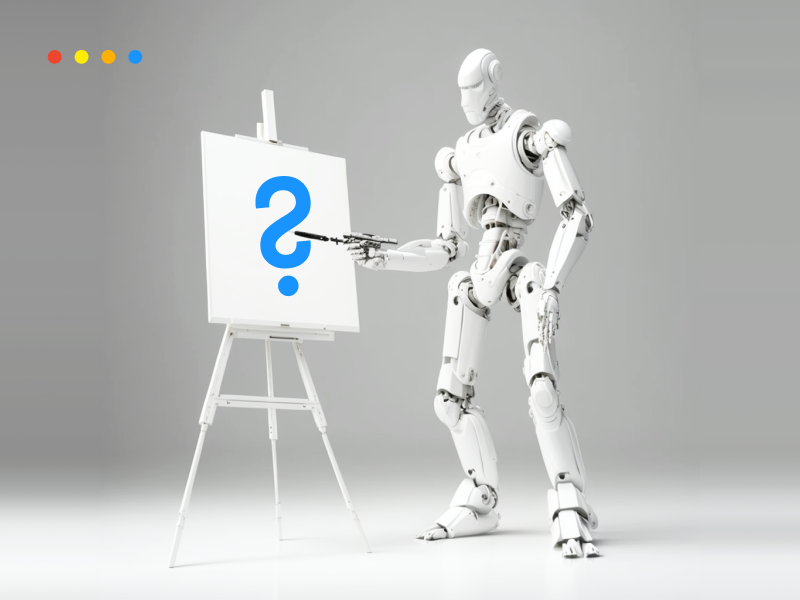
The Human Edge That AI Cannot Touch
This is why designers still matter. AI is fast, but it lacks the qualities that make a website resonate.
- Originality: Designers invent, while AI recombines. True brand identity comes from human imagination.
- Strategy: Designers understand business goals, market context, and conversion psychology. AI doesn’t.
- Empathy: AI may flag contrast issues, but only a human can create a design that feels inclusive and welcoming.
- Emotional nuance: Every color, phrase, and animation has a psychological effect. Humans know how to craft those details with intention.
AI may generate a blueprint. But only humans can design a space people actually want to step into.
Where AI and Humans Work Best Together
The real opportunity isn’t in choosing sides. It’s in collaboration.
AI alone can feel mechanical. Human work alone can feel slow. But together? That’s where the magic happens. Think of AI as the engine and humans as the driver; the engine provides speed, data, and automation, while the driver sets the direction, makes decisions, and brings value.
1. Prototyping with Speed and Context
AI tools like Google Stitch and Figma can generate ten layout variations in seconds, reducing the time spent on early drafts.. That’s incredible for brainstorming. But designers then evaluate those options, refine the details, and select the approach that aligns with the brand’s goals and narrative, turning raw outputs into a coherent design direction.
2. Personalization with Empathy
AI can analyze user behavior, predict what visitors might want, and automatically adjust content. On top of that, it detects patterns humans might miss. Meanwhile, designers ensure these adjustments feel consistent with the brand and relevant to the audience, so personalization enhances the experience rather than feeling mechanical or inconsistent.
3. Accessibility Beyond Compliance
AI quickly flags issues like low contrast, missing alt text, or poor navigation flow. Useful, yes, but shallow on its own. Designers interpret these findings and implement solutions that go beyond technical compliance, shaping experiences that are not only accessible but also inclusive and welcoming for all users.
4. Smarter Optimization
AI keyword research and AEO tools highlight gaps, suggest topics, and even structure headings for search engines. However, designers and content strategists ensure that those keywords live inside a compelling story; content that people actually want to read, not just text designed to game the algorithm.
5. Audits that Drive Action
AI can crawl thousands of pages in minutes, map broken links, and visualize user behavior with heatmaps. The designer takes that data, determines what matters most, and creatively addresses the issues without compromising the brand’s identity with just a generic AI UX design.

The Future of Web Designers in 2025
For designers, this is not the end of the profession but the beginning of a new chapter. The future belongs to those who embrace AI as a tool while sharpening the skills AI cannot replicate.
That means:
- Becoming fluent in Answer Engine Optimization (AEO) so your sites appear not only on Google but also in AI search results.
- Doubling down on skills like UX psychology, brand storytelling, and ethical design.
- Positioning yourself as the strategist who knows how to combine AI’s efficiency with human originality.
The more AI advances, the more clients will crave websites that feel alive, trustworthy, and unique. And that is exactly where designers prove their value.
The Untold Truth
AI in web design is here to stay. It is faster, wiser, and more integrated than ever. But the truth is simple: The more AI designs websites, the more we need human designers.
While AI website design offers undeniable advantages and a growing toolbox of features, it still stops short of what truly matters: to make it unforgettable.
Designers can craft a site that captures attention, stirs emotion, and stays in someone’s mind long after they leave.
To get scalable results in 2025, it’s crucial to combine AI’s efficiency with human web designers’ creativity and expertise.
The future is not man versus machine. It is man and machine, working together. And if you want a site that not only looks good but feels authentic and performs, my team at Alpha Efficiency is here to help you build it.
Book a free consultation with me today, and let’s design a site that tells your unique story.

Recent Post
Brian Dordevic
Your Review Strategy Is a Ticking Time Bomb
READ MORE
Brian Dordevic
You'll Regret Skipping Web Design Quality Assurance
READ MORE
Brian Dordevic
HubSpot CMS vs WordPress Isn't a Debate (How High-Growth Teams Use Both)
READ MORE